On This Page
Description
Kicked out of school after a misfired practical joke, Rick Luban takes a job mining asteroids and is surprised by the industry's fierce competion and dangers, which include sabotage and murder.Tags
Recommendations






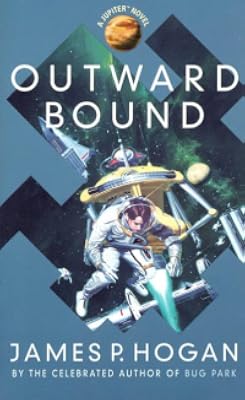

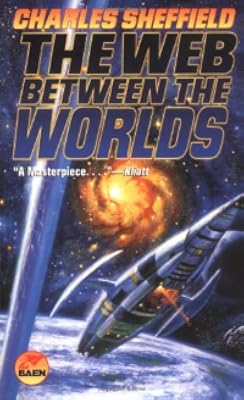
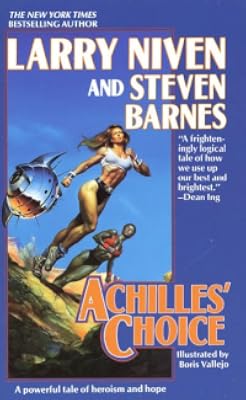
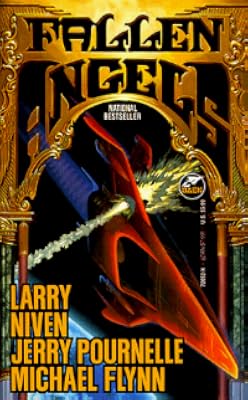








Member Reviews
Sheffield, Charles, and Jerry Pournelle. Higher Education. Jupiter No. 1. Tor, 1996.
In Higher Education, Sheffield and Pournelle channel early Heinlein juveniles (now YA) better than anyone ever has. Rick Luban is a smart kid who is not a good fit in a modern urban schoolroom. When a practical joke goes badly awry, he is given a chance to train to mine asteroids in a strict bootcamp environment. What elevates the book above most similar young adult science fiction is the attention to the science of asteroid mining that Sheffield and Pournelle bring to it. Would that more YA scifi writers would pay as much attention to the science in their novels. I last read this book in 2015, and it holds up well six years later. 4 stars.
In Higher Education, Sheffield and Pournelle channel early Heinlein juveniles (now YA) better than anyone ever has. Rick Luban is a smart kid who is not a good fit in a modern urban schoolroom. When a practical joke goes badly awry, he is given a chance to train to mine asteroids in a strict bootcamp environment. What elevates the book above most similar young adult science fiction is the attention to the science of asteroid mining that Sheffield and Pournelle bring to it. Would that more YA scifi writers would pay as much attention to the science in their novels. I last read this book in 2015, and it holds up well six years later. 4 stars.
The thing about most dystopian fiction is that it is fundamentally pessimistic. The individual characters may have a happy ending, but the world as a whole is still fucked.
Higher Education -- and most of the Jupiter novels, for that matter, present a future Earth that is as dystopian as any '90s cyberpunk novel. But the story isn't content with accepting the inevitability of dystopia. It believes that only can individual people become better, but that these people together can lay the foundation for a better world.
Higher Education -- and most of the Jupiter novels, for that matter, present a future Earth that is as dystopian as any '90s cyberpunk novel. But the story isn't content with accepting the inevitability of dystopia. It believes that only can individual people become better, but that these people together can lay the foundation for a better world.
My reaction to reading this novel in 1997. Spoilers follow.
This book was a pleasant, if not great, read and, I suspect, a great deal like Robert Heinlein’s juvenile novels of which I’ve only read Starship Troopers and, a long time ago, The Rolling Stones. It’s the story of a youth learning adult responsibilities and a lot of math and science – the authors deliver some good minor science lessons in passing including one on why rings around planets can’t be solid. The plot of corporate espionage and sabotage was, if my memory is correct, added from the novella of the same name. (In it protagonist Rick Luban finishes training and his employer tries to recruit him for training Earthside and the novel ends with a similar pitch but show more after more training. I liked the airlock warning signs on not forgetting to check your suit.)
The main flaw is, given the supposedly even more decadent, ignorant, and violent schools of the future, Rick Luban and the other delinquent of his school seem way too tame in their behavior and lack of profanity to be the problem children of tomorrow. They seem like problem children of the fifties. The future of the novel – aristocratic politicians ruling an overregulated welfare state – is obviously Pournelle’s and reminiscent of his Exiles to Glory which features a similar plot of a student being forced off Earth by circumstances and finding a new life is space though that character was an engineering student in trouble after defending himself from gang. Both novels feature government insiders (a teacher in Higher Education and a policeman in Exiles to Glory). show less
This book was a pleasant, if not great, read and, I suspect, a great deal like Robert Heinlein’s juvenile novels of which I’ve only read Starship Troopers and, a long time ago, The Rolling Stones. It’s the story of a youth learning adult responsibilities and a lot of math and science – the authors deliver some good minor science lessons in passing including one on why rings around planets can’t be solid. The plot of corporate espionage and sabotage was, if my memory is correct, added from the novella of the same name. (In it protagonist Rick Luban finishes training and his employer tries to recruit him for training Earthside and the novel ends with a similar pitch but show more after more training. I liked the airlock warning signs on not forgetting to check your suit.)
The main flaw is, given the supposedly even more decadent, ignorant, and violent schools of the future, Rick Luban and the other delinquent of his school seem way too tame in their behavior and lack of profanity to be the problem children of tomorrow. They seem like problem children of the fifties. The future of the novel – aristocratic politicians ruling an overregulated welfare state – is obviously Pournelle’s and reminiscent of his Exiles to Glory which features a similar plot of a student being forced off Earth by circumstances and finding a new life is space though that character was an engineering student in trouble after defending himself from gang. Both novels feature government insiders (a teacher in Higher Education and a policeman in Exiles to Glory). show less
I found this to be a better than average space adventure with an element of cultural satire about public education and rampant litigation. The plot unfolds a bit abruptly in places, and the characters are not exactly believable, and some of the conflict seems contrived mainly because one of the authors or editors thought the story needed constant conflict, but it's an interesting read for the science and the satire.
All four of these are basically the same plot, with similar themes. They're engaging, but not awesome, imo. Probably best for teen boys. Possibly dated by now. The first is the grittiest. My favorite is Putting Up Roots. This is the most cliched. All are recommended if you happen to find them at your library or friend's house, none if you have to buy them.
They do *not* need to be read in order. The significant characters do not carry over, nor does the plot. The world that is being built is developed further in each, but an understanding beyond what is included in each book is not necessary.
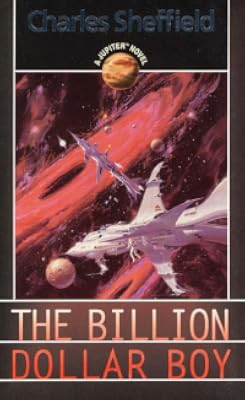
The writing is unexpectedly fresh and clean, with some gems. From The Billion Dollar Boy, "Shelby woke up bit by bit, body before brain, memory show more before mind."
(Review copy-pasted to each of the four.) show less
They do *not* need to be read in order. The significant characters do not carry over, nor does the plot. The world that is being built is developed further in each, but an understanding beyond what is included in each book is not necessary.
The writing is unexpectedly fresh and clean, with some gems. From The Billion Dollar Boy, "Shelby woke up bit by bit, body before brain, memory show more before mind."
(Review copy-pasted to each of the four.) show less
Ratings
Members
- Recently Added By
Author Information

156+ Works 10,067 Members

148+ Works 40,488 Members
Jerry Eugene Pournelle was born in Shreveport, Louisiana on August 7, 1933. During the Korean War, he served in the U. S. Army. He received a B.S. in psychology in 1955, an M.S. in psychology in 1958, and a Ph.D. in political science in 1964 from the University of Washington. He worked for Boeing and NASA where he worked on the Mercury, Gemini, show more and Apollo missions. He also advised the federal government on military matters and space exploration. He wrote science fiction and helped popularize the military science fiction genre. His first novel, Red Heroin, was published in 1969 under the pen name Wade Curtis. His other novels published under his own name included Janissaries, Starswarm, and The Mercenary. He also wrote novels with Larry Niven including Oath of Fealty, The Mote in God's Eye, Lucifer's Hammer, Inferno, Escape from Hell, and Footfall. Pournelle was widely credited as the first major author to write a published novel entirely on a computer. He wrote a witty advice columns for computer users in Byte magazine. He received the John W. Campbell Award for Best New Writer of 1973. He died of heart failure on September 8, 2017 at the age of 84. (Bowker Author Biography) show less
Some Editions
Awards and Honors
Series

Common Knowledge
- Canonical title
- Higher Education
- Original publication date
- 1996
- People/Characters
- Rick Luban
Classifications
Statistics
- Members
- 322
- Popularity
- 98,838
- Reviews
- 5
- Rating
- (3.63)
- Languages
- English
- Media
- Paper, Ebook
- ISBNs
- 4
- ASINs
- 3