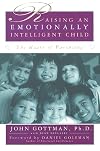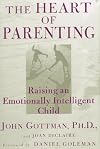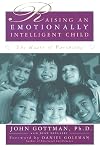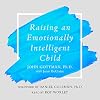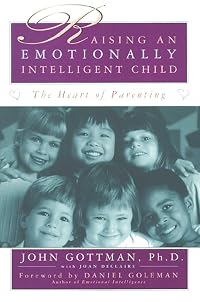
Raising an Emotionally Intelligent Child: The Heart of Parenting
by John Gottman
On This Page
Description
From Dr. John Gottman comes Raising an Emotionally Intelligent Child, a modern guide to raising healthy and emotionally intelligent children, with a foreword by Daniel Goleman, New York Times bestselling author of Emotional Intelligence. Based on twenty years of research at the University of Washington studying parent-child interactions, award-winning research psychologist John Gottman and his team have developed Emotion Coaching -- a technique that parents can use to teach their children show more self-awareness and self-control, and to foster good emotional development. This proven technique has demonstrated a positive effect on children's physical health, academic achievement and emotional well-being. Among the issues this program explores: * Emotion Coaching: the key to raising emotionally intelligent kids * How to assess your parenting style * Key steps and strategies for Emotion Coaching * The effects of marriage and divorce on your child's emotional health * The crucial role of fathers in families Dr. Gottman's research has shown that children who learn to master their emotions have more self-confidence, do better in school, and have a better chance of living happy, emotionally healthy lives. Filled with practical and common-sense advice on how to become an Emotion Coaching parent, this is a how-to guide for parents interested in helping their children grow into "emotionally intelligent" people. show lessTags
Recommendations

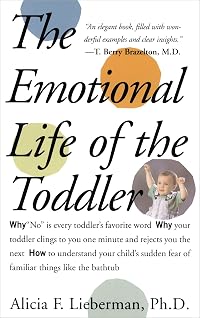
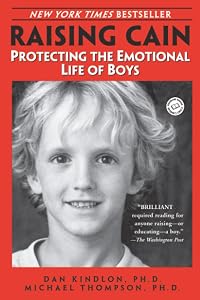
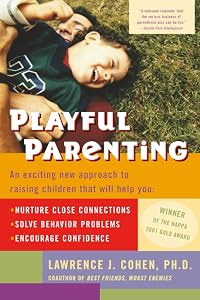
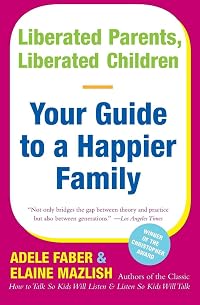
Member Reviews
Nope. Nothing to announce. Just feeling the need for some Gottman in my life. And this was good. For those who had read his other works, it may have seemed somewhat repetitive but it was still easy to sort out the chapters you could skim.
The chapters on fathers and divorce were brilliant, especially the one on fathers. It is astounding what backed-up-facts there are on the necessity for father's involvement for the well-being of a child. They are definitely much more than just sperm donors.*
* Start the movement.
The chapters on fathers and divorce were brilliant, especially the one on fathers. It is astounding what backed-up-facts there are on the necessity for father's involvement for the well-being of a child. They are definitely much more than just sperm donors.*
* Start the movement.
One thing my mother always told me was that she believes children are people too, and adults should remember that. Essentially, that is the message John Gottman seeks to deliver in Raising An Emotionally Intelligent Child.
As a parent I found the book helpful because it gives five "rules" for responding when your child is emotional. I find, that as my son gets older, my impulse is to expect him to keep his emotions more under control. But that expectation is sometimes unreasonable; I need to remember that he needs training and practice to be able to handle his emotions.
Children really feel everything and they express it fully. That's why they can go from laughing to crying in seconds, and screaming with anger to seeming fine a few show more minutes later. This lability causes adults to believe that children's emotions aren't real.
I didn't need the first third of the book, devoted to convincing the reader that they need the need the rest of the book, so I skimmed those parts. But I did need the bulk of the book. I have, in the five years since my son was born, learned these techniques (or ones similar to them) and forgotten them again several times. The book was a great reminder for me why it is so important to take the time and energy to engage with my children and really help them and me understand what they are feeling and how they can best handle it appropriately.
I especially enjoyed and found helpful the sections showing how to let the child discover the solution for themselves. No one, especially not my older son, likes to be told what to do! So more techniques to help him figure out solutions to his problems the better, as far as I'm concerned. I know I'll want to read it again in a few years when the techniques that work best now with a five year old will need to be changed for my son as an eight, twelve, or sixteen year old.
Just as I know that I cannot assume I know or understand everything about another adult, I know that I cannot know or understand everything about my children. But this book has helped me develop some tools so that I can be receptive to hearing from them what they are experiencing. And I need to be receptive, because I want them to keep talking to me for a long time to come. show less
As a parent I found the book helpful because it gives five "rules" for responding when your child is emotional. I find, that as my son gets older, my impulse is to expect him to keep his emotions more under control. But that expectation is sometimes unreasonable; I need to remember that he needs training and practice to be able to handle his emotions.
Children really feel everything and they express it fully. That's why they can go from laughing to crying in seconds, and screaming with anger to seeming fine a few show more minutes later. This lability causes adults to believe that children's emotions aren't real.
I didn't need the first third of the book, devoted to convincing the reader that they need the need the rest of the book, so I skimmed those parts. But I did need the bulk of the book. I have, in the five years since my son was born, learned these techniques (or ones similar to them) and forgotten them again several times. The book was a great reminder for me why it is so important to take the time and energy to engage with my children and really help them and me understand what they are feeling and how they can best handle it appropriately.
I especially enjoyed and found helpful the sections showing how to let the child discover the solution for themselves. No one, especially not my older son, likes to be told what to do! So more techniques to help him figure out solutions to his problems the better, as far as I'm concerned. I know I'll want to read it again in a few years when the techniques that work best now with a five year old will need to be changed for my son as an eight, twelve, or sixteen year old.
Just as I know that I cannot assume I know or understand everything about another adult, I know that I cannot know or understand everything about my children. But this book has helped me develop some tools so that I can be receptive to hearing from them what they are experiencing. And I need to be receptive, because I want them to keep talking to me for a long time to come. show less
some good and useful information (as most parenting books are, only if you agree with this kind of parenting style). what i liked best were the tips to help you and the recommendations for kid's books (from infant to young adult) at the end.
he is clear to say repeatedly that his tips won't keep stress or conflict out of a family, but it still bothered me the assumptions he made about how a kid would respond to a parent using his technique, as if it was nearly assured. (ex: instead of starting a conversation with your teen, who's music is too loud, with a "you call this music" if you instead say, "i haven't heard this song before. what band is it?" you'll get a conversation. so unrealistic. maybe a nicer way to engage with your kid, but show more you're going to get eye rolls regardless and pretending otherwise calls the rest at least a little into question.).
but i do agree with the vast majority of this (isn't that what the rating system means when it comes to parenting books?) and think that it's a way of living that is open and honest and beneficial to everyone, not just parent/child relationships. (although the standard reflective response would irk me to no end if that's all i got from my partner or a good friend when talking.) show less
he is clear to say repeatedly that his tips won't keep stress or conflict out of a family, but it still bothered me the assumptions he made about how a kid would respond to a parent using his technique, as if it was nearly assured. (ex: instead of starting a conversation with your teen, who's music is too loud, with a "you call this music" if you instead say, "i haven't heard this song before. what band is it?" you'll get a conversation. so unrealistic. maybe a nicer way to engage with your kid, but show more you're going to get eye rolls regardless and pretending otherwise calls the rest at least a little into question.).
but i do agree with the vast majority of this (isn't that what the rating system means when it comes to parenting books?) and think that it's a way of living that is open and honest and beneficial to everyone, not just parent/child relationships. (although the standard reflective response would irk me to no end if that's all i got from my partner or a good friend when talking.) show less
Although irritating in an American way in the beginning, this book has really helped me shout less at and listen more to my child. And thus benefited us both.
A lot of good info, though not anything new to me, a bit repetitive, and a little dated. Would be interesting to see some of the conclusions of the studies he speaks of that weren't finished at the time of writing. I found it very similar to Adele Faber's books.
Great book on teaching and applying the principles of emotional intelligence in the context of raising kids.
This book dives into child psychology and development and focuses on helping parents raise children that are able to express their emotions in a positive and healthy way. Encourages empathy and compassion.
Members
- Recently Added By
Lists

Parenting is Hard, These Books Help
7 works; 1 member

Tom's Bookstore
346 works; 2 members

Men's healing resources
747 works; 1 member
Author Information

79+ Works 6,465 Members
John M. Gottman, Ph.D., is a professor of psychology at the University of Washington
All Editions
Common Knowledge
- Canonical title
- Raising an Emotionally Intelligent Child: The Heart of Parenting
Classifications
- Genres
- Nonfiction, General Nonfiction
- DDC/MDS
- 649.1 — Applied science & technology Home economics & family management Child rearing; home care of people with illnesses and disabilities by family and friends Parenting
- LCC
- BF723 .E6 .G67 — Philosophy, Psychology and Religion Psychology Psychology Developmental psychology
- BISAC
Statistics
- Members
- 718
- Popularity
- 39,524
- Reviews
- 12
- Rating
- (3.96)
- Languages
- 8 — Dutch, English, German, Greek, Indonesian, Italian, Portuguese, Swedish
- Media
- Paper, Audiobook, Ebook
- ISBNs
- 20
- ASINs
- 4