On This Page
Description
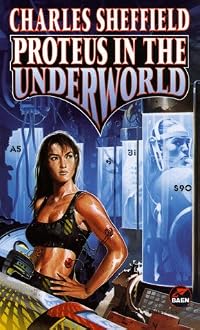
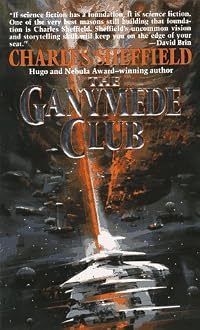
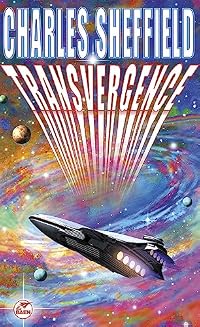
In the 22nd century biofeedback techniques have enabled humans the ultimate expression--the ability to transform the body into any viable form. What began as an innocent technique to reduce anxiety without drugs has raised fundamental questions about what it is to be human. Enter the Humanity Test.Tags
Recommendations



































Member Reviews
My reaction to reading this novel in 1997. Spoilers may follow.
I got the impression that Sheffield, listed as the main science advisor in Kim Stanley Robinson’s Red Mars and Green Mars, wanted to do a Martian novel of his own. As with the Robinson Martian trilogy, this novel features two groups in conflict over what to do with Mars.
Old Mars wants to terraform Mars. Its opposition wants to alter man for Mars with form-change equipment – a technology of human will and the subconscious altering the human form via biofeedback that figures as the centerpiece of the Proteus series and seems to link it with the McAndrew series. Sheffield not only deals with the surface of Mars but also the Underworld, a series of natural caverns show more underneath equatorial Mars. The story involves the seeming failure of the “humanity test” given to human children. (Failure to pass it gets the child killed and sent to the organ banks.) It has failed to detect “feral” and definitely non human forms.
The character of the now retired Bey Wolf (ex-head of the Office of Form Control and hero of the series) was ok, and I liked his many quotations. Likewise, I found his distant relative Sandra Wolf Dearborn acceptable. I didn’t even mind their romance at novel’s end. The plot of who is sabotaging the humanity test kept me turning the pages.
However, the main interest for me were the bizarre colonies of Carcon (dedicated to synthesizing carbon and silicon intelligences in cyborg forms) and Fugate (dedicated to allowing the brain and head to grow in size – requiring giant forms). The forms in these colonies and the very sophisticated and illegal forms of Martian surface dwellers (I liked the idea of organic radio transceivers in their bodies) point to a problem of adopting man to an environment. Humanity is speciating. The Logians realize this and manipulate part of the books’ events to alter the use and perception of form change equipment. show less
I got the impression that Sheffield, listed as the main science advisor in Kim Stanley Robinson’s Red Mars and Green Mars, wanted to do a Martian novel of his own. As with the Robinson Martian trilogy, this novel features two groups in conflict over what to do with Mars.
Old Mars wants to terraform Mars. Its opposition wants to alter man for Mars with form-change equipment – a technology of human will and the subconscious altering the human form via biofeedback that figures as the centerpiece of the Proteus series and seems to link it with the McAndrew series. Sheffield not only deals with the surface of Mars but also the Underworld, a series of natural caverns show more underneath equatorial Mars. The story involves the seeming failure of the “humanity test” given to human children. (Failure to pass it gets the child killed and sent to the organ banks.) It has failed to detect “feral” and definitely non human forms.
The character of the now retired Bey Wolf (ex-head of the Office of Form Control and hero of the series) was ok, and I liked his many quotations. Likewise, I found his distant relative Sandra Wolf Dearborn acceptable. I didn’t even mind their romance at novel’s end. The plot of who is sabotaging the humanity test kept me turning the pages.
However, the main interest for me were the bizarre colonies of Carcon (dedicated to synthesizing carbon and silicon intelligences in cyborg forms) and Fugate (dedicated to allowing the brain and head to grow in size – requiring giant forms). The forms in these colonies and the very sophisticated and illegal forms of Martian surface dwellers (I liked the idea of organic radio transceivers in their bodies) point to a problem of adopting man to an environment. Humanity is speciating. The Logians realize this and manipulate part of the books’ events to alter the use and perception of form change equipment. show less
Part of another fascinating series by Sheffield - why do the good die young?!
Ratings
Members
- Recently Added By
Author Information

156+ Works 10,067 Members
Some Editions
Series

Common Knowledge
- Original publication date
- 1995
Classifications
Statistics
- Members
- 242
- Popularity
- 133,871
- Reviews
- 3
- Rating
- (3.38)
- Languages
- English, German
- Media
- Paper
- ISBNs
- 3
- ASINs
- 1