On This Page
Description
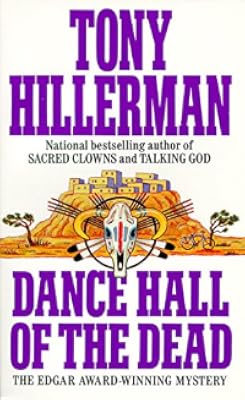
Two Native-American boys have vanished into thin air, leaving a pool of blood behind them. Lieutenant Joe Leaphorn of the Navajo Tribal Police has no choice but to suspect the very worst, since the blood that stains the parched New Mexican ground once flowed through the veins of one of the missing, a young ZuNi. But his investigation into a terrible crime is being complicated by an important archaeological dig and a steel hypodermic needle. And the unique laws and sacred religious rites of show more the ZuNi people are throwing impassable roadblocks in Leaphorn's already twisted path, enabling a craven murderer to elude justice or, worse still, to kill again. show lessTags
Recommendations










Member Recommendations
Member Reviews
He was so lonely. I think it must be bad to be a Navajo if being lonely bothers you. [168]
Two young teens are missing, one Zuñi and the other Navajo, with strong suspicions that the Zuñi boy was murdered and the Navajo knows how if not by whom. Yet Shalako ceremonies at Zuñi Village will be held in just a few days, when crowds will make investigation difficult and hiding clues easy. Lieutenant Leaphorn makes the rounds of the few places the Navajo boy is known to visit: his family hogan and its troubled past; a nearby archaeology dig site; a Franciscan Mission; a hippy commune. Everyone remembers the boy as a "little crazy" but claims not to know where he's gone.
The FBI lead their own investigation and typically, insist on show more supervising all other law enforcement on the scene. Their approach suggests the missing boys are not a particular motivation, however.
He was finding no order in his thoughts, none of that mild and abstract pleasure which the precise application of logic always brought to him. Instead there was only the discordant clash of improbable against unlikely, effect without cause, action without motive, patternless chaos. Leaphorn's orderly mind found this painful. [74-5]
In this story and the novel before it, Hillerman uses supernatural events as a blind for natural crime. In each case, the perpetrator intended for others to see a mythological interpretation for their behaviour. It will be curious to see if future stories mix it up a bit: criminals not intentionally mimicking supernatural activity, the mythology element overlapping with but not directly connected to the crime, and so forth. And: will there be any scenarios in which the supernatural element is left open to the reader, because irrelevant to the specific solution?
[A]nthropologists have paid scant attention to one of the most basic dimensions of human experience – that close companion of heart and mind, often subdued yet potentially overwhelming, that is known as sense of place. [106]
-- Keith Basso, Wisdom Sits In Places
Hillerman's careful inclusion of landscape references is a key means for acquainting the reader with the lived aspect of Dinetah. Scenes typically include prevailing weather: not merely for scene setting, though it's effective in that way. Immediate conditions are highly relevant to what is happening and what is possible, as evidenced in this story with imminent winter on the high desert and the threat even to seasoned Najavo (never mind a 14-year-old boy alone without food or shelter). In The Blessing Way, territory and climate were relevant both for Leaphorn's immediate need to locate someone hiding in the vast tracts of Dinetah, but also for understanding the ways different people (from different cultures) were likely to see and move through that landscape: other Najavo, military contractors, other indigenous people, city dwellers travelling interstates through reservation lands.
Perhaps even more insightful into the Navajo Way is the land's direct link to Diné stories and values. Places people pass in their daily rounds are the very same places that are featured in their myths and cultural stories. Hillerman regularly notes when events take place near or at these locations, allowing the attentive reader to wonder about the relevance of placenames like Halona or Corn Mountain or Mount Taylor. What is more, these places are shared by other cultures (Hopi, Zuñi, Apache), everyone living among them with slightly different emphases and understanding, and of course, different names. Perhaps similar to Muslim, Christian, and Jewish people living alongside one another in the Middle East, a parallel blend of historical and contemporary.
//
This second novel is the first to follow Leaphorn as primary force behind the investigation. While other law enforcement are involved in significant aspects of the larger story bearing on the initial case, Leaphorn is alone in focusing on finding George Bowlegs, the missing Navajo teen. The first novel, by contrast, gave an Anglo anthropologist as much of the drive behind the investigation as it gave Leaphorn. The next significant change won't be for another few novels: when Hillerman introduces the character of Jim Chee.
Again not all Navajo are portrayed as the good guys, here, nor was the primary criminal a Navajo or Zuñi but someone off-reservation. That could become a tiresome scenario if it were to become formulaic. show less
Two young teens are missing, one Zuñi and the other Navajo, with strong suspicions that the Zuñi boy was murdered and the Navajo knows how if not by whom. Yet Shalako ceremonies at Zuñi Village will be held in just a few days, when crowds will make investigation difficult and hiding clues easy. Lieutenant Leaphorn makes the rounds of the few places the Navajo boy is known to visit: his family hogan and its troubled past; a nearby archaeology dig site; a Franciscan Mission; a hippy commune. Everyone remembers the boy as a "little crazy" but claims not to know where he's gone.
The FBI lead their own investigation and typically, insist on show more supervising all other law enforcement on the scene. Their approach suggests the missing boys are not a particular motivation, however.
He was finding no order in his thoughts, none of that mild and abstract pleasure which the precise application of logic always brought to him. Instead there was only the discordant clash of improbable against unlikely, effect without cause, action without motive, patternless chaos. Leaphorn's orderly mind found this painful. [74-5]
[A]nthropologists have paid scant attention to one of the most basic dimensions of human experience – that close companion of heart and mind, often subdued yet potentially overwhelming, that is known as sense of place. [106]
-- Keith Basso, Wisdom Sits In Places
Hillerman's careful inclusion of landscape references is a key means for acquainting the reader with the lived aspect of Dinetah. Scenes typically include prevailing weather: not merely for scene setting, though it's effective in that way. Immediate conditions are highly relevant to what is happening and what is possible, as evidenced in this story with imminent winter on the high desert and the threat even to seasoned Najavo (never mind a 14-year-old boy alone without food or shelter). In The Blessing Way, territory and climate were relevant both for Leaphorn's immediate need to locate someone hiding in the vast tracts of Dinetah, but also for understanding the ways different people (from different cultures) were likely to see and move through that landscape: other Najavo, military contractors, other indigenous people, city dwellers travelling interstates through reservation lands.
Perhaps even more insightful into the Navajo Way is the land's direct link to Diné stories and values. Places people pass in their daily rounds are the very same places that are featured in their myths and cultural stories. Hillerman regularly notes when events take place near or at these locations, allowing the attentive reader to wonder about the relevance of placenames like Halona or Corn Mountain or Mount Taylor. What is more, these places are shared by other cultures (Hopi, Zuñi, Apache), everyone living among them with slightly different emphases and understanding, and of course, different names. Perhaps similar to Muslim, Christian, and Jewish people living alongside one another in the Middle East, a parallel blend of historical and contemporary.
//
This second novel is the first to follow Leaphorn as primary force behind the investigation. While other law enforcement are involved in significant aspects of the larger story bearing on the initial case, Leaphorn is alone in focusing on finding George Bowlegs, the missing Navajo teen. The first novel, by contrast, gave an Anglo anthropologist as much of the drive behind the investigation as it gave Leaphorn. The next significant change won't be for another few novels: when Hillerman introduces the character of Jim Chee.
Again not all Navajo are portrayed as the good guys, here, nor was the primary criminal a Navajo or Zuñi but someone off-reservation. That could become a tiresome scenario if it were to become formulaic. show less
In this second entry in the series, Leaphorn is starting to take shape as a character, and I like him. He is patient, thoughtful, doesn't resent (too much) having to work within the limited jurisdiction and authority of his position as a Navajo police officer. The puzzle this time was quite interesting, as well. Two young Native American boys, one Navajo and one Zuni, have disappeared. One is feared dead, and the other may be a suspect. Several law enforcement agencies, including the FBI and probably the DEA, are involved in searching for them, as boundaries are crossed, and drug-dealing may be a factor. I especially like the fact that Leaphorn is no superhuman cop; he hasn't been shot, beaten, or frozen half to death in every book. And show more he doesn't always manage to save the day. So far, he doesn't have an adversarial relationship with a superior, a substance abuse problem, or a complicated love life either. Handled well, those story elements can keep a series going, but this one doesn't need them. The Native American beliefs and practices featured were incorporated easily into the narrative, without feeling "educational". show less
Very good novel about the mysterious death of a Zuni boy and the search for his missing best friend, a Navajo. I enjoyed the blend of mysticism, mystery, history, and culture as Lt. Leaphorn tracks a murderer through the landscape of New Mexico and searches for a missing boy. The mystery is compelling, a sense of place pervades the action, and the cultural information is fascinating. Although this book is over fifty years old, it stands up well against contemporary novels.
The tension between Zuni, Navajo, and white culture hums throughout, and Leaphorn struggles to understand the motivations of the people who embody each of these cultures.
The tension between Zuni, Navajo, and white culture hums throughout, and Leaphorn struggles to understand the motivations of the people who embody each of these cultures.
When a young Navajo boy disappears and it turns out his Zuni friend may have been killed for revealing religious ceremony secrets, Lieutenant Joe Leaphorn has to figure out where the kachina spirits meet since Leaphorn is told that the missing boy is making his way there to make amends. The second book in a series can sometimes be a bit of a let-down, but in this case, Hillerman's first installment was the wavering one since it had a split viewpoint and in this installment, Leaphorn is our main character and his viewpoint is strong enough to carry the very high-stakes story. In this story we also get a simple introduction to Zuni religion and the wonders that are kachinas, in this case specifically kachina dancers and the fascinating show more masks they wear when representing their respective supernatural spirits. The books in this series are obviously fiction and not anthropology textbooks, but I do enjoy very much how Hillerman mixes his mysteries with southwest Native American culture to create a niche of his own. show less
This was my very first Hillerman novel, and I was (to borrow that all-so-famous cliche) 'hooked from the first page.' Hillerman's authentic insight into Native American modernity disallows his narrative from regressing into some hyper-sympathetic cultural misappropriation lunacy. That said, 'Dance Hall of the Dead' has a tight plot which moves rapidly without obfuscating the reader. We have grizzled Leaphorn navigating archaeological frameworks, tribal vendettas and all this to solve the disappearance of two tribal boys. This truly is a novel of 'world's collide' dimension.
law-enforcement, Hopi, Navajo, murder-investigation, historical-research, lore*****
I figured it was time to revisit a series that I had enjoyed some years ago, so when it was offered as audio by Chirp I Leaphorned at the chance. Bad pun, I admit it. However this is a good convoluted mystery full of misdirection, Zuni and Navajo lore, suspense, red herrings, and the universal squabbles between branches of law enforcement. I loved it and plan to reread the entire series before winter is through with us!
George Guidall has always been an exceptional narrator.
I figured it was time to revisit a series that I had enjoyed some years ago, so when it was offered as audio by Chirp I Leaphorned at the chance. Bad pun, I admit it. However this is a good convoluted mystery full of misdirection, Zuni and Navajo lore, suspense, red herrings, and the universal squabbles between branches of law enforcement. I loved it and plan to reread the entire series before winter is through with us!
George Guidall has always been an exceptional narrator.
When a young Navajo boy disappears and it turns out his Zuni friend may have been killed for revealing religious ceremony secrets, Lieutenant Joe Leaphorn has to figure out where the kachina spirits meet since Leaphorn is told that the missing boy is making his way there to make amends. The second book in a series can sometimes be a bit of a let-down, but in this case, Hillerman's first installment was the wavering one since it had a split viewpoint and in this installment, Leaphorn is our main character and his viewpoint is strong enough to carry the very high-stakes story. In this story we also get a simple introduction to Zuni religion and the wonders that are kachinas, in this case specifically kachina dancers and the fascinating show more masks they wear when representing their respective supernatural spirits. The books in this series are obviously fiction and not anthropology textbooks, but I do enjoy very much how Hillerman mixes his mysteries with southwest Native American culture to create a niche of his own. show less
Members
- Recently Added By
Lists

Best Crime Fiction
262 works; 39 members

100 Mysteries and Thrillers to Read in a Lifetime
99 works; 22 members

Top 100 Mystery Novels of All Time
98 works; 9 members

Crime and Mysteries to Read
746 works; 31 members

H.R.F. Keating's 100 Best Crime & Mystery Books
100 works; 8 members

New York Times Best Mysteries of the Year
18 works; 2 members

Books Set in Arizona
8 works; 3 members

Edgar Award
418 works; 15 members

#MysteryBingo2021Silver(Revised)
36 works; 1 member
#MysteryBingo2021Silver(Original)
36 works; 1 member
#JustTheFacts2021Silver
60 works; 1 member

1970s
657 works; 23 members

Carole's List
445 works; 13 members

Books Read in 2015
3,299 works; 126 members

Evan's Reading List 2023
20 works; 1 member
Author Information

123+ Works 45,395 Members
Tony Hillerman was born in Sacred Heart, Oklahoma on May 27, 1925. During World War II, he enlisted in the Army and was awarded the Silver Star, the Bronze Star and the Purple Heart after being severely injured during a raid behind German lines. He received a bachelor's degree from the University of Oklahoma in 1948. From 1948 to 1962, he covered show more crime and politics for newspapers in Texas, Oklahoma, and New Mexico, eventually working his way up to the position of editor of the Santa Fe New Mexican. He taught at the University of Mexico and went on to chair the journalism department for more than 20 years. He retired in 1985. His first novel, The Blessing Way, was published in 1971. During his lifetime, he wrote 29 books, including the popular 18-book mystery series featuring Navajo police officers Jim Chee and Joe Leaphorn, two non-series novels, two children's books, and nonfiction works. He received numerous awards during his lifetime including the Edgar Allan Poe Award for Best Mystery Novel for Dance Hall of the Dead in 1974, the Western Writers of America's Golden Spur Award for Skinwalkers in 1987, the Mystery Writers of America's Grand Master Award in 1991, the Navajo tribe's Special Friend Award, France 's Grand Prix de Litterature Policiere, the 2002 Malice Domestic Lifetime Achievement Award, the Agatha Award for Best Nonfiction Book for Seldom Disappointed, and the Wister Award for Lifetime achievement in 2008. He died from pulmonary failure on October 26, 2008 at the age of 83. (Bowker Author Biography) show less
Some Editions
Awards and Honors
Awards
Distinctions
Series

Belongs to Publisher Series
Caminho de Bolso (100)
Work Relationships
Is contained in
Pick 6 Tony Hillerman Paperbacks (A Thief of Time, Talking God, Dance Hall of the Dead, The Fallen Man, Sacred Clowns & Finding Moon) by Tony Hillerman
Joe Leaphorn and Jim Chee Mystery Series Complete Set by Tony Hillerman, Volumes 1-18. Also known as the Navajo Tribal Police Mystery Novels. (Titles include: The Blessing Way / Dance Hall of the Dead / Listening Woman / People of Darkness / The Darkwind / The Ghostway / Skinwalkers / A Theif of Time / Talking God / Coyote Waits, / Sacred Clowns / The Fallen Man / The First Eagle / Hunting Badger / The Walking Wind / The Sinister Pig / Skeleton Man / Shape Shifter) by Tony Hillerman
Common Knowledge
- Canonical title
- Dance Hall of the Dead
- Original title
- Dance Hall of the Dead; Dancehall of the Dead
- Alternate titles*
- Schüsse aus der Steinzeit | dt. 1. Ausgabe]
- Original publication date
- 1973
- People/Characters
- Joe Leaphorn (Navajo Nation Law & Order, Lieutenant); Ed Pasquaanti (Zuñ | i Nation, Chief of Police); George Bowlegs; Ernesto Cata; Cecil Bowlegs; Ted Isaacs (show all 12); Chester Reynolds (Arizona State University, Doctoral Professor); Susanne; Cipriano "Orange" Naranjo (McKinley County Deputy Sheriff); J.D. Highsmith (New Mexico State Patrolman); John O'Malley (FBI Agent); Baker (Federal Narcotics Agent)
- Important places
- Navajo Reservation, USA; Zuñi Reservation, USA
- Important events
- Shalako
- Dedication
- For Alex Atcitty and Old Man Madman and all the others who agree that Custer had it coming.
- First words
- Shulawitsi, the Little Fire God, member of the Council of the Gods and Deputy to the Sun, had taped his track shoes to his feet.
- Last words
- (Click to show. Warning: May contain spoilers.)And maybe someday he would write a note to O'Malley and let him know who killed Ernesto Cata. But probably not.
- Publisher's editor
- François Guérif
- Original language*
- Amerikanisch
- Canonical DDC/MDS
- 813.54
- Canonical LCC
- PS3558.I45 D26
*Some information comes from Common Knowledge in other languages. Click "Edit" for more information.
Classifications
Statistics
- Members
- 2,271
- Popularity
- 8,871
- Reviews
- 67
- Rating
- (3.85)
- Languages
- 7 — Danish, English, French, German, Polish, Portuguese, Swedish
- Media
- Paper, Audiobook, Ebook
- ISBNs
- 58
- UPCs
- 1
- ASINs
- 22