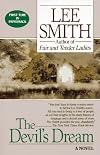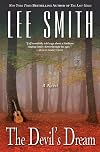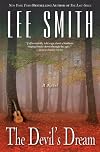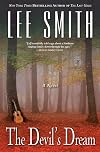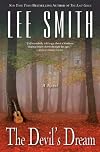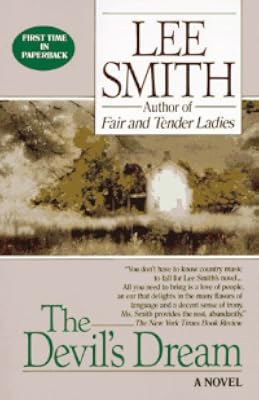
Devil's Dream
by Lee Smith
On This Page
Description
Moses Bailey forbade his wife to play the fiddle, judging it to be the voice of the Devil.Tags
Recommendations


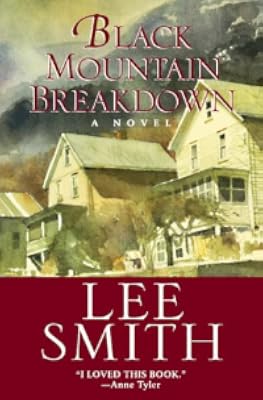
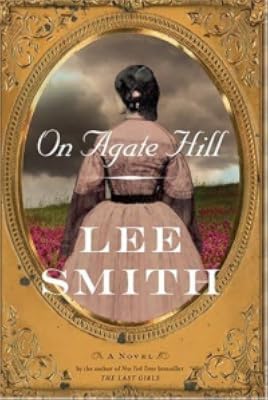
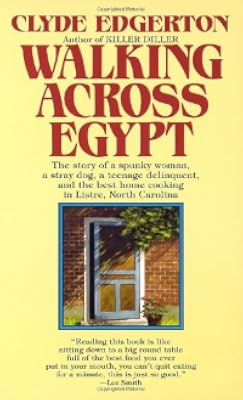






Member Recommendations
Member Reviews
I fell in love with Lee Smith when I read [b:Fair and Tender Ladies|199635|Fair and Tender Ladies|Lee Smith|https://images.gr-assets.com/books/1389575982s/199635.jpg|1437835], and I have been hoping that I would find another Lee Smith book that would come close to touching it. I have found it. It is [b:The Devil's Dream|177611|The Devil's Dream|Lee Smith|https://images.gr-assets.com/books/1172449729s/177611.jpg|171572].
When Moses Bailey, a strictly religious man, marries Kate Malone, a girl who loves fiddling and singing, he tries to suppress her love of music and shut it out of her life. He is not successful, for the music rises in her like water bubbling from a stream. Their story is an unnecessary tragedy, but from their union comes show more several generations of Bailey/Malones, and the recurring importance of both religion and music winds through their lives and this saga.
This book felt at times like being home for me. My daddy was a country music fiddler, one of the best, self-taught. His brothers played instruments and so did his friends, and my young life was full of music and gatherings of friends and family to play and sing. So many of the songs mentioned here were familiar to me, forming a part of the soundtrack of my life. I can remember singing Patsy Cline and Skeeter Davis with the accompaniment of a full band when I was little more than ten years old. What I love of my memories is that everyone sang, whether they were old or young, perfect-pitched or not, and they sang for the joy. We watched the Grand Ole Opry and I went to hundreds of small venue shows where household names like George Jones, Jim Ed Brown, Bobby Bare and Porter Wagoner performed, shook hands and talked to fans on such a personal level. Country music sprang from the heartland and the artists in those days still belonged to the people they had come from.
Perhaps his book is so realistic because it is loosely based on the lives of The Carter Family. One instinctively feels, while reading, that these people are based on life experiences. There is a simple earthiness, particularly in the early stories; a bit of humor, a lot of tragedy, as people struggle to shape their lives into the lives they want versus the ones they have been given. There is a fair amount of ugliness and moments of unbridled beauty, for, as we all know, there is no perfection, no happily ever after, there is only life, which brings us some of both, and sometimes it is we, ourselves, who decide the balance. show less
When Moses Bailey, a strictly religious man, marries Kate Malone, a girl who loves fiddling and singing, he tries to suppress her love of music and shut it out of her life. He is not successful, for the music rises in her like water bubbling from a stream. Their story is an unnecessary tragedy, but from their union comes show more several generations of Bailey/Malones, and the recurring importance of both religion and music winds through their lives and this saga.
This book felt at times like being home for me. My daddy was a country music fiddler, one of the best, self-taught. His brothers played instruments and so did his friends, and my young life was full of music and gatherings of friends and family to play and sing. So many of the songs mentioned here were familiar to me, forming a part of the soundtrack of my life. I can remember singing Patsy Cline and Skeeter Davis with the accompaniment of a full band when I was little more than ten years old. What I love of my memories is that everyone sang, whether they were old or young, perfect-pitched or not, and they sang for the joy. We watched the Grand Ole Opry and I went to hundreds of small venue shows where household names like George Jones, Jim Ed Brown, Bobby Bare and Porter Wagoner performed, shook hands and talked to fans on such a personal level. Country music sprang from the heartland and the artists in those days still belonged to the people they had come from.
Perhaps his book is so realistic because it is loosely based on the lives of The Carter Family. One instinctively feels, while reading, that these people are based on life experiences. There is a simple earthiness, particularly in the early stories; a bit of humor, a lot of tragedy, as people struggle to shape their lives into the lives they want versus the ones they have been given. There is a fair amount of ugliness and moments of unbridled beauty, for, as we all know, there is no perfection, no happily ever after, there is only life, which brings us some of both, and sometimes it is we, ourselves, who decide the balance. show less
Smith uses a multi-generational approach to show us the uneasy relationship between popular traditional music and religion in the Appalachian area. Beginning in the 1830s with the marriage of a preacher and a woman from a fiddle-loving family, Smith gives us vignettes narrated by members of successive generations, that show how the times changed and the people changed with them. Most of the viewpoint characters are women, and most of the men are either repressive patriarchs or irresponsible bad boys. The presence of two good men in the penultimate section balances this a bit. Smith seems to be showing that while men had more freedom in the mountain culture, many (most?) fell into one of these extremes. Or maybe those are just the ones show more with whom this particular family of women was inclined to interact, or the ones who made for the best stories.
The voices of the women change a bit as the book progresses. Earlier narrators use simpler language, while the last couple use more abstract and educated-sounding words. The differences are not obvious; you couldn't have a dialog among these women without attributions and know who was speaking, except perhaps Katie. Perhaps, in this as well as the final chapter, Smith is telling us that while many things change, even more do not. show less
The voices of the women change a bit as the book progresses. Earlier narrators use simpler language, while the last couple use more abstract and educated-sounding words. The differences are not obvious; you couldn't have a dialog among these women without attributions and know who was speaking, except perhaps Katie. Perhaps, in this as well as the final chapter, Smith is telling us that while many things change, even more do not. show less
It all starts when Moses Bailey marries young, beautiful Kate Malone. The Baileys are known to be a strict, religious family and the Malones are known to be a fun-loving, party family. This dichotomy continues throughout Moses and Kate's family tree. Some of their descendants are fiddle-playing musicians and some are devout church-going folks who frown on their more-popular relatives. The book mainly follows the lives of five different family members. Each one has something to contribute to the church vs fiddle feud, whether it's "I used to be a good-time man, but God showed me the error of my ways late one night" or "My mama was a real religious woman and I just couldn't wait to get out from under her roof and off to Nashville."
This show more was just okay. Now that I think about it, the book read more like a series of long short stories, if you know what I'm trying to say. I enjoy short stories, but Lee Smith tends to write very complicated, nuanced characters. Each main character's story ended before I really felt ready for it to end, so I was always left wanting more. If she ever used this book for a jumping-off place for five different novels, I would probably enjoy those. This book just left me a little frustrated.
But, as alway, Smith got the culture and the language of the Southern Appalachians exactly right. And to an extent, this church-or-music-heaven-or-hell-there's-no-meeting-of-the-two kind of culture is still out there. It's not so widespread, but it's still definitely around. So she knows what she's talking about. The book was, as always, very readable, and the fact that I wanted more about each character should tell you something about characterization. All the characters could get confusing at times, but my copy had a family tree at the front and the back. Expect to refer to that pretty frequently.
I would recommend this to those who are already fans of Lee Smith, but for someone who's never read one of her wonderful books, I would recommend one of her more traditional novels. show less
This show more was just okay. Now that I think about it, the book read more like a series of long short stories, if you know what I'm trying to say. I enjoy short stories, but Lee Smith tends to write very complicated, nuanced characters. Each main character's story ended before I really felt ready for it to end, so I was always left wanting more. If she ever used this book for a jumping-off place for five different novels, I would probably enjoy those. This book just left me a little frustrated.
But, as alway, Smith got the culture and the language of the Southern Appalachians exactly right. And to an extent, this church-or-music-heaven-or-hell-there's-no-meeting-of-the-two kind of culture is still out there. It's not so widespread, but it's still definitely around. So she knows what she's talking about. The book was, as always, very readable, and the fact that I wanted more about each character should tell you something about characterization. All the characters could get confusing at times, but my copy had a family tree at the front and the back. Expect to refer to that pretty frequently.
I would recommend this to those who are already fans of Lee Smith, but for someone who's never read one of her wonderful books, I would recommend one of her more traditional novels. show less
In this loving tribute to country music and its artists, Smith traces the history of this uniquely American tradition through several generations of the Bailey family of Grassy Springs, Virginia. Moses Bailey’s preacher father thinks fiddle music is the voice of the Devil laughing; Moses’ wife, Kate Malone comes from a fiddle playing family. Starting in 1833 the Baileys are torn between their love of God and their love of music. Plain Baptist hymns and haunting Appalachian ballads shape the lives of the early generations. Grandsons R.C. and Durwood marry Lucie and Tampa, who, as the Grassy Branch Girls, take part in the early "hillbilly recordings" of the 1920s. Warm, amusing, moving, this novel represents Smith at her best. Highly show more recommended. This is another of Lee Smith's novels that progresses chronologically through generations, each successive generation represented through a group of narrators. Her ability to portray a character through that character's voice is amazing. show less
I wanted to like Lee Smith's tribute to country music more than I did, but it was too disjointed and confusing. Too many narrators that all sounded alike. My tired old brain kept mixing up the characters so I had to keep peeking at the family tree provided in the endpapers of the book. At least there was a family tree. I really didn't feel much for any of the characters. Recently re-released in an attractive trade paperback.
Another good Lee novel. Lee tells the tales of the Bailey offspring from Virginia starting in 1833 and ending in the 1960s. This is country music Americana at its finest.
Ratings
Members
- Recently Added By
Lists

Southern Fiction
212 works; 51 members

Biggest Disappointments
606 works; 168 members
Page Turners
185 works; 11 members
Author Information

32+ Works 7,045 Members
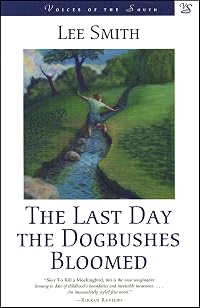
Lee Smith is a novelist, short story writer, and educator. She was born in 1944 in Grundy, Virginia. Smith attended Hollins College in Roanoke, Virginia. In her senior year at Hollins, Smith entered a Book-of-the-Month Club contest, submitting a draft of a novel called The Last Day the Dog Bushes Bloomed. The book, one of 12 entries to receive a show more fellowship, was published in 1968. Smith wrote reviews for local papers and continued to write short stories. Her first collection of short stories, Cakewalk, was published in 1981. Smith taught at North Carolina State University. Her novel, Oral History, published in 1983, was a Book-of-the-Month Club featured selection. She has received two O. Henry Awards, the Robert Penn Warren Prize for Fiction, the North Carolina Award for Fiction, the Lila Wallace/Reader's Digest Award, and the Academy Award in Literature presented by the American Academy of Arts and Letters. (Bowker Author Biography) show less
Common Knowledge
- Original publication date
- 1993
- People/Characters
- Moses Bailey; Kate Bailey; Ezekiel Bailey; Nonnie Bailey
- Important places
- USA; Cana, Virginia, USA; Davidson County, Tennessee, USA; Nashville, Tennessee, USA; Tennessee, USA; Virginia, USA
- Dedication
- This book is dedicated to all the real country artists, living and dead, whose music I have loved for so long.
- First words
- It's Christmastime at the Opryland Hotel, and you never saw anything like it!
- Last words
- (Click to show. Warning: May contain spoilers.)The last thing you hear as they shut the door is Mama Tampa, telling her old crazy stories one more time.
Classifications
Statistics
- Members
- 294
- Popularity
- 109,279
- Reviews
- 6
- Rating
- (3.75)
- Languages
- English
- Media
- Paper, Audiobook, Ebook
- ISBNs
- 12
- ASINs
- 6