
On This Page
Description
The second book in the Galactic Empire series, the spectacular precursor to the classic Foundation series, by one of history's most influential writers of science fiction, Isaac AsimovTrantor had extended its rule over half the Galaxy, but the other half defied its authority, defending their corrupt fiefdoms with violence and repression. On the planet Florina, the natives labored as slaves for their arrogant masters on nearby Sark. But now both worlds were hurtling toward a cataclysmic show more doom, and only one man knew the truth—a slave unaware of the secret knowledge locked inside his own brain.
Rik had once been a prominent scientist until a psychic probe erased all memories of his past. Now he was a humble laborer in the kyrt mills of Florina. Then the memories began to return, bringing with them the terrible truth about the future—a truth that his masters on Sark would kill to keep secret . . . even at the cost of their own survival. show less
Tags
Recommendations


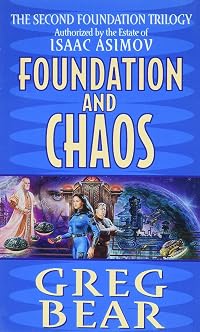
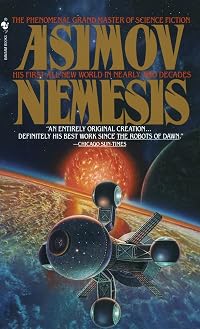


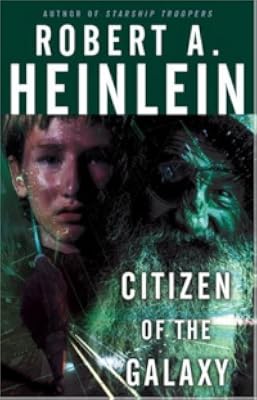


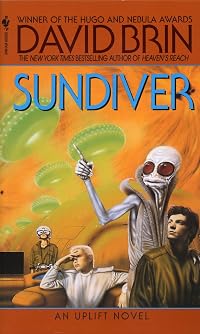











Member Recommendations

Member Reviews
First published on Forest Azuaron.
Depending on your point of view, The Currents of Space is either the last, second, or first book in the Galactic Empire trilogy: it was published last, but the depicted events happen before Pebble in the Sky and after The Stars, Like Dust, but is recommended as the first to read by Asimov himself. Personally, I find I can't read things out of in-universe chronological order, so The Currents of Space is my second foray into The Galactic Empire, following The Stars, Like Dust.
While I found The Stars, Like Dust to be merely good, The Currents of Space is now my favorite Asimov book.
Let's talk about the "main character has amnesia" plot, and how well Asimov side-stepped what makes that so clichéd anymore. show more First, while Rik is certainly the most important character in the book and drives the plot forward, most of our time is not spent with him. We spend most of our time with people like the Townman and Dr. Junz, and Rik is merely around. Second, Rik is not "basically himself, but without his memories" or even "used to be a bad guy, but now is without his memories and naive". The process by which his memories are lost has had a catastrophic effect on Rik, and when he is first found he has the mental capacity of an infant. Finally, the plot isn't about making Rik remember. Remembering is something that happens during the plot, but no one sits around showing him things saying, "How about this? Does this trigger anything?" Sixty years later, and Asimov's handling of the amnesia plot feels fresher than anything in the past decade.
Then there's the plot itself. While the Robots series might be the explicit detective novels, The Currents of Space is, in my opinion, a better-crafted mystery than any of them. So well-crafted, in fact, that I hesitate to say anything about it for fear of spoiling, despite it being 60 years old and well passed the statute of limitations on spoiling.
Finally, I really enjoyed the characters. One of the primary problems I had with the Robots series was that everyone was, essentially, some academic or another and spoke appropriately, so there was no range of voices. The Currents of Space is the first of Asimov's books I've read that really shows his skill with dialog, and his ability to get inside the heads of a broad range of characters.
5 carbon atoms out of a supernova. show less
Depending on your point of view, The Currents of Space is either the last, second, or first book in the Galactic Empire trilogy: it was published last, but the depicted events happen before Pebble in the Sky and after The Stars, Like Dust, but is recommended as the first to read by Asimov himself. Personally, I find I can't read things out of in-universe chronological order, so The Currents of Space is my second foray into The Galactic Empire, following The Stars, Like Dust.
While I found The Stars, Like Dust to be merely good, The Currents of Space is now my favorite Asimov book.
Let's talk about the "main character has amnesia" plot, and how well Asimov side-stepped what makes that so clichéd anymore. show more First, while Rik is certainly the most important character in the book and drives the plot forward, most of our time is not spent with him. We spend most of our time with people like the Townman and Dr. Junz, and Rik is merely around. Second, Rik is not "basically himself, but without his memories" or even "used to be a bad guy, but now is without his memories and naive". The process by which his memories are lost has had a catastrophic effect on Rik, and when he is first found he has the mental capacity of an infant. Finally, the plot isn't about making Rik remember. Remembering is something that happens during the plot, but no one sits around showing him things saying, "How about this? Does this trigger anything?" Sixty years later, and Asimov's handling of the amnesia plot feels fresher than anything in the past decade.
Then there's the plot itself. While the Robots series might be the explicit detective novels, The Currents of Space is, in my opinion, a better-crafted mystery than any of them. So well-crafted, in fact, that I hesitate to say anything about it for fear of spoiling, despite it being 60 years old and well passed the statute of limitations on spoiling.
Finally, I really enjoyed the characters. One of the primary problems I had with the Robots series was that everyone was, essentially, some academic or another and spoke appropriately, so there was no range of voices. The Currents of Space is the first of Asimov's books I've read that really shows his skill with dialog, and his ability to get inside the heads of a broad range of characters.
5 carbon atoms out of a supernova. show less
Abel said, “What is Florina to you?”
Junz hesitated. He said, “I feel a kinship.”
“But you are a Libairian. Or at least that is my impression.”
“I am, but there lies the kinship. We are both extremes in a Galaxy of the average.”
“Extremes? I don’t understand.”
Junz said, “In skin pigmentation. They are unusually pale. We are unusually dark. It means something. It binds us together. It gives us something in common. It seems to me our ancestors must have had long histories of being different, even of being excluded from the social majority. We are unfortunate whites and darks, brothers in being different.”
So some things have changed, but humanity is still up to its usual tricks, including shooting the messenger. The show more planet Florina is going to be destroyed, but when Rik brings the news he’s reduced to a vegetable by a psychic probe and dumps on the very planet with a time limit. Will he recover his memories in time to save everyone? This might sound a bit silly, but this is actually a very good novel with a serious intent.
It’s about pressions of various kinds: oppression, repression. Florina is a conquered world, run on a feudal system with the natives reduced to serfdom. A situation closely analogous to England after the Norman invasion, though I don’t think Asimov has this particularly in mind. Other references put one in mind of the plantation economy of the southern US states or of political oppression generally.
Either way, the Sarkites are repressing the Florinians in a variety of nasty ways, not least by suppressing education. Ultimately it’s their ignorance that keeps them in check. This is reflected in Rik’s condition. His knowledge has been suppressed. I suppose the point being that ignorance leads to to destruction. This is essentially a political thriller written like a mystery. The reader’s knowledge is also suppressed so your awareness of the plot plays out backwards.
The novel has a number of flaws, but I think most can be winked at because there’s so much here that works. The most glaring is that it’s too short. This is not something I often say, but it could do with an extra hundred pages. I suppose sf was limited to about 200 pages at the time because of printing costs and Asimov does an excellent job of getting the essentials into such a short space. It’s efficient and economical and very well constructed. There are just some things that could do with being fleshed out for artistic reasons. show less
Junz hesitated. He said, “I feel a kinship.”
“But you are a Libairian. Or at least that is my impression.”
“I am, but there lies the kinship. We are both extremes in a Galaxy of the average.”
“Extremes? I don’t understand.”
Junz said, “In skin pigmentation. They are unusually pale. We are unusually dark. It means something. It binds us together. It gives us something in common. It seems to me our ancestors must have had long histories of being different, even of being excluded from the social majority. We are unfortunate whites and darks, brothers in being different.”
So some things have changed, but humanity is still up to its usual tricks, including shooting the messenger. The show more planet Florina is going to be destroyed, but when Rik brings the news he’s reduced to a vegetable by a psychic probe and dumps on the very planet with a time limit. Will he recover his memories in time to save everyone? This might sound a bit silly, but this is actually a very good novel with a serious intent.
It’s about pressions of various kinds: oppression, repression. Florina is a conquered world, run on a feudal system with the natives reduced to serfdom. A situation closely analogous to England after the Norman invasion, though I don’t think Asimov has this particularly in mind. Other references put one in mind of the plantation economy of the southern US states or of political oppression generally.
Either way, the Sarkites are repressing the Florinians in a variety of nasty ways, not least by suppressing education. Ultimately it’s their ignorance that keeps them in check. This is reflected in Rik’s condition. His knowledge has been suppressed. I suppose the point being that ignorance leads to to destruction. This is essentially a political thriller written like a mystery. The reader’s knowledge is also suppressed so your awareness of the plot plays out backwards.
The novel has a number of flaws, but I think most can be winked at because there’s so much here that works. The most glaring is that it’s too short. This is not something I often say, but it could do with an extra hundred pages. I suppose sf was limited to about 200 pages at the time because of printing costs and Asimov does an excellent job of getting the essentials into such a short space. It’s efficient and economical and very well constructed. There are just some things that could do with being fleshed out for artistic reasons. show less
Asimov’s 1952 novel, The Currents of Space, surprised me. In it, I thought he showed some insights into racial/class/cultural issues that were ahead of his time, and that was something he rarely did in my opinion. He takes on economic and class privilege here, slavery, classicism, racism, addiction, invasive psychiatric procedures, and more. There’s a good story here and it makes for a good mystery. It’s not the author’s toughest mystery to crack, but as it was one of his very first books, that’s forgivable. He learned as he matured as a writer. The plot is fairly original as presented, or was at the time, I presume. I am, however, sick to death of reading about Trantor. The fact that every one of his 500 books all connect show more together in some incestuous way all back to one book is just plain warped. Cough, cough.
Anyway, very good story. Some nice tension, good mystery. Who’s the man with amnesia? Where did he come from? What are these warnings about? Suppression? What? Yeah. Good stuff. Nice paranoia. Sounds more like Philip K. Dick, actually. Four stars. Recommended. show less
Anyway, very good story. Some nice tension, good mystery. Who’s the man with amnesia? Where did he come from? What are these warnings about? Suppression? What? Yeah. Good stuff. Nice paranoia. Sounds more like Philip K. Dick, actually. Four stars. Recommended. show less
This story has a remarkably sophisticated plot that traces the outlines of a mystery that kept me guessing all the way through. I was shocked to find out midway through my reading that this was written in 1952, prior to the whodunit stories in his Robot series, ‘The Caves of Steel’ and ‘The Naked Sun’, which seem somehow less complex by comparison. It also had a lot more suspense and action, even violence, than I’ve come to expect from Asimov. Only in the final chapters do we see any multi-page-long monologues, something else seen frequently in Asimov’s work. Taken together, it feels like a more mature and developed story that I would have instead placed in the 1970's or 80’s. I’m incidentally glad that I had read show more 1986’s “Foundation and Earth” prior to this story, as it would have spoiled one of that books biggest surprises had I not.
Aside from it’s strong mystery elements, it had rather tame space opera elements, with commonplace technologies (though perhaps not for his original audience), and no aliens whatsoever. There is a very loud theme that is impossible to ignore; the dangers of a stratified social class system without any upward mobility. This seems timely to consider in our growing crisis of 21st century Wealth Gap expansion, although retrospectively looks misplaced for the time of writing. show less
Aside from it’s strong mystery elements, it had rather tame space opera elements, with commonplace technologies (though perhaps not for his original audience), and no aliens whatsoever. There is a very loud theme that is impossible to ignore; the dangers of a stratified social class system without any upward mobility. This seems timely to consider in our growing crisis of 21st century Wealth Gap expansion, although retrospectively looks misplaced for the time of writing. show less
Once upon a time, one of my classmates had enthusiastically shoved a rather drab copy of Prelude to the Foundation in my hand. Not sporting a particularly handsome cover, it didn't exactly excite me, but I read it nonetheless. And for the next few years, Isaac Asimov's reputation remained firmly parked on the absolute best author pedestal.
So when I picked up his books again, I was naturally expecting to be just as bowled over, excited, engrossed in the story... you name it. Is it any wonder that I just couldn't quite reconcile the idea, that his writing is mostly boring, and that his characters' dramatic antics would be at home in an Indian soap?
The squires of Sark have been ruling over the planet Florinia and its people for quite some show more time. Preventing the planet's citizens access to decent education, the sarkites have ensured lasting supplies of Florinia's precious kyrt, the only resource for the known world's most pricey fabric... and the key to Sarkite wealth, heh.
But then a space scientist shows up claiming that Florinia and its inhabitants are in grave, and irreversible, danger. The man gets swiftly rewarded with a hefty dose of brain-washing and abduction. Unfortunately for his attackers, the simpleton Rik starts mumbling about similar evil omens a year later, so a mad chase ensues. And amidst all this chaos no one knows what Florinia's doom actually consists of, nor who Rik's attackers actually are.
I admit that I absolutely LOVED the resolution of things. The reason for the doom was sufficiently dramatic, the identity of the bad guy was not very obvious, not to mention the very obvious link between Rik and the scientist.
However all the above makes up about 10% of the book, and that's found in the conclusion of the story. So basically, until you get to the interesting stuff, you find yourself wading through a bunch of tedious dialogue, whiny politicians, evil cackling and a hefty dose of all around frustration.
Score: 2.7 / 5 stars
Asimov's plot lines are just genius. His books' endings contain just the right amount of drama, and the reader can't help but feel satisfied. His characters however, and their journey to said resolution, seem to be left up to chance: they're either utterly awesome (eg: R. Daneel Olivaw), or seemingly endless resources of drama (every single Sarkite from this book).
=======================================
Review of the 1st book: The Stars Like Dust show less
So when I picked up his books again, I was naturally expecting to be just as bowled over, excited, engrossed in the story... you name it. Is it any wonder that I just couldn't quite reconcile the idea, that his writing is mostly boring, and that his characters' dramatic antics would be at home in an Indian soap?
The squires of Sark have been ruling over the planet Florinia and its people for quite some show more time. Preventing the planet's citizens access to decent education, the sarkites have ensured lasting supplies of Florinia's precious kyrt, the only resource for the known world's most pricey fabric... and the key to Sarkite wealth, heh.
But then a space scientist shows up claiming that Florinia and its inhabitants are in grave, and irreversible, danger. The man gets swiftly rewarded with a hefty dose of brain-washing and abduction. Unfortunately for his attackers, the simpleton Rik starts mumbling about similar evil omens a year later, so a mad chase ensues. And amidst all this chaos no one knows what Florinia's doom actually consists of, nor who Rik's attackers actually are.
I admit that I absolutely LOVED the resolution of things. The reason for the doom was sufficiently dramatic, the identity of the bad guy was not very obvious, not to mention the very obvious link between Rik and the scientist.
However all the above makes up about 10% of the book, and that's found in the conclusion of the story. So basically, until you get to the interesting stuff, you find yourself wading through a bunch of tedious dialogue, whiny politicians, evil cackling and a hefty dose of all around frustration.
Score: 2.7 / 5 stars
Asimov's plot lines are just genius. His books' endings contain just the right amount of drama, and the reader can't help but feel satisfied. His characters however, and their journey to said resolution, seem to be left up to chance: they're either utterly awesome (eg: R. Daneel Olivaw), or seemingly endless resources of drama (every single Sarkite from this book).
=======================================
Review of the 1st book: The Stars Like Dust show less
This is the second volume of Asimov’s early Galactic Empire trilogy, and, unlike the first volume (The Stars, Like Dust), it is also an early chapter in his long-running series that continues through the Foundation books as well.
That makes this book a good starting place, I think, for the Asimov universe that includes this series, the Foundation series, and the Robot series. It’s also a worthy standalone.
The plot centers on the planet Florina, the only source of a kind of miracle crop called kyrt. Florina is ruled over by the “Squires” of Sark, a neighboring world whose people enjoy the privileges of feudal rule over Florina and the prosperous kyrt trade with other parts of the galaxy.
Kyrt is a kind of miracle fabric, for show more aesthetic and practical purposes. Attempts have been made to grow it on other planets, but all were unsuccessful. This made Florina an even greater treasure for the Sarkites to protect.
Sark maintains an iron hand, essentially enslaving the population of Florina, keeping to a consistent theme in Asimov’s writing — tyranny and oppression. It’s an interesting theme to follow. Asimov is no fan of disorder, but he isn’t a fan of authoritarianism either.
Much of the action in the story is on the level of political maneuvering, between the Florinians and the Sarkites, among the Sarkites, and between the Sarkites and the galaxy’s greatest power, Trantor.
As far as I know this is the first appearance of Trantor in Asimov’s writing. Trantor of course becomes central to the story told in the Foundation. In The Currents of Space, it has not yet become the all-dominating empire that it will later become. And Sark maintains a somewhat uneasy independence, based largely on their rule of Florina and the kyrt trade.
The action begins when an Earthman (Earth now being a radioactive nearly uninhabitable wasteland) is being questioned about a dire warning he brings to Florina. He is subjected to a probe that effectively erases his brain. Then deposited helpless on Florina, he is taken in and adopted by Valona March, an otherwise unremarkable Florinian, who takes care of and falls in love with the Earthman, now called “Rik” (actually a derogatory Florinian term, similar to “moron”).
Rik begins to remember his identity and the warning he meant to deliver. And so doing, he becomes a threat to the entire order and prosperity of Sark and Florina — I won’t get into details so as not to spoil the story. Enough said.
Rik and Valona fall into the hands of their apparent rescuer, Terens, a Florinian “townman” (something like a mayor and go-between, serving the Sarkite’s interests on Florina). Terens, you’ll find out quickly, is more than he appears.
Terens himself becomes a main driver in the plot, trying to address Rik's warning, Rik and Volona’s safety, and the over-looming issue of justice between Sark and Florina.
That’s about as far as I can take it without spoilers. It’s a good Asimovish story, and it really does set the tone for the political maneuverings that dominate the Foundation series.
There’s also another good Asimov ingredient — the very idea of the “currents of space.” Rik, in his former identity, is a “spatio-analyst” — someone who studies and understands interstellar space for the purposes of navigation. Space is not simply empty — it has currents of radiation and flows of matter. It’s in that capacity that Rik has discovered the warning he means to deliver to Florina.
In addition to the politics of Florina, Sark, and Trantor, there are racial elements, too, as the various populations are marked by differences in skin color. Remember, this is the early 1950s when this book was published, and Asimov is relating his universe to the America of his time. show less
That makes this book a good starting place, I think, for the Asimov universe that includes this series, the Foundation series, and the Robot series. It’s also a worthy standalone.
The plot centers on the planet Florina, the only source of a kind of miracle crop called kyrt. Florina is ruled over by the “Squires” of Sark, a neighboring world whose people enjoy the privileges of feudal rule over Florina and the prosperous kyrt trade with other parts of the galaxy.
Kyrt is a kind of miracle fabric, for show more aesthetic and practical purposes. Attempts have been made to grow it on other planets, but all were unsuccessful. This made Florina an even greater treasure for the Sarkites to protect.
Sark maintains an iron hand, essentially enslaving the population of Florina, keeping to a consistent theme in Asimov’s writing — tyranny and oppression. It’s an interesting theme to follow. Asimov is no fan of disorder, but he isn’t a fan of authoritarianism either.
Much of the action in the story is on the level of political maneuvering, between the Florinians and the Sarkites, among the Sarkites, and between the Sarkites and the galaxy’s greatest power, Trantor.
As far as I know this is the first appearance of Trantor in Asimov’s writing. Trantor of course becomes central to the story told in the Foundation. In The Currents of Space, it has not yet become the all-dominating empire that it will later become. And Sark maintains a somewhat uneasy independence, based largely on their rule of Florina and the kyrt trade.
The action begins when an Earthman (Earth now being a radioactive nearly uninhabitable wasteland) is being questioned about a dire warning he brings to Florina. He is subjected to a probe that effectively erases his brain. Then deposited helpless on Florina, he is taken in and adopted by Valona March, an otherwise unremarkable Florinian, who takes care of and falls in love with the Earthman, now called “Rik” (actually a derogatory Florinian term, similar to “moron”).
Rik begins to remember his identity and the warning he meant to deliver. And so doing, he becomes a threat to the entire order and prosperity of Sark and Florina — I won’t get into details so as not to spoil the story. Enough said.
Rik and Valona fall into the hands of their apparent rescuer, Terens, a Florinian “townman” (something like a mayor and go-between, serving the Sarkite’s interests on Florina). Terens, you’ll find out quickly, is more than he appears.
Terens himself becomes a main driver in the plot, trying to address Rik's warning, Rik and Volona’s safety, and the over-looming issue of justice between Sark and Florina.
That’s about as far as I can take it without spoilers. It’s a good Asimovish story, and it really does set the tone for the political maneuverings that dominate the Foundation series.
There’s also another good Asimov ingredient — the very idea of the “currents of space.” Rik, in his former identity, is a “spatio-analyst” — someone who studies and understands interstellar space for the purposes of navigation. Space is not simply empty — it has currents of radiation and flows of matter. It’s in that capacity that Rik has discovered the warning he means to deliver to Florina.
In addition to the politics of Florina, Sark, and Trantor, there are racial elements, too, as the various populations are marked by differences in skin color. Remember, this is the early 1950s when this book was published, and Asimov is relating his universe to the America of his time. show less
Another Agatha Christie-style thriller masquerading as science fiction. This one was a little less preposterous than than the last in the series, as we get to see multiple different persons construct an explanation of the events from their different perspective. I listened to the book on audio, and was entertained by the French accent of the wily old diplomat. The most interesting science-fiction detail: gum-chewers are still as disgusting as ever but cigarettes can now dispose of themselves.
Besides science-fact and science-fiction, Asimov also wrote plenty of histories, including histories of the Roman republic and the Roman empire. The Trantorian empire has a very similar history, on a stellar or galactic scale.
Besides science-fact and science-fiction, Asimov also wrote plenty of histories, including histories of the Roman republic and the Roman empire. The Trantorian empire has a very similar history, on a stellar or galactic scale.
Members
- Recently Added By
Lists

Books Read in 2016
4,666 works; 197 members

Books Read in 2018
4,360 works; 110 members
Author Information

Isaac Asimov was born in Petrovichi, Russia, on January 2, 1920. His family emigrated to the United States in 1923 and settled in Brooklyn, New York, where they owned and operated a candy store. Asimov became a naturalized U.S. citizen at the age of eight. As a youngster he discovered his talent for writing, producing his first original fiction at show more the age of eleven. He went on to become one of the world's most prolific writers, publishing nearly 500 books in his lifetime. Asimov was not only a writer; he also was a biochemist and an educator. He studied chemistry at Columbia University, earning a B.S., M.A. and Ph.D. In 1951, Asimov accepted a position as an instructor of biochemistry at Boston University's School of Medicine even though he had no practical experience in the field. His exceptional intelligence enabled him to master new systems rapidly, and he soon became a successful and distinguished professor at Columbia and even co-authored a biochemistry textbook within a few years. Asimov won numerous awards and honors for his books and stories, and he is considered to be a leading writer of the Golden Age of science fiction. While he did not invent science fiction, he helped to legitimize it by adding the narrative structure that had been missing from the traditional science fiction books of the period. He also introduced several innovative concepts, including the thematic concern for technological progress and its impact on humanity. Asimov is probably best known for his Foundation series, which includes Foundation, Foundation and Empire, and Second Foundation. In 1966, this trilogy won the Hugo award for best all-time science fiction series. In 1983, Asimov wrote an additional Foundation novel, Foundation's Edge, which won the Hugo for best novel of that year. Asimov also wrote a series of robot books that included I, Robot, and eventually he tied the two series together. He won three additional Hugos, including one awarded posthumously for the best non-fiction book of 1995, I. Asimov. "Nightfall" was chosen the best science fiction story of all time by the Science Fiction Writers of America. In 1979, Asimov wrote his autobiography, In Memory Yet Green. He continued writing until just a few years before his death from heart and kidney failure on April 6, 1992. (Bowker Author Biography) show less
Some Editions
Series


Belongs to Publisher Series
Work Relationships
Is contained in
Has as a commentary on the text
Common Knowledge
- Canonical title
- The Currents of Space
- Original title
- The Currents of Space
- Alternate titles
- Ströme ins All; The Currents of Space: A Galactic Empire Novel
- Original publication date
- 1952
- People/Characters
- Rik; Valona March 'Lona'; Myrlyn Terens; Rasie; Ull Jencus; Matt Khorov (show all 19); Dr. Selim Junz; Ludigan Abel; Samia of Fife; Racety; Squire of Fife; Squire of Rune; Squire of Balle; Squire of Steen; Squire of Bort; Jacof; Alstair Deamone; Markis Gerro; Tip
- Important places
- Florina; Sark; Trantor
- Dedication
- To David, who took his time coming but, was worth waiting for
- First words
- The man from Earth came to a decision.
- Last words
- (Click to show. Warning: May contain spoilers.)". . . He says he can't bear the thought of leaving Florina to die alone."
- Original language
- English
Classifications
Statistics
- Members
- 3,736
- Popularity
- 4,310
- Reviews
- 66
- Rating
- (3.60)
- Languages
- 21 — Chinese, Czech, Dutch, English, Estonian, Finnish, French, German, Hebrew, Hungarian, Italian, Japanese, Lithuanian, Polish, Portuguese, Romanian, Russian, Slovak, Spanish, Swedish, Turkish
- Media
- Paper, Audiobook, Ebook
- ISBNs
- 62
- UPCs
- 1
- ASINs
- 67