On This Page
Description
A deranged derelict, a crazed Vietnam vet, has been arrested for gunning down successful young lawyer Glenn Holtzmann at a corner phone booth on Eleventh Avenue -- and the suspect's brother wants p.i. Matthew Scudder to prove the madman innocent. But Scudder's curiosity and dedication are leading him to dark, unexplored places in his own heart...and to passions and secrets that could destroy everything be loves.Tags
Recommendations




Member Reviews
This one redeemed the Scudder series for me. I understand why other readers might feel it doesn't compare with its immediate predecessors: very little violence, no emotional attachment to the victim and almost no blood, although Matt does seem to be in several sorts of emotional danger. However, the emotional subplots are the trimmings that elevate the Scudder series above ordinary noir detective or mystery thriller going for the roller-coaster climb, and its why the Scudder series consistently yields such satisfying reads.
Elaine and Scudder are settling into a solid companionship, and she convinces him to go on a couple-date with Lisa, a woman she met in an art class, and her husband, Glenn. While the women hit it off, the men don't, show more despite Glenn's obvious enthusiasm for Matt's work. In the next few weeks, Glenn runs into Scudder a few times, ostensibly to discuss writing a book. Matt would rather avoid him--there's something sly and sneaky about ol' Glenn. Shockingly, Glenn is gunned down while making a call at a public telephone not long after they meet. Police are certain they have the killer, a homeless guy who is mostly living in the Vietnam war. The suspect's brother and Lisa both entreat Scudder to get involved, and he finds himself unenthusiastically conducting an investigation. An exchange from when Scudder meets up with Durkin perfectly summarizes the police reaction:
"You know what's wrong with the case, Joe?"
"The only thing wrong with it is you're taking an interest. Aside from that it's perfect."
Scudder's ex, Jan, reappears from the past with some significant life events and blows him into a tailspin. There are some fascinating conversations that sound emotionally authentic around Jan's storyline. However, the whiff of carpe diem has an unanticipated effect on Scudder's decision-making. While I can understand some of his reasoning, I don't respect his behavior. Others may have found their squirm point in prior books; this one had mine. It's a measure of Block's skill as a writer that he can create such conflict in the reader about the justification of Matt's actions. Elaine doesn't even know the half of it when she exclaims, "You've got him buying guns and selling dope and hanging out with transsexuals. You're a wonderful positive influence on the boy."
I love that Block is willing to be judgement-neutral with his characters, whether gender-bending Julia, TJ's fascination with her, or the lawyer Kaplan figuring out how to best serve his client. Almost everyone's a little dirty in this one, except the charming elderly publisher who hired Glenn. Listening to a murderer explain why assisting a suicide is morally wrong was fascinating, and almost understandable. As a by-product, the investigation gives us a little insight into a transsexual's life, and I respect Block for not playing up the freak/shock factor. Likewise, he treats the homeless and mentally ill suspect with a great deal of sensitivity. The suspect's brother perfectly summarizes why the suspect should be free if he isn't guilty:
"I don't want to glamorize the life he leads, make him sound like some kind of Noble Savage. It's a horrible life. He lives like an animal, he lives in fear and torment... I wouldn't live his life for the world, but it's his life, do you follow me? It's his f-ing life so let him f-ing live it."
Levity was added in Block's usual sly asides, including an insult about the Big Book of AA, which Scudder describes as "the sophistication level was that of a Rotary Club Breakfast in a small town in Iowa." Snerk. Then there was the off-handed slap at Block's competitors: "I didn't think there was a policeman or private detective anywhere in New York who wasn't trying to get a book published. Nobody's out looking for criminals these days. They are all looking for agents."
Thankfully, Block found a good one. show less
Elaine and Scudder are settling into a solid companionship, and she convinces him to go on a couple-date with Lisa, a woman she met in an art class, and her husband, Glenn. While the women hit it off, the men don't, show more despite Glenn's obvious enthusiasm for Matt's work. In the next few weeks, Glenn runs into Scudder a few times, ostensibly to discuss writing a book. Matt would rather avoid him--there's something sly and sneaky about ol' Glenn. Shockingly, Glenn is gunned down while making a call at a public telephone not long after they meet. Police are certain they have the killer, a homeless guy who is mostly living in the Vietnam war. The suspect's brother and Lisa both entreat Scudder to get involved, and he finds himself unenthusiastically conducting an investigation. An exchange from when Scudder meets up with Durkin perfectly summarizes the police reaction:
"You know what's wrong with the case, Joe?"
"The only thing wrong with it is you're taking an interest. Aside from that it's perfect."
Scudder's ex, Jan, reappears from the past with some significant life events and blows him into a tailspin. There are some fascinating conversations that sound emotionally authentic around Jan's storyline. However, the whiff of carpe diem has an unanticipated effect on Scudder's decision-making. While I can understand some of his reasoning, I don't respect his behavior. Others may have found their squirm point in prior books; this one had mine. It's a measure of Block's skill as a writer that he can create such conflict in the reader about the justification of Matt's actions. Elaine doesn't even know the half of it when she exclaims, "You've got him buying guns and selling dope and hanging out with transsexuals. You're a wonderful positive influence on the boy."
I love that Block is willing to be judgement-neutral with his characters, whether gender-bending Julia, TJ's fascination with her, or the lawyer Kaplan figuring out how to best serve his client. Almost everyone's a little dirty in this one, except the charming elderly publisher who hired Glenn. Listening to a murderer explain why assisting a suicide is morally wrong was fascinating, and almost understandable. As a by-product, the investigation gives us a little insight into a transsexual's life, and I respect Block for not playing up the freak/shock factor. Likewise, he treats the homeless and mentally ill suspect with a great deal of sensitivity. The suspect's brother perfectly summarizes why the suspect should be free if he isn't guilty:
"I don't want to glamorize the life he leads, make him sound like some kind of Noble Savage. It's a horrible life. He lives like an animal, he lives in fear and torment... I wouldn't live his life for the world, but it's his life, do you follow me? It's his f-ing life so let him f-ing live it."
Levity was added in Block's usual sly asides, including an insult about the Big Book of AA, which Scudder describes as "the sophistication level was that of a Rotary Club Breakfast in a small town in Iowa." Snerk. Then there was the off-handed slap at Block's competitors: "I didn't think there was a policeman or private detective anywhere in New York who wasn't trying to get a book published. Nobody's out looking for criminals these days. They are all looking for agents."
Thankfully, Block found a good one. show less
A large part of the appeal of Lawrence Block’s Matthew Scudder series has always (or at least from about the third novel onwards) been to follow the fate of its protagonist, his trying to survive without a regular job, his trying to come to terms with his past as a police officer, and chiefly his struggle with (and quite often succumbing to) his alcoholism.
But this is how it goes – you creat a recurring protagonist for your novels, give him a backstory, and, as no man is an island, some friends, some acquaintances and maybe an enemy or two. Then, likely a few novels into your series now, you have to show how your hero copes with history, how his past influences his present, maybe show he overcomes it. You have to keep track of what show more his friends and acquaintances are doing, maybe have an old enemy return. And as your hero keeps working on cases, there are new friends, new acquaintances, new enemies, all of which have to kept track of, too, while your hero continues to develop, maybe enters a relationship, wonders whether it might be something serious. You have a fairly long series now, ten, maybe eleven volumes, and as you write your most recent one you suddenly notice how your protagonist’s ongoing private life has so encroached on what was supposed to be the plot of your novel that it is taking up most of the space and the attention.
This is what I think happened to the Matthew Scudder series in its eleventh volume The Devil Knows You’re Dead – in all ten novels before this one, the crime plot was always placed firmly centre stage, with Scudder’s private life in the background, enhancing the main plot with depth and emotional resonance. In contrast, The Devil Knows You’re Dead is first and foremost about Matthew Scudder the man and his personal history, and as his job is working as an unlicenced private detective, there is some crime here, but it’s only taking place in the periphery – while you usually have a detective because a crime has been comitted, here you have a crime because the book happens to be about an detective.
Such a reversal of emphasis might have been a sure recipe for a boring, uninteresting novel – but Scudder is a fascinating character (and readers who have followed him through the series will have quite an emotional investment in him by now) and Block is an excellent writer who manages to pull this off with apparent effortlessness and keeps us interested^, making us care more about how things between Elaine and Scudder will turn out and what he will do about Jan than in who did or did not kill Glenn Holtzmann.
Block’s regard is as unflinching when it is directed on Scudder’s private life as when it is on the more public sphere of crime and punishment – not satisfied with his usual shorcomings – his alcoholism, his befriending a known and ruthless criminal, his dithering in his relationship with Elaine – Scudder in this volume adds infidelity to the list when begins an affair with a crime victim’s widow. Still, the reader (this reader at least) can’t help but like Scudder, for aren’t we all flawed somehow, and we’ve been together with him through so much, one can’t help but hope that he’ll get a grip on himself and do right by Elaine. And of course read the next book in the series, to find out whether he does. show less
But this is how it goes – you creat a recurring protagonist for your novels, give him a backstory, and, as no man is an island, some friends, some acquaintances and maybe an enemy or two. Then, likely a few novels into your series now, you have to show how your hero copes with history, how his past influences his present, maybe show he overcomes it. You have to keep track of what show more his friends and acquaintances are doing, maybe have an old enemy return. And as your hero keeps working on cases, there are new friends, new acquaintances, new enemies, all of which have to kept track of, too, while your hero continues to develop, maybe enters a relationship, wonders whether it might be something serious. You have a fairly long series now, ten, maybe eleven volumes, and as you write your most recent one you suddenly notice how your protagonist’s ongoing private life has so encroached on what was supposed to be the plot of your novel that it is taking up most of the space and the attention.
This is what I think happened to the Matthew Scudder series in its eleventh volume The Devil Knows You’re Dead – in all ten novels before this one, the crime plot was always placed firmly centre stage, with Scudder’s private life in the background, enhancing the main plot with depth and emotional resonance. In contrast, The Devil Knows You’re Dead is first and foremost about Matthew Scudder the man and his personal history, and as his job is working as an unlicenced private detective, there is some crime here, but it’s only taking place in the periphery – while you usually have a detective because a crime has been comitted, here you have a crime because the book happens to be about an detective.
Such a reversal of emphasis might have been a sure recipe for a boring, uninteresting novel – but Scudder is a fascinating character (and readers who have followed him through the series will have quite an emotional investment in him by now) and Block is an excellent writer who manages to pull this off with apparent effortlessness and keeps us interested^, making us care more about how things between Elaine and Scudder will turn out and what he will do about Jan than in who did or did not kill Glenn Holtzmann.
Block’s regard is as unflinching when it is directed on Scudder’s private life as when it is on the more public sphere of crime and punishment – not satisfied with his usual shorcomings – his alcoholism, his befriending a known and ruthless criminal, his dithering in his relationship with Elaine – Scudder in this volume adds infidelity to the list when begins an affair with a crime victim’s widow. Still, the reader (this reader at least) can’t help but like Scudder, for aren’t we all flawed somehow, and we’ve been together with him through so much, one can’t help but hope that he’ll get a grip on himself and do right by Elaine. And of course read the next book in the series, to find out whether he does. show less
One thing about the Matt Scudder books is that you'll learn a lot about AA and the relationship between an alcoholic and his mentor. This one in particular seems to have more about the different types of meetings, what transpires, and the sub-culture of alcoholics working to stay sober. Now, I'm not a drinker, being overly concerned with control, never wanting to cede what little gray matter I have to some external drug, so I have no way of knowing how accurate or what Block's history with AA might be, but it certainly rings true.
In this novel, our relationship to death also plays a significant role. Jan, an old friend of Matt's, has asked him to get her an untraceable gun so she can kill herself. She has pancreatic cancer and has been show more given less than a year to live and she doesn't want to go through the decline and pain of the illness. This leads to a long discussion between Matt and his mentor about death as another of God's design flaws.
The Scudder novels differ greatly from other PI novels where the hero can consume copious quantities of straight scotch and then thread a needle with great precision, a la Spenser (not true of Parker's Jesse Stone, however, whose career in L.A. homicide is destroyed by alcohol.) The true demon in the Scudder series is alcohol and Matt's constant battle with that scourge. Self-denial becomes a huge backdrop to his other actions when he falls off the wagon (A Stab in the Dark,) "maintenance drinking," he called it. By A Devil Knows You're Dead, Scudder is still wrestling with those temptations, and trying to deal with the death of his friend, but more successfully. It's noteworthy that his girlfriend, Elaine, is a hooker, another of society's outcasts, but who seems to have a more perspicacious view of the world than most others. Block has said in an interview that he wanted to see how Scudder would develop as a character if he stopped drinking. The Scudder series, I think, is his best in dealing with the dark impulses and pressures of society.
I've read a smattering of his other series: Ehrengraf is good if more light-hearted but consciously amoral; Keller is lots of fun but decidedly even more amoral; the Chip Harrison series never grabbed me, and Tanner often gets a little ridiculous even as he pokes fun at society. I love the Bernie Rhodenbarr series; they are quite amusing. How Block manages to juggle all these characters is marvelous and astonishing. show less
In this novel, our relationship to death also plays a significant role. Jan, an old friend of Matt's, has asked him to get her an untraceable gun so she can kill herself. She has pancreatic cancer and has been show more given less than a year to live and she doesn't want to go through the decline and pain of the illness. This leads to a long discussion between Matt and his mentor about death as another of God's design flaws.
The Scudder novels differ greatly from other PI novels where the hero can consume copious quantities of straight scotch and then thread a needle with great precision, a la Spenser (not true of Parker's Jesse Stone, however, whose career in L.A. homicide is destroyed by alcohol.) The true demon in the Scudder series is alcohol and Matt's constant battle with that scourge. Self-denial becomes a huge backdrop to his other actions when he falls off the wagon (A Stab in the Dark,) "maintenance drinking," he called it. By A Devil Knows You're Dead, Scudder is still wrestling with those temptations, and trying to deal with the death of his friend, but more successfully. It's noteworthy that his girlfriend, Elaine, is a hooker, another of society's outcasts, but who seems to have a more perspicacious view of the world than most others. Block has said in an interview that he wanted to see how Scudder would develop as a character if he stopped drinking. The Scudder series, I think, is his best in dealing with the dark impulses and pressures of society.
I've read a smattering of his other series: Ehrengraf is good if more light-hearted but consciously amoral; Keller is lots of fun but decidedly even more amoral; the Chip Harrison series never grabbed me, and Tanner often gets a little ridiculous even as he pokes fun at society. I love the Bernie Rhodenbarr series; they are quite amusing. How Block manages to juggle all these characters is marvelous and astonishing. show less
I just haven't been able to get into the Matt Scudder character and this book didn't help. Way too much whining about AA and his need for a drink, and then his cheating on his girlfriend even as he makes plans to live with her. What a jerk. The plot was OK, but didn't overcome the significant character flaws. I just didn't like any of them except for the dying ex-girlfriend.
The detective part of this was sort of secondary to advancing the more soap opera bits of Scudder's life. So one out of eleven books is kind of a dud. That's a pretty good record. Still a good porch book.
Scudder Astray
A review of the LB Productions eBook (October 4, 2020) of the original William Morrow & Co. hardcover (1993).
The case seems almost beside the point in this 11th Matthew Scudder investigation. A lawyer is mysteriously shot while making a call in a phone booth. A mentally troubled man is arrested for the crime due to being in the vicinity and even confesses to the crime. His brother hires Scudder to attempt to prove his innocence. Scudder meets with the widow and even begins an affair with her.
As with most in the latter parts show more of this series, Scudder's continued AA attendance and meetings with his sponsor take up a lot of the proceedings. His relationship with girlfriend Elaine seems to be rocky as he hovers over commitment. Ex-girlfriend Jan has a fatal medical diagnosis and asks Scudder to help her commit suicide. Scudder continues to tempt fate and regularly sits with Irish gangster friend Mick Ballou in overnight sessions (although only drinking coffee or soda) in Ballou's bar before attending the butcher's mass in the early morning.
The investigation resolves in an odd way and proves to have been a case of mistaken identity, adding to the haphazard nihilistic aura. But Scudder continues to fascinate as a character and I continue to enjoy these re-reads 30+ years later.
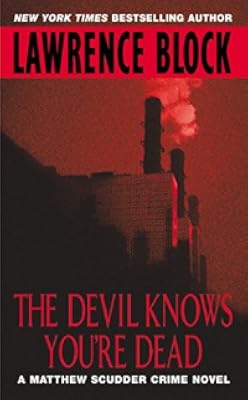
See cover at https://images-na.ssl-images-amazon.com/images/S/compressed.photo.goodreads.com/...
The front cover of the original 1993 William Morrow & Co. hardcover edition. Image sourced from Goodreads.
Trivia and Links
I read a considerable number of Lawrence Block books in my pre-GR and pre-reviewing days. Probably 40 or so out of the 100+ that are available. That included all of the Matt Scudder books, several of the Bernie Rhodenbarrs, several of the Evan Tanners, several of the John Kellers, a dozen or so standalones and some of the memoirs. There were even a few of the earlier pulp novels which were originally published under pseudonyms. This re-read is a look back at some of those.
Lawrence Block (June 24, 1938 - ) considers himself retired these days, but still maintains an occasional newsletter with the latest issued in August 2024. He self-publishes some of his earlier works which have otherwise gone out of print, using his own LB Productions imprint. This current eBook edition of The Devil Knows You're Dead is one of those. show less
A review of the LB Productions eBook (October 4, 2020) of the original William Morrow & Co. hardcover (1993).
May the road rise to meet you
May the wind be always at your back
May you be in heaven an hour before
The Devil knows you're dead. - An Irish Blessing, the epigraph used for "The Devil Knows You're Dead."
The case seems almost beside the point in this 11th Matthew Scudder investigation. A lawyer is mysteriously shot while making a call in a phone booth. A mentally troubled man is arrested for the crime due to being in the vicinity and even confesses to the crime. His brother hires Scudder to attempt to prove his innocence. Scudder meets with the widow and even begins an affair with her.
As with most in the latter parts show more of this series, Scudder's continued AA attendance and meetings with his sponsor take up a lot of the proceedings. His relationship with girlfriend Elaine seems to be rocky as he hovers over commitment. Ex-girlfriend Jan has a fatal medical diagnosis and asks Scudder to help her commit suicide. Scudder continues to tempt fate and regularly sits with Irish gangster friend Mick Ballou in overnight sessions (although only drinking coffee or soda) in Ballou's bar before attending the butcher's mass in the early morning.
The investigation resolves in an odd way and proves to have been a case of mistaken identity, adding to the haphazard nihilistic aura. But Scudder continues to fascinate as a character and I continue to enjoy these re-reads 30+ years later.
He wasn’t hitting the Jameson bottle very hard, just topping up his glass often enough to keep from losing that edge. It was maintenance drinking, and I remembered it well; I had done my own share of it, until life took me to a point where maintaining was no longer possible because the traitorous booze would get me drunk before it would let me get comfortable.
See cover at https://images-na.ssl-images-amazon.com/images/S/compressed.photo.goodreads.com/...
The front cover of the original 1993 William Morrow & Co. hardcover edition. Image sourced from Goodreads.
Trivia and Links
I read a considerable number of Lawrence Block books in my pre-GR and pre-reviewing days. Probably 40 or so out of the 100+ that are available. That included all of the Matt Scudder books, several of the Bernie Rhodenbarrs, several of the Evan Tanners, several of the John Kellers, a dozen or so standalones and some of the memoirs. There were even a few of the earlier pulp novels which were originally published under pseudonyms. This re-read is a look back at some of those.
Lawrence Block (June 24, 1938 - ) considers himself retired these days, but still maintains an occasional newsletter with the latest issued in August 2024. He self-publishes some of his earlier works which have otherwise gone out of print, using his own LB Productions imprint. This current eBook edition of The Devil Knows You're Dead is one of those. show less
Unlicensed PI Matthew Scudder is hired by two clients with overlapping interests. One wants him to determine the innocence of his brother, a homeless man arrested for gunning down a successful lawyer at a payphone; the other, the lawyer’s widow, wants to find out more about her late husband’s private life. But Scudder’s real struggles involve a fatally-diagnosed ex, and the fears that lead him to vice and addiction.
Although less fantastic, Scudder’s New York City is no less an exotic setting for me (a non-New Yorker) than Discworld, with its familiar haunts and near-infinite geography, and the emerging and disappearing technology and trends of the eighties and nineties.
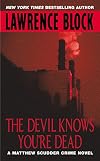
The Devil Knows You're Dead cover Many of the books thus far show more in the Scudder series hinge or touch on the dark side of human nature – ranging from serial killers and sexual perversion to the urge to lose oneself in violence or drink. While there have been many cringe-worthy moments, perhaps the most striking thing about the Scudder novels is its flawed protagonist. I don’t mean “flawed” in a hot-headed, mistake-making, or Greek tragedy sense of the word. I mean there are times when it’s horrifying to root for the main character. But I still do. So what if I don’t idolize Matt Scudder as one might do Philip Marlowe? Scudder (at least when he’s on a case) acts with a sense of purpose and narrates with a clear, frank voice. It’s refreshing to see series characters again or find new ones introduced, especially since Block lets characters in this series evolve. And examining the contradictions or compulsions that make me uncomfortable with their actions leads me to reflect on my own character and life.
It doesn’t hurt that Block really is a master craftsman. When I read a Matthew Scudder mystery, I find it hard to make time for anything else.
(cross-posted from http://librarianorama.wordpress.com) show less
Although less fantastic, Scudder’s New York City is no less an exotic setting for me (a non-New Yorker) than Discworld, with its familiar haunts and near-infinite geography, and the emerging and disappearing technology and trends of the eighties and nineties.
The Devil Knows You're Dead cover Many of the books thus far show more in the Scudder series hinge or touch on the dark side of human nature – ranging from serial killers and sexual perversion to the urge to lose oneself in violence or drink. While there have been many cringe-worthy moments, perhaps the most striking thing about the Scudder novels is its flawed protagonist. I don’t mean “flawed” in a hot-headed, mistake-making, or Greek tragedy sense of the word. I mean there are times when it’s horrifying to root for the main character. But I still do. So what if I don’t idolize Matt Scudder as one might do Philip Marlowe? Scudder (at least when he’s on a case) acts with a sense of purpose and narrates with a clear, frank voice. It’s refreshing to see series characters again or find new ones introduced, especially since Block lets characters in this series evolve. And examining the contradictions or compulsions that make me uncomfortable with their actions leads me to reflect on my own character and life.
It doesn’t hurt that Block really is a master craftsman. When I read a Matthew Scudder mystery, I find it hard to make time for anything else.
(cross-posted from http://librarianorama.wordpress.com) show less
Members
- Recently Added By
Lists

SantaThing 2014 Gifts
299 works; 17 members

#MysteryBingo2025Silver(Original)
15 works; 1 member
#MysteryBingo2025Silver(Revised)
15 works; 1 member
Author Information

495+ Works 38,186 Members
Lawrence Block is the author of the popular series' featuring Bernie Rhodenbarr, Matthew Scudder, and Chip Harrison. Over 2 million copies of Lawrence Block's books are in print. He has published articles and short fiction in American Heritage, Redbook, Playboy, GQ, and The New York Times, and has published several collections of short fiction in show more book form, most recently Collected Mystery Stories. Block is a Grand Master of Mystery Writers of America. He has won the Edgar and Shamus awards four times, the Japanese Maltese Falcon award twice, as well as the Nero Wolfe award. In France, he was proclaimed a Grand Maitre du Roman Noir and has been awarded the Societe 813 trophy twice. Block was presented with the key to the city of Muncie, Indiana, and is a past president of the Private Eye Writers of America and the Mystery Writers of America. (Bowker Author Biography) Lawrence Block is the author of the popular series featuring Bernie Rhodenbarr, Matthew Scudder, and Chip Harrison. Over 2 million copies of Lawrence Block's books are in print. Lawrence Block has won the Edgar Award three times, the Shamus Award four times, the Maltese Falcon Award twice, and was named Grandmaster by the Mystery Writers of America. (Publisher Provided) show less
Awards and Honors
Awards
Distinctions
Series

Common Knowledge
- Canonical title
- The Devil Knows You're Dead
- Original publication date
- 1993
- People/Characters
- Matthew Scudder; Elaine Mardell; Glenn Holtzmann; Lisa Holzmann; Jan Keane; George Sadecki
- Important places
- New York, New York, USA
- Epigraph
- May the road rise to meet you
May the wind be always at you back
May you be in heaven an hour before
The Devil knows you're dead.
AN IRISH BLESSING - Dedication
- In Memory of Sandra Kolb
- First words
- On the last Thursday in September, Lisa Holtzmann went shopping on Ninth Avenue.
- Last words
- (Click to show. Warning: May contain spoilers.)This is Matt, I would say. Would you like company?
Classifications
Statistics
- Members
- 683
- Popularity
- 42,166
- Reviews
- 12
- Rating
- (3.86)
- Languages
- 7 — Chinese, English, Finnish, French, German, Italian, Turkish
- Media
- Paper, Audiobook, Ebook
- ISBNs
- 27
- ASINs
- 11