
Leave the World Behind
by Rumaan Alam
On This Page
Description
A magnetic novel about two families, strangers to each other, who are forced together on a long weekend gone terribly wrong Amanda and Clay head out to a remote corner of Long Island expecting a vacation: a quiet reprieve from life in New York City, quality time with their teenage son and daughter, and a taste of the good life in the luxurious home they've rented for the week. But a late-night knock on the door breaks the spell. Ruth and G. H. are an older couple-it's their house, and show more they've arrived in a panic. They bring the news that a sudden blackout has swept the city. But in this rural area-with the TV and internet now down, and no cell phone service-it's hard to know what to believe. Should Amanda and Clay trust this couple-and vice versa? What happened back in New York? Is the vacation home, isolated from civilization, a truly safe place for their families? And are they safe from one other? Suspenseful and provocative, Rumaan Alam's third novel is keenly attuned to the complexities of parenthood, race, and class. Leave the World Behind explores how our closest bonds are reshaped-and unexpected new ones are forged-in moments of crisis. show lessTags
Recommendations





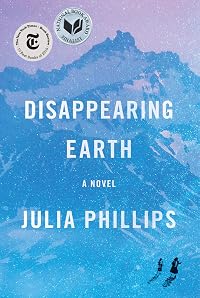

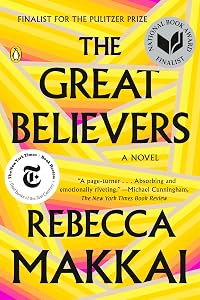
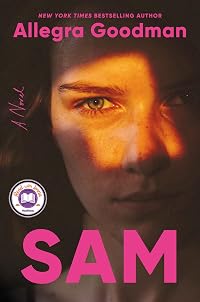
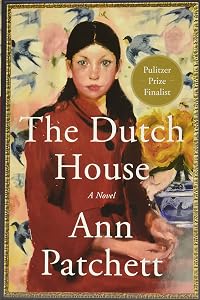



Member Recommendations
sturlington Well-off people on vacation when disaster hits.
Member Reviews
A couple and their two teenage children are taking a vacation, a pleasant getaway from their home in NYC spent in a very nice house they've rented for a few days, in a place far enough out in the country that they can't even get decent cell phone service. They do get just enough signal, though, to catch a glimpse of some kind of news about a big blackout on much of the east coast. And then the TV and the internet go out. And the people who own the house, who also happened to be out of the city for the day, stop by and want to stay, because something tells them maybe New York City isn't where they want to be right now.
But, really, everything's fine. Everything is absolutely fine. How can everything possibly not be fine, when you're on show more vacation?
Hooooo boy.
For most of this novel, I kept thinking that I didn't like it very much, that the writing just wasn't working for me. Such a pity, I thought to myself, because it has a lot going for it, otherwise. The author clearly does have some real talent, and the characters are very believable, the details of their lives and attitudes almost painfully recognizable at times. There's some good suspense, and some complicated, insightful thematic stuff. But, oh, I told myself, I just can't get along with the writing style at all. All that head-hopping (a particular pet peeve of mine, and something I believe very few authors can get away with). That detached narrative voice that keeps flat-out telling us things about the characters instead of showing us through words and actions (even if it doesn't feel amateurish the way that sort of thing usually does). The places where the sentences start to seem like they've maybe been polished one too many times, to the point where they've become slightly unnatural. The "little did they know"-type moments that start to pop up here and there, which surely must be just a little too coy, a little too narratively convenient. Yes, I decided, all of that is just too much of a problem for me. A pity, but that's obviously the reason I keep not wanting to pick this back up after I've put it down, the reason I'm not fully sinking into the story, the reason I feel sort of stressed out and annoyed as I read.
Yeah, well, you know what? Most of that is me being almost as much in denial as some of the characters. Because this is not a badly written book, or even a book whose writing is so much not to my taste that it just kind of ruins everything for me. I'm still not a fan of this particular POV structure, but Alam does actually do some good stuff with it, and those moments of dramatic irony that I kept wanting to think of as coy and convenient ultimately turn out to be nothing short of devastating.
No, it took me until very near the end to fully admit it to myself, but the truth is, the reason I kept fighting getting too much into this novel and telling myself it wasn't working is because it was just absolutely, positively not the book I should have been reading in the first week of 2021. Which is to say, a novel that, among other things, plays on the anxious possibility that if you take your eyes off the news for one moment something terrible will happen while you're not looking (something that did, in fact, happen for me on the same day I started reading this), a novel that reminds you, slowly but insistently, that the lives and the systems that we take for granted are in fact vulnerable and unstable and maintained largely by fragile consensus
Yeah. Basically, it stirred up every single horrible, anxious, frightened thing that's sitting in my brain right now, and it seems I am not quite emotionally equipped to confront in fiction what I'm already currently having a hard time handling in reality. And yet, once I finally recognized this fact, once I gave up fighting against it and just let myself go where it wanted to take me... Well, the result was very powerful. I may have let out a very long, ragged breath at the end. I guess you do have to count that as a significant success.
I still really, really wish I'd read it some other week, though. Or some other year. Or maybe in some other timeline.
Rating: 4.5/5, entirely despite myself. Damn you, Rumaan Alam. show less
But, really, everything's fine. Everything is absolutely fine. How can everything possibly not be fine, when you're on show more vacation?
Hooooo boy.
For most of this novel, I kept thinking that I didn't like it very much, that the writing just wasn't working for me. Such a pity, I thought to myself, because it has a lot going for it, otherwise. The author clearly does have some real talent, and the characters are very believable, the details of their lives and attitudes almost painfully recognizable at times. There's some good suspense, and some complicated, insightful thematic stuff. But, oh, I told myself, I just can't get along with the writing style at all. All that head-hopping (a particular pet peeve of mine, and something I believe very few authors can get away with). That detached narrative voice that keeps flat-out telling us things about the characters instead of showing us through words and actions (even if it doesn't feel amateurish the way that sort of thing usually does). The places where the sentences start to seem like they've maybe been polished one too many times, to the point where they've become slightly unnatural. The "little did they know"-type moments that start to pop up here and there, which surely must be just a little too coy, a little too narratively convenient. Yes, I decided, all of that is just too much of a problem for me. A pity, but that's obviously the reason I keep not wanting to pick this back up after I've put it down, the reason I'm not fully sinking into the story, the reason I feel sort of stressed out and annoyed as I read.
Yeah, well, you know what? Most of that is me being almost as much in denial as some of the characters. Because this is not a badly written book, or even a book whose writing is so much not to my taste that it just kind of ruins everything for me. I'm still not a fan of this particular POV structure, but Alam does actually do some good stuff with it, and those moments of dramatic irony that I kept wanting to think of as coy and convenient ultimately turn out to be nothing short of devastating.
No, it took me until very near the end to fully admit it to myself, but the truth is, the reason I kept fighting getting too much into this novel and telling myself it wasn't working is because it was just absolutely, positively not the book I should have been reading in the first week of 2021. Which is to say, a novel that, among other things, plays on the anxious possibility that if you take your eyes off the news for one moment something terrible will happen while you're not looking (something that did, in fact, happen for me on the same day I started reading this), a novel that reminds you, slowly but insistently, that the lives and the systems that we take for granted are in fact vulnerable and unstable and maintained largely by fragile consensus
Yeah. Basically, it stirred up every single horrible, anxious, frightened thing that's sitting in my brain right now, and it seems I am not quite emotionally equipped to confront in fiction what I'm already currently having a hard time handling in reality. And yet, once I finally recognized this fact, once I gave up fighting against it and just let myself go where it wanted to take me... Well, the result was very powerful. I may have let out a very long, ragged breath at the end. I guess you do have to count that as a significant success.
I still really, really wish I'd read it some other week, though. Or some other year. Or maybe in some other timeline.
Rating: 4.5/5, entirely despite myself. Damn you, Rumaan Alam. show less
Reading Leave the World Behind by Rumaan Alam during an ongoing pandemic may not seem like a good idea. After all, a story about what looks like a catastrophic event as experienced by two families with no access to the news is a little too on-the-nose considering current events. For those brave enough to crack open its pages, however, what you will find is a mesmerizing story of opposites forced into cooperation and brutal self-reflection that does as much to help you forget reality as it does make you grateful that we are only experiencing a pandemic.
Leave the World Behind is chilling on so many levels – the lack of news, the isolation, the panic. What will strike readers the most, however, is the self-reflection required of each of show more the characters as they strive to work together all while trying to overcome their inherent biases. After all, the two families are as opposite as can be. Black versus white. Rich versus middle class. Retired versus vacationers. Old versus young. A reliance on wifi and electronics versus those who view such gadgets as unnecessary. Plus one family has the experiences that come with living a full and long life while the other family is still in the throes of puberty, school, and everything else that comes with raising a family.
Not every character is as successful at addressing their inner biases as others. In fact, much of what makes Leave the World Behind so brilliant is the fact that the characters acknowledge their racism and other biases while also understanding that they shouldn’t have those feelings if they want to consider themselves truly enlightened. It makes for some very uncomfortable reading at times, which, I believe, is Mr. Alam’s point. While showing the characters’ weaknesses, he forces readers to confirm their own.
The unknown event in New York is very much a secondary character in its own right, even though we never find out what exactly happened. Mr. Alam draws our attention to certain seemingly random events happening in nature as well as mentioning various long-term effects of that event so that you understand just how catastrophic, almost apocalyptic, it was. As a result, the characters’ state of uncertainty and eventual panic becomes that much more palpable because you understand the gravity of the situation more than they do.
Ultimately, Leave the World Behind is a rather intense apocalyptic novel that fits well into 2020. Its deep dive into the inherent racism and other biases we each internally carry is spot on for this year’s ongoing fight against systemic racism. Plus, its unknown catastrophe is an intriguing alternative to our current, still-relatively-unknown pandemic. Make no mistake, Leave the World Behind is going to be among many a Best of 2020 list. show less
Leave the World Behind is chilling on so many levels – the lack of news, the isolation, the panic. What will strike readers the most, however, is the self-reflection required of each of show more the characters as they strive to work together all while trying to overcome their inherent biases. After all, the two families are as opposite as can be. Black versus white. Rich versus middle class. Retired versus vacationers. Old versus young. A reliance on wifi and electronics versus those who view such gadgets as unnecessary. Plus one family has the experiences that come with living a full and long life while the other family is still in the throes of puberty, school, and everything else that comes with raising a family.
Not every character is as successful at addressing their inner biases as others. In fact, much of what makes Leave the World Behind so brilliant is the fact that the characters acknowledge their racism and other biases while also understanding that they shouldn’t have those feelings if they want to consider themselves truly enlightened. It makes for some very uncomfortable reading at times, which, I believe, is Mr. Alam’s point. While showing the characters’ weaknesses, he forces readers to confirm their own.
The unknown event in New York is very much a secondary character in its own right, even though we never find out what exactly happened. Mr. Alam draws our attention to certain seemingly random events happening in nature as well as mentioning various long-term effects of that event so that you understand just how catastrophic, almost apocalyptic, it was. As a result, the characters’ state of uncertainty and eventual panic becomes that much more palpable because you understand the gravity of the situation more than they do.
Ultimately, Leave the World Behind is a rather intense apocalyptic novel that fits well into 2020. Its deep dive into the inherent racism and other biases we each internally carry is spot on for this year’s ongoing fight against systemic racism. Plus, its unknown catastrophe is an intriguing alternative to our current, still-relatively-unknown pandemic. Make no mistake, Leave the World Behind is going to be among many a Best of 2020 list. show less
Enjoyable, but I see why this book is rated poorly on here. The ending is very abrupt and answers no questions. The writing style takes getting used to, and I wasn’t a fan of the useless details in some spots (example: listing every single thing one of the characters bought at the store).
But you know what? I’m not mad. Does knowing the cause of the apocalypse change anything, for me or the characters living through it? Not really. In this case it’s beside the point. The focus is supposed to be on the dynamic between the two families and how race/class informs everything about the way they interact and handle the world ending. This book does something different and, to me, it makes the experience a little confusing and jarring at show more times. I understand why this wouldn’t work for everyone, though. show less
But you know what? I’m not mad. Does knowing the cause of the apocalypse change anything, for me or the characters living through it? Not really. In this case it’s beside the point. The focus is supposed to be on the dynamic between the two families and how race/class informs everything about the way they interact and handle the world ending. This book does something different and, to me, it makes the experience a little confusing and jarring at show more times. I understand why this wouldn’t work for everyone, though. show less
I can't remember now where I saw it but the author was telling someone something along these lines: "Don't pay attention to the first chapter. I tried to show the editor that I can WRITE. After the first chapter it's normal." During the first chapter I had a feeling that I wasn't reading it in English and I almost DNFed it, but then quickly he ran out of all the fancy words such as "synecdoche" and switched to ordinary yet a tad posh English. I actually really enjoyed the writing and the disturbing atmosphere he created. There were so many quotable quotes I yearned to highlight. I'm parallelly reading Beartown in Swedish and Backman is also very quotable and they kind of talk about similar things - family, children, fear, humanity. I show more often caught myself thinking of a particular quote and which book it was from. There is something of Backman in Alam. show less
In this story, a rather ordinary family of middle-class white New Yorkers head out to the Hamptons for a late-summer vacation in a rented AirBnB, a lovely and well-appointed house that isn't on the ocean but does have a pool. They spend a couple of days there doing vacation things, spending a lot of money on extravagant and impractical food (the trip to the grocery store is described in much detail), and then there is a knock on the door late at night. An older Black couple is standing on the doorstep. They say they own the house and something bad has happened in New York, so they want to stay.
At first, this story, and this family, were annoying me. The family is so bland, so white-bread, that they didn't seem to be characters so much show more as caricatures. But when the Black couple shows up, they are completely ordinary as well, boring even. It's not a mystery whether they are truly the house's owners; the omniscient narrator lets us know fairly quickly that they are. The mystery is what is happening out in the world, and how will these people handle it?
It gradually dawned on me that all of these people were so ordinary and indistinguishable because they are meant to be anybody, and everybody. This is, I think, a story that pretty realistically depicts what it might be like if an unthinkable disaster were unfolding and you really had no idea what was going on or what to do. The narrator is godlike in knowing everything that is happening and will happen, and sometimes doles out little bits of information so we, the readers, know slightly more than the characters. But the questions of interest are: What would you do if you had no idea what to do? Would you come together? Or lock the doors? Much has been made of the race-relations aspect of the story, and the white couple are pretty typical in that they hold some fairly stereotypical views of Black and Hispanic people, but I don't think that's the point. I think the point is that these are ordinary people, the world may be ending, and what are they going to do? Anything besides getting drunk?
I don't think it's any accident that climate change is mentioned so frequently. The disaster unfolding, whatever it is, happens more quickly, but there is a point being made: that the world is already ending, and collectively, we're not doing much about it. However, it is interesting to me that there is one character who recognizes what is happening and knows what to do--who that character turns out to be. So although when the book started, it had me rolling my eyes at this Wonderbread family, by the end, it had me thinking about some very interesting questions. Overall, a win. show less
At first, this story, and this family, were annoying me. The family is so bland, so white-bread, that they didn't seem to be characters so much show more as caricatures. But when the Black couple shows up, they are completely ordinary as well, boring even. It's not a mystery whether they are truly the house's owners; the omniscient narrator lets us know fairly quickly that they are. The mystery is what is happening out in the world, and how will these people handle it?
It gradually dawned on me that all of these people were so ordinary and indistinguishable because they are meant to be anybody, and everybody. This is, I think, a story that pretty realistically depicts what it might be like if an unthinkable disaster were unfolding and you really had no idea what was going on or what to do. The narrator is godlike in knowing everything that is happening and will happen, and sometimes doles out little bits of information so we, the readers, know slightly more than the characters. But the questions of interest are: What would you do if you had no idea what to do? Would you come together? Or lock the doors? Much has been made of the race-relations aspect of the story, and the white couple are pretty typical in that they hold some fairly stereotypical views of Black and Hispanic people, but I don't think that's the point. I think the point is that these are ordinary people, the world may be ending, and what are they going to do? Anything besides getting drunk?
I don't think it's any accident that climate change is mentioned so frequently. The disaster unfolding, whatever it is, happens more quickly, but there is a point being made: that the world is already ending, and collectively, we're not doing much about it. However, it is interesting to me that there is one character who recognizes what is happening and knows what to do--who that character turns out to be. So although when the book started, it had me rolling my eyes at this Wonderbread family, by the end, it had me thinking about some very interesting questions. Overall, a win. show less
Knowing that this was an apocalyptic type novel I wasn't sure if it would be my bag, but I actually thoroughly enjoyed it.
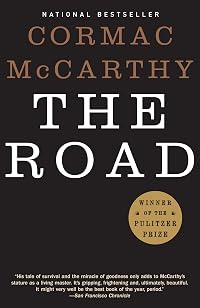
What I liked most was that Alam didn't fall into the usual plot stereotype of this type of book. It's not like McCarthy's The Road, focusing on the fallout of an apocalypse for the few remaining survivors. Instead it focuses on the first hours of something major happening (we never find out what), when the characters, who are staying in a relatively remote area, get the sense that something's happened as TV and mobile phones stop working, and animals start behaving in strange ways, but they don't know what or how cataclysmic it is.
It feels believable, and for that reason successfully edgy and eerie, particularly in show more this COVID era where the end of the world now feels depressingly possible rather than the stuff of fictional fodder.
The setting for the book is a family in an upmarket holiday rental who are forced to accommodate some unexpected and unwelcome visitors as the situation starts to unfold. It works brilliantly; the polite, awkward tension between the two families as they're thrown together in the situation, neither wanting to be with the other, no one knowing what is happening, how serious the situation is and whether it's safe to leave the social discomfort of the house. Rumaan Alam could have easily got carried away with the plot and taken it into full apocalyptic territory, but he controls it and keeps it tightly reined in to the hinterland of the event.
4 stars (possibly a bit more) - clever writing that haves you questioning throughout - 'what would I do?' show less
What I liked most was that Alam didn't fall into the usual plot stereotype of this type of book. It's not like McCarthy's The Road, focusing on the fallout of an apocalypse for the few remaining survivors. Instead it focuses on the first hours of something major happening (we never find out what), when the characters, who are staying in a relatively remote area, get the sense that something's happened as TV and mobile phones stop working, and animals start behaving in strange ways, but they don't know what or how cataclysmic it is.
It feels believable, and for that reason successfully edgy and eerie, particularly in show more this COVID era where the end of the world now feels depressingly possible rather than the stuff of fictional fodder.
The setting for the book is a family in an upmarket holiday rental who are forced to accommodate some unexpected and unwelcome visitors as the situation starts to unfold. It works brilliantly; the polite, awkward tension between the two families as they're thrown together in the situation, neither wanting to be with the other, no one knowing what is happening, how serious the situation is and whether it's safe to leave the social discomfort of the house. Rumaan Alam could have easily got carried away with the plot and taken it into full apocalyptic territory, but he controls it and keeps it tightly reined in to the hinterland of the event.
4 stars (possibly a bit more) - clever writing that haves you questioning throughout - 'what would I do?' show less
if i'm being polite, i'd say this book wasn't for me. but once you hit the point of finishing a book and feeling a combination of rage-induced adrenaline and bone-deep relief, stomping around your apartment going BLUGHGHHGHHHHH, i think you've earnt the right to say that it was just total bullshit all round.
look, i saw what alam was going for. i get it. chiefly, though, i found the style of writing utterly tiresome. i hated the language, the overwrought metaphors. (also, why were so many things compared to orgasms? why did we have to read in such voyeuristic detail about archie jerking off? i'm not averse to sex in literature, but jesus, he's 16. i don't need to know.) i wanted to respect the commitment to grossness and viscera but i show more just didn't like the execution. i'm hard to sell on omniscient third person, but i've loved it before; i did not love it here. i found it choppy and distracting, and i particularly hated that every line of dialogue was interspersed with a different character's introspection on the matter, which is a style of dialogue writing i hate even from a focused perspective and hated even more here. it was distracting. it was often confusing: florid words were used to obfuscate actual meaning, and if i went back to reread a metaphor i was like, wait, what the fuck are you actually saying here?
i would also like to note, categorically and for the record, that this is neither suspenseful or a thriller. the first two thirds of the book is spent introducing us to the characters, none of whom are particularly likeable - and this is coming from someone who LIKES unlikable characters, but there was just zero spark, and particularly with amanda i felt that alam had gone so out of his way to make her objectionable in every little way possible that there was just no redemption, no possible way i could ever connect to her. anyway, the rest of the first third is ostensibly a social comedy, but i did not find it funny, and any message (of which i think there were several brewing) was lost in the confusion of the overwrought language and the jumping around between perspectives.
the final third of the book is where most of the action comes in, and i was kind of interested in what was happening, except it was totally undercut by sudden shifts in focus to the omniscient narrator telling us about random people who had died in horrific ways, and hinting obliquely at what was going on in the rest of the world, hinting at what had caused the sudden apocalypse. (the omniscient narrator also regularly jumped into the future to accomplish this, among other things, which could be interesting stylistically but was just overplayed here.) this was so frustrating!! once these big geopolitical questions came into play, i was totally diverted by wanting answers, but there was zero continuity or concreteness to it, and it was all in these cheeky asides that made it clear the characters would never know. like... so why are you telling us then? i also found that there was mixed messaging - it seemed like the outside world hints were leaning towards war, but then there were continual mentions of climate change, which muddied the effect and left me scratching my head. besides that, there was an undercurrent narrative about how dependent we all are on our phones and the internet, which i found trite and overdone; there was no new commentary to be found in that thread.
i don't know, was this a book that collapsed under the weight of its own ambition, trying to fit so many themes and moments into something that was all told quite short? would it have been stronger if alam focused in on just the social satire and ignored the cause of the apocalypse, given no outside world information at all? i think so, but would i have enjoyed that more or less? should i just go read some shitty brainless action thriller to fulfill me after all that stuff was hinted at but never explored? probably! anyway i'm grumpy because on paper this looked like a book i'd love, and there were a few seeds of some good stuff, but actually, i just couldn't stand it. show less
look, i saw what alam was going for. i get it. chiefly, though, i found the style of writing utterly tiresome. i hated the language, the overwrought metaphors. (also, why were so many things compared to orgasms? why did we have to read in such voyeuristic detail about archie jerking off? i'm not averse to sex in literature, but jesus, he's 16. i don't need to know.) i wanted to respect the commitment to grossness and viscera but i show more just didn't like the execution. i'm hard to sell on omniscient third person, but i've loved it before; i did not love it here. i found it choppy and distracting, and i particularly hated that every line of dialogue was interspersed with a different character's introspection on the matter, which is a style of dialogue writing i hate even from a focused perspective and hated even more here. it was distracting. it was often confusing: florid words were used to obfuscate actual meaning, and if i went back to reread a metaphor i was like, wait, what the fuck are you actually saying here?
i would also like to note, categorically and for the record, that this is neither suspenseful or a thriller. the first two thirds of the book is spent introducing us to the characters, none of whom are particularly likeable - and this is coming from someone who LIKES unlikable characters, but there was just zero spark, and particularly with amanda i felt that alam had gone so out of his way to make her objectionable in every little way possible that there was just no redemption, no possible way i could ever connect to her. anyway, the rest of the first third is ostensibly a social comedy, but i did not find it funny, and any message (of which i think there were several brewing) was lost in the confusion of the overwrought language and the jumping around between perspectives.
the final third of the book is where most of the action comes in, and i was kind of interested in what was happening, except it was totally undercut by sudden shifts in focus to the omniscient narrator telling us about random people who had died in horrific ways, and hinting obliquely at what was going on in the rest of the world, hinting at what had caused the sudden apocalypse. (the omniscient narrator also regularly jumped into the future to accomplish this, among other things, which could be interesting stylistically but was just overplayed here.) this was so frustrating!! once these big geopolitical questions came into play, i was totally diverted by wanting answers, but there was zero continuity or concreteness to it, and it was all in these cheeky asides that made it clear the characters would never know. like... so why are you telling us then? i also found that there was mixed messaging - it seemed like the outside world hints were leaning towards war, but then there were continual mentions of climate change, which muddied the effect and left me scratching my head. besides that, there was an undercurrent narrative about how dependent we all are on our phones and the internet, which i found trite and overdone; there was no new commentary to be found in that thread.
i don't know, was this a book that collapsed under the weight of its own ambition, trying to fit so many themes and moments into something that was all told quite short? would it have been stronger if alam focused in on just the social satire and ignored the cause of the apocalypse, given no outside world information at all? i think so, but would i have enjoyed that more or less? should i just go read some shitty brainless action thriller to fulfill me after all that stuff was hinted at but never explored? probably! anyway i'm grumpy because on paper this looked like a book i'd love, and there were a few seeds of some good stuff, but actually, i just couldn't stand it. show less
Members
- Recently Added By
Published Reviews
Leave the World Behind was written before the coronavirus crisis and yet it taps brilliantly into the feeling of generalised panic that has attached itself to the virus and seems to mingle fears about the climate, inequality, racism and our over-reliance on technology. As the reader moves through the book, a new voice interjects, an omniscient narrator who begins to allow us gradual access to show more the terrifying events taking place across America. show less
added by Lemeritus
In cutting detail, Alam moves between all the characters’ private thoughts on race, privilege, class and survival, revealing the lies they tell each other both to encourage a sense of calm and to protect their own insecurities.... There’s a dark comfort to engaging with these stories, a sense that living in uncertainty does not necessarily mean we are alone—and that knowing the future show more won’t help prevent it. I felt a particular isolation in the immediate aftermath of the storm; I feel it every day in the coronavirus era. Resolution will come later. Knowing that is enough for now. “Understanding came after the fact,” Alam writes of his characters. “You had to walk backward and try to make sense. That’s what people did, that’s how people learned.” show less
added by Lemeritus
Alam doesn’t dwell in the specificity of apocalypse, which has been the obsession of writers since the Flood. Instead he lobs a prescient accusation: Faced with the end of the world, you wouldn’t do a damn thing... “Leave the World Behind” teeters on that seesaw-edge question in horror fiction: to reveal the monster or not? Ultimately it totters too far to one side, but there is still show more the primal nail-biting need to know what-the-hell-is-going-on. This propulsion, which drives much of the characters’ decisions, likewise drives the reader onward to a breathless conclusion that, if not altogether satisfying, is undeniably haunting. show less
added by Lemeritus
Lists

2021 Tournament of Books
18 works; 12 members

Top Five Books of 2020
982 works; 348 members

Best Beach Reads
99 works; 61 members

Books Set in New York State
65 works; 11 members

Books recommended by Barack Obama
295 works; 28 members

Top Five Books of 2021
604 works; 181 members
The Guardian Books of the Year 2020
126 works; 8 members

National Book Award Finalists - Fiction
377 works; 12 members

Houses and Buildings as Characters in Fiction
182 works; 29 members

Dystopian and Apocalyptic Literature
350 works; 74 members

2021 Notable Books for Adults
24 works; 4 members

Recommended Speculative Fiction by Women and People of Color
298 works; 45 members

Books Set on Islands
190 works; 24 members

Books Read in 2020
4,379 works; 124 members

Obama Reads
181 works; 3 members

Summer Books
82 works; 9 members

Books Read in 2021
5,361 works; 114 members

Nightmares Not Included
175 works; 3 members

Barack Obama's Summer Reading List 2021
11 works; 2 members

Books Read in 2024
4,623 works; 126 members

Fiction Published in 2020
32 works; 1 member

Reading Group 2022
6 works; 1 member

Books Read in 2025
4,091 works; 97 members

Read with Jenna
91 works; 2 members
Author Information

6+ Works 4,276 Members
Some Editions
Awards and Honors
Awards
Distinctions
The Guardian Book of the Day (2020-11-09)
Read with Jenna (2020-09 – 2020)
Work Relationships
Has the adaptation
Common Knowledge
- Canonical title
- Leave the World Behind
- Original publication date
- 2020-10-06
- People/Characters
- Amanda; Clay; Ruth Washington; George "G. H." Herman Washington; Archie; Rose (show all 8); Danny; Karen
- Important places
- Long Island, New York, USA; New York, New York, USA; Brooklyn, New York, USA
- Related movies
- Leave the World Behind (2023 | IMDb)
- Epigraph
- Love goes on like birdsong,
As soon as possible after a bomb.
--Bill Callahan, "Angela" - Dedication
- for Simon and for Xavier
- First words
- Well, the sun was shining.
- Quotations
- There was no real structure to prevent chaos, there was only a collective faith in order.
Sometimes distance showed a thing most clearly.
Amanda wasn’t magnanimous. The call was a relief. She wanted her colleagues to need her as God wants people to keep praying.
He sat on the front lawn in the shade of a tree and smoked. He should feel bad about this, but tobacco was the foundation of the nation. Smoking tethered you to history itself! It was a patriotic act, or once had been, anyway... (show all), like owning slaves or killing the Cherokee.
Clay was diligent but also (he knew it) a little lazy. He wanted to be asked to write for the New York Times Book Review but didn’t want to actually write anything.
“What did it say?” Ruth wanted more information. She’d seen it with her own eyes but knew nothing. “Did it say why?”
Ruth had learned only one thing from the current reality, and it was that everything held together by tacit agreement that it would. All it took to unravel something was one party deciding to do just that. There was no real s... (show all)tructure to prevent chaos, there was only a collective faith in order.
G.H.’s business was money’s preservation. Actual spending was so abstract to him that he did as the contractor said. Danny was one of those men other men didn’t want to seem a fool in front of. He had a power over men t... (show all)hat was almost sexual, in the way that sex always ends up being about power. You’d do what he said, and maybe in your worst moments you’d worry that Danny was laughing at you. Their checks had certainly paid for Danny’s daughter’s year at private school. That’s why they rented: to recoup.
You never know when a time is the last time, because if you did you could never go on with life.
Years ago, Ruth was asked to help out in the school office. Dalton wanted to increase diversity. Now Ruth was immune to kids’ germs and mostly impervious to their charms.
Nothing matters to children but themselves, or perhaps that is the human condition.
Whatever they thought they’d understood was not wrong but irrelevant.
Their bodies knew what their minds did not. Children and the very old have this in common. Born, you understand something about the world. That’s why toddlers report conversing with ghosts and unnerve their parents. The ver... (show all)y old begin to remember it, but can rarely articulate it, and no one listens to the very old anyway.
Trees marked their lives in rings that can’t be seen; people, in the garbage they left everywhere, a way of insisting on their own importance.
“Let’s eat something. I’m going to take a shower, and then we should eat something. I think that will help.” No, that wasn’t quite it. “I can’t think of anything else to do.”
Parenthood was never knowing what was going to hurt your kids, but knowing only that something, inevitably, would.
You told yourself you’d be attuned to a holocaust unfolding a world away, but you weren’t. It was immaterial, thanks to distance. People weren’t that connected to one another. Terrible things happened constantly and nev... (show all)er prevented you from going out for ice cream or celebrating birthdays or going to the movies or paying your taxes or fucking your wife or worrying about the mortgage.
Home was just where you were, in the end. It was just the place where you found yourself.
Clay could feel his wife tense up. She preferred that they eat healthily (especially Rose). He could pick up her disapproval like sonar. It was like the swell that presaged an erection. They'd been married sixteen years.
Clay found a baseball game on the radio, though he did not care about baseball. He thought the description comforting, the play-by-play like being read a bedtime story.
She said "Fine" the way adolescents learn to pronounce it, with all the fervor of any four-letter word.
Rose turned the secret of the deer over and over, as you would a hard candy on your tongue.
The sickness in the ground and in the air and in the water was all a clever design. There was a menace in the woods and Rose could feel it, and another child would have called it God. Did it matter if a storm had metastasized... (show all) into something for which no noun yet existed? Did it matter if the electrical grid broke apart like something built of Lego? Did it matter if Lego would never biodegrade, would outlast Notre Dame, the pyramids at Giza, the pigment daubed on the walls at Lascaux?
They couldn't know that the silence that seemed so relaxing in the country seemed so menacing in the city, which was hot, still, and quiet in a way that made no sense.
G.H. would have pointed out that the information had always been there waiting for them, in the gradual death of Lebanon's cedars, in the disappearance of the river dolphin, in the renaissance of cold-war hatred, in the disco... (show all)very of fission, in the capsizing vessels crowded with Africans. No one could plead ignorance that was not willful.
Maybe they should feel only awe at life's mysteries, as children did.
They both were and were not alone. Fate was collective but the rest of it was always individual, a thing impossible to escape. They lay that way for a long time. They didn't talk because there was nothing to discuss. The soun... (show all)ds of their sleeping children were relentless as the ocean.
Archie shivered the way you might when you walk into a spiderweb, the way you might if you saw a spider dart from beneath your pillow and lose itself in your mosaic-printed bedsheets, the way you might if a spider crept from ... (show all)your shoulder up your neck and nestled into the comforting cave of your ear, the way you might if a spider dropped from the ceiling and landed on your hair and then picked its way forward carefully down the slope of your nose so you could barely see it with your wide-set eyes, the way you might if a spider started and bit you and then became a part of you, inextricable as your DNA, the thing that made you.
Ruth didn't believe in prayer, so she thought of nothing.
The youngest child was used to not being noticed.
Rose knew what the noise was, but no one had asked her. It was the sound of fact. It was the change they'd pretended not to know was coming. It was the end of one kind of life, but it was also the beginning of another kind of... (show all) life.
Was this a test of faith? It affirmed only their faith in their ignorance.
It took unimaginable courage to kill your children.
None of those forty mourned those dead even one bit. They were bad men, they told themselves, not knowing how little it mattered whether you'd spent your life being good or bad. - Last words
- (Click to show. Warning: May contain spoilers.)If they didn't know how it would end—with night, with more terrible noise from the top of Olympus, with bombs, with disease, with blood, with happiness, with deer or something else watching them from the darkened woods—well, wasn't that true of every day?
- Blurbers
- Novey, Idra; Abbott, Megan; Machado, Carmen Maria; Hunt, Samantha; Kiesling, Lydia; Offill, Jenny (show all 7); Chaon, Dan
- Canonical DDC/MDS
- 813.6
- Canonical LCC
- PS3601.L3257
Classifications
Statistics
- Members
- 3,286
- Popularity
- 5,616
- Reviews
- 161
- Rating
- (3.40)
- Languages
- 12 — Catalan, Danish, Dutch, English, French, German, Italian, Polish, Portuguese, Spanish, Swedish, Turkish
- Media
- Paper, Audiobook, Ebook
- ISBNs
- 35
- ASINs
- 11