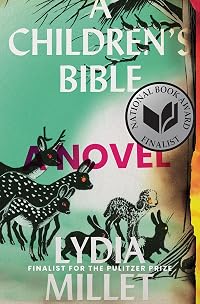
A Children's Bible
by Lydia Millet
On This Page
Description
Pulitzer Prize finalist Lydia Millet's sublime new novel-her first since the National Book Award long-listed Sweet Lamb of Heaven-follows a group of twelve eerily mature children on a forced vacation with their families at a sprawling lakeside mansion. Contemptuous of their parents, who pass their days in a stupor of liquor, drugs, and sex, the children feel neglected and suffocated at the same time. When a destructive storm descends on the summer estate, the group's ringleaders-including show more Eve, who narrates the story-decide to run away, leading the younger ones on a dangerous foray into the apocalyptic chaos outside. As the scenes of devastation begin to mimic events in the dog-eared picture Bible carried around by her beloved little brother, Eve devotes herself to keeping him safe from harm. A Children's Bible is a prophetic, heartbreaking story of generational divide-and a haunting vision of what awaits us on the far side of Revelation. show lessTags
Recommendations






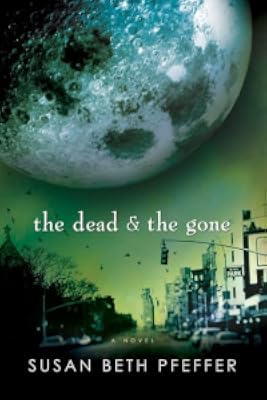
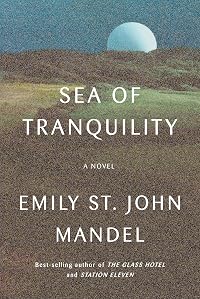
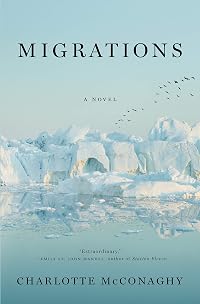
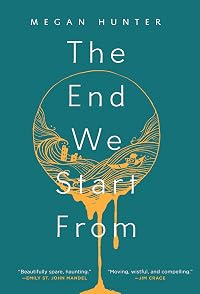





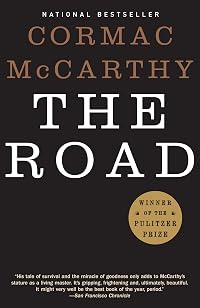
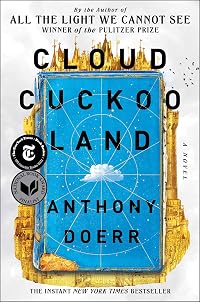
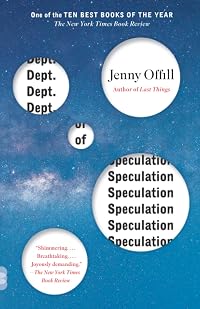
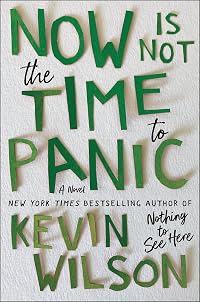
Member Recommendations

hairball Adults failing, young people trying to make their way forward in a world that's climate-spiraling.
Member Reviews
I can't think of how a book could be more 2020 than this. Just finished last night and I am absolutely gutted by this book.
I got it from the library because I've enjoyed two of her other books but didn't know anything about it going in. That might have been a good thing, but it was also a little disorienting because the book involves climate change disaster, a mini-pandemic, and armed militia groups...like Millet was tapped into many people's exact fears at this exact moment.
I can't really explain why this affected me so much. The writing is simple and almost dreamlike, and the whole story has the quality of a fable, with many layers of allusion. It is a perfectly crafted horror story for our time.
I got it from the library because I've enjoyed two of her other books but didn't know anything about it going in. That might have been a good thing, but it was also a little disorienting because the book involves climate change disaster, a mini-pandemic, and armed militia groups...like Millet was tapped into many people's exact fears at this exact moment.
I can't really explain why this affected me so much. The writing is simple and almost dreamlike, and the whole story has the quality of a fable, with many layers of allusion. It is a perfectly crafted horror story for our time.
In the past few months I have often half-kidded about the glut of signs of the biblical apocalypse (we laugh so we do not cry.) Lydia Millet has stopped kidding and has created a proper narrative around this. There is likely no better person to do this than the brilliant Millet who is a gifted writer, a working climate scientist, and a woman with a knowledge of scripture, a sense of humor, and a core of decency.
This is a short book that took me longer to read than most twice its length. It is a hard read - most of the time when I say that I am referring to emotional toll, but in this case I am using it in the intellectual sense (though I suppose it could be read as just a cool story and someone could ignore that it - like all bible show more stories - is a parable.) This is a book that sent me skittering back to check biblical passages and to read swaths of Plato's The Last Days of Socrates (mostly the Crito) and a bit of Arne Naess.
I have been reeling lately what with the world in tatters and our country being run by the Monkey King. Add to that the fact that for the first time in my life I have what appears to be a serious back issue so I have been in really serious though lessening pain and you come up with a me doing a lot of feather-light reading. It was great, and it was fun, but I was really ready for something more meaty but not dry and textbook-like, something challenging because it takes brain-power and not just because it obscure and needlessly complicated, and this was perfect. Smart, accessible and important. Seriously people, we are headed for the iceberg - its unavoidable but maybe if we get it together and start behaving like we are not waiting for the rapture it won't take us all down. show less
This is a short book that took me longer to read than most twice its length. It is a hard read - most of the time when I say that I am referring to emotional toll, but in this case I am using it in the intellectual sense (though I suppose it could be read as just a cool story and someone could ignore that it - like all bible show more stories - is a parable.) This is a book that sent me skittering back to check biblical passages and to read swaths of Plato's The Last Days of Socrates (mostly the Crito) and a bit of Arne Naess.
I have been reeling lately what with the world in tatters and our country being run by the Monkey King. Add to that the fact that for the first time in my life I have what appears to be a serious back issue so I have been in really serious though lessening pain and you come up with a me doing a lot of feather-light reading. It was great, and it was fun, but I was really ready for something more meaty but not dry and textbook-like, something challenging because it takes brain-power and not just because it obscure and needlessly complicated, and this was perfect. Smart, accessible and important. Seriously people, we are headed for the iceberg - its unavoidable but maybe if we get it together and start behaving like we are not waiting for the rapture it won't take us all down. show less
New Generation Steps Up
While the adults of the world party on, many youth look on aghast a what these players—industrialists and financial manipulators and hedonists—are ignoring, until what they ignore overwhelm them, and the children step up put things as right as possible, hopefully. In other words, our willful degrading of our environment will catch up with us and render pretty much all we satiate ourselves with useless and worthless. But even in Millet’s sympathetic allegorical tale about the environment and the next generation, most of these youth aren’t sufficiently meek enough to offer sustainable hope, those that are being like the little Jacks and Shels of the world. This last, though, gets ahead of the tale.
A group of show more well-off families pitch in and rent a historical house on the coast for the summer. The parents spend their days drinking and laying about, leaving their children to fend for themselves. As Evie, our young adolescent narrator, tells us, the children, young teens like herself and younger like her brother Jack, are not only content to fend for themselves, but are thoroughly embarrassed by their parents to the point where they don’t wish their friends to know to whom they belong. In the first part of this short novel, Evie observes and comments on the often outrageous behavior of the adults and how the children amuse themselves in the nature that surrounds them.
In the second part, Millet injects a huge dose of energy in the form of a category 4 hurricane that alone would cripple any countryside, but this is only one of a continuing onslaught of rain and flooding. The parents react by stepping up their drinking and generally beating their chests in woe. The children retreat to a treehouse to care for themselves. Skillful hikers and an estate caretaker show up to help them. Then with society beyond the mansion in disarray, a local armed, ragtag militia invade, intent on stealing their food and anything else of value. It’s the children who seek a solution through peaceful negotiation to save themselves and their parents. In the end, though, something of a divine intervention occurs directly from the sky above, allowing children and parents to leave and find refuge in the palatial home of one set of parents.
In this third part, the parents revert to their old ways, until the children finally assert themselves. They set up schedules to accomplish lifesaving tasks and generally assume control and management of day to day affairs. With this, the parents become unless and literally fade away, with the children inheriting the world. But will it be a better one. A reader can hope so, but the final scene between Evie and her small, gentle, pint-sized naturalist brother leaves us wondering.
As for the connection to the Bible, little Jack, a blank slate regarding religion, finds a Bible picture book. He works at deciphering the meaning of God, nature, and belief, while he, the other children, and the adults in one form or another act out certain parts of the book, some as obvious as Noah’s Ark, and others more obscure.
Often darkly humorous, particularly in the exchanges between the children, cautionary about the environment without being bombastic, and well paced, it’s a small novel with big ideas that more readers should discover. show less
While the adults of the world party on, many youth look on aghast a what these players—industrialists and financial manipulators and hedonists—are ignoring, until what they ignore overwhelm them, and the children step up put things as right as possible, hopefully. In other words, our willful degrading of our environment will catch up with us and render pretty much all we satiate ourselves with useless and worthless. But even in Millet’s sympathetic allegorical tale about the environment and the next generation, most of these youth aren’t sufficiently meek enough to offer sustainable hope, those that are being like the little Jacks and Shels of the world. This last, though, gets ahead of the tale.
A group of show more well-off families pitch in and rent a historical house on the coast for the summer. The parents spend their days drinking and laying about, leaving their children to fend for themselves. As Evie, our young adolescent narrator, tells us, the children, young teens like herself and younger like her brother Jack, are not only content to fend for themselves, but are thoroughly embarrassed by their parents to the point where they don’t wish their friends to know to whom they belong. In the first part of this short novel, Evie observes and comments on the often outrageous behavior of the adults and how the children amuse themselves in the nature that surrounds them.
In the second part, Millet injects a huge dose of energy in the form of a category 4 hurricane that alone would cripple any countryside, but this is only one of a continuing onslaught of rain and flooding. The parents react by stepping up their drinking and generally beating their chests in woe. The children retreat to a treehouse to care for themselves. Skillful hikers and an estate caretaker show up to help them. Then with society beyond the mansion in disarray, a local armed, ragtag militia invade, intent on stealing their food and anything else of value. It’s the children who seek a solution through peaceful negotiation to save themselves and their parents. In the end, though, something of a divine intervention occurs directly from the sky above, allowing children and parents to leave and find refuge in the palatial home of one set of parents.
In this third part, the parents revert to their old ways, until the children finally assert themselves. They set up schedules to accomplish lifesaving tasks and generally assume control and management of day to day affairs. With this, the parents become unless and literally fade away, with the children inheriting the world. But will it be a better one. A reader can hope so, but the final scene between Evie and her small, gentle, pint-sized naturalist brother leaves us wondering.
As for the connection to the Bible, little Jack, a blank slate regarding religion, finds a Bible picture book. He works at deciphering the meaning of God, nature, and belief, while he, the other children, and the adults in one form or another act out certain parts of the book, some as obvious as Noah’s Ark, and others more obscure.
Often darkly humorous, particularly in the exchanges between the children, cautionary about the environment without being bombastic, and well paced, it’s a small novel with big ideas that more readers should discover. show less
what an excellent screed against the way the adults of this world are relying on the children to save everyone, to make the decisions, to do the hard work of making the world livable and survivable. how we turn a blind eye, but they can't and so they don't. how we love our kids - the ones specifically ours - but how that doesn't manifest in actually taking care of them, or in loving others or the world they need to be able to continue on.
the writing is great, the voice is tough, the biblical allusions powerful. so so good.
(and it's read by one of my favorite narrators.)
the writing is great, the voice is tough, the biblical allusions powerful. so so good.
(and it's read by one of my favorite narrators.)
Travel to the not-too-distant future and witness the calamities befall a group of families in Lydia Millet’s A Children’s Bible. The families - parents and children - have assembled at a rented coastal mansion for Millet’s frightening parable in which children are forced to supplant their parents in an apparent dress rehearsal for the End Times. She includes natural disasters which make modern-day services impossible; lawless behavior by gangs of armed men; the righteous natural world pushing back against the ruination of the planet in seeming outrage.
Millet includes a touch of the supernatural when the owner of the farm to which the children eventually escape and are holed up: a young boy has fallen into a pit and suffered what show more might be a compound fracture. The farm’s owner, a no-nonsense woman accompanied in her helicopter by a SWAT team, apparently cures the boy and he’s no worse for the wear. This perhaps lays the groundwork for the episode a little later in the narrative where all the parents simply disappear, apparently having lost their will to live because the children are so self-sufficient.
This book takes up serious issues: the exhausted planet, the broken culture, the teetering infrastructure. Whether it does these issues justice, and whether it’s possible to do all these issues justice in so short a work, is fully open to question. The hurricane sequence is the best in the book. The noise, the dark, the violence of nature, the fragility of man-made structures - all these are so vivid and immediate that I cringed for everyone’s safety. The children have surprising moments of worldly wisdom among all the complaining and desultory disrespect.
And here is the center of the narrative. The younger generation, teens mostly, going into junior and senior year of high school (plus a few younger siblings), energetically revile the assembled parents. It’s clear from the start that the teens are and will be on their own, and to their credit this holds true, and they do a creditable job … except for the key event of their rescue at the farm. The parents play a central role in that, and it’s very difficult for me to accept the way they simply wander off forever.
Readers interested in Millet, and you very well should be, please take up Millet’s 2016 novel, Sweet Lamb of Heaven. show less
Millet includes a touch of the supernatural when the owner of the farm to which the children eventually escape and are holed up: a young boy has fallen into a pit and suffered what show more might be a compound fracture. The farm’s owner, a no-nonsense woman accompanied in her helicopter by a SWAT team, apparently cures the boy and he’s no worse for the wear. This perhaps lays the groundwork for the episode a little later in the narrative where all the parents simply disappear, apparently having lost their will to live because the children are so self-sufficient.
This book takes up serious issues: the exhausted planet, the broken culture, the teetering infrastructure. Whether it does these issues justice, and whether it’s possible to do all these issues justice in so short a work, is fully open to question. The hurricane sequence is the best in the book. The noise, the dark, the violence of nature, the fragility of man-made structures - all these are so vivid and immediate that I cringed for everyone’s safety. The children have surprising moments of worldly wisdom among all the complaining and desultory disrespect.
And here is the center of the narrative. The younger generation, teens mostly, going into junior and senior year of high school (plus a few younger siblings), energetically revile the assembled parents. It’s clear from the start that the teens are and will be on their own, and to their credit this holds true, and they do a creditable job … except for the key event of their rescue at the farm. The parents play a central role in that, and it’s very difficult for me to accept the way they simply wander off forever.
Readers interested in Millet, and you very well should be, please take up Millet’s 2016 novel, Sweet Lamb of Heaven. show less
Millet pulls together a brilliant cli-fi novel and allusions to the bible in A Children's Bible. The allusions are perfect. The reader certainly recognizes the bible stories, but they aren't exact - just a hint. They way the story is woven to show climate change is remarkable. Since it's setting is in the present, it's haunting the way it turns apocalyptic. The kids in the novel are the heroes plotting to save themselves (and some animals). This will be a book I revisit to see what I missed.
“Once we had let them do everything for us—assumed they would. Then came the day we didn’t want them to. Still later we found out that they hadn’t done everything at all. They’d left out the important part. And it was known as: the future. “
A Children’s Bible is a quick, enjoyable parable-like tale, told from the point of view of a teenage girl, Eve. A group of teenagers have traveled to luxurious shore house in Rhode Island where their parents are having a sort of reunion. The teens go off on their own and make a game of not revealing which parents are theirs, because they are all embarrassed by them. “It didn’t have to be spoken aloud that our association with them diminished us and compromised our personal show more integrity. “
This quickly becomes a climate change novel which both paints and accuses the parents as ruining the world around them. Millet writes in an interview: “Real parents are ancestors, who act out of a duty to the future of those under their care. Real parents are those who understand that the future has to be guarded, not only for their own children but for all who come after them. If we’re derelict in that duty — which we should take to be a sacred one — we may as well abandon the idea that we’re parents and admit we’re nothing more than breeders.” The parents here are worthless, spending their time drinking too much, ignoring their children. Millet doesn’t even give them names. Eve has a younger brother, Jack, who is reading a children’s Bible and starts to see the parallels to their experience here, especially when a hurricane destroys their house and causes power and food shortages. So yes there’s a flood, a Moses, a birth in a barn, a crucifixion. The biblical allegories abound but it’s fascinating to see the revealed in futuristic terms. The author’s tone and sense of humor make the novel interesting and make this reader question my similarity to those depicted. Recommend
Lines:
Say what you like about us, our legs and arms were strong and streamlined. I realize that now. Our stomachs were taut and unwrinkled, our foreheads similar. When we ran, if we chose to, we ran like flashes of silk. We had the vigor of those freshly born.
For it was under the influence, when parents got sloppy, that they shed their protective shells. Without which they were slugs. They left a trail of slime.
The bottom exposed her ass crack and the top was pretty funny: her nipples showed through the white of the bra cups like dark eyes.
The peasant mother was leaning in the door. Her salt-and-pepper hair stuck out in small braids all over her head. Looked like someone had tried for cornrows and ended up with a grimy shag rug.
What people wanted to be, but never could, traveled along beside them. Company. show less
A Children’s Bible is a quick, enjoyable parable-like tale, told from the point of view of a teenage girl, Eve. A group of teenagers have traveled to luxurious shore house in Rhode Island where their parents are having a sort of reunion. The teens go off on their own and make a game of not revealing which parents are theirs, because they are all embarrassed by them. “It didn’t have to be spoken aloud that our association with them diminished us and compromised our personal show more integrity. “
This quickly becomes a climate change novel which both paints and accuses the parents as ruining the world around them. Millet writes in an interview: “Real parents are ancestors, who act out of a duty to the future of those under their care. Real parents are those who understand that the future has to be guarded, not only for their own children but for all who come after them. If we’re derelict in that duty — which we should take to be a sacred one — we may as well abandon the idea that we’re parents and admit we’re nothing more than breeders.” The parents here are worthless, spending their time drinking too much, ignoring their children. Millet doesn’t even give them names. Eve has a younger brother, Jack, who is reading a children’s Bible and starts to see the parallels to their experience here, especially when a hurricane destroys their house and causes power and food shortages. So yes there’s a flood, a Moses, a birth in a barn, a crucifixion. The biblical allegories abound but it’s fascinating to see the revealed in futuristic terms. The author’s tone and sense of humor make the novel interesting and make this reader question my similarity to those depicted. Recommend
Lines:
Say what you like about us, our legs and arms were strong and streamlined. I realize that now. Our stomachs were taut and unwrinkled, our foreheads similar. When we ran, if we chose to, we ran like flashes of silk. We had the vigor of those freshly born.
For it was under the influence, when parents got sloppy, that they shed their protective shells. Without which they were slugs. They left a trail of slime.
The bottom exposed her ass crack and the top was pretty funny: her nipples showed through the white of the bra cups like dark eyes.
The peasant mother was leaning in the door. Her salt-and-pepper hair stuck out in small braids all over her head. Looked like someone had tried for cornrows and ended up with a grimy shag rug.
What people wanted to be, but never could, traveled along beside them. Company. show less
Members
- Recently Added By
Published Reviews
ThingScore 75
A bleak and righteously angry tale determined to challenge our rationalizations about climate change.
added by Charon07
Lists

2021 Tournament of Books
18 works; 12 members

Best Dystopias
280 works; 271 members

Top Five Books of 2021
604 works; 181 members

Top Five Books of 2020
982 works; 350 members

National Book Award Finalists - Fiction
377 works; 12 members

Dystopian and Apocalyptic Literature
350 works; 74 members

Houses and Buildings as Characters in Fiction
182 works; 29 members

Beginner's Guide to Climate Fiction
24 works; 7 members

2022 Christmas Gifts
60 works; 13 members

Adult Stories Involving Animals
76 works; 6 members

Books Read in 2021
5,361 works; 114 members

Fiction Published in 2020
32 works; 1 member

Reading Group 2021
5 works; 1 member

Books Read in 2025
4,091 works; 97 members
Author Information

27+ Works 4,434 Members
Lydia Millet is the author of Omnivores and George Bush, Dark Prince of Love. She lives in Tucson, Arizona and New York City. (Bowker Author Biography)
Some Editions
Awards and Honors
Awards
Distinctions
Common Knowledge
- Canonical title
- A Children's Bible
- Original publication date
- 2020
- Important events
- climate change
- First words
- Once we lived in a summer country.
- Quotations
- What people wanted to be, but never could, traveled along beside them. Company. (pg. 140)
- Last words
- (Click to show. Warning: May contain spoilers.)We call that hope, you see.
- Canonical DDC/MDS
- 813.54
Classifications
Statistics
- Members
- 1,161
- Popularity
- 21,622
- Reviews
- 58
- Rating
- (3.75)
- Languages
- 7 — Catalan, Dutch, English, French, German, Portuguese, Spanish
- Media
- Paper, Audiobook, Ebook
- ISBNs
- 18
- UPCs
- 1
- ASINs
- 4