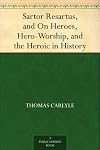
Sartor Resartus, and On Heroes, Hero-Worship, and the Heroic in History
by Thomas Carlyle
On This Page
Description
1831 and 1841. Scottish-born British historian and essayist who was a leading figure in the Victorian era. Carlyle's Sartor Resartus was a disguised spiritual autobiography, in which he faces the tendencies to intellectual skepticism and dedicates himself to a life of spiritual affirmation. The first half of the book is about the ideas of a self-made philosopher who believes everything can be explained in terms of clothes. Carlyle also undertook several series of lectures, of which the most show more significant was On Heroes, Hero-Worship and the Heroic in History. See other works by this author available from Kessinger Publishing. show lessTags
Recommendations






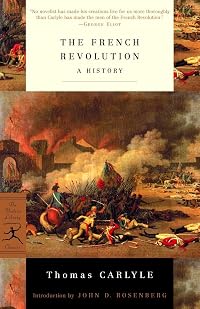














Member Recommendations

slickdpdx It is as if Carlyle willed Nietzsche into being.
Member Reviews
Sartor Resartus and On Heroes and Hero Worship
Carlyle, Thomas Hudson, W.H. [Introduction]
Published by , 1964
Carlyle, Thomas Hudson, W.H. [Introduction]
Published by , 1964
Ratings
Members
- Recently Added By
Author Information

477+ Works 6,293 Members
Thomas Carlyle was a social critic and historian born in Ecclefechan, Dumfriesshire, Scotland, December 4, 1795, the same year as John Keats, but Carlyle is considered an early Victorian rather than a Romantic. After completing his elementary studies, he went to the University of Edinburgh but left in 1814 without a degree. His parents wanted him show more to become a minister in the Scottish church, but his independence of spirit made such a life program impossible. In 1816 he fell in love with, and was rejected by, a young woman. His love affair was followed by a period of doubt and uncertainty described vividly in Sartor Resartus, a work published in 1833 that attracted much attention. Carlyle's first literary work reveals his admiration for German thought and philosophy, and especially for the two great German poets Schiller and Goethe. The fictional autobiography of a philosopher deeply impressed Ralph Waldo Emerson who brought it back to the United States to be published there. History of the French Revolution (1837), rewritten after parts of it were mistakenly burned as kindling by John Stuart Mill, cemented Carlyle's reputation. The work brought him fame but no great wealth. As a result of his comparative poverty he was induced to give four series of public lectures. Of these the most famous were those On Heroes, Hero-Worship, and the Heroic of History delivered in 1840 and published in 1841. Past and Present (1843), and Latter Day Pamphlets (1850) present his economic and industrial theories. With The Letters and Speeches of Oliver Cromwell (1845), The Life of John Sterling (1851), and History of Frederick II of Prussia, Called Frederick the Great (1858-1865) he returned to biography. In 1865, Carlyle was made Lord Rector of Edinburgh. (Bowker Author Biography) show less
Series
Belongs to Publisher Series
Everyman's Library (278)
Work Relationships
Contains
Common Knowledge
- Original publication date
- 1934
Classifications
Statistics
- Members
- 212
- Popularity
- 154,449
- Reviews
- 2
- Rating
- (3.30)
- Languages
- English
- Media
- Paper, Ebook
- ISBNs
- 9
- ASINs
- 24