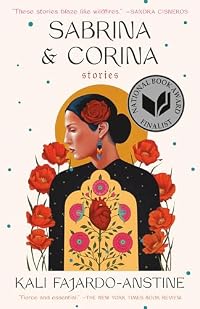
Sabrina & Corina: Stories
by Kali Fajardo-Anstine
On This Page
Description
Kali Fajardo-Anstine's magnetic story collection breathes life into her Latina characters of indigenous ancestry and the land they inhabit in the American West. Against the remarkable backdrop of Denver, Colorado--a place that is as fierce as it is exquisite--these women navigate the land the way they navigate their lives: with caution, grace, and quiet force.Tags
Recommendations



Member Reviews
This is yet another exception to my avoidance of short story collections; thanks to Ted Chiang and others, the exceptions threaten to outnumber the rule.
These are vividly realistic stories about Latina women living in Denver and southern Colorado, dealing with racism and poverty, and accompanying issues like drug addiction. They're not really "downers"; there's hope and persistence and resistance. In one, Josie becomes a mother at 16, and may no longer be able to handle raising now 10 year old Sierra. In the title story, one cousin, Sabrina, is spectacularly beautiful and has high hopes, but the lack of opportunities drive her to drugs and promiscuity. Corina, plainer, tries to keep her cousin from completely going off the rails, while show more going to beauty school and trying to establish her own life. Other stories show the holes in our supposed social safety nets. In one, when a mother contracts breast cancer, there are no good options. Her husband's insurance doesn't cover worthwhile treatments, and he can't leave his job to help care for her. What they end up doing is a sad commentary on healthcare in this country.
This excellent collection is piercing, but never unhopeful. show less
These are vividly realistic stories about Latina women living in Denver and southern Colorado, dealing with racism and poverty, and accompanying issues like drug addiction. They're not really "downers"; there's hope and persistence and resistance. In one, Josie becomes a mother at 16, and may no longer be able to handle raising now 10 year old Sierra. In the title story, one cousin, Sabrina, is spectacularly beautiful and has high hopes, but the lack of opportunities drive her to drugs and promiscuity. Corina, plainer, tries to keep her cousin from completely going off the rails, while show more going to beauty school and trying to establish her own life. Other stories show the holes in our supposed social safety nets. In one, when a mother contracts breast cancer, there are no good options. Her husband's insurance doesn't cover worthwhile treatments, and he can't leave his job to help care for her. What they end up doing is a sad commentary on healthcare in this country.
This excellent collection is piercing, but never unhopeful. show less
"Her stance was wobbly and unrefined, as though she had given someone else permission to wear her skin. That's when I knew she was forever caught in her own undercurrent, bouncing from one deep swell to the next. She would never lift me out of that sea. She would never pause to fill her lungs with air. Soon the worlds would yank her chain of sadness against every shore, every rock, every glass-filled beach, leaving nothing but the broken hull of a drowned woman." Any Further West
In the above quote thirteen year old Casey is describing her mother, who we know doesn't live much into her thirties. All of the selections in this new collection are set in and around Denver, Colorado and involve women mostly, of Latina heritage, just like the show more author who can trace her family back to when Colorado was part of Mexico. Like all short story collections, some were stronger than others but all the stories in this collection are very good. Wonderful even.
Women are the stars here, in one way or another. The ones that stand out to me are the ones who looked trouble in the face and stood up to it eventually and against all odds. Drugs, alcohol, poverty.....all the usual suspects roam around the streets and lives of the characters in these stories. But somehow the warmth of these families comes through and one after the other someone steps forward and lends a helping hand or saves the day. In the title story, Sabrina has been strangled and her grandmother insists that Corina, who works in the make-up department at Macy's, be the one to apply the make-up for the open casket, " paying special attention to her neck." Family is everything in these stories. Outsiders are not welcome or especially useful. But family......
These characters exuded life and will stay with me for a long time. Highly recommended. show less
In the above quote thirteen year old Casey is describing her mother, who we know doesn't live much into her thirties. All of the selections in this new collection are set in and around Denver, Colorado and involve women mostly, of Latina heritage, just like the show more author who can trace her family back to when Colorado was part of Mexico. Like all short story collections, some were stronger than others but all the stories in this collection are very good. Wonderful even.
Women are the stars here, in one way or another. The ones that stand out to me are the ones who looked trouble in the face and stood up to it eventually and against all odds. Drugs, alcohol, poverty.....all the usual suspects roam around the streets and lives of the characters in these stories. But somehow the warmth of these families comes through and one after the other someone steps forward and lends a helping hand or saves the day. In the title story, Sabrina has been strangled and her grandmother insists that Corina, who works in the make-up department at Macy's, be the one to apply the make-up for the open casket, " paying special attention to her neck." Family is everything in these stories. Outsiders are not welcome or especially useful. But family......
These characters exuded life and will stay with me for a long time. Highly recommended. show less
Absolutely beautiful. I knew from the first few pages of the first perfectly constructed story that this was the work of a master. Look, my company published Trust Exercise and I liked it a lot, too, but I do think that if it weren't for that book's meta-literariness (catnip to book nerds), then Sabrina & Corina probably should have won the National Book Award. I can't wait to read more of Fajardo-Anstine's work!
5 stars and instantly going on my new "to re-read" list.
First read, favorite stories:
Sugar Babies
Sabrina & Corina
Sisters
Cheeseman Park
Tomi
All Her Names
That's half the book isn't it? Aiyah!
One thing I particularly loved was that, even if every story could stand on its own, there were some recurring characters woven into other show more stories. Only in one case, I think, did a side character later get their own story, but the way these women touched each others lives from a distance underscored their commonalities. One major recurring theme was abandonment by a parent, sometimes a white one. A quote from "Sisters" about white men viewing Latina and Chicano women as exotic arm candy hints heavily at part of the problem, and I can't help but think back to Cherie Moraga's brother in Native Country of the Heart, who abandoned his birth family to devote himself to his white wife.
As I said, I'll be reading this again. There's so much to digest in short stories.
Quote Roundup
p. 44) I thought of all the women my family had lost, the horrible things they'd witnessed, the acts they simply endured. Sabrina had become another face in a line of tragedies that stretched back generations. And soon, when the mood hit my grandmother just right, she'd sit at her kitchen table, a Styrofoam cup of lemonade in her warped hand, and she'd tell the story of Sabrina Cordova--how men loved her too much, how little she loved herself, how in the end it killed her. The stories always ended the same, only different girls died, and I didn't want to hear them anymore.
This systemic violence against Latinas/Chicanas struck me as a bit of a parallel to police violence against black men.
p. 51) Doty felt white men treated her as something less than a full woman, a type of exotic object to display in their homes like a dead animal.
Ah, here's the "arm-candy" quote I mentioned above--significantly more profound and pointed than my dumb memory of it. I found this story, "Sisters," which featured a lesbian woman in the 1950s, one of the most poignant.
p. 128) The homeless man held his ground and the animal soon retreated, leaving the veranda silent once more. The woman with the infant thanked my mother, ignoring the homeless man as he retreated, slouched and small, back where he came.
Since I work in a soup kitchen, I was very touched by this portrayal of the homeless. I know so many good people who would do things like this, even when society treats all of them as invisible.
p. 138-139) "I've been looking at some photos of myself," she said. "Mostly from when I was with your father. I'm a little embarrassed. . . . I can tell how sad I look. It's something in my eyes. . . . But it changed."
I asked her how. . .
"The world did. It became less urgent, somehow bigger, and I didn't worry so much about being loved."
I'm fortunate never to have suffered this kind of serious domestic abuse, but I identify with Monica's mother's realization. I just got lucky. I got happy being alone, and then I grew happy being with someone else.
p. 204) For the remainder of class, Brown lectures, answers appropriate questions, and shakes her head, no, not quite, when a front-row student compares the cliff dwellings of Mesa Verde to the grandeur of Notre Dame.
Oh, the irony overload in this sentence...
[Again, no idea if those dates are right or not] show less
5 stars and instantly going on my new "to re-read" list.
First read, favorite stories:
Sugar Babies
Sabrina & Corina
Sisters
Cheeseman Park
Tomi
All Her Names
That's half the book isn't it? Aiyah!
One thing I particularly loved was that, even if every story could stand on its own, there were some recurring characters woven into other show more stories. Only in one case, I think, did a side character later get their own story, but the way these women touched each others lives from a distance underscored their commonalities. One major recurring theme was abandonment by a parent, sometimes a white one. A quote from "Sisters" about white men viewing Latina and Chicano women as exotic arm candy hints heavily at part of the problem, and I can't help but think back to Cherie Moraga's brother in Native Country of the Heart, who abandoned his birth family to devote himself to his white wife.
As I said, I'll be reading this again. There's so much to digest in short stories.
Quote Roundup
p. 44) I thought of all the women my family had lost, the horrible things they'd witnessed, the acts they simply endured. Sabrina had become another face in a line of tragedies that stretched back generations. And soon, when the mood hit my grandmother just right, she'd sit at her kitchen table, a Styrofoam cup of lemonade in her warped hand, and she'd tell the story of Sabrina Cordova--how men loved her too much, how little she loved herself, how in the end it killed her. The stories always ended the same, only different girls died, and I didn't want to hear them anymore.
This systemic violence against Latinas/Chicanas struck me as a bit of a parallel to police violence against black men.
p. 51) Doty felt white men treated her as something less than a full woman, a type of exotic object to display in their homes like a dead animal.
Ah, here's the "arm-candy" quote I mentioned above--significantly more profound and pointed than my dumb memory of it. I found this story, "Sisters," which featured a lesbian woman in the 1950s, one of the most poignant.
p. 128) The homeless man held his ground and the animal soon retreated, leaving the veranda silent once more. The woman with the infant thanked my mother, ignoring the homeless man as he retreated, slouched and small, back where he came.
Since I work in a soup kitchen, I was very touched by this portrayal of the homeless. I know so many good people who would do things like this, even when society treats all of them as invisible.
p. 138-139) "I've been looking at some photos of myself," she said. "Mostly from when I was with your father. I'm a little embarrassed. . . . I can tell how sad I look. It's something in my eyes. . . . But it changed."
I asked her how. . .
"The world did. It became less urgent, somehow bigger, and I didn't worry so much about being loved."
I'm fortunate never to have suffered this kind of serious domestic abuse, but I identify with Monica's mother's realization. I just got lucky. I got happy being alone, and then I grew happy being with someone else.
p. 204) For the remainder of class, Brown lectures, answers appropriate questions, and shakes her head, no, not quite, when a front-row student compares the cliff dwellings of Mesa Verde to the grandeur of Notre Dame.
Oh, the irony overload in this sentence...
[Again, no idea if those dates are right or not] show less
Wow! This is an impressive story collection. I love discovering a fresh new voice, and this young author delivers. Mostly female characters populate, these stories- mothers, daughters, sisters, cousins and friends and all of Latina heritage, living in the Denver metropolitan area. There is some joy found in these pages, but are struggles too, along with a hefty dose of grit. This was a National Book finalist and I clearly think it is deserving. Here is a sample of her lovely prose:
“Her stance was wobbly and undefined, as though she had given someone else permission to wear her skin. That's when I knew she was forever caught in her own undercurrent, bouncing from one deep swell to the next. She would never lift me out of that sea. She show more would never pause to fill her lungs with air. Soon the world would yank her chain of sadness against every shore, every rock, every glass-filled beach, leaving nothing but the broken hull of a drowned woman." show less
“Her stance was wobbly and undefined, as though she had given someone else permission to wear her skin. That's when I knew she was forever caught in her own undercurrent, bouncing from one deep swell to the next. She would never lift me out of that sea. She show more would never pause to fill her lungs with air. Soon the world would yank her chain of sadness against every shore, every rock, every glass-filled beach, leaving nothing but the broken hull of a drowned woman." show less
On the shortlist for this year’s National Book Award, Sabrina & Corina by Kali Fajardo-Anstine is a collection of stories about the American West and the people of color who live there. These short stories connect not only through the characters’ backgrounds, but through the Colorado location, where they all inhabit the same small towns and neighborhoods, and even use the same cemetery. They also connect through the themes of family and lives with missing pieces--mostly parents who left or died-- and the relationships between those left behind. Fajardo-Anstine constructs a beautiful, painful world of early deaths, grandparents, poverty, and addiction through these snippets of lives written in even smaller snippets that often flash show more back and forth through the characters' lives. This a gorgeous and interesting collection of stories doubtful to win the NBA, but certainly worth a read. show less
11 poignant, gut-wrenching stories told from the perspective of the indigenous Chicana community of Denver and Southern Colorado.
There aren’t many writers currently writing about Chicana Indigenous women. These stories, told in the voices of women of various ages deal with maternal loss, maternal abandonment, violence against women, poverty, addiction, and, ultimately survival.
Kali Fajardo-Anstine grew up in Colorado and it is clear throughout that she understands what her characters are going through. The stories are told with compassion and the women come alive on the page. There is no doubt in the reader’s mind that they are real, living, breathing women inhabiting the Colorado desert towns.
While there is no real connection show more between the stories, the common setting and the fleeting mention of a character from another story here and there, make the book cohesive and the shared heritage and experiences, authentic.
I must admit that I was painfully aware of my white privilege the entire time I was reading this book and of that fact that I know so little about the hardships portrayed in these stories that so many women endure on a daily basis.
As with all story collections, I found myself engrossed in some more than others. My two favorite stories were Remedies and Tomi, followed by Sisters and Any Further West, but this is undoubtedly a solid debut collection and I am excited to see what the author is going to give us next. show less
There aren’t many writers currently writing about Chicana Indigenous women. These stories, told in the voices of women of various ages deal with maternal loss, maternal abandonment, violence against women, poverty, addiction, and, ultimately survival.
Kali Fajardo-Anstine grew up in Colorado and it is clear throughout that she understands what her characters are going through. The stories are told with compassion and the women come alive on the page. There is no doubt in the reader’s mind that they are real, living, breathing women inhabiting the Colorado desert towns.
While there is no real connection show more between the stories, the common setting and the fleeting mention of a character from another story here and there, make the book cohesive and the shared heritage and experiences, authentic.
I must admit that I was painfully aware of my white privilege the entire time I was reading this book and of that fact that I know so little about the hardships portrayed in these stories that so many women endure on a daily basis.
As with all story collections, I found myself engrossed in some more than others. My two favorite stories were Remedies and Tomi, followed by Sisters and Any Further West, but this is undoubtedly a solid debut collection and I am excited to see what the author is going to give us next. show less
A terrific debut collection. Fajardo-Anstine is writing about a very specific slice of American culture—Western Chicanas of indigenous ancestry, set mostly in Colorado—but she never reverts to type or falls into any sort of shorthand. These stories are about the many permutations of love and family, and the (mostly) mothers, daughters, sisters, and aunts here are wonderful creations. There is so much heart in this collection, and so much good writing as well. Really nicely done all the way through—a pleasure.
Members
- Recently Added By
Lists

2020 Notable Books for Adults
26 works; 5 members

Top Five Books of 2019
387 works; 111 members

National Book Award Finalists - Fiction
377 works; 11 members

Kirkus Starred Fiction Reviews of Books Published in 2019
411 works; 12 members

Fiction with Women's Names in the Title
378 works; 15 members
Author Information

2 Works 1,226 Members
Awards and Honors
Awards
Distinctions
Notable Lists
Common Knowledge
- Original publication date
- 2019
- Important places
- Denver, Colorado, USA
Classifications
Statistics
- Members
- 581
- Popularity
- 50,377
- Reviews
- 26
- Rating
- (4.15)
- Languages
- English, Italian, Spanish
- Media
- Paper, Audiobook, Ebook
- ISBNs
- 12
- ASINs
- 2