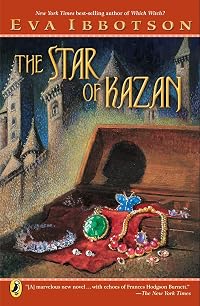
The Star of Kazan
by Eva Ibbotson
On This Page
Description
After twelve-year-old Annika, a foundling living in late nineteenth-century Vienna, inherits a trunk of costume jewelry, a woman claiming to be her aristocratic mother arrives and takes her to live in a strangely decrepit mansion in Germany.Tags
Recommendations

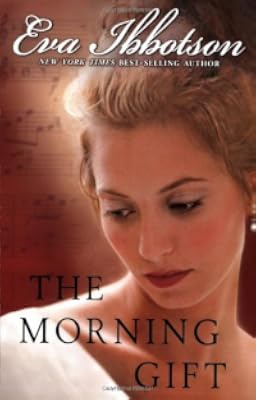
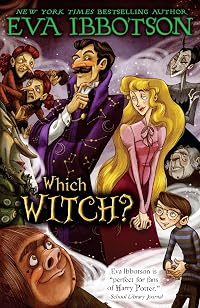



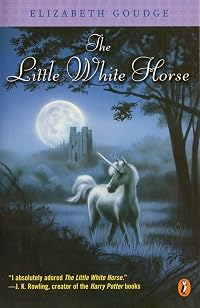
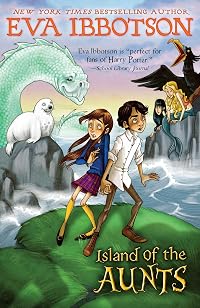
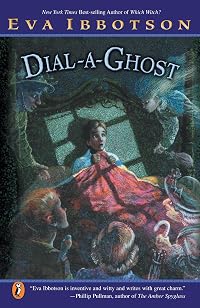
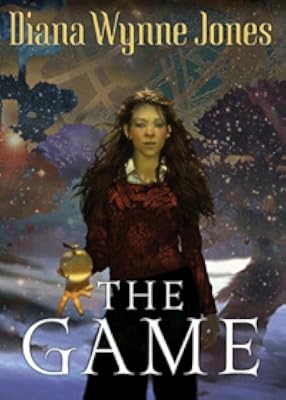
Member Recommendations
bmlg good-hearted orphans in a well-realised historical setting, finding their way among two-faced enemies and true friends, fast-moving adventure with twists and turns.

Member Reviews
If you have read Ibbotson or reviews of Ibbotson, you know her plots are pretty much alike. And even though this book is aimed at a middle grade audience, it contains the same elements as her books for adults, minus the grown-up romance. Before I go any further, I should say that the reason I and others keep reading these books, is that, although similar, they are delightful subverted fairytales that remain enchanting no matter how many retellings.
This story is set in 1908 Vienna, with its ornate architecture, sumptuous pastries, ubiquitous music, the Prater royal park containing the highest “Ferris Wheel" in Europe, and the famous Spanish riding school with its dancing white Lippizaner stallions. If you have never seen Vienna, it’s show more no matter: Ibbotson brings to life for you, describing the cinnamon and coffee smells, and the marzipan confections, and the sights and sounds along the River Danube. In particular, we get to know the neighborhood of Annika, a foundling adopted twelve years earlier by two employees of three eccentric professors who live not far from the Emperor’s Palace: the cook, Ellie, and housemaid, Sigrid. They become parents to Annika. But everyone in the household, as well as in the neighborhood, adores Annika.
Annika’s life is happy and satisfying, especially after she befriends an elderly woman across the square who tells her stories of her former life as “La Rondine,” a star of the stage. When La Rondine finally passes away, Annika is bereft.
Moreover, what Ellie fears the most finally comes true, as an elegant woman sweeps into their lives one day, coming to reclaim her long lost daughter Annika.
Discussion: As I mentioned above (and in previous posts), the bones of every adult book by Eva Ibbotson is the same, centering on a lovely fresh and innocent young girl instantly beloved by all who meet her; a terrible misunderstanding that pulls her apart from all she loves; and an ending in which suddenly the clouds of misunderstanding break and love conquers all. On top of this underlying and pretty much unerring plan, the distinctive elements of each book reflect the author’s passions: opera, ballet, art, and in this book, the Lippizaners stallions.
Another common element of Ibbotson books is the way in which the "have-nots" are the virtuous characters, and the members of the elite are generally bad. Ibbotson displays a great deal of sensitivity toward the injustices of class discrimination, but unfortunately, she somewhat undermines her case with the Cinderella-style endings to her stories. Not only do the poor kitchen maids end up princesses of some sort or other, but also they come into the means that enable them to live like the upper classes. (Needless to say, the heroine is, in all the books, more than generous to her previous detractors.) I’m not saying it is a bad thing for the heroine to end up rich and titled, but neither is it a total subversion. Rather, Ibbotson reinforces the valorization of the very social institutions she made so much effort to revile as effete and damaging to the qualities so valued in the heroine and her ilk (such as compassion, kindness, industriousness, generosity , etc.).
One other quibble I had with this particular book is very spoilery, so I shall leave it to you whether to read it or not.
Spoilery comments:
Annika is raised by two loving women who bring her up to be the lovely young woman she is. But she dreams of her real mother coming and when Edeltraut von Tannenberg enters her life, she gives nary a thought to Ellie and Sigrid in her joy of having her dream come true. When it turns out this woman is liar and a thief, Annika still sticks by her:
“Perhaps people who had always had mothers felt differently, but to her, her mother’s arrival, after the years of daydreaming about her, had been a miracle. She could not now turn her back on the person who had given her life.”
It is only when she finds out, finally, that the woman is also an imposter, and isn’t her actual mother at all, that she returns to Ellie and Sigrid. Again, Ibbotson cannot make a break with convention, and take the subversive leap of faith that sometimes “families” aren’t comprised of blood relations at all.
End of spoilery comments.
Evaluation: I loved this booknow, as an adult, and I know I would have loved it even more had I been at that age when it would have created a new world for me, much as The Secret Garden did. There is suspense, some mysteries to solve, and some very lovable side characters, especially Annika’s young friends. I especially enjoyed learning more about the Lippizaner stallions. (They still perform - you can learn more about them on the official website, here.) Highly recommended for you and the middle graders in your lives!
Note: The book also contains intermittent illustrations by Kevin Hawkes. show less
This story is set in 1908 Vienna, with its ornate architecture, sumptuous pastries, ubiquitous music, the Prater royal park containing the highest “Ferris Wheel" in Europe, and the famous Spanish riding school with its dancing white Lippizaner stallions. If you have never seen Vienna, it’s show more no matter: Ibbotson brings to life for you, describing the cinnamon and coffee smells, and the marzipan confections, and the sights and sounds along the River Danube. In particular, we get to know the neighborhood of Annika, a foundling adopted twelve years earlier by two employees of three eccentric professors who live not far from the Emperor’s Palace: the cook, Ellie, and housemaid, Sigrid. They become parents to Annika. But everyone in the household, as well as in the neighborhood, adores Annika.
Annika’s life is happy and satisfying, especially after she befriends an elderly woman across the square who tells her stories of her former life as “La Rondine,” a star of the stage. When La Rondine finally passes away, Annika is bereft.
Moreover, what Ellie fears the most finally comes true, as an elegant woman sweeps into their lives one day, coming to reclaim her long lost daughter Annika.
Discussion: As I mentioned above (and in previous posts), the bones of every adult book by Eva Ibbotson is the same, centering on a lovely fresh and innocent young girl instantly beloved by all who meet her; a terrible misunderstanding that pulls her apart from all she loves; and an ending in which suddenly the clouds of misunderstanding break and love conquers all. On top of this underlying and pretty much unerring plan, the distinctive elements of each book reflect the author’s passions: opera, ballet, art, and in this book, the Lippizaners stallions.
Another common element of Ibbotson books is the way in which the "have-nots" are the virtuous characters, and the members of the elite are generally bad. Ibbotson displays a great deal of sensitivity toward the injustices of class discrimination, but unfortunately, she somewhat undermines her case with the Cinderella-style endings to her stories. Not only do the poor kitchen maids end up princesses of some sort or other, but also they come into the means that enable them to live like the upper classes. (Needless to say, the heroine is, in all the books, more than generous to her previous detractors.) I’m not saying it is a bad thing for the heroine to end up rich and titled, but neither is it a total subversion. Rather, Ibbotson reinforces the valorization of the very social institutions she made so much effort to revile as effete and damaging to the qualities so valued in the heroine and her ilk (such as compassion, kindness, industriousness, generosity , etc.).
One other quibble I had with this particular book is very spoilery, so I shall leave it to you whether to read it or not.
Spoilery comments:
Annika is raised by two loving women who bring her up to be the lovely young woman she is. But she dreams of her real mother coming and when Edeltraut von Tannenberg enters her life, she gives nary a thought to Ellie and Sigrid in her joy of having her dream come true. When it turns out this woman is liar and a thief, Annika still sticks by her:
“Perhaps people who had always had mothers felt differently, but to her, her mother’s arrival, after the years of daydreaming about her, had been a miracle. She could not now turn her back on the person who had given her life.”
It is only when she finds out, finally, that the woman is also an imposter, and isn’t her actual mother at all, that she returns to Ellie and Sigrid. Again, Ibbotson cannot make a break with convention, and take the subversive leap of faith that sometimes “families” aren’t comprised of blood relations at all.
End of spoilery comments.
Evaluation: I loved this booknow, as an adult, and I know I would have loved it even more had I been at that age when it would have created a new world for me, much as The Secret Garden did. There is suspense, some mysteries to solve, and some very lovable side characters, especially Annika’s young friends. I especially enjoyed learning more about the Lippizaner stallions. (They still perform - you can learn more about them on the official website, here.) Highly recommended for you and the middle graders in your lives!
Note: The book also contains intermittent illustrations by Kevin Hawkes. show less
This is a very clever twist on the orphan-girl-finds-her-family type novel, with unforgettable characters and very evocative descriptions of landscape and cityscape. It certainly made me want to visit Vienna, and to read more of the author's work.
I couldn't put this book down, and the bit about the dog made me cry. Actually the whole Spittal section made me cry, but the bit about the dog really set me off.
The book avoids sentimentality and mawkishness, and the characters are deftly drawn and not stereotyped.
At the beginning of the book, the style was a little bit "for younger readers" but after a while it settled down and became more aimed at all ages.
Overall, this book deserves to be ranked as a classic alongside 'The Little Princess', show more 'The Lost Prince', and 'The Secret Garden'. show less
I couldn't put this book down, and the bit about the dog made me cry. Actually the whole Spittal section made me cry, but the bit about the dog really set me off.
The book avoids sentimentality and mawkishness, and the characters are deftly drawn and not stereotyped.
At the beginning of the book, the style was a little bit "for younger readers" but after a while it settled down and became more aimed at all ages.
Overall, this book deserves to be ranked as a classic alongside 'The Little Princess', show more 'The Lost Prince', and 'The Secret Garden'. show less
Star of Kazan by Eva Ibbotson is a children’s story about a young orphan who, abandoned at birth, goes through a series of adventures in order to find out where she truly belongs. I am a fan of this author and this book has become one of my favorites by her.
Set in Vienna, the city is an important part of the story and the author obviously knows and loves this city as it is brought to life through her descriptions. Annika, the abandoned baby, grows up in the care of a cook and housekeeper, but her family also includes the three professors that the servants work for, and indeed, many of the surrounding neighbours. Although a very happy child, she nevertheless dreams of her mother coming to find her. Her life takes a drastic turn when show more one day a regal looking woman comes knocking and claims Annika is her long lost daughter.
This is a timeless story that would appeal to the young at heart of all ages with it’s clever plot revolving around Annika’s heritage. Being a children’s story, all ends are neatly tied up by the end of the book but with it’s pre-WWI setting of Vienna and engaging characters, The Star of Kazan is a satisfying, feel good story for all ages. show less
Set in Vienna, the city is an important part of the story and the author obviously knows and loves this city as it is brought to life through her descriptions. Annika, the abandoned baby, grows up in the care of a cook and housekeeper, but her family also includes the three professors that the servants work for, and indeed, many of the surrounding neighbours. Although a very happy child, she nevertheless dreams of her mother coming to find her. Her life takes a drastic turn when show more one day a regal looking woman comes knocking and claims Annika is her long lost daughter.
This is a timeless story that would appeal to the young at heart of all ages with it’s clever plot revolving around Annika’s heritage. Being a children’s story, all ends are neatly tied up by the end of the book but with it’s pre-WWI setting of Vienna and engaging characters, The Star of Kazan is a satisfying, feel good story for all ages. show less
Nostalgic, comfortable, with a tour of Vienna thrown in. I particularly appreciated the four pages devoted to the Christmas Eve carp: when one marries into a family with Eastern or Mittel European heritage, one comes to understand the importance of these things. In fact, the food in this book was generally glorious. There's always something that I end up side-eyeing in Ibbotson's 'real world' books: in this case it was the stereotyped pre-war Prussians. But I enjoyed 'The Star of Kazan' for its insistence on good food, and the importance of the family that makes you its own.
It's a very Eva Ibbotson book -- very Vienna focused, very idyllic childhood (poor but happy), very idealized main character (so saintly, that girl). The audio book is well read, so I enjoyed it. If it was the first Eva Ibbotson book I had read, I would have probably loved it's fairy-tale predictability and idealistic world view. As it is, I found it dragged in detail and plot. You know it's all going to turn out for the best, but first we must agonize through all the hoops of sorrow and stress.
However, the characters are wonderful (well, Annika is a little too saintly), but the people in the square where she grows up are a hilarious cast of eccentrics. On the whole, good times, but doesn't have enough to it to re-read with pleasure.
However, the characters are wonderful (well, Annika is a little too saintly), but the people in the square where she grows up are a hilarious cast of eccentrics. On the whole, good times, but doesn't have enough to it to re-read with pleasure.
I do love my Eva Ibbotson! This book was very much in her mold. It is one of her children's books, but reminded me a lot of her books for adults, being set in Vienna with a heroine who is so good and loyal. You definitely cheer for Annika and her loved ones, and want to get even with her enemies. The plot isn't very surprising, you'll guess what is going on quite early, but the way the author gets us there is fun. The characters are all well formed and the settings and descriptions are vintage Ibbotson. This is probably my second favorite of her children's books. It will be hard for anything to beat Journey to the River Sea.
This was only the second of Ibbotson's books that I've read that wasn't a children's ghost story (the first was Journey to the River Sea) and I pretty much loved it. I am incredibly happy that I have so many of her books still ahead of me. It almost makes up for the fact that I'm nearly out of new Diana Wynne Jones books (almost but ... well ... not really ... ::small sob::). This story had a lot of great elements and I didn't have any problems with it until right at the end. The main character, Annika, makes a choice that I guess is a good example for children of being forgiving and kind but I really wanted her to go the revenge and prosecution route!
http://webereading.com/2013/05/catching-up-1-yamg-collection.html
http://webereading.com/2013/05/catching-up-1-yamg-collection.html
Members
- Recently Added By
Published Reviews
Kirkus (Kirkus Reviews, September 15, 2004 (Vol. 72, No. 18))
Ibbotson, master of the "poor orphan makes good" tale, offers another eminently satisfying example, this one wrapped in a valentine to Vienna, the author's natal city. Raised by servants to be "a person who was interested in doing things, not having them," 11-or-so-year-old foundling Annika sees a dream come true when lovely, regal show more Edeltraut von Tannenberg appears at the door one day, joyously announcing that she's her real mother. Blinded by adoration, Annika barely notices how badly in need of repairs is her fortress-like new home, or how poorly she fits in with her spoiled and predatory new "family." Readers will, though, as piece by piece, the author reveals an elaborate, clever fraud involving faked documents, smoothly plausible lies, and a hoard of supposedly imitation jewelry that Annika has inherited from an elderly neighbor. Creating suspense by letting readers into the scheme long before Annika and her friends, Ibbotson also paints a vivid picture of pre-WWI Vienna, from its delectable pastries to the famed show horses of the Spanish Riding School. Along with this beguiling atmosphere and expertly developed plot, readers will long remember the admirable Annika and cheer her eventual, well-deserved, triumph. Illustrations not seen. 2004, Dutton, 336p, $16.99. Category: Fiction. Ages 10 to 13. Starred Review. © 2004 Kirkus Reviews/VNU eMedia, Inc. All rights reserved. show less
Ibbotson, master of the "poor orphan makes good" tale, offers another eminently satisfying example, this one wrapped in a valentine to Vienna, the author's natal city. Raised by servants to be "a person who was interested in doing things, not having them," 11-or-so-year-old foundling Annika sees a dream come true when lovely, regal show more Edeltraut von Tannenberg appears at the door one day, joyously announcing that she's her real mother. Blinded by adoration, Annika barely notices how badly in need of repairs is her fortress-like new home, or how poorly she fits in with her spoiled and predatory new "family." Readers will, though, as piece by piece, the author reveals an elaborate, clever fraud involving faked documents, smoothly plausible lies, and a hoard of supposedly imitation jewelry that Annika has inherited from an elderly neighbor. Creating suspense by letting readers into the scheme long before Annika and her friends, Ibbotson also paints a vivid picture of pre-WWI Vienna, from its delectable pastries to the famed show horses of the Spanish Riding School. Along with this beguiling atmosphere and expertly developed plot, readers will long remember the admirable Annika and cheer her eventual, well-deserved, triumph. Illustrations not seen. 2004, Dutton, 336p, $16.99. Category: Fiction. Ages 10 to 13. Starred Review. © 2004 Kirkus Reviews/VNU eMedia, Inc. All rights reserved. show less
added by kthomp25
Lists

A Child's Book Tour of Austria
14 works; 2 members

Children's Literature, Briefly Historical Fiction Reading List
44 works; 4 members

Books Read in 2016
110 works; 1 member
Author Information

40+ Works 22,423 Members
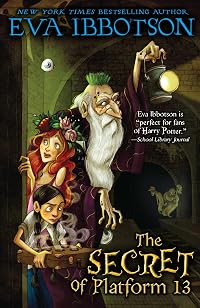
Eva Ibbotson was born in Vienna, Austria, on January 21, 1925. She graduated from Bedford College, London with a degree in physiology in 1945 and the University of Durham with a degree in education in 1965. Her first book, The Great Ghost Rescue, was published in 1975. She primarily wrote children's book and romance novels for adults and young show more adults. Her other works include The Secret of Platform 13, The Star of Kazan, Which Witch?, Island of the Aunts, Dial-a-Ghost, The Ogre of Oglefort, A Company of Swans, and A Song For Summer. She won the Nestlé Smarties Book Prize for Journey to the River Sea. She died on October 20, 2010 at the age of 85. (Bowker Author Biography) show less
All Editions
Some Editions
Awards and Honors
Awards
Distinctions
Common Knowledge
- Canonical title
- The Star of Kazan
- Original title
- The Star of Kazan
- Original publication date
- 2004
- People/Characters
- Annika; Ellie; Sigrid; Pauline; Stefan; Zed (show all 11); Rocco (bay stallion); Hector (water spaniel); Professor Julius; Professor Emil; Professor Gertrude
- Important places
- Vienna, Austria; Germany; Austria
- Dedication
- For Rowan
- First words
- Ellie had gone into the church because of her feet.
- Last words
- (Click to show. Warning: May contain spoilers.)Then, 'I'm hungry,' said Hansi -- and Ellie nodded, and they all went home.
Classifications
- Genres
- Fiction and Literature, Kids, Tween, Children's Books
- DDC/MDS
- 823.914 — Literature & rhetoric English & Old English literatures English fiction 1900- 1901-1999 1945-1999
- LCC
- PZ7 .I117 .S — Language and Literature Fiction and juvenile belles lettres Fiction and juvenile belles lettres Juvenile belles lettres
- BISAC
Statistics
- Members
- 1,473
- Popularity
- 15,827
- Reviews
- 41
- Rating
- (3.93)
- Languages
- 9 — Danish, English, Estonian, Finnish, French, German, Italian, Spanish, Swedish
- Media
- Paper, Audiobook, Ebook
- ISBNs
- 47
- ASINs
- 13