
On This Page
Description
Anna does boring things for terrible people because even criminals need office help and she needs a job. As a temp, she's just a cog in the machine. But when she finally gets a promising assignment, everything goes very wrong, and an encounter with the so-called 'hero' leaves her badly injured. So, of course, then she gets laid off. With no money and no mobility, with only her anger and internet research acumen, she discovers her suffering at the hands of a hero is far from unique. When show more people start listening to the story that her data tells, she realizes she might not be as powerless as she thinks. Because the key to everything is data: knowing how to collate it, how to manipulate it, and how to weaponize it. show lessTags
Recommendations








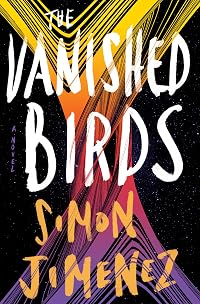
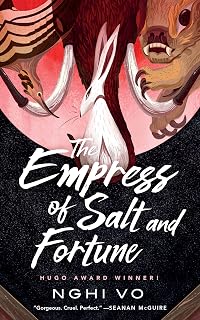
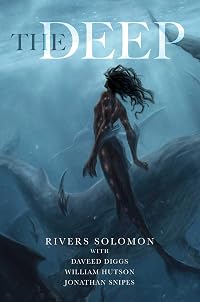
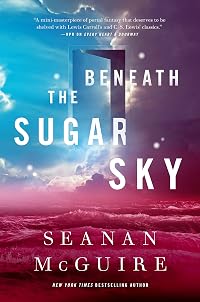

Member Recommendations

Caramellunacy For a more light-hearted romance between an assistant coming into her own and The Villain.

Caramellunacy Both stories examine the oft-ignored collateral damage/impact from superhero antics and focus on bullet-journal/spreadsheet wizards, though Hench is darker and built on more rage.
Caramellunacy A YA society with superheroes and villains and a look at the injustice and corruption in the impact from the system.
Member Reviews
Anna is working as a temp hench, largely doing analysis for a supervillain. When she goes out in the field for the first time, she's injured by a superhero who pushed her out of the way while going after her boss. Now Anna is obsessed with how much damage superheroes do while purportedly saving people and begins doing the math. Her work catches the eye of one of the biggest supervillains in the business, pulling Anna into a conflict that has the possibility of changing how everyone views superheroes.
Such a compelling read and one where I was never quite sure where it was going next. Walschots engages thoughtfully with the thin line between hero and villain and how often the only thing differentiating them is public narrative. She also show more creates a central character who isn't interested in being a major villain but just wants to do her work and is slowly transformed by it. Obviously this will have greatest appeal to readers who enjoy superhero narratives but readers who aren't into the genre will find plenty to appreciate here. show less
Such a compelling read and one where I was never quite sure where it was going next. Walschots engages thoughtfully with the thin line between hero and villain and how often the only thing differentiating them is public narrative. She also show more creates a central character who isn't interested in being a major villain but just wants to do her work and is slowly transformed by it. Obviously this will have greatest appeal to readers who enjoy superhero narratives but readers who aren't into the genre will find plenty to appreciate here. show less
{Stand alone? Urban fantasy, superheroes, contemporary} (2020)
What if superheroing were run like a business and so, therefore, would supervillaining also be. And, to help them in their dastardly deeds, what if supervillains and other calibres of villains, employed people - known as henches (supplying brain power) or Meat (likewise for brawn) in their companies? Our heroine ... er ... villainess, Anna, is one such hench.
(Her surname is always being mangled and, yes, her dating life fails to launch. Don’t expect romance here - though she fancies a few people - but there are some good friendships.)
Initially she survives from temp job to job analysing data and show more working remotely but when she takes her first step to working in the office of a minor villain, she ends up being caught in the crossfire, so to speak, when a team of superheroes (including Supercollider, the most famous hero) foils one of his schemes. While recuperating, she idly starts calculating the cost of the damage of that incident which she then extends to other superhero rescues and starts a blog which brings her to the attention of Leviathan, The supervillain, who offers her a permanent job. Then she can really bring her talents to bear against superheroes.
I must say, the incidental damage that occurs in superhero films always makes me wince, imagining what that kind of destruction would cause and cost in a normal person's life.
Walschots expands that idea to henches - people who may be on the bad guys' team but are only there to earn a living and who are considered expendable by the villains they work for and by the heroes who disregard them as collateral damage.
She also casts a pejorative eye at the bureaucracy, in her world (where everyone is tested in school for superpowers and heroes, villains, sidekicks and henches may be cybernetically enhanced), that creates and supports superheroes.
(um - she really doesn't like Supercollider, who caused her lifelong injuries)
Granted this story is told from the point of support staff to villains, so you do have to suspend your moral judgment (I assume you have one?); having done which, there are some very amusing moments. (The one that startled me into laughing out loud is too spoilerish to quote here, unfortunately.) I did find some moments a little bit ... squicky, especially towards the end (so a quarter star off for overenthusiastic vindictiveness. Even if it is 'for the greater good').
Walschots pokes fun at several superhero tropes such as superhero/ villain speeches
or Quantum Entanglement, the Maori superhero Anna admires the most (or, even, at all) having to relocate to the USA from New Zealand. Because all superheroes live and work in the USA.
I did like the way ladies are portrayed and one, especially 'whom he'd kept under his thumb for the better part of twelve years', really finds her feet.
Despite the story being about supervillains/ superheroes, I can't see it appealing to kids given that it centres around working in an office, running spreadsheets and, to some extent, office culture. And (my parent-mode is going down still fighting) there is a lot of casual swearing.
This was an unusual idea (for me, anyway), grippingly told. This felt like this told Anna's story and is complete in itself ... but I do wonder which of her options she's going to choose to explore next. There was a really good idea mentioned near the end and I'd be interested in that story.
June 2021
4.75 stars
just noting some quotes, before my Overdrive book expires:
She raised a perfect, threaded eyebrow. The Meat eating the sandwich unconsciously let his arm waver, and a tomato slid out from between the bread and hit the floor. Shirtless grabbed a tea towel and tried to hide his naked chest behind it.
I cleared my throat. It seemed to snap them out of their shock enough to hustle out, Shirtless still demurely trying to hide behind the tiny square of cotton towel. show less
What if superheroing were run like a business and so, therefore, would supervillaining also be. And, to help them in their dastardly deeds, what if supervillains and other calibres of villains, employed people - known as henches (supplying brain power) or Meat (likewise for brawn) in their companies? Our heroine ... er ... villainess, Anna, is one such hench.
“Anna Tromedlov,” I croaked.
“Am I speaking with . . . the Palindrome?”
(Her surname is always being mangled and, yes, her dating life fails to launch. Don’t expect romance here - though she fancies a few people - but there are some good friendships.)
Initially she survives from temp job to job analysing data and show more working remotely but when she takes her first step to working in the office of a minor villain, she ends up being caught in the crossfire, so to speak, when a team of superheroes (including Supercollider, the most famous hero) foils one of his schemes. While recuperating, she idly starts calculating the cost of the damage of that incident which she then extends to other superhero rescues and starts a blog which brings her to the attention of Leviathan, The supervillain, who offers her a permanent job. Then she can really bring her talents to bear against superheroes.
I must say, the incidental damage that occurs in superhero films always makes me wince, imagining what that kind of destruction would cause and cost in a normal person's life.
A budding restaurateur whose business was physically demolished by an errant eye laser. A makeup artist blinded by psionics. A parade of mortified flesh: burned, crushed, frozen, liquified. Buildings people saved years or decades to afford reduced to rubble by a hero blundering through. The endless reams of psychological damage. A litany of heroes leaving trauma blossoming in their wake.
Walschots expands that idea to henches - people who may be on the bad guys' team but are only there to earn a living and who are considered expendable by the villains they work for and by the heroes who disregard them as collateral damage.
'My point is just, if we're willing to tolerate that, who is going to care about a temp worker's spiral fracture?'
Or a photographer's spinal injury. I let that unspoken sentence hang. The journalist's experience had been similar to mine; Supercollider had learned so much of his manner and affect and approach from his old hero. Proton was vaguely apologetic, but once he was satisfied that the young photographer he had catastrophically injured wasn't a threat (with no aspirations to villainy), the hero forgot about McKinnon entirely.
She also casts a pejorative eye at the bureaucracy, in her world (where everyone is tested in school for superpowers and heroes, villains, sidekicks and henches may be cybernetically enhanced), that creates and supports superheroes.
Supercollider had a great deal in common with a diamond: aesthetically tacky; value artificially ascribed by corporate greed; cultural significance vastly overinflated; and incredibly hard to damage.
(um - she really doesn't like Supercollider, who caused her lifelong injuries)
Granted this story is told from the point of support staff to villains, so you do have to suspend your moral judgment (I assume you have one?); having done which, there are some very amusing moments. (The one that startled me into laughing out loud is too spoilerish to quote here, unfortunately.) I did find some moments a little bit ... squicky, especially towards the end (so a quarter star off for overenthusiastic vindictiveness. Even if it is 'for the greater good').
Walschots pokes fun at several superhero tropes such as superhero/ villain speeches
'Have you ever met him, Quantum?'
She looked utterly startled. 'Of course! We've fought -'
'No. Like when you were not trying to kill each other. Has he ever actually exchanged words with you.' She opened her mouth to speak. 'Delivering a monologue in the third person does not count, nor do general threats.'
'Oh. No.' She pressed her lips together and frowned, furrowing her brow and trying to think. 'We've never - no. I don't think so.'
or Quantum Entanglement, the Maori superhero Anna admires the most (or, even, at all) having to relocate to the USA from New Zealand. Because all superheroes live and work in the USA.
I did like the way ladies are portrayed and one, especially 'whom he'd kept under his thumb for the better part of twelve years', really finds her feet.
Despite the story being about supervillains/ superheroes, I can't see it appealing to kids given that it centres around working in an office, running spreadsheets and, to some extent, office culture. And (my parent-mode is going down still fighting) there is a lot of casual swearing.
This was an unusual idea (for me, anyway), grippingly told. This felt like this told Anna's story and is complete in itself ... but I do wonder which of her options she's going to choose to explore next. There was a really good idea mentioned near the end and I'd be interested in that story.
June 2021
4.75 stars
just noting some quotes, before my Overdrive book expires:
She raised a perfect, threaded eyebrow. The Meat eating the sandwich unconsciously let his arm waver, and a tomato slid out from between the bread and hit the floor. Shirtless grabbed a tea towel and tried to hide his naked chest behind it.
I cleared my throat. It seemed to snap them out of their shock enough to hustle out, Shirtless still demurely trying to hide behind the tiny square of cotton towel. show less
I did really enjoy the ride but afterwards it left me feeling like I did with Dexter when I read it first, I came out of it and then realised that I empathised with the Villain. Kudos to the author for achieving that.
In a world with supervillains and superheroes there are temp agencies for henchpeople - referred to throughout as Henches and muscle - referred to throughout as Meat; which brings the true situation of some of them to stark light. Yes you work for villains, but is it any worse than working for a greedy corporation or a bank? Evil is subjective and sometimes very seductive. Anna (a wonderfully everywoman name to start) is close to the breadline, her temp jobs are very short-term and honestly she's struggling. When she gets a show more job where one of her tasks is to stand there as a token female behind a villain as he makes demands, it's not difficult for her to go with it, eating is a wonderful hobby.
But the superheroes arrive and she's collateral damage (and the villain lays her off with flowers while in hospital). A shattered leg and a long convalescence she starts to look into other collateral damage caused by superheroes (not villains!) and she discovers that there is a lot (not new territory, there was at least one graphic novel about the same concept, but rare territory) this leads to a blog and attention from both heroes and villains and the heroes aren't very convincing that they are the good guys when they ask her to stop.
It's about going down a path, without intending it, that leads to evil and how, honestly, often the side of good isn't great. It's also about the power of data and manipulation and how sometimes you can do bad things and think that you're doing good. And that sometimes you can do the right things for the wrong reasons and sometimes that's the best thing that can happen.
I really was sucked in and read it quite quickly, I hope Natalie Zina Walschots writes more. show less
In a world with supervillains and superheroes there are temp agencies for henchpeople - referred to throughout as Henches and muscle - referred to throughout as Meat; which brings the true situation of some of them to stark light. Yes you work for villains, but is it any worse than working for a greedy corporation or a bank? Evil is subjective and sometimes very seductive. Anna (a wonderfully everywoman name to start) is close to the breadline, her temp jobs are very short-term and honestly she's struggling. When she gets a show more job where one of her tasks is to stand there as a token female behind a villain as he makes demands, it's not difficult for her to go with it, eating is a wonderful hobby.
But the superheroes arrive and she's collateral damage (and the villain lays her off with flowers while in hospital). A shattered leg and a long convalescence she starts to look into other collateral damage caused by superheroes (not villains!) and she discovers that there is a lot (not new territory, there was at least one graphic novel about the same concept, but rare territory) this leads to a blog and attention from both heroes and villains and the heroes aren't very convincing that they are the good guys when they ask her to stop.
It's about going down a path, without intending it, that leads to evil and how, honestly, often the side of good isn't great. It's also about the power of data and manipulation and how sometimes you can do bad things and think that you're doing good. And that sometimes you can do the right things for the wrong reasons and sometimes that's the best thing that can happen.
I really was sucked in and read it quite quickly, I hope Natalie Zina Walschots writes more. show less
This is such a fun concept — taking a look at superheroes and villains from the side of the office jobs who keep their empires going. Anna is an excellent narrator with a fun voice; Tatiana Maslany would be a good choice to play her if this were a TV show. Meanwhile, I pictured Supercollider looking like Syndrome from The Incredibles. And although this starts out somewhat lighthearted, the story does escalate quickly. Anna grapples with post-traumatic stress and a long, painful recovery from a serious injury. The final showdown gets gory, too, to the point where I yelped out loud at some particularly gross moments. I imagine there’s a healthy percentage of readers who would want a sequel, but I think it ended perfectly the way it show more did. The last line was excellent. I recommend this book if you like media about the superhero world that look at it in a new way, in which protagonists don’t take themselves too seriously. show less
Rating: 4.5* of five, rounded up because I'm damn near popping from impatience to get her next book
I CHECKED THIS BOOK OUT OF MY LOCAL LIBRARY. SUPPORT YOUR LIBRARY, FOLKS! USE THEM OFTEN!
Several book ideas later, Author Walschots realized they all fit into one if she used a different frame...
I will make no bones about or apologies for my complete disdain for superhero crap. It's a bad social message. It's worse storytelling. The violence it does to physics and reality is incalculable.
Hey wait! I found *another* level of this book!
That this is a first novel is astonishing. That it is an assured and deft flensing of Western fascism and capitalism is a joy. That I am finding it now, nine months after William Morrow unleashed it on the US, show more is shocking. This should've flown at me, beating my head with its hard covers, demanding that it enter my consciousness long before now. Alas, the library wait-list was deep. I'm both glad and irked, because that means a lot more people have read it than might otherwise have been able to.
So, two reads in two weeks, and what I take away from it is: Love sucks.
Yeah, there's more, but given the data-destroying propensities of this place, I am leaving it at my blog: show less
I CHECKED THIS BOOK OUT OF MY LOCAL LIBRARY. SUPPORT YOUR LIBRARY, FOLKS! USE THEM OFTEN!
Several book ideas later, Author Walschots realized they all fit into one if she used a different frame...
I will make no bones about or apologies for my complete disdain for superhero crap. It's a bad social message. It's worse storytelling. The violence it does to physics and reality is incalculable.
Hey wait! I found *another* level of this book!
That this is a first novel is astonishing. That it is an assured and deft flensing of Western fascism and capitalism is a joy. That I am finding it now, nine months after William Morrow unleashed it on the US, show more is shocking. This should've flown at me, beating my head with its hard covers, demanding that it enter my consciousness long before now. Alas, the library wait-list was deep. I'm both glad and irked, because that means a lot more people have read it than might otherwise have been able to.
So, two reads in two weeks, and what I take away from it is: Love sucks.
Yeah, there's more, but given the data-destroying propensities of this place, I am leaving it at my blog: show less
While some folks have applied the description "fun" to this debut novel, that Walschot has commented on how "too much evil and misery takes place in the name of heroism," should tell you that there is some serious satire in play here. So, instead of a hero's journey, one has the twisted path of how our protagonist, a woman who has drifted into the "gig" economy providing administrative support to assorted mid-tier villains, becomes a catalyst to a plot to take down the dominant superhero team, mostly by using the tools of data analysis and social media warfare, to spectacular affect. I'm not going to say much more than that, except to also second that Walschot has a knack of body horror that will be a deterrent some readers to picking show more up this book, but I thought that this was a great deconstruction of superhero tropes under modern conditions. I'll be very interested in seeing what Walschot does with this setting in the future (she is trying to pull together a follow-up). show less
This was a book I didn't even know existed until it was suggested to me LibraryThing. And this book is near perfect for what it is. Smart characters, reasons for why things happen, plus it has the phrase "The Excel Pervert" to describe a character that is a genius with tables. Where I think the book shines (and I suspect that others may disagree with me), is the way the author handles backstories - things that don't matter. For example, our leading heroine, Anna Tromedlov and her parents are estranged. Why, doesn't matter. Or that Anna is has superpowers, but its up to the reader to guess. They don't matter. What does matter is that Anna know how people work and how to use that information to break people.
Of course, this is a book about show more with very generic superheroes and villains - think superman rather than batman. And while the cost of a world with stereotypical superheroes includes buildings being damaged, there is a real injury to those on the sideline. This is a book that explores that. Its part revenge story, but its also part accountability.
This is a book written for this generation. Superheros as metaphor for gender, or Superheros as metaphor big corporations with no accountability. Also, throws in a bit of finding yourself. Also, social media as a weapon.
And last, I really appreciate that the characters here while obviously gay, or trans, or other, they are written fully. There is no "gay" character, there's just a man whose marriage broke when he switched to being a bad guy, or a character that uses the pronoun 'They', but is a cybernetic wiz. The only exception to this is our superman analog - but, there's a great explanation for this, and really does make you think about the harm that comes from forcing kids to a certain mold. show less
Of course, this is a book about show more with very generic superheroes and villains - think superman rather than batman. And while the cost of a world with stereotypical superheroes includes buildings being damaged, there is a real injury to those on the sideline. This is a book that explores that. Its part revenge story, but its also part accountability.
This is a book written for this generation. Superheros as metaphor for gender, or Superheros as metaphor big corporations with no accountability. Also, throws in a bit of finding yourself. Also, social media as a weapon.
And last, I really appreciate that the characters here while obviously gay, or trans, or other, they are written fully. There is no "gay" character, there's just a man whose marriage broke when he switched to being a bad guy, or a character that uses the pronoun 'They', but is a cybernetic wiz. The only exception to this is our superman analog - but, there's a great explanation for this, and really does make you think about the harm that comes from forcing kids to a certain mold. show less
Members
- Recently Added By
Published Reviews
ThingScore 100
Walschots (Doom) gleefully blurs the line between heroes and villains in this hilarious peek behind the scenes of supervillains’ lairs.... Walschots playfully pokes at both office politics and comic book absurdity while offering gripping action and gut-wrenching body horror. The inventive premise, accessible heroine, and biting wit will have readers eager for more from this talented author.
added by karenb
Lists

Favorite Science Fiction by Women Authors
737 works; 202 members

Top Five Books of 2020
982 works; 350 members

Top Five Books of 2022
736 works; 272 members

ALA Reading List: Science Fiction 2021-2026
30 works; 3 members

Favorite Books from the 2010s
75 works; 3 members

Canada Reads Winners and Nominees
129 works; 9 members

Books Read in 2021
5,361 works; 114 members

Superhero Fantasy
81 works; 7 members

Books Read in 2022
5,168 works; 114 members

Global Reads: Books by Canadian Authors
6 works; 1 member

2023 Update: The Best Twenty Books You've Read in the Past Five Years
40 works; 3 members

Top Five Books of 2024
795 works; 264 members

Books We Couldn't Put Down
443 works; 197 members

Books We Discovered On LibraryThing
530 works; 130 members

Favorite Science Fiction
456 works; 218 members
Author Information

6+ Works 1,410 Members
Some Editions
Awards and Honors
Awards
Distinctions
Series

Common Knowledge
- Canonical title
- Hench
- Original publication date
- 2020-09-22
- People/Characters
- Anna Tromedlov a/k/a Palindrome, Auditor; Oscar (taxi driver); June; Greg; Electric Eel; Accelerator (show all 37); Supercollider; Quantum Entanglement; Sapphire Mask; Nucleus; Melinda (driver); Leviathan; Molly; Nour; Javier Khan; Darla; Tardigrade f/k/a Blast Furnace; Glassblower; Bob Keller; Defense Mechanism; Denial; Vesper f/k/a Gloom; Rosalind Fife; Ludmilla Illyushkin; Ocean Four; Riptide of the Ocean Four; Undertow of the Ocean Four; Current of the Ocean Four; Abyssal of the Ocean Four; Flamethrower; Blowtorch; Spark; Tamara Ng; McKinnon (reporter); Doc Proton; Entropy; Cassowary
- Dedication
- For Jairus, whose hands I'll recognize in heaven
- First words
- When the temp agency called, I was struggling to make the math work.
- Quotations
- Her face was extraordinary. She was Grendel's mother; she was vengeance incarnate.
- Last words
- (Click to show. Warning: May contain spoilers.)"I'll run the numbers."
- Publisher's editor
- Pomerico, David
- Blurbers
- Estep, Jennifer; Jackson, Joshilyn; Shepherd, Peng; McGuire, Seanan
- Original language
- English Canada
- Canonical DDC/MDS
- 813.6
- Canonical LCC
- PR9199.4.W3444
Classifications
Statistics
- Members
- 1,310
- Popularity
- 18,458
- Reviews
- 89
- Rating
- (4.02)
- Languages
- English
- Media
- Paper, Audiobook, Ebook
- ISBNs
- 12
- ASINs
- 4