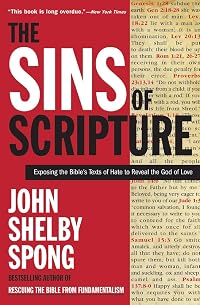
The Sins of Scripture: Exposing the Bible's Texts of Hate to Reveal the God of Love
by John Shelby Spong, John Shelby Spong (Author)
On This Page
Description
In the history of the Western World, the Bible has been a perpetual source of inspiration and guidance for countless Christians. However, this Bible has also left a trail of pain. It is undeniable that the Bible is not always used for good. Sometimes the Bible can seem overtly evil. Sometimes its texts are terrible. Bishop John Shelby Spong boldly approaches those texts that have been used through history to justify the denigration or persecution of others while carrying with them the show more implied and imposed authority of the claim that they were the "Word of God." As he exposes and challenges what he calls the "terrible texts of the Bible", laying bare the evil done by these texts in the name of God, he also seeks to redeem these texts, hoping to recover their ultimate depth and purpose. Spong looks specifically at texts used to justify homophobia, anti-Semitism, treating women as second-class humans, corporal punishment, and environmental degradation, but he also delivers a new picture of how Christians can use the Bible today. As Spong battles against the way the Bible has been used throughout history, he provides a new framework, introducing people to a proper way to engage this holy book of the Judeo-Christian tradition. show lessTags
Recommendations



Member Reviews
The subtitle of this book is Exposing the Bible’s Texts of Hate to Reveal the God of Love. I read this book a few years back, and the reason it came to mind today is because I am feeling overwhelmed by the aggressiveness of anti-Bible crusaders. Unquestionably, there are many passages in the Bible that are not only questionable theology, but downright appalling. Unquestionably, there are “Christians” today who pounce on these texts in order to promote discrimination or oppression. But the majority of Christians do not; the majority of Christians worship a God of love, and either spiritualize or completely discard those scriptures that reveal, not God’s will, but human weakness.
Can we really worship a God who murdered all the show more firstborn males in every Egyptian household? How about a God who stops the sun in the sky, providing more daylight so that Joshua can slaughter more of his enemies? Would the God you worship instruct Samuel to “Go and smite Amalek, and utterly destroy all that they have; do not spare them, but kill both man and woman, infant and suckling, ox and sheep, camel and ass”?
Is it ok to possess slaves, or sell your daughter into slavery? Should cursing or violating the Sabbath be cause for death? Is it right to stone disobedient children? Of course not, neither today or 2,500 years ago, and we know this.
How about the treatment of women as chattel? Encouragement of homophobia? Anti-Semitism? Spong guides us into a more liberal understanding of the Bible, pointing out the texts that exhibit human thinking, human fear, and comparing them to texts where the love of God shows through, and briefly touching on his vision of the Kingdom of God. It’s true that this book is one of the more negative of Spong’s works, but it sets us up for books yet to come. show less
Can we really worship a God who murdered all the show more firstborn males in every Egyptian household? How about a God who stops the sun in the sky, providing more daylight so that Joshua can slaughter more of his enemies? Would the God you worship instruct Samuel to “Go and smite Amalek, and utterly destroy all that they have; do not spare them, but kill both man and woman, infant and suckling, ox and sheep, camel and ass”?
Is it ok to possess slaves, or sell your daughter into slavery? Should cursing or violating the Sabbath be cause for death? Is it right to stone disobedient children? Of course not, neither today or 2,500 years ago, and we know this.
How about the treatment of women as chattel? Encouragement of homophobia? Anti-Semitism? Spong guides us into a more liberal understanding of the Bible, pointing out the texts that exhibit human thinking, human fear, and comparing them to texts where the love of God shows through, and briefly touching on his vision of the Kingdom of God. It’s true that this book is one of the more negative of Spong’s works, but it sets us up for books yet to come. show less
I like Spong. The retired Episcopal bishop does a fair job generally in trying to incorporate the explosion of 1st century knowledge in the past generation to correct and align Christian theology with some semblance of reality.
The problem with Sins of Scripture is that Spong either needs to be more careful with his research or he needs a better editor.
That errors of fact and ignorance that creep into his text are irritating. He repeatedly refers to Andrea Yates, the Texas woman who drowned her five children, as "Agatha Yarnell."
He writes that the world's population has doubled in 30 years; it hasn't. He believes there's a population explosion under way that threatens human survival; there isn't. The decline in birthrates worldwide since show more 1962 has begun to be felt. Population is falling in many countries and is expected to peak globally in 2040 before beginning a long and steep fall.
The errors of fact and subtance are embarrassing to read, and it undermines the credibility of his theological arguments.
His book also tries to make the case about the bible as a source of hatred, intolerance, discrimination, inequality and slavery. And he does as good a job as any, I suppose. But you have to dig through an awful lot of manure before you find the pony in this book. show less
The problem with Sins of Scripture is that Spong either needs to be more careful with his research or he needs a better editor.
That errors of fact and ignorance that creep into his text are irritating. He repeatedly refers to Andrea Yates, the Texas woman who drowned her five children, as "Agatha Yarnell."
He writes that the world's population has doubled in 30 years; it hasn't. He believes there's a population explosion under way that threatens human survival; there isn't. The decline in birthrates worldwide since show more 1962 has begun to be felt. Population is falling in many countries and is expected to peak globally in 2040 before beginning a long and steep fall.
The errors of fact and subtance are embarrassing to read, and it undermines the credibility of his theological arguments.
His book also tries to make the case about the bible as a source of hatred, intolerance, discrimination, inequality and slavery. And he does as good a job as any, I suppose. But you have to dig through an awful lot of manure before you find the pony in this book. show less
A tad uneven – not all of the earlier chapters are as cogent as we expect from Bishop Spong – but the book rises to a magnificent climax in the last section "Reading scripture as epic history". These last chapters I found very cogent and valuable.
I thought this was really lightweight material, especially considering the author is usually intellectually stimulating and thought provoking. I've read numerous books and other resources that provide much more material, in greater detail, with less unnecessary verbiage while still getting their points across. I've seen more and better from Christians, agnostics, and atheists. I was very disappointed in this book. Not remotely recommended.
texts of hate to reveal God;s love
From the publisher:
As Spong exposes and challenges what he calls the "terrible texts of the Bible," laying bare the evil done by them in the name of God, he also seeks to redeem these texts, hoping to recover their ultimate depth and purpose.
As Spong exposes and challenges what he calls the "terrible texts of the Bible," laying bare the evil done by them in the name of God, he also seeks to redeem these texts, hoping to recover their ultimate depth and purpose.
Bible > Bible > Interpretation and criticism (Exegesis) > Religion
Members
- Recently Added By
Author Information

46+ Works 8,759 Members
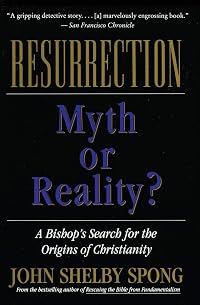
Scholar, author and bishop, John Shelby Spong was born in 1931 in Charlotte, North Carolina. He graduated from the University of North Carolina at Chapel Hill in 1952 and received his Master of Divinity degree in 1955 from the Protestant Episcopal Theological Seminary in Virginia. That seminary and St. Paul's College have both conferred on him show more honorary Doctor of Divinity degrees. Ordained in 1955, he is now bishop of the Episcopal diocese of Newark, New Jersey. As the most-published member of the House of Bishops of the Episcopal Church in the United States, Spong is the author of 14 books and more than 90 articles, including Honest Prayer (1973), Dialogue ? In Search of Jewish-Christian Umderstanding (1975), The Living Commandments (1977), Into the Whirlwind: The Future of the Church (1983), Living in Sin? A Bishop Rethinks Human Sexuality (1988), Rescuing the Bible from Fundamentalism: A Bishop Rethinks the Meaning of Scripture (1991), and Resurrection: Myth or Reality? (1994). With an active interest in football, basketball and baseball, Bishop Spong was at one time a play-by-play announcer for radio stations in Tarboro, North Carolina, and Lynchburg, Virginia. In addition, he served as sports editor for The Daily Southerner in Tarboro. Bishop Spong resides in Morristown, New Jersey. (Bowker Author Biography) show less
Common Knowledge
- Dedication
- For Christine Mary Spong, My Partner in Every Sense of the Word
- First words
- It is a mysterious book, this Bible.
- Quotations
- … That was our faith story's moment of truth. Shortly thereafter, a creed was formed to articulate that experience. Originally, it had only three words, all of which were rather vague: Jesus is Maschiach.
Maschiach was,... (show all) as noted earlier, a Jewish word that literally meant "the anointed one." Those three words constituted the first attempt to develop a creed. Many people will assert that this was the best creed the church was destined ever to produce, primarily because it made no attempt to pin down the power of this God experience. It understood the fact that human minds might experience a sense of the holy but they will never be able to explain that dimension of their lives, to say nothing of being able to explain the fullness of God. So it was that this three-word creed left vast amounts of what might be called "wiggle room." At the very least this creed understood that God cannot be bound in human concepts. As history moved and Christianity became more institutionalized, however, the human need for security of certainty overwhelmed the sense of awe and wonder in the experience of the divine and the creedal explanations of the church grew increasingly more complex and restrictive.
That is what the Bible is, the epic of our life. To try to make it more than that, the source of religious authority or the ultimate definer of truth, is to turn it into being demonic. It is from those who have claimed too mu... (show all)ch for this literalized Bible that the sins of scripture embedded in its “terrible texts” have emerged. They are texts wrenched out of this epic tale and used to enhance violence, to destroy the holiness of God’s world, and to hurt, maim or kill certain of the children of God. The day of using the Bible to claim for your prejudice that it has “the authority of the Word of God” is quite frankly over, and we should give thanks for that fact.
From Paul suggesting that God entered Jesus in the resurrection when God raised him into God's life, to John suggesting that Jesus was the enfleshed word of God and part of who God is (since God spoke in creation and said "Le... (show all)t there be light"), is quite a range of human explanations. Paul and John and all the other New Testament writers were attempting, each in his own way, to make sense out of an experience that proclaimed, in ecstatic language, "We have met God in this life of Jesus." I am not interested in debating the details of these competing biblical explanations. I am interested rather in what it was that created the experience that God had been met in Jesus. I regard all explanations as time-bound and time-warped. When they become supernatural tales that purport to hear the voice of God speaking from the sky or see the Holy Spirit descending on a particular life, or suggests a miraculous birth that occurred without benefit of a human father, I recognize that I am reading mythology. I do not dismiss mythology as untrue. I ask, What was there about this life that required this elaborate mythology to develop? - Last words
- (Click to show. Warning: May contain spoilers.)Shalom.
Classifications
Statistics
- Members
- 669
- Popularity
- 42,880
- Reviews
- 8
- Rating
- (3.59)
- Languages
- English
- Media
- Paper, Ebook
- ISBNs
- 6
- ASINs
- 2