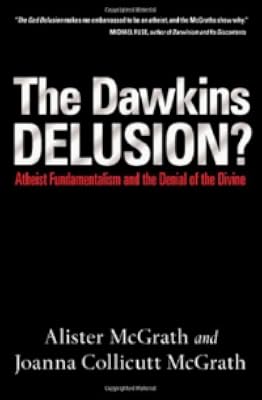
The Dawkins Delusion?
by Alister McGrath, Joanna Collicutt McGrath
On This Page
Description
World-renowned scientist Richard Dawkins writes in The God Delusion: ''If this book works as I intend, religious readers who open it will be atheists when they put it down.'' The volume has received wide coverage, fuelled much passionate debate and caused not a little confusion. Alister McGrath is ideally placed to evaluate Dawkins'' ideas. Once an atheist himself, he gained a doctorate in molecular biophysics before going on to become a leading Christian theologian. He wonders how two show more people, who have reflected at length on substantially the same world, could possibly have come to such differ show lessTags
Recommendations
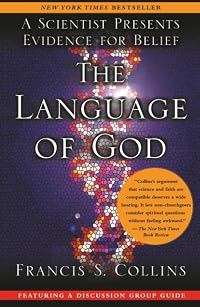
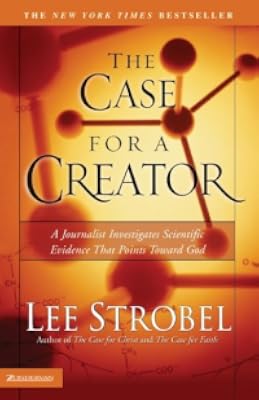

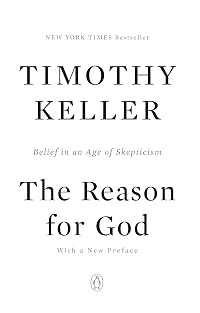
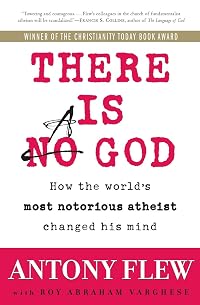














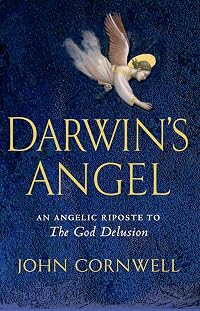



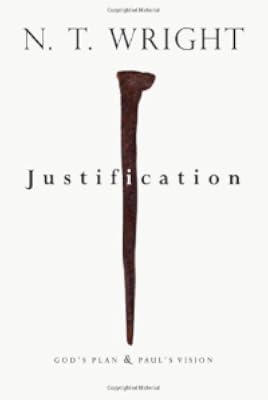

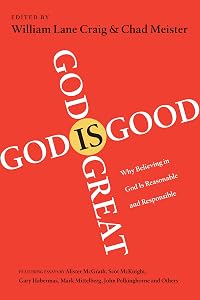
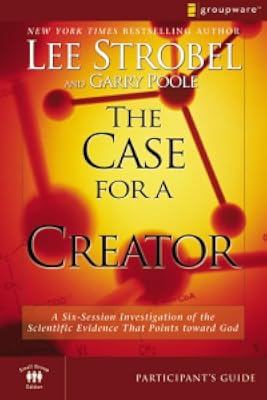






Member Recommendations
Member Reviews
The best thing that can be said for "The Dawkins Delusion?" is that at under 100 pages, it didn't waste too much of my time. To save you from wasting any of yours, let me summarize (and paraphrase): "Dawkins makes hateful baseless claims and ignores evidence that cuts against his position." If you're hoping for this book to say more, you'll be sorely disappointed (though perhaps appreciative of the irony).I think perhaps I just need a break from this genre, for it has gotten to feel like a horribly juvenile case of "he said, she said." Here are some of my major critiques of this particular installment:As I already implied, the authors mirror many of the things they criticize about Dawkins. For instance, they chastise his use of show more religious extremists examples as being representative of the faithful as a whole. Which is fair, until they respond in kind: "Atheism must indeed be in a sorry state if its leading contemporary defender has to depend so heavily--and so obviously--on the improbable and the false to bolster his case." I'm not sure who on either side would consider Dawkins to be representative of atheists as a whole, making the authors, at best, hypocritical (at worst - dare I say - deluded).Other parts of the book are merely irrelevant: "I subsequently found myself persuaded that Christianity was a much more interesting and intellectually exciting worldview than atheism." Perhaps law school has gotten the best of me, but I am desperately waiting for the "And therefore..." Who cares about what is interesting or exciting? I thought this was a discussion about what is "right," or at the least, what is well argued.Finally, the "I was a believer-turned-atheist" or "I was an atheist-turned believer" claim is 1) completely overdone, and 2) entirely unpersuasive. I'll stop there because this is a review, not a rebuttal, but hopefully these observations underpin at least some of the weaknesses I saw in this book. show less
An incisive and often slashing response to Richard Dawkins' "The God Delusion." The McGraths do not focus on the minutiae of all the arguments but instead systematically anayze Dawkins' main arguments and demonstrate the major fallacies and weaknesses therein.
Dawkins is exposed as merely the atheist reflection of the "fundamentalists" he despises. He ridicules and mocks that which concerning he is fantastically ignorant while proving entirely unwilling to subject his ideas and presentation to the critical, skeptical review to which he subjects religion. His arguments are exposed for being irrational and dogmatic, highly simplified, even naive, and a colossal affront to not just religious persons but also atheists who know better.
As show more McGrath postulates in the end, perhaps Dawkins' rabid atheist fundamentalism signifies that he is losing his grip on his atheist worldview that can not dare to be challenged or exposed for its naivete and for being out of touch with reality.
If you were possibly able to be in any way convinced by of Dawkins' arguments, you must consider this book! show less
Dawkins is exposed as merely the atheist reflection of the "fundamentalists" he despises. He ridicules and mocks that which concerning he is fantastically ignorant while proving entirely unwilling to subject his ideas and presentation to the critical, skeptical review to which he subjects religion. His arguments are exposed for being irrational and dogmatic, highly simplified, even naive, and a colossal affront to not just religious persons but also atheists who know better.
As show more McGrath postulates in the end, perhaps Dawkins' rabid atheist fundamentalism signifies that he is losing his grip on his atheist worldview that can not dare to be challenged or exposed for its naivete and for being out of touch with reality.
If you were possibly able to be in any way convinced by of Dawkins' arguments, you must consider this book! show less
A thin defense of PC religion
I have zero sympathy for Dawkins's worldview or his anti-religious harangues, but I can't give McGrath's book much of a recommendation. One might reasonably expect that by reading McGrath's reply you'd learn a lot about Dawkins's arguments but that simply isn't the case. He uses this book's hundred or so pages to tell us more or less that Dawkins's arguments aren't worth responding to. Yet McGrath does find the room to make fun of Dawkins for, of all things, thinking that Paul wrote Hebrews and to speculate that _The God Delusion_ was written as a last gasp attempt by Dawkins to bolster his waning faith in atheism. This is just silly.
I don't know of a good alternative to recommend to those wanting a solid show more critique of Dawkins, but I just finished reading _C.S. Lewis: Essay Collection and other Short Pieces_ and I can't imagine that a theist armed with Lewis's ideas would find Dawkins very troubling at all. Besides having the clear advantage over McGrath in style, Lewis defends a full-blooded Christianity and is unafraid to grapple with the thorny issues. show less
I have zero sympathy for Dawkins's worldview or his anti-religious harangues, but I can't give McGrath's book much of a recommendation. One might reasonably expect that by reading McGrath's reply you'd learn a lot about Dawkins's arguments but that simply isn't the case. He uses this book's hundred or so pages to tell us more or less that Dawkins's arguments aren't worth responding to. Yet McGrath does find the room to make fun of Dawkins for, of all things, thinking that Paul wrote Hebrews and to speculate that _The God Delusion_ was written as a last gasp attempt by Dawkins to bolster his waning faith in atheism. This is just silly.
I don't know of a good alternative to recommend to those wanting a solid show more critique of Dawkins, but I just finished reading _C.S. Lewis: Essay Collection and other Short Pieces_ and I can't imagine that a theist armed with Lewis's ideas would find Dawkins very troubling at all. Besides having the clear advantage over McGrath in style, Lewis defends a full-blooded Christianity and is unafraid to grapple with the thorny issues. show less
Though I hold a naturalistic world view, do not share the beliefs of any organized religion, and have been a long-time fan and admirer of Richard Dawkins’s science writing, I was surprised and disappointed with his book on atheism, The God Delusion. It is an ill-conceived and poorly researched polemic against religion, primarily Christianity, that does no credit to Richard Dawkins or atheism in general. Instead, the book showcases an accomplished science writer lowering himself to the level of a TV “shock-jock,” exhibiting the same lack of concern for accuracy, and the same simplistic, narrow-minded orientation.
The McGraths offer a much-needed response in this succinct and intelligent book, which I noticed in the New Books section show more of the Kansas City Public Library a few weekends ago. At 118 pages, including end notes, annotated bibliography, and author profiles, it is not a lengthy reading project. In their introduction the authors explain they do not intend a point-by-point rebuttal of all the inaccuracies, misstatements, and mistakes in The God Delusion, which would be tedious indeed given the width and depth of its blunders. Their approach, instead, is to challenge Dawkins “at representative points and let readers draw their own conclusions about the overall reliability of his evidence and judgment.” (p 13)
Their challenges are presented in four chapters, “Deluded About God?,” which critiques the distorted characterization of contemporary religious belief Dawkins presents; “Has Science Disproved God?” which explores scientism (a worldview insisting only scientific investigation can provide reliable knowledge) and takes exception with Dawkins’s argument that the vast majority of scientists are atheists; “What are the Origins of Religion” highlights gross mischaracterizations by Dawkins about research on the historical origins of religion and also demonstrates Dawkins’s conclusion on the subject have no evidentiary basis and, in fact, is nothing more than uninformed speculation; and “Is Religion Evil?,” which provides a balanced view of the healthy and unhealthy aspects of religious belief, as well as other sociological processes that can also lead to violence.
These chapters are not constructed as comprehensive arguments, but provide general overviews of the topics covered and direct readers to more detailed resources for further reading and evaluation. Alister McGrath, the principal author, has a tendency to repetition with increasingly emphatic statements. One rather imagines him typing away at the word processor, becoming more and more heated by some particularly irksome inanity in Dawkins’s book, pounding the keyboard with more and more force, until Joanna pokes her head into the study with a mildly admonishing “Alister, perhaps it’s time for some tea?”
One passage I found telling occurs on page 62, which is in the chapter on the origins of religion. The authors discuss cognitive biases which “predispose us to fail to notice or to discount data that are inconsistent with our view. On the whole we do this because it is efficient – it takes effort and is upsetting to have to change one’s mind – even if change is in a positive direction.” The God Delusion is then presented as an example of such bias. “Without full awareness that he is doing so, Dawkins foregrounds evidence that fits his own views and discounts or distorts evidence that does not.”
This struck me because I have had difficulty accounting for how an experienced science writer with a reputation for accuracy could distort and misrepresent so many reference sources. While reading the book, I began obtaining some of Dawkins’s references and found that he frequently does misrepresent them. Just one salient example is Max Jammer’s Einstein and Religion, which Dawkins uses to support a statement that Einstein was “repeatedly indignant” about being described as a theist; that is, one who believes in God (Dawkins, p 18). Jammer’s book demonstrates exactly the opposite: Einstein was repeatedly indignant about being described as an atheist. “In view of such harmony in the cosmos which I, with my limited human mind, am able to recognize, there are yet people who say there is no God. But what really makes me angry is that they quote me for support of such views.” (Jammer, p 97)
Such problems, and this is only one of many examples, demonstrate that Dawkins’s position regarding atheism is so strongly biased he cannot be objective about the evidence. He can’t even read references accurately.
Einstein’s phrase, the “harmony of the cosmos,” recalls another passage from The Dawkins Delusion, which sites an argument for the existence of God, as phrased by Richard Swinburne, “that the intelligibility of the universe itself requires an explanation.” In other words, what can account for the natural order of the cosmos which science has been so effective at discovering? Answers to this question seem clearly beyond the realm of science. Is faith not a legitimate response? Earlier in their book, the McGraths observe that much of the available evidence supports both atheistic and theistic interpretations. Fundamentalists on either side of the argument deny this, but the observation should give pause for thought to readers with an open mind on the subject. show less
The McGraths offer a much-needed response in this succinct and intelligent book, which I noticed in the New Books section show more of the Kansas City Public Library a few weekends ago. At 118 pages, including end notes, annotated bibliography, and author profiles, it is not a lengthy reading project. In their introduction the authors explain they do not intend a point-by-point rebuttal of all the inaccuracies, misstatements, and mistakes in The God Delusion, which would be tedious indeed given the width and depth of its blunders. Their approach, instead, is to challenge Dawkins “at representative points and let readers draw their own conclusions about the overall reliability of his evidence and judgment.” (p 13)
Their challenges are presented in four chapters, “Deluded About God?,” which critiques the distorted characterization of contemporary religious belief Dawkins presents; “Has Science Disproved God?” which explores scientism (a worldview insisting only scientific investigation can provide reliable knowledge) and takes exception with Dawkins’s argument that the vast majority of scientists are atheists; “What are the Origins of Religion” highlights gross mischaracterizations by Dawkins about research on the historical origins of religion and also demonstrates Dawkins’s conclusion on the subject have no evidentiary basis and, in fact, is nothing more than uninformed speculation; and “Is Religion Evil?,” which provides a balanced view of the healthy and unhealthy aspects of religious belief, as well as other sociological processes that can also lead to violence.
These chapters are not constructed as comprehensive arguments, but provide general overviews of the topics covered and direct readers to more detailed resources for further reading and evaluation. Alister McGrath, the principal author, has a tendency to repetition with increasingly emphatic statements. One rather imagines him typing away at the word processor, becoming more and more heated by some particularly irksome inanity in Dawkins’s book, pounding the keyboard with more and more force, until Joanna pokes her head into the study with a mildly admonishing “Alister, perhaps it’s time for some tea?”
One passage I found telling occurs on page 62, which is in the chapter on the origins of religion. The authors discuss cognitive biases which “predispose us to fail to notice or to discount data that are inconsistent with our view. On the whole we do this because it is efficient – it takes effort and is upsetting to have to change one’s mind – even if change is in a positive direction.” The God Delusion is then presented as an example of such bias. “Without full awareness that he is doing so, Dawkins foregrounds evidence that fits his own views and discounts or distorts evidence that does not.”
This struck me because I have had difficulty accounting for how an experienced science writer with a reputation for accuracy could distort and misrepresent so many reference sources. While reading the book, I began obtaining some of Dawkins’s references and found that he frequently does misrepresent them. Just one salient example is Max Jammer’s Einstein and Religion, which Dawkins uses to support a statement that Einstein was “repeatedly indignant” about being described as a theist; that is, one who believes in God (Dawkins, p 18). Jammer’s book demonstrates exactly the opposite: Einstein was repeatedly indignant about being described as an atheist. “In view of such harmony in the cosmos which I, with my limited human mind, am able to recognize, there are yet people who say there is no God. But what really makes me angry is that they quote me for support of such views.” (Jammer, p 97)
Such problems, and this is only one of many examples, demonstrate that Dawkins’s position regarding atheism is so strongly biased he cannot be objective about the evidence. He can’t even read references accurately.
Einstein’s phrase, the “harmony of the cosmos,” recalls another passage from The Dawkins Delusion, which sites an argument for the existence of God, as phrased by Richard Swinburne, “that the intelligibility of the universe itself requires an explanation.” In other words, what can account for the natural order of the cosmos which science has been so effective at discovering? Answers to this question seem clearly beyond the realm of science. Is faith not a legitimate response? Earlier in their book, the McGraths observe that much of the available evidence supports both atheistic and theistic interpretations. Fundamentalists on either side of the argument deny this, but the observation should give pause for thought to readers with an open mind on the subject. show less
In Richard Dawkin’s new book, “the God Delusion”, he alludes to the mantra of fundamentalist atheism that all wars are caused by religion, and that we would be better off without religion as then wars would cease. This tired argument from an eminent scientist demonstrates that when Dawkins speaks about religion and history, he is speaking well beyond his competence.
In Dawkins’ Wikipedia article, there is mention that in 2004, a self selecting and unscientific poll by Prospect magazine had selected Dawkins as the leading intellectual in the world today (last year Noam Chomsky polled over twice as many votes as Dawkins on the same poll). As useless as such polls really are, it did lead me to a review of Dawkin’s book by a non show more religious writer in the same magazine. He said of Dawkin’s argument:
"Yet under Stalin almost the entire Orthodox priesthood was exterminated simply for being priests, as were the clergy of other religions and hundreds of thousands of Baptists. The claim that Stalin’s atheism had nothing to do with his actions may be the most disingenuous in the book, but it has competition from a later question, “Why would anyone go to war for the sake of an absence of belief [atheism]?” as if the armies of the French revolution had marched under icons of the Virgin, or as if a common justification offered for China’s invasion of Tibet had not been the awful priest-ridden backwardness of the Dalai Lama’s regime. "
Indeed, the same review starts off with this summary:
"It has been obvious for years that Richard Dawkins had a fat book on religion in him, but who would have thought him capable of writing one this bad? Incurious, dogmatic, rambling and self-contradictory, it has none of the style or verve of his earlier works. "
Is Dawkins speaking beyond his competence? McGrath points out (with clear examples) that Dawkins is embarrassingly ignorant of Christian theology. The writer of this review says: “One might argue that a professor of the public understanding of science has no need to concern himself with trivialities outside his field like the French revolution, the Spanish civil war or Stalin’s purges when he knows that history is on his side”.
This is a man who has fallen into the same trap that we all fall into sometimes - of failing to properly research and critically evaluate the evidence - particularly when the evidence seems to support his thesis. If he is not researching and evaluating evidence, he is indeed speaking well beyond his competence.
McGrath's polemic therefore ably exposes the weaknesses piee by piece in Dawkin's book. Will you be impressed? That will largely depend on what side of the argument you are already persuaded to - but an unchallenged argument is like an unstomped sand castle - very pretty, but not very strong. Read this book to hear the other side of the story. show less
In Dawkins’ Wikipedia article, there is mention that in 2004, a self selecting and unscientific poll by Prospect magazine had selected Dawkins as the leading intellectual in the world today (last year Noam Chomsky polled over twice as many votes as Dawkins on the same poll). As useless as such polls really are, it did lead me to a review of Dawkin’s book by a non show more religious writer in the same magazine. He said of Dawkin’s argument:
"Yet under Stalin almost the entire Orthodox priesthood was exterminated simply for being priests, as were the clergy of other religions and hundreds of thousands of Baptists. The claim that Stalin’s atheism had nothing to do with his actions may be the most disingenuous in the book, but it has competition from a later question, “Why would anyone go to war for the sake of an absence of belief [atheism]?” as if the armies of the French revolution had marched under icons of the Virgin, or as if a common justification offered for China’s invasion of Tibet had not been the awful priest-ridden backwardness of the Dalai Lama’s regime. "
Indeed, the same review starts off with this summary:
"It has been obvious for years that Richard Dawkins had a fat book on religion in him, but who would have thought him capable of writing one this bad? Incurious, dogmatic, rambling and self-contradictory, it has none of the style or verve of his earlier works. "
Is Dawkins speaking beyond his competence? McGrath points out (with clear examples) that Dawkins is embarrassingly ignorant of Christian theology. The writer of this review says: “One might argue that a professor of the public understanding of science has no need to concern himself with trivialities outside his field like the French revolution, the Spanish civil war or Stalin’s purges when he knows that history is on his side”.
This is a man who has fallen into the same trap that we all fall into sometimes - of failing to properly research and critically evaluate the evidence - particularly when the evidence seems to support his thesis. If he is not researching and evaluating evidence, he is indeed speaking well beyond his competence.
McGrath's polemic therefore ably exposes the weaknesses piee by piece in Dawkin's book. Will you be impressed? That will largely depend on what side of the argument you are already persuaded to - but an unchallenged argument is like an unstomped sand castle - very pretty, but not very strong. Read this book to hear the other side of the story. show less
I did not read Dawkins's The God Delusion (though I did hear much about it when it came out and I have read some of Dawkins's other titles as required reading in college).
I thought this book did a good job of presenting the distilled version of Dawkins's arguments (what his points in The God Delusion are) along with evidence for or against those points. The authors were fair in their assessments of Dawkins's arguments and not afraid to say they agreed with him on a few points (such as religious violence being bad) though that did not stop them from pointing out flaws in his arguments.
I thought this book did a good job of presenting the distilled version of Dawkins's arguments (what his points in The God Delusion are) along with evidence for or against those points. The authors were fair in their assessments of Dawkins's arguments and not afraid to say they agreed with him on a few points (such as religious violence being bad) though that did not stop them from pointing out flaws in his arguments.
Although I have not read The God Delusions, I did find the McGrath's rebuttal to one of Dawkins' most famous and contested works interesting and useful in rebutting points that flow from or originate from readings of Dawkins' book.
The Dawkins' Delusion? is much shorter than Dawkin's book, and in around one hundred pages succinctly rebuts and deconstructs Dawkins' arguments. The McGrath's book also rightly accuses Dawkins of turning into the very fundamentalist he loathes: for Dawkins has abandoned his rationality and impartiality that science brings to adopt an ironically fundamentalist viewpoint vis-à-vis atheism.
Of course, this book will be subject to its own controversy as any book about such a subject would. Nevertheless, this is show more a handy book to further debunk the already-stale argument that faith and science are not compatible. show less
The Dawkins' Delusion? is much shorter than Dawkin's book, and in around one hundred pages succinctly rebuts and deconstructs Dawkins' arguments. The McGrath's book also rightly accuses Dawkins of turning into the very fundamentalist he loathes: for Dawkins has abandoned his rationality and impartiality that science brings to adopt an ironically fundamentalist viewpoint vis-à-vis atheism.
Of course, this book will be subject to its own controversy as any book about such a subject would. Nevertheless, this is show more a handy book to further debunk the already-stale argument that faith and science are not compatible. show less
Members
- Recently Added By
Author Information

238+ Works 23,866 Members
Alister McGrath is currently professor of theology at Oxford and principal of Wycliffe Hall. He is a consulting editor, general editor and author of several books. He lives in Oxford, England.

13 Works 1,133 Members
Joanna Collicutt McGrath is a lecturer in the psychology of religion at Heythrop College, University of London. A former head of clinical neuropsychology at Rivermead Rehabilitation Centre in Oxford and head of psychological services at the Nuffield Orthopaedic Centre NHS Trust, she has a wealth of experience in the rehabilitation and continuing show more care of people with complex neurological disabilities. She is also an Anglican priest. show less
Work Relationships
Is a reply to
Common Knowledge
- Canonical title
- The Dawkins Delusion?
- Original title
- The Dawkins Delusion? Atheist Fundamentalism and the Denial of the Divine
- Original publication date
- 2007
- People/Characters
- Richard Dawkins
- First words
- Introduction
Since the publication of The Selfish Gene (1976), Richard Dawkins has established himself as one of the most successful and skillful scientific popularizers. Along with his American colleague Stephen ... (show all)Jay Gould, he has managed to make evolutionary biology accessible and interesting to a new generation of readers. I and other admirers of his popular scientific works have long envied their clarity, their beautiful use of helpful analogies, and their entertaining style. - Last words
- (Click to show. Warning: May contain spoilers.)Dawkins seems to thing that saying something more loudly and confidently, while ignoring or trivializing counterevidence, will persuade the open-minded that religious belief is a type of delusion. Sadly, sociological studies of charismatic leaders—religious and secular—indicate that Dawkins may be right to place some hope in this strategy. For the gullible and credulous, it is the confidence with which something is said that persuades rather than the evidence offered in its support. Yet the fact that Dawkins relies so excessively on rhetoric rather than the evidence that would otherwise be his stock in trade clearly indicates that something is wrong with his case. Ironically the ultimate achievement of The God Delusion for modern atheism may be to suggest that this emperor has no clothes to wear. Might atheism be a delusion about God?
- Blurbers
- Collins, Francis ; Williams, Rowan ; Myers, David G. ; Johnson, Timothy ; Gingerich, Owen ; Ruse, Michael
Classifications
Statistics
- Members
- 1,017
- Popularity
- 25,594
- Reviews
- 19
- Rating
- (3.04)
- Languages
- 5 — Dutch, English, Finnish, German, Portuguese (Portugal)
- Media
- Paper, Ebook
- ISBNs
- 10
- ASINs
- 4