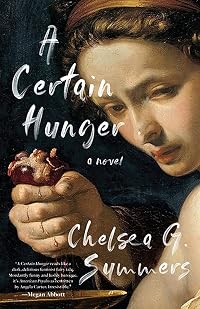
A Certain Hunger
by Chelsea G. Summers
On This Page
Description
Food critic Dorothy Daniels loves what she does. Discerning, meticulous, and very, very smart, Dorothy's clear mastery of the culinary arts make it likely that she could, on any given night, whip up a more inspired dish than any one of the chefs she writes about. Dorothy loves sex as much as she loves food, and while she has struggled to find a long-term partner that can keep up with her, she makes the best of her single life, frequently traveling from Manhattan to Italy for a taste of both. show more But there is something within Dorothy that's different from everyone else, and having suppressed it long enough, she starts to embrace what makes Dorothy uniquely, terrifyingly herself. Recounting her life from a seemingly idyllic farm-to-table childhood, the heights of her career, to the moment she plunges an ice pick into a man's neck on Fire Island, Dorothy Daniels show us what happens when a woman finally embraces her superiority. A satire of early foodieism, a critique of how gender is defined, and a showcase of virtuoso storytelling, Chelsea G. Summers's A Certain Hunger introduces us to the food world's most charming psychopath and an exciting new voice in fiction. show lessTags
Recommendations












Member Reviews
"𝘈 𝘮𝘢𝘴𝘵𝘦𝘳 𝘰𝘧 𝘵𝘩𝘦 𝘤𝘶𝘭𝘪𝘯𝘢𝘳𝘺 𝘢𝘳𝘵𝘴, 𝘧𝘰𝘰𝘥 𝘤𝘳𝘪𝘵𝘪𝘤 𝘋𝘰𝘳𝘰𝘵𝘩𝘺 𝘋𝘢𝘯𝘪𝘦𝘭𝘴 𝘭𝘰𝘷𝘦𝘴 𝘸𝘩𝘢𝘵 𝘴𝘩𝘦 𝘥𝘰𝘦𝘴. 𝘚𝘩𝘦 𝘢𝘭𝘴𝘰 𝘭𝘰𝘷𝘦𝘴 𝘴𝘦𝘹 𝘢𝘴 𝘮𝘶𝘤𝘩 𝘢𝘴 𝘴𝘩𝘦 𝘭𝘰𝘷𝘦𝘴 𝘧𝘰𝘰𝘥, 𝘧𝘳𝘦𝘲𝘶𝘦𝘯𝘵𝘭𝘺 𝘵𝘳𝘢𝘷𝘦𝘭𝘪𝘯𝘨 𝘧𝘳𝘰𝘮 𝘔𝘢𝘯𝘩𝘢𝘵𝘵𝘢𝘯 𝘵𝘰 𝘐𝘵𝘢𝘭𝘺 𝘧𝘰𝘳 𝘢 𝘵𝘢𝘴𝘵𝘦 𝘰𝘧 𝘣𝘰𝘵𝘩. 𝘉𝘶𝘵 𝘵𝘩𝘦𝘳𝘦 𝘪𝘴 𝘴𝘰𝘮𝘦𝘵𝘩𝘪𝘯𝘨 show more 𝘸𝘪𝘵𝘩𝘪𝘯 𝘋𝘰𝘳𝘰𝘵𝘩𝘺 𝘵𝘩𝘢𝘵 𝘮𝘢𝘬𝘦𝘴 𝘩𝘦𝘳 𝘵𝘦𝘳𝘳𝘪𝘧𝘺𝘪𝘯𝘨𝘭𝘺 𝘶𝘯𝘪𝘲𝘶𝘦."
While this review may be safe, this book is not for the faint of heart...or stomach. Dorothy freely admits that she is a female psychopath. While she may not have known the terminology at the time, she has been since she was twelve years old. She lies in the very first chapter, possibly establishing an unreliable narrative. Her antisocial, narcissistic empathetic, fearless behavior is disguised as a frank, daring, feminist perspective and I've caught more than a few sympathetic reviewers. But that's the trick of a true psychopath isn't it? Intentional or not, Dorothy seduces readers with her wit, intelligence and seemingly logical justifications for the horrific acts that she commits.
From the beginning, author Chelsea Summers cleverly and beautifully inserts food-based analogies to what would otherwise be the most unappealing or foul aspects of violence, animal slaughter or organ harvesting. One could certainly argue that this gives the reader a kind of feel-good complacency. Oh that's not blood, that's the delicious sauce of a warm cherry cobbler. As we journey through Dorothy's life story, we're savoring every comforting aroma and texture. Each act becomes a reflection of Dorothy's head space and evolution of an unapologetic killer. Chelsea Summers has really outdone herself here. It will disgust you, delight you, and you'll find yourself reading passages over and over. I've already added "An Excellent Host" to my wishlist! show less
While this review may be safe, this book is not for the faint of heart...or stomach. Dorothy freely admits that she is a female psychopath. While she may not have known the terminology at the time, she has been since she was twelve years old. She lies in the very first chapter, possibly establishing an unreliable narrative. Her antisocial, narcissistic empathetic, fearless behavior is disguised as a frank, daring, feminist perspective and I've caught more than a few sympathetic reviewers. But that's the trick of a true psychopath isn't it? Intentional or not, Dorothy seduces readers with her wit, intelligence and seemingly logical justifications for the horrific acts that she commits.
From the beginning, author Chelsea Summers cleverly and beautifully inserts food-based analogies to what would otherwise be the most unappealing or foul aspects of violence, animal slaughter or organ harvesting. One could certainly argue that this gives the reader a kind of feel-good complacency. Oh that's not blood, that's the delicious sauce of a warm cherry cobbler. As we journey through Dorothy's life story, we're savoring every comforting aroma and texture. Each act becomes a reflection of Dorothy's head space and evolution of an unapologetic killer. Chelsea Summers has really outdone herself here. It will disgust you, delight you, and you'll find yourself reading passages over and over. I've already added "An Excellent Host" to my wishlist! show less
The story of Dorothy, a psychopath who indulges in her lack of empathy. Coming from a moderately wealthy family and left an inheritance, Dorothy becomes an exceptionally well-traveled, well-read food critic. She knows the best restaurants and enjoys cooking, describing the both the exotic and traditional dishes she eats, especially in Italy, her adopted second home.
She also relishes finding new lovers, especially if her research on the person turns up something Dorothy can use as leverage in the future. That she can destroy them is always in the back of her mind. As she matures, Dorothy's pleasure in the forbidden includes murder and cannibalism.
It would be too easy to say that Dorothy is a monster and her story is one of vulgar show more brutality, but that would ignore the times when she discusses the beauty of Italy and the care that goes into the cuisine, or the magazine trade of the 90s, the art of Ivan Albright, how Kosher meat is processed and how the USDA works. All these asides of a page or two combine to show how intelligent and curious Dorothy is about the world. The brutality is mixed with her version of sensuousness, which can be gross, but Summers is a superb writer who has created a fascinating character. show less
She also relishes finding new lovers, especially if her research on the person turns up something Dorothy can use as leverage in the future. That she can destroy them is always in the back of her mind. As she matures, Dorothy's pleasure in the forbidden includes murder and cannibalism.
It would be too easy to say that Dorothy is a monster and her story is one of vulgar show more brutality, but that would ignore the times when she discusses the beauty of Italy and the care that goes into the cuisine, or the magazine trade of the 90s, the art of Ivan Albright, how Kosher meat is processed and how the USDA works. All these asides of a page or two combine to show how intelligent and curious Dorothy is about the world. The brutality is mixed with her version of sensuousness, which can be gross, but Summers is a superb writer who has created a fascinating character. show less
This book was gruesome. It was gross, even frustrating at times. Our speaker was pretentious and self important. But all of this was so well written and purposeful. I have never read a book that makes me HATE the narrator and also sincerely understand her (in some ways). While Dorothy was a gruesome murderer, she was also insightful in her understanding of womanhood. Even if her knowledge of woman was centered around their violence, I still found that information profound and unique.
I will say, whenever I was totally immersed in the story, there were allusions that were impossible to understand and were pretty important to the context. Places, people, foods, even entire sentences in other languages. I don't think I could get through show more this book if I looked up everything I didn't know. Ultimately, I found myself glazing over half of paragraphs, speeding through pages about foods that (didn't really matter and) I had never heard of. I understand this was part of her character though which is why I still think this is a 5 star book!! show less
I will say, whenever I was totally immersed in the story, there were allusions that were impossible to understand and were pretty important to the context. Places, people, foods, even entire sentences in other languages. I don't think I could get through show more this book if I looked up everything I didn't know. Ultimately, I found myself glazing over half of paragraphs, speeding through pages about foods that (didn't really matter and) I had never heard of. I understand this was part of her character though which is why I still think this is a 5 star book!! show less
"Despite their numbers, brutal women catch us by surprise. We expect random acts of violence from men. Men are the people who brought us the golden hits of war, genocide, rape, drones, and football. We do not expect murder, pain, and sadism from women, but we are co-opted idiots. Our unshakeable belief in women's essential goodness is a wondrous, drooling thing. Despite all evidence to the contrary, we act as starry-eyed as Margarete Keane paintings about the eternal sunshine of the spotless female mind. It's as if none of us ever had mothers who ever acted cruelly, and we all did. Some more than others."
The mark of a good writer is if they can make you believe a falsehood. And I don't mean a typical conspiracy or the way propaganda show more can. Rather, a good writer hones the truth in fiction, so even when you're reading about a nymphomaniac cannibal, you can recognize a common humanity. Dorothy is not a real person, but as the above quote begs us to realize, she's not that far off, either.
The prose here is nothing short of mesmerizing. Thick and steeped in dark humor and loaded with probing questions. It's nothing short of a master's work, and even when the plot became about as dark as an unlit alley, Summers's writing lit the way. I never wanted anything more than to keep reading. show less
The mark of a good writer is if they can make you believe a falsehood. And I don't mean a typical conspiracy or the way propaganda show more can. Rather, a good writer hones the truth in fiction, so even when you're reading about a nymphomaniac cannibal, you can recognize a common humanity. Dorothy is not a real person, but as the above quote begs us to realize, she's not that far off, either.
The prose here is nothing short of mesmerizing. Thick and steeped in dark humor and loaded with probing questions. It's nothing short of a master's work, and even when the plot became about as dark as an unlit alley, Summers's writing lit the way. I never wanted anything more than to keep reading. show less
Bitter, sinfully sweet, and dripping with both blood and the kind of intrigue that can only be spawned from grizzly murder—A Certain Hunger is one of a kind.
Chelsea G. Summers has crafted a tale so dark and lovely that from the very first page the reader will find there is no escape, no lifeboat preservers to be found as they follow renowned food critic and imprisoned cannibal Dorothy Daniels on the re-telling of her life's story.
Something that makes Dorothy so unforgettable is the harsh, blunt language she uses throughout the novel. She doesn't once shy away from the brutality of her crimes, or from the inherent messiness that comes with the evisceration of one's life. Pun intended. She's cold and calculated, looking at the people show more around her as prey; as toys to be used for sex or sustenance or both. At its core, A Certain Hunger explores what happens when a woman goes to any lengths to sate herself...burned bridges (or corpses) be damned.
It can almost be guaranteed that Dorothy is a serial killer without equal to any other that prospective readers may have previously encountered between pages. Charming and vicious in equal measure, Dorothy lavishes both her victims and the reader with just enough praise and disdain that neither can stop themselves from coming back for more. show less
Chelsea G. Summers has crafted a tale so dark and lovely that from the very first page the reader will find there is no escape, no lifeboat preservers to be found as they follow renowned food critic and imprisoned cannibal Dorothy Daniels on the re-telling of her life's story.
Something that makes Dorothy so unforgettable is the harsh, blunt language she uses throughout the novel. She doesn't once shy away from the brutality of her crimes, or from the inherent messiness that comes with the evisceration of one's life. Pun intended. She's cold and calculated, looking at the people show more around her as prey; as toys to be used for sex or sustenance or both. At its core, A Certain Hunger explores what happens when a woman goes to any lengths to sate herself...burned bridges (or corpses) be damned.
It can almost be guaranteed that Dorothy is a serial killer without equal to any other that prospective readers may have previously encountered between pages. Charming and vicious in equal measure, Dorothy lavishes both her victims and the reader with just enough praise and disdain that neither can stop themselves from coming back for more. show less
You who call women the fairer sex, you may repress and deny all you want, but some of us were born with a howling void where our souls should sway.
I almost chose not to review this book. Not because I didn't thoroughly enjoy it, but to be honest, I had no idea how to approach it from a reviewer's point-of-view. To be even more honest, I wasn't sure I wanted my grandmother, who lovingly follows my progress on social media, to read this review. (Grammy I'm sorry for the direction this is about to go!) But buckle up, because here I am, ready to dig into what is mostly likely one of the most fucked-up books I've read this year to date.
Dorothy Daniels is a food critic. She enjoys what she does, and loves sex just as much as she loves food. show more She also happens to be a discerning and meticulous psychopath, murderess, and high-end cannibal. Told in a memoir-esque style, Dorothy recounts her life, the turbulent path from a seemingly idyllic, homegrown, homestead household, to the moment in which she plunges an ice pick into a man's neck on Fire Island, fully embracing her deepest internal desires.
We know from the beginning that this story has an end; that Dorothy is arrested, arraigned, prosecuted, and incarcerated, and she tells us as much in the opening of the book. And yet, it does not stop the book itself from resembling a ball rolling downhill in its tumultuous journey forwards. I felt like I might have been going slowly insane as I read, delving deeper into a strange hypnosis all the while. There's a certain gluttony to this novel in its entirety, a tryptophan-filled dinner that lulls the reader into a deep, unmatched stupor over four courses of a special brand of madness.
And I admit, reading this made me rather hungry. The cannibalism aside, Dorothy is the perfect picture of a sophisticated food critic, dreaming of tantalizing Italian dishes with names and ingredients that I, in all of my Midwestern-grown farm-town ignorance have never heard of, and yet I can feel my mouth watering as Dorothy enlightens me to the world and practiced whims of all of her culinary ways.
Some readers complained about the repetitiveness of these gastronomous name-drops, the pretention of the language, I could only find myself deeper drawn into the lasciviousness of the narrative because of it. I'm not truly sure I liked this novel, only that I enjoyed it. A regrettable and yet delicious meal, if you will.
If you're familiar with the hype around A Certain Hunger when it was first released, it was originally hailed as a criticism of early foodieism, a critique in how gender is defined, and the strained relationship between womanhood and food. In my opinion, it holds up very well in these areas, and showcases a strange understanding of the gender-power dynamic aside.
It's been a few days since I finished this novel and I'm still not sure I've fully digested (hah) my opinions about it or understanding of it, but if I waited until I did, I might never write this review. All I can say is that there's a definite rousing statement being made about the secretive, vicious nature of the female appetite, hidden in public and unleashed in private, but I am perhaps not intellectual enough, or not clear-headed enough to decipher it.
Summers is most definitely in love with metaphor, in love with winding prose and rolling hills of literary class, descriptive language, and pretentious, weighty narrative, and yet for this novel, it works. In my opinion, she's aware of exactly what effect she's having on the reader. It's the literary equivalent of an opulent Tudor feast, and it sits heavy in the stomach long after it's gone. (And here I am, making too many literary-culinary metaphors in Summers' wake).
Likewise, the sexual content is very carnal, very food-adjacent (makes sense given the context of the novel), very shock-factor, harsh-language laden, meant to stir the reader from their feasted stupor. It wasn't appealing, but it was as strange as the rest of the novel and that let it fit right in.
I truly hope Summers will be publishing more fiction in the future, if only so that I can see how well it holds up to my assumption that the heft of this narrative is purposeful and understood.
Overall, I'm left with a strange taste in my mouth and the knowledge that I have tramped down into a spiral of madness and carnal rage and won my way out again, if not with the knowledge that the novel promised, then at least the experience. Like I said, I'm not sure that I liked this novel, only that I enjoyed it. Whatever that means.
I leave you with this: “What is heaven but the hope for righteous acknowledgment, and what is hell but the fear of discovery.” show less
I almost chose not to review this book. Not because I didn't thoroughly enjoy it, but to be honest, I had no idea how to approach it from a reviewer's point-of-view. To be even more honest, I wasn't sure I wanted my grandmother, who lovingly follows my progress on social media, to read this review. (Grammy I'm sorry for the direction this is about to go!) But buckle up, because here I am, ready to dig into what is mostly likely one of the most fucked-up books I've read this year to date.
Dorothy Daniels is a food critic. She enjoys what she does, and loves sex just as much as she loves food. show more She also happens to be a discerning and meticulous psychopath, murderess, and high-end cannibal. Told in a memoir-esque style, Dorothy recounts her life, the turbulent path from a seemingly idyllic, homegrown, homestead household, to the moment in which she plunges an ice pick into a man's neck on Fire Island, fully embracing her deepest internal desires.
We know from the beginning that this story has an end; that Dorothy is arrested, arraigned, prosecuted, and incarcerated, and she tells us as much in the opening of the book. And yet, it does not stop the book itself from resembling a ball rolling downhill in its tumultuous journey forwards. I felt like I might have been going slowly insane as I read, delving deeper into a strange hypnosis all the while. There's a certain gluttony to this novel in its entirety, a tryptophan-filled dinner that lulls the reader into a deep, unmatched stupor over four courses of a special brand of madness.
And I admit, reading this made me rather hungry. The cannibalism aside, Dorothy is the perfect picture of a sophisticated food critic, dreaming of tantalizing Italian dishes with names and ingredients that I, in all of my Midwestern-grown farm-town ignorance have never heard of, and yet I can feel my mouth watering as Dorothy enlightens me to the world and practiced whims of all of her culinary ways.
Some readers complained about the repetitiveness of these gastronomous name-drops, the pretention of the language, I could only find myself deeper drawn into the lasciviousness of the narrative because of it. I'm not truly sure I liked this novel, only that I enjoyed it. A regrettable and yet delicious meal, if you will.
If you're familiar with the hype around A Certain Hunger when it was first released, it was originally hailed as a criticism of early foodieism, a critique in how gender is defined, and the strained relationship between womanhood and food. In my opinion, it holds up very well in these areas, and showcases a strange understanding of the gender-power dynamic aside.
It's been a few days since I finished this novel and I'm still not sure I've fully digested (hah) my opinions about it or understanding of it, but if I waited until I did, I might never write this review. All I can say is that there's a definite rousing statement being made about the secretive, vicious nature of the female appetite, hidden in public and unleashed in private, but I am perhaps not intellectual enough, or not clear-headed enough to decipher it.
Summers is most definitely in love with metaphor, in love with winding prose and rolling hills of literary class, descriptive language, and pretentious, weighty narrative, and yet for this novel, it works. In my opinion, she's aware of exactly what effect she's having on the reader. It's the literary equivalent of an opulent Tudor feast, and it sits heavy in the stomach long after it's gone. (And here I am, making too many literary-culinary metaphors in Summers' wake).
Likewise, the sexual content is very carnal, very food-adjacent (makes sense given the context of the novel), very shock-factor, harsh-language laden, meant to stir the reader from their feasted stupor. It wasn't appealing, but it was as strange as the rest of the novel and that let it fit right in.
I truly hope Summers will be publishing more fiction in the future, if only so that I can see how well it holds up to my assumption that the heft of this narrative is purposeful and understood.
Overall, I'm left with a strange taste in my mouth and the knowledge that I have tramped down into a spiral of madness and carnal rage and won my way out again, if not with the knowledge that the novel promised, then at least the experience. Like I said, I'm not sure that I liked this novel, only that I enjoyed it. Whatever that means.
I leave you with this: “What is heaven but the hope for righteous acknowledgment, and what is hell but the fear of discovery.” show less
Food critic, serial killer, cannibal, psychopath. This first person narrative is a delicious tale of Dorothy’s journey into depravity. I will readily admit that this won’t be for everyone. Normally I am put off by excessive use of “ high point scrabble words” but it FITS this story. It adds to her personality of excess, self inflation and a luxe lifestyle. Dorothy blends her journey with the love of food, travel, eroticism and her love of flesh. I feel like all these topics intertwine, this story feels carnivorous and unapologetic. Foodies will enjoy the random tangents of food history, recipes and local faire while gore lovers will love when it’s spliced with obsessive precision of detailed murder and cannibalism.
One thing show more that made this tale most enjoyable is there is no self discovery. Dorothy knows precisely who she is and doesn’t give two shits if that entails eating parts of her past lovers or jetting off to Italy because she’s craving shellfish or having no reservations for her sexual experiences. To her they’re all tied together.
I probably won’t reread this book but I’m interested to see what this author has to offer. But if said other works are too word salad-y to the point of pretentious I won’t read them. However in this work it fits the character perfectly and was very enjoyable. show less
One thing show more that made this tale most enjoyable is there is no self discovery. Dorothy knows precisely who she is and doesn’t give two shits if that entails eating parts of her past lovers or jetting off to Italy because she’s craving shellfish or having no reservations for her sexual experiences. To her they’re all tied together.
I probably won’t reread this book but I’m interested to see what this author has to offer. But if said other works are too word salad-y to the point of pretentious I won’t read them. However in this work it fits the character perfectly and was very enjoyable. show less
Members
- Recently Added By
Lists

Overdue Podcast
806 works; 9 members

sad girl books
51 works; 3 members

Books Read in 2024
4,623 works; 126 members

Top Five Books of 2024
795 works; 264 members
Author Information

2+ Works 1,193 Members
Some Editions
Awards and Honors
Awards
Notable Lists
Common Knowledge
- People/Characters
- Dorothy Daniels; Casimir Bezrukov; Joanne "Emma Absinthe" Correa; Davide "Marco Iocco" Iachino; Giovanni Traverso; Andrew (show all 11); Gil; Marco; Karen Wasserman; Margaret Lately; Alex Konings
- Important places
- New York, New York, USA; Boston, Massachusetts, USA; Siena, Tuscany, Italy; Rome, Italy; Milan, Lombardy, Italy
- Dedication
- To all the bad girls, but especially to Molly and Katelan.
- First words
- They all look the same, hotel bars, even when they don’t.
- Last words
- (Click to show. Warning: May contain spoilers.)How many women - hungry as we are for immutability - can say the same?
- Blurbers
- Abbott, Megan; Crabapple, Molly; Gentry, Amy; Doyle, Sady; Johnson, Mat; Katsu, Alma (show all 7); Weinman, Sarah
- Original language
- English
Classifications
Statistics
- Members
- 1,172
- Popularity
- 21,394
- Reviews
- 25
- Rating
- (3.88)
- Languages
- 5 — English, French, Italian, Polish, Spanish
- Media
- Paper, Audiobook, Ebook
- ISBNs
- 12
- ASINs
- 4