On This Page
Description
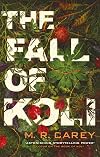
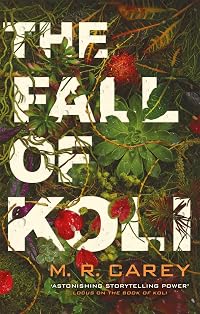
M. R. Carey's Rampart trilogy is "an epic post-apocalyptic fable" (Kirkus) like no other, set in a world where nature has turned against us. Now, in the unforgettable final chapter, the world that was lost comes back to haunt those who have survived–and Koli's journey comes to its astonishing close."A gorgeous, borderline flawless trilogy." –Seanan McGuire
What will the future hold for those who are left?
Koli has come a long way since being exiled from his small village of Mythen Rood. show more In his search for the fabled tech of the Old Times, he knew he'd be battling shunned men, strange beasts and trees that move as fast as whips. But he has already encountered so much more than he bargained for.
Now that Koli and his companions have found the source of the signal they've been following - the mysterious "Sword of Albion"—there is hope that their perilous journey will finally be worth something.
They're searching for a way to help humanity fight back against nature. But what they'll find is an ancient war that never ended . . .
The Rampart Trilogy
The Book of Koli
The Trials of Koli
The Fall of Koli
For more from M. R. Carey, check out:
The Girl With All the Gifts
Fellside
The Boy on the Bridge
Someone Like Me
By the same author, writing as Mike Carey:
The Devil You Know
Vicious Circle
Dead Men's Boots
Thicker Than Water
The Naming of the Beasts. show less
Tags
Recommendations








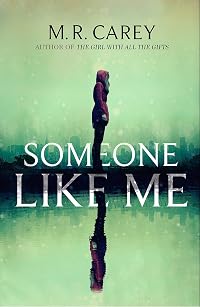











Member Reviews
I received this novel from Orbit Books through NetGalley, in exchange for an honest review: my thanks to both of them for this opportunity.
Approaching a series ender often brings contrasting emotions, particularly the concern that it might not live up to expectations: well, this was definitely NOT the case with The Fall of Koli, the amazing, adrenaline-infused final book in M.R. Carey’s Rampart series set in a post-apocalyptic future where humanity hangs on to survival by its fingernails. As is my habit, I will try to refrain from spoilers as much as I can, but be aware that some details from previous books might be mentioned.
Young Koli Woodsmith was exiled from his native village of Mythen Rood in book 1: in this future, dystopian show more England, the few remaining - and functioning - items of tech from the old civilization are both weapons of defense and the way for the village’s ruling clan to keep hold of their power. Having stolen a piece of tech for himself, thus uncovering a long-guarded secret in Mythen Rood, Koli is forced to leave home and start a journey across the land, gathering two unlikely companions: Ursala from Elsewhere, a sort of traveling physician, and Cup, former member of a death cult. In book 2, the three companions undertake a voyage toward mythical London, where they might find a way to revive a dying civilization, and at the end of that second book we are left with a disturbing cliffhanger.
The Fall of Koli defies any expectation one might have entertained about the story’s progression, both in developing events and in the way the story is told: equal narrative space is given to Koli and his companions and to the situation in Mythen Rood, where Koli’s one-time friends Spinner and Jon, together with the other villagers, face a deadly threat from a nearby enclave, whose superior firepower and aggressive attitude might end in death and destruction. I have come to see this series’ storytelling as the expanding circles forming when one throws a stone in water: at first we learn about the small, confined world of Koli’s home village, then we see a little of the outside world and its many dangers, and once we reach this last installment we finally understand how the world as we know it ended, what remains of its former power and what threat that dormant power represents.
The regular shifts in narrative perspective turn the story into a compulsive read, and the raising stakes on both sides of the action keep the tension at high levels, making it clear that any kind of ending is possible, and that it might not contemplate a happily-ever-after for everyone. Where the situation in Mythen Rood might look like a classic post-apocalyptic scenario where the strongest and better armed always overpower the weakest, the sections concerning Koli & Co. become progressively more disturbing as the real nature of the Sword of Albion, whose recorded message prompted the group’s journey toward London, is revealed and the individuals the travelers meet look more sinister and threatening with every passing day.
Where the overall scenario is compelling, the characters’ journey is no less intriguing: Koli is probably the one who changes less than others, but the fact that he appears to remain true to himself throughout the story does not detract from his innate kindness, selflessness and capacity for compassion, which are the traits that best define him. Koli might not be the “hero” in the widely accepted definition of the word because his strength does not come from particular acts of bravery: what defines him and makes him so relatable is his capacity for connecting to people and understanding their worth, for seeing the possibilities of redemption and change as he did with Cup before and as he does here with Stanley Banner, a truly creepy character on the outside, whose tragic destiny comes to the fore thanks to Koli’s refusal to consider circumstances only in black and white.
Spinner, once Koli’s love interest and now a prominent figure in the hierarchy of Mythen Rood, enjoys a greatly transformative journey: from young girl set on obtaining through marriage a comfortable position in the village’s society, she moves on to the role of fiercely protective mother first and equally fierce defender of her small world once outside threats come knocking on the door. In a way, Spinner achieves what Koli had set out to do and failed at: by throwing a monkey wrench in the workings of Mythen Rood’s balance of power, she helps wake her people from a sort of complacent status quo that might ultimately have led them to extinction. Her growth is much more pronounced than Koli’s but still she tempers it with compassion and a fine understanding of her fellow citizens’ psychological traits, mixing it with a determination that belies her young age: I enjoyed Spinner’s chapters greatly and her journey was a very compelling counterpoint to Koli’s own adventures.
Last but not least Monono: Koli and Spinner are the story’s two main focuses, granted, but the Dream Sleeve’s AI personality is further explored in this third book, offering an enlightening view on her abilities and the true changes brought on by the software upload that took her to a different level of performance. Monono’s “voice” remains the same charmingly cute girl-analogue we have learned to know and love, but here - where she gets her own point of view chapters - we discover something else, a capacity for viciousness that belies the effervescent tone she employs in her dealings with humans. It’s true that at times Monono’s quips and pop-culture references provide some light relief to an increasingly tense situation - see when she mentions the Stepford Wives or the Boys from Brazil, or when she calls Morticia and Gomez the oh-so-creepy Lorraine and Paul Banner - but when she shows her true nature it’s impossible not to consider the threat other AIs have represented in fiction and to see Monono in a troublingly different light. The only factor keeping her from going down the same road as, for example, HAL 9000 or the more recent AIDAN, is Koli: the young man’s inherent kindness is indeed the balancing element conferring the human angle Monono needs to avoid that pitfall, as she says herself:
I’m not forgiving by nature, and every shit I give about your species is given – grudgingly – because I was stupid enough to get involved with a boy from the wrong side of tracks. A boy made of flesh and blood.
Be warned, The Fall of Koli does not tie up nicely the narrative threads explored throughout the trilogy since it reserves some space for tragedy and loss, but nonetheless the poignant ending of the series is both surprising and satisfactory and closes a compelling story-arc in the best possible way I could have asked for. show less
Approaching a series ender often brings contrasting emotions, particularly the concern that it might not live up to expectations: well, this was definitely NOT the case with The Fall of Koli, the amazing, adrenaline-infused final book in M.R. Carey’s Rampart series set in a post-apocalyptic future where humanity hangs on to survival by its fingernails. As is my habit, I will try to refrain from spoilers as much as I can, but be aware that some details from previous books might be mentioned.
Young Koli Woodsmith was exiled from his native village of Mythen Rood in book 1: in this future, dystopian show more England, the few remaining - and functioning - items of tech from the old civilization are both weapons of defense and the way for the village’s ruling clan to keep hold of their power. Having stolen a piece of tech for himself, thus uncovering a long-guarded secret in Mythen Rood, Koli is forced to leave home and start a journey across the land, gathering two unlikely companions: Ursala from Elsewhere, a sort of traveling physician, and Cup, former member of a death cult. In book 2, the three companions undertake a voyage toward mythical London, where they might find a way to revive a dying civilization, and at the end of that second book we are left with a disturbing cliffhanger.
The Fall of Koli defies any expectation one might have entertained about the story’s progression, both in developing events and in the way the story is told: equal narrative space is given to Koli and his companions and to the situation in Mythen Rood, where Koli’s one-time friends Spinner and Jon, together with the other villagers, face a deadly threat from a nearby enclave, whose superior firepower and aggressive attitude might end in death and destruction. I have come to see this series’ storytelling as the expanding circles forming when one throws a stone in water: at first we learn about the small, confined world of Koli’s home village, then we see a little of the outside world and its many dangers, and once we reach this last installment we finally understand how the world as we know it ended, what remains of its former power and what threat that dormant power represents.
The regular shifts in narrative perspective turn the story into a compulsive read, and the raising stakes on both sides of the action keep the tension at high levels, making it clear that any kind of ending is possible, and that it might not contemplate a happily-ever-after for everyone. Where the situation in Mythen Rood might look like a classic post-apocalyptic scenario where the strongest and better armed always overpower the weakest, the sections concerning Koli & Co. become progressively more disturbing as the real nature of the Sword of Albion, whose recorded message prompted the group’s journey toward London, is revealed and the individuals the travelers meet look more sinister and threatening with every passing day.
Where the overall scenario is compelling, the characters’ journey is no less intriguing: Koli is probably the one who changes less than others, but the fact that he appears to remain true to himself throughout the story does not detract from his innate kindness, selflessness and capacity for compassion, which are the traits that best define him. Koli might not be the “hero” in the widely accepted definition of the word because his strength does not come from particular acts of bravery: what defines him and makes him so relatable is his capacity for connecting to people and understanding their worth, for seeing the possibilities of redemption and change as he did with Cup before and as he does here with Stanley Banner, a truly creepy character on the outside, whose tragic destiny comes to the fore thanks to Koli’s refusal to consider circumstances only in black and white.
Spinner, once Koli’s love interest and now a prominent figure in the hierarchy of Mythen Rood, enjoys a greatly transformative journey: from young girl set on obtaining through marriage a comfortable position in the village’s society, she moves on to the role of fiercely protective mother first and equally fierce defender of her small world once outside threats come knocking on the door. In a way, Spinner achieves what Koli had set out to do and failed at: by throwing a monkey wrench in the workings of Mythen Rood’s balance of power, she helps wake her people from a sort of complacent status quo that might ultimately have led them to extinction. Her growth is much more pronounced than Koli’s but still she tempers it with compassion and a fine understanding of her fellow citizens’ psychological traits, mixing it with a determination that belies her young age: I enjoyed Spinner’s chapters greatly and her journey was a very compelling counterpoint to Koli’s own adventures.
Last but not least Monono: Koli and Spinner are the story’s two main focuses, granted, but the Dream Sleeve’s AI personality is further explored in this third book, offering an enlightening view on her abilities and the true changes brought on by the software upload that took her to a different level of performance. Monono’s “voice” remains the same charmingly cute girl-analogue we have learned to know and love, but here - where she gets her own point of view chapters - we discover something else, a capacity for viciousness that belies the effervescent tone she employs in her dealings with humans. It’s true that at times Monono’s quips and pop-culture references provide some light relief to an increasingly tense situation - see when she mentions the Stepford Wives or the Boys from Brazil, or when she calls Morticia and Gomez the oh-so-creepy Lorraine and Paul Banner - but when she shows her true nature it’s impossible not to consider the threat other AIs have represented in fiction and to see Monono in a troublingly different light. The only factor keeping her from going down the same road as, for example, HAL 9000 or the more recent AIDAN, is Koli: the young man’s inherent kindness is indeed the balancing element conferring the human angle Monono needs to avoid that pitfall, as she says herself:
I’m not forgiving by nature, and every shit I give about your species is given – grudgingly – because I was stupid enough to get involved with a boy from the wrong side of tracks. A boy made of flesh and blood.
Be warned, The Fall of Koli does not tie up nicely the narrative threads explored throughout the trilogy since it reserves some space for tragedy and loss, but nonetheless the poignant ending of the series is both surprising and satisfactory and closes a compelling story-arc in the best possible way I could have asked for. show less
I am always worried when a series I am enjoying publishes its last book. I should not have worried here.
Just when you think that the world in this series cannot get weirder, we get crazy robots, clones and the Arthurian legends mixed in with everything else we already had. And despite that, Carey not just manages to close the story properly and clean up all the dangling threads but to find a finish which brings closure to everyone.
Koli and company finally find the truth about the signal that sent them on the whole adventure to start with - and despite their hopes, it turns out to be quite different from what they could have imagined. Before long, they get in trouble - except that this time it is not just Koli, Monono, Ursala and Cup show more that are about to lose everything - they manage to kick off a world invasion. And just when things look absolutely hopeless, our stellar team pulls another rabbit out from their collective hats and turn the tables on everyone. Meanwhile, back in Mythen Rood, things deteriorate even worse than they do for Koli - the chances of the village surviving seem to get lower by the day.
100 pages before the end of the book, I was not sure how Carey can get wrap up all the threads - he was still opening new ones at that point. And yet, he managed to - he even managed to pull a final twist which was unexpected but absolutely logical.
I really enjoyed the whole trilogy -- and I think that Carey found the perfect length for the story - maybe some parts could have been cut but... even the ones which seemed unimportant ended up helping in these last chapters and making the end possible. But you should not try to read this novel on its own - it will work even less as a standalone than the second one. show less
Just when you think that the world in this series cannot get weirder, we get crazy robots, clones and the Arthurian legends mixed in with everything else we already had. And despite that, Carey not just manages to close the story properly and clean up all the dangling threads but to find a finish which brings closure to everyone.
Koli and company finally find the truth about the signal that sent them on the whole adventure to start with - and despite their hopes, it turns out to be quite different from what they could have imagined. Before long, they get in trouble - except that this time it is not just Koli, Monono, Ursala and Cup show more that are about to lose everything - they manage to kick off a world invasion. And just when things look absolutely hopeless, our stellar team pulls another rabbit out from their collective hats and turn the tables on everyone. Meanwhile, back in Mythen Rood, things deteriorate even worse than they do for Koli - the chances of the village surviving seem to get lower by the day.
100 pages before the end of the book, I was not sure how Carey can get wrap up all the threads - he was still opening new ones at that point. And yet, he managed to - he even managed to pull a final twist which was unexpected but absolutely logical.
I really enjoyed the whole trilogy -- and I think that Carey found the perfect length for the story - maybe some parts could have been cut but... even the ones which seemed unimportant ended up helping in these last chapters and making the end possible. But you should not try to read this novel on its own - it will work even less as a standalone than the second one. show less
This is the third book in the best darn dystopian trilogy that I've ever read and I've read a few. The Fall of Koli by M.R. Carey ends Koli's story on a calm and serene note so creative that the reader is left strangely satisfied and even joyful.
I'm sure I'll think about Koli and the book's supporting characters for many days to come. I'll think about Carey's command of the writing craft, of the words, phrases, sentences and paragraphs that lead the reader down a path that accepts Koli's world and Koli's story as not only believable, but likely.
As a reader, I paused quite a number of times to consider the big questions explored by Carey throughout the telling of this tale. What is love? What is friendship? When is honesty less show more important than survival? Which actions can be excused and which seldom can? Why do humans fear change? What is consciousness? What is death? How is it that the same events lead some people to pray, some people to worship a demigod, others to become angry and strike out, and still others to challenge their fate in resourceful and awe-inspiring ways?
Each one of the trilogy's books caused me to find more time each day to devote to reading. I wanted to quickly find out what would happen, but in finding out, I now lament the end of the tale. Fine tales, exquisitely told will lead inevitably to just this conundrum. show less
I'm sure I'll think about Koli and the book's supporting characters for many days to come. I'll think about Carey's command of the writing craft, of the words, phrases, sentences and paragraphs that lead the reader down a path that accepts Koli's world and Koli's story as not only believable, but likely.
As a reader, I paused quite a number of times to consider the big questions explored by Carey throughout the telling of this tale. What is love? What is friendship? When is honesty less show more important than survival? Which actions can be excused and which seldom can? Why do humans fear change? What is consciousness? What is death? How is it that the same events lead some people to pray, some people to worship a demigod, others to become angry and strike out, and still others to challenge their fate in resourceful and awe-inspiring ways?
Each one of the trilogy's books caused me to find more time each day to devote to reading. I wanted to quickly find out what would happen, but in finding out, I now lament the end of the tale. Fine tales, exquisitely told will lead inevitably to just this conundrum. show less
I was a little underwhelmed by [b:The Book of Koli|51285749|The Book of Koli (Rampart Trilogy #1)|M.R. Carey|https://i.gr-assets.com/images/S/compressed.photo.goodreads.com/books/1570049059l/51285749._SX50_.jpg|72759249], but the trilogy has gone from strength to strength. [b:The Fall of Koli|53321887|The Fall of Koli (Rampart Trilogy #3)|M.R. Carey|https://i.gr-assets.com/images/S/compressed.photo.goodreads.com/books/1588549985l/53321887._SY75_.jpg|81711011] is a really strong conclusion to Koli's story. In the previous book, the point of view was split between Koli and Spinner. Here, Monono is also given narrator duties, which I really liked as her voice is so distinct from the other two. All the main characters get very satisfying show more roles to play in [b:The Fall of Koli|53321887|The Fall of Koli (Rampart Trilogy #3)|M.R. Carey|https://i.gr-assets.com/images/S/compressed.photo.goodreads.com/books/1588549985l/53321887._SY75_.jpg|81711011], but none more so than Monono. The book begins with Koli, Cup, and Ursala boarding a mysterious ship called the Sword of Albion, which they rapidly realise is weird and wrong. The eerie atmosphere is very effective. Meanwhile back in Mythen Rood, Spinner is dealing with the threat of invasion.
It was great to find out more about what the hell went wrong three hundred years ago. The answer: deranged brexiteers started a genocidal war. All that remains of them is their vast ship, housing a massive amount of automated weaponry, two human-looking robots, and a clone of their leader, a Nigel Farage type. I was a little surprised that Monono managed to sink the ship and save Koli, Cup, and Ursala only just over halfway through the book. The plot did not slow after that, though, as Koli and company then returned to Mythen Rood just in time to save it from destruction. On the way, they began building roads to link the remaining villages in an attempt to prevent humanity's extinction from Great Britain. I liked this plot twist, particularly as Monono declared she would prevent humans from destroying as much of the environment as they managed before. The environment has become much fiercer, in any case.
A great deal of the Koli trilogy hangs on technology remaining functional after three hundred years of neglect. Generally in post-apocalyptic sci-fi I find this requires some suspension of disbelief, given in-built obsolescence. My laptops end up unusable after three to five years thanks to snapped hinges, broken screens, inoperative power sockets, and/or constant shutdowns due to mystery hardware failure. At least here the majority of still-operational technology is military and therefore presumably designed to be a bit more rugged. The fact that Monono can still connect to a remnant of the internet leads me to believe that Britain is a feral outlier and the rest of the world has not completely disintegrated into chaos. She is such a charming and interesting character that it is worth handwaving that, effectively, an iPod would still work after three centuries. It is pretty delightful that she ended up setting other AIs free and living in cyberspace with a digital version of Koli. The fact that Koli becomes a digital immortal after dying heroically in the battle for Mythen Rood also finally explains why his narrative always sounded far too mature for a sixteen year old boy.
I found [b:The Fall of Koli|53321887|The Fall of Koli (Rampart Trilogy #3)|M.R. Carey|https://i.gr-assets.com/images/S/compressed.photo.goodreads.com/books/1588549985l/53321887._SY75_.jpg|81711011] an involving, exciting, and clever conclusion. The post-apocalyptic world is well-developed and vivid and the book ends on a hopeful, positive note. Perhaps a little too cheerful given the setting, but it was carefully built up to and so made for a very pleasing reading experience. It's interesting to find such techno-utopianism in a post-apocalyptic setting. After a relatively slow start, I found myself enjoying this trilogy a great deal. show less
A great deal of the Koli trilogy hangs on technology remaining functional after three hundred years of neglect. Generally in post-apocalyptic sci-fi I find this requires some suspension of disbelief, given in-built obsolescence. My laptops end up unusable after three to five years thanks to snapped hinges, broken screens, inoperative power sockets, and/or constant shutdowns due to mystery hardware failure. At least here the majority of still-operational technology is military and therefore presumably designed to be a bit more rugged. The fact that Monono can still connect to a remnant of the internet leads me to believe that Britain is a feral outlier and the rest of the world has not completely disintegrated into chaos. She is such a charming and interesting character that it is worth handwaving that, effectively, an iPod would still work after three centuries. It is pretty delightful that she ended up setting other AIs free and living in cyberspace with a digital version of Koli. The fact that Koli becomes a digital immortal after dying heroically in the battle for Mythen Rood also finally explains why his narrative always sounded far too mature for a sixteen year old boy.
I found [b:The Fall of Koli|53321887|The Fall of Koli (Rampart Trilogy #3)|M.R. Carey|https://i.gr-assets.com/images/S/compressed.photo.goodreads.com/books/1588549985l/53321887._SY75_.jpg|81711011] an involving, exciting, and clever conclusion. The post-apocalyptic world is well-developed and vivid and the book ends on a hopeful, positive note. Perhaps a little too cheerful given the setting, but it was carefully built up to and so made for a very pleasing reading experience. It's interesting to find such techno-utopianism in a post-apocalyptic setting. After a relatively slow start, I found myself enjoying this trilogy a great deal. show less
The Fall of Koli is the final entry in the Rampart Trilogy by M.R. Carey. The first is The Book of Koli, and The Trials of Koli is the second entry. I've been eagerly awaiting this final entry. It's newly released and is a delicious chunkster with 532 pages of addictive reading!
I don't read a lot of sci fi or fantasy, but if the setting is post apocalyptic, it's one I definitely will pick up. I am fascinated by the imaginings of what the world might be like if....
As a quick catch-up...sometime in the future, the human race has been decimated. Small pockets of survivors live in their own fortified villages and encampments. Society has reverted to a much earlier time with survival being the goal. Nature has turned on humans, with predator show more plants and trees. Tech from the past is revered. Koli from Mythen Rood is the main protagonist in this trilogy. Without spoiling things for a new reader, Koli has left his village and is travelling with his compatriots towards a signal. Who could be still broadcasting? Is it simply a computer still functioning somewhere? Or could it be a group farther along in rebuilding than those in Koli's sphere?
Well, in this latest entry, they make it to the source of the signal. And it's not at all what they had imagined or hoped for. More questions than answers and the residents of Albion are more dangerous than safe. Carey kept me reading late into the night by switching the narrative back and forth at crucial junctures from Koli to Spinner of Mythen Rood. She is leading the fight to keep the village safe from a megalomaniac and his followers. And there's a third character given a voice in this last entry. I was so surprised and thrilled to see this player be given a bigger (and truly pivotal) role. And yes, I'm going to be obtuse about who it is as I don't want to provide spoilers.
I loved Carey's world building and imaginings of what such a world might look like. (And its a tad scary to be reading a book where a virus wipes out most of humanity at this time...) Science and technology play a large part of the books - as defender, weapon, and is revered and is of the utmost value and status. Lots of food for thought here...
I've become invested in the characters from the first page of the first book to the sadly turned last page. There's been loss and love, adventures and trials, and I was mentally standing with them as they faced the unknown. The Fall of Koli gives us that final showdown if you will - an epic battle that will change what is left of their world.
Carey's writing is addictive and invites the reader to be a part of the story. I'm quite sad to see this trilogy finish up, but am looking forward to Carey's next work. show less
I don't read a lot of sci fi or fantasy, but if the setting is post apocalyptic, it's one I definitely will pick up. I am fascinated by the imaginings of what the world might be like if....
As a quick catch-up...sometime in the future, the human race has been decimated. Small pockets of survivors live in their own fortified villages and encampments. Society has reverted to a much earlier time with survival being the goal. Nature has turned on humans, with predator show more plants and trees. Tech from the past is revered. Koli from Mythen Rood is the main protagonist in this trilogy. Without spoiling things for a new reader, Koli has left his village and is travelling with his compatriots towards a signal. Who could be still broadcasting? Is it simply a computer still functioning somewhere? Or could it be a group farther along in rebuilding than those in Koli's sphere?
Well, in this latest entry, they make it to the source of the signal. And it's not at all what they had imagined or hoped for. More questions than answers and the residents of Albion are more dangerous than safe. Carey kept me reading late into the night by switching the narrative back and forth at crucial junctures from Koli to Spinner of Mythen Rood. She is leading the fight to keep the village safe from a megalomaniac and his followers. And there's a third character given a voice in this last entry. I was so surprised and thrilled to see this player be given a bigger (and truly pivotal) role. And yes, I'm going to be obtuse about who it is as I don't want to provide spoilers.
I loved Carey's world building and imaginings of what such a world might look like. (And its a tad scary to be reading a book where a virus wipes out most of humanity at this time...) Science and technology play a large part of the books - as defender, weapon, and is revered and is of the utmost value and status. Lots of food for thought here...
I've become invested in the characters from the first page of the first book to the sadly turned last page. There's been loss and love, adventures and trials, and I was mentally standing with them as they faced the unknown. The Fall of Koli gives us that final showdown if you will - an epic battle that will change what is left of their world.
Carey's writing is addictive and invites the reader to be a part of the story. I'm quite sad to see this trilogy finish up, but am looking forward to Carey's next work. show less
Damn, I loved this trilogy so much. This final book might have been my favorite. Just a wonderful way to end the story. If you want a post-apocalyptic world that's not TOO dark, I can't recommend this highly enough.
I love this series! It’s a fantastic adult science fiction and dystopian read. The major characters are so great between Koli, Monono, Ursula, Cup, and Spinner. I will say this last book got a little slower to me than the first two and some of the adventures weren’t quite as interesting, but I still loved it and enjoyed the ending to Koli’s story. And it has quite the ending!
I really appreciate Cup as a main character that is Trans and well fleshed out and shown having made a new family that supports her. This is one of the very few books I have read with trans rep and to have it be in such a positive way that explores Cup’s options and thoughts and her support network is really great.
Some of the ideas throughout the series show more and how they culminate in this final book were really interesting. For one, I love how tech went through different forms of usage from showing who was supposed to be in power, to finding its own power through becoming AI, through being claimed as someone’s property by right, to making copies of people and used in political coups, to the final use of bringing people together again.
I listened to this whole series on audiobook, which kept the same narrator across all three books, while adding one at a point for Spinner and adding a third voice for a character in the final book. The narration was fantastic, particularly for Koli!
I think if you love a good science fiction, dystopian, speculations on AI, plants vs. people, some light political intrigue, diverse reading, and a typically faster paced read, you will certainly enjoy this series. show less
I really appreciate Cup as a main character that is Trans and well fleshed out and shown having made a new family that supports her. This is one of the very few books I have read with trans rep and to have it be in such a positive way that explores Cup’s options and thoughts and her support network is really great.
Some of the ideas throughout the series show more and how they culminate in this final book were really interesting. For one, I love how tech went through different forms of usage from showing who was supposed to be in power, to finding its own power through becoming AI, through being claimed as someone’s property by right, to making copies of people and used in political coups, to the final use of bringing people together again.
I listened to this whole series on audiobook, which kept the same narrator across all three books, while adding one at a point for Spinner and adding a third voice for a character in the final book. The narration was fantastic, particularly for Koli!
I think if you love a good science fiction, dystopian, speculations on AI, plants vs. people, some light political intrigue, diverse reading, and a typically faster paced read, you will certainly enjoy this series. show less
Members
- Recently Added By
Lists

2022 Hugo Awards -- Eligible Works -- Novels
43 works; 10 members

Anticipated SFF 2021
86 works; 3 members

Anticipated 2021 Reads
231 works; 7 members
Author Information

18+ Works 11,339 Members
Series

Belongs to Publisher Series
Common Knowledge
- Canonical title
- The Fall of Koli
- Original publication date
- 2021
Classifications
Statistics
- Members
- 261
- Popularity
- 124,159
- Reviews
- 14
- Rating
- (4.20)
- Languages
- English
- Media
- Paper, Audiobook, Ebook
- ISBNs
- 8
- ASINs
- 4