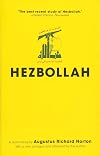
Hezbollah: a Short History
by Augustus Richard Norton
On This Page
Description
"With Hezbollah's entry into the Lebanese government in 2009 and forceful intervention in the Syrian civil war, the potent Shi'i political and military organization continues to play an enormous role in the Middle East. A hybrid of militia, political party, and social services and public works provider, the group is the most powerful player in Lebanon. Policymakers in the United States and Israel usually denounce Hezbollah as a dangerous terrorist organization and refuse to engage with it, show more yet even its adversaries need to contend with its durability and resilient popular support. Augustus Richard Norton's incisive account stands as the most lucid, informed, and balanced analysis of Hezbollah yet written--and this fully revised and updated edition features a new prologue and conclusion, as well as two new chapters largely devoted to the group's recent activities, including its involvement in Syria. Hezbollah is a work of perennial importance and remains essential reading for anyone who wants to understand the Middle East."-- show lessTags
Recommendations






































Member Reviews
Hezbollah has been one of the most well-known terrorist/Islamic-militant organizations on the planet since it came to prominence in the 1980s by attacking Israeli and American targets during Israel's occupation of southern Lebanon. It is a Shiite religious group that seeks two things: 1) the expulsion of all Israeli forces from Lebanese soil (Israel and Hezbollah disagree over whether Israel has in fact done this) and 2) a "fair" distribution of political power within Lebanon, where Shiites have often been excluded from power by Christians and Sunnis.
In Hezbollah: A Short History Augustus Richard Norton attempts to dispel the notion that Hezbollah is an organization that commits acts of terror for terror's sake and that it seeks show more perpetual war against the West. In other words, Norton tries to dispel the notion that Hezbollah is basically a Shiite version of al Qaeda. He largely succeeds at this effort.
Instead, Norton positions Hezbollah as a religious/nationalist movement that would probably refrain from undertaking attacks on Israel if the Israelis evacuated all Lebanese territory and engaged it in negotiations, as part of a nationwide Lebanese team, to end Israeli-Lebanese conflict. In essence, Norton believes that Israel could make peace with Hezbollah before settling the dispute with the Palestinians.
While I think that is being optimistic on Norton's part, I do buy into his position that Hezbollah is looking to get out of the violent militia racket and into the governing one. Furthermore, Norton also effectively positions Hezbollah as a nationalist movement, and not a pan-Arab or pan-Islamic, or even a pan-Shiite one. In other words, there is a possibility of splitting Hezbollah from its Syrian and Iranian sponsors if a deal can be worked out that leaves Hezbollah with a strong position within Lebanese politics. Whether or not Israel can take such a leap of faith remains to be seen. Since 1980, Israel's most difficult military encounters have been with Hezbollah, not the PLO or Hamas or any Arab state. Letting Hezbollah get control of Lebanon's military may be expecting too much of Israel despite the signs of Hezbollah's willingness to live and let live.
Interestingly, Norton claims that while Hezbollah claimed victory in the 2006 war with Israel, Hezbollah's leaders privately admitted that Israel inflicted a lot of damage on the organization, both physically and psychologically. This may well have been a turning point in Hezbollah's history that caused it to decide once and for all to try and live peacefully with Israel. If so, this in itself would be reason to call Israel's invasion of Lebanon a success. Of course, only time will tell. show less
In Hezbollah: A Short History Augustus Richard Norton attempts to dispel the notion that Hezbollah is an organization that commits acts of terror for terror's sake and that it seeks show more perpetual war against the West. In other words, Norton tries to dispel the notion that Hezbollah is basically a Shiite version of al Qaeda. He largely succeeds at this effort.
Instead, Norton positions Hezbollah as a religious/nationalist movement that would probably refrain from undertaking attacks on Israel if the Israelis evacuated all Lebanese territory and engaged it in negotiations, as part of a nationwide Lebanese team, to end Israeli-Lebanese conflict. In essence, Norton believes that Israel could make peace with Hezbollah before settling the dispute with the Palestinians.
While I think that is being optimistic on Norton's part, I do buy into his position that Hezbollah is looking to get out of the violent militia racket and into the governing one. Furthermore, Norton also effectively positions Hezbollah as a nationalist movement, and not a pan-Arab or pan-Islamic, or even a pan-Shiite one. In other words, there is a possibility of splitting Hezbollah from its Syrian and Iranian sponsors if a deal can be worked out that leaves Hezbollah with a strong position within Lebanese politics. Whether or not Israel can take such a leap of faith remains to be seen. Since 1980, Israel's most difficult military encounters have been with Hezbollah, not the PLO or Hamas or any Arab state. Letting Hezbollah get control of Lebanon's military may be expecting too much of Israel despite the signs of Hezbollah's willingness to live and let live.
Interestingly, Norton claims that while Hezbollah claimed victory in the 2006 war with Israel, Hezbollah's leaders privately admitted that Israel inflicted a lot of damage on the organization, both physically and psychologically. This may well have been a turning point in Hezbollah's history that caused it to decide once and for all to try and live peacefully with Israel. If so, this in itself would be reason to call Israel's invasion of Lebanon a success. Of course, only time will tell. show less
This is a pretty good overview of the Hezbollah and the major turning points in the group's evolution. The afterword, which adds a bit to the narrative, is current up to August 2008.
I wish other scholars could right like this guy. He knows his stuff but he shares it in a way we can all understand.
As good a history of post-civil war Lebanon as exists in English.
Ratings
Members
- Recently Added By
Lists

Radical Islam/Islamism
75 works; 6 members

Middle Eastern Literature & Non-Fiction
99 works; 3 members

Reading list
170 works; 1 member

Global Reads: Books Set in the Middle East and North Africa
50 works; 8 members
Author Information

11 Works 295 Members
Awards and Honors
Series
Belongs to Publisher Series
Common Knowledge
- Canonical title
- Hezbollah: a Short History
- People/Characters
- Michael Aoun; Muhammad Hussein Fadlallah; Rafiq al-Hariri; Hasan Nasrallah; Musa al-Sadr
- Important places
- Lebanon; Beqaa Valley
- Publisher's editor
- Eickelman, Dale F.; Norton, Augustus Richard
- Blurbers
- Hamilton, Lee; Nasr, Vali; Deeb, Lara; Bellin, Eva
Classifications
- Genres
- Nonfiction, Politics and Government, General Nonfiction, Religion & Spirituality, History
- DDC/MDS
- 324.25692082 — Society, government, & culture Political science Politics & Elections Political parties Asia Middle East
- LCC
- JQ1828 .A98 .H6263 — Political Science Political institutions and public administration (Asia, Africa, Australia, Pacific Area, etc.) Political institutions and public administration (Asia, Middle East
- BISAC
Statistics
- Members
- 227
- Popularity
- 143,355
- Reviews
- 4
- Rating
- (3.93)
- Languages
- English
- Media
- Paper, Ebook
- ISBNs
- 8
- ASINs
- 3