This book was a demanding but worthwhile read. Corbin analyzes the Sufi mystical experience in academic terms, but he also does his best to describe something that transcends words and to nourish the reader's intuitive understanding. He has his own political and religious agenda, but instead of steering him into a blinkered mindset, his beliefs serve as a creative springboard. He does tend to be repetitive, but this is probably necessary in order to maintain the reader's concentration. This is a quirky and brilliant book, and it falls into the same general milieu as work by Louis Massignon and Gershom Scholem. I highly recommend it!
Amusingly dated in some respects and disturbingly relevant in others, this book is full of engaging ideas and dry humor. So I am at a loss to explain why I could rarely make it through more than five pages at a time without starting to fall asleep. I think that the lack of a scholarly apparatus, rather than making the writing more accessible, actually made it more monotonous to me. It's a nice addition to the intellectual toolkit, and I don't regret reading it, but I plan to make my next read something less soporific.

This is a real downer, as most everyone has seen fit to mention. It's also quite funny, which not as many people have pointed out. There's not a lot that I need to say about an acknowledged masterpiece such as this; it's my first time reading Ishiguro, and I'm sold. I think I'll wait a while, though, before immersing myself again in his particular brand of misery.
This is my first exposure to Cioran, and he has enough of an arresting style that I plan to check out more of his books. The adolescent despair on display here charmed me for a while, but by the end of the (quite short) book I was getting tired of it. I did find Cioran to be compulsively readable and adorably misanthropic, and I look forward to reading some of his more mature work.
This clear and engaging book traces the history of the computer as far back as its 19th-century conceptual origins. By devoting so much space to the connections between digital computers and related technology, the authors manage to situate the computer within a clearly defined social and scientific context. The book loses some of its focus as it reaches the Internet era, which is probably harder to examine from a historical perspective. But overall, it is an excellent introduction to the subject by two scholars who successfully cater to the general reader.
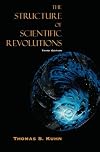
I started reading this book assuming that I already knew all of the basic ideas behind it. I mostly wanted to say that I had read it; I didn't think that I would learn a great deal. I was way off. As old as it is, this book is full of great concepts; even though most of the basic ideas have been absorbed by our culture, the details are well worth studying. I highly recommend reading it all the way through!

I found this book to be highly entertaining and thought-provoking, although it is not the sort of work that ages well. Simultaneously an overarching study of world history and an anti-Soviet polemic, the book explores Marx's concept of the "Asiatic mode of production" by comparing the socioeconomic structures of historical Asian and other non-Western civilizations. Wittfogel finds authoritarian modes of government to be linked to the needs of river-valley societies, which require a high degree of centralization in order to carry out large-scale irrigation projects. A specialist in Chinese history, the author confidently draws from an immense range of literature and positions each civilization within a highly nuanced framework. The book (as well as the historical argument) is mechanically organized to an oppressive degree, but Wittfogel's dry humor and barely suppressed anger help to keep the writing fresh. This is a flawed and somewhat outdated work, but still a classic with which students of history should become familiar.
American Humor: A Study of the National Character (New York Review Books Classics) by Constance Rourke
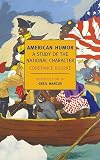
First off: the style of this book is so lovely that it is a pleasure to read, almost regardless of the actual content. Rourke writes in a delicate and oblique fashion worthy of a good novelist. This is, of course, an old book, and the depictions of American territorial expansion and of racist caricature will likely cause the contemporary reader to cringe now and then. The subject matter of the book is more aptly summed up in the subtitle than in the primary title: "humor," narrowly defined, is only one among many topics covered here. What is really at issue is the search for unique characteristics of American literature and how they derive from a national collective consciousness. One complaint is that the author seemed to feel obligated to cover every major American author active in the 19th century: she gives the impression of having something to say about James and Dickinson but to hammer out a few uninspired pages about Melville. As some of the other reviews mention, this book is better at conveying insightful, pithy quotes than factual information. It will not serve as a general primer on American literature or as a hard scholarly resource, but it is a highly worthwhile read on aesthetic grounds alone.
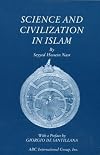
This is an informative yet aggravating book, and I had a hard time deciding how to rate it. Seyyed Hossein Nasr is a very knowledgeable man with what I consider to be some bizarre views, and here he is constantly at work to force said views upon the reader. I found the size and scope of the book to be ideal, and the balance between analysis and translations of primary texts was perfect (although his selection criteria occasionally baffled me). This is a good text to read along with another (hopefully more sane) introduction to Islamicate science, or one could use the bibliography as a helpful jumping off point: the references are dated but helpful.
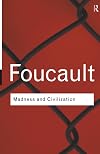
Four stars, I guess? I don't really know how to review something like this. There were several sections, including the conclusion, that I didn't feel I understood at all. And Foucault continues to frustrate me in the way that he seems deliberately obscure: while I certainly wouldn't say that he is dealing in simple concepts, they seem like they don't need to be as difficult as he is making them. But for all of its faults and quirks, this was a totally rewarding book. The idea that psychoanalysis deals not with the eternal structure of the human mind but rather with a set of complexes developing within the last few centuries of Western history was particularly fascinating to me. A brilliant book: maybe someday I'll actually read the entire History of Madness, but I doubt that it will be anytime soon!
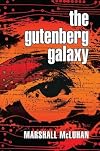
This was a fun and inspiring book, and there were points at which I would have considered just giving it five stars despite some of its obvious flaws and the fact that it is quite dated. I really like the way that McLuhan constructs his narrative by quoting other writers and commenting on the quoted material. I found this to be wonderfully transparent and to give a sense of the relative weight of each author in relation to McLuhan's thought. It sometimes felt like I was reading the most enjoyable annotated bibliography ever, or a medieval text with glosses and super-glosses.
The main point of irritation for me is how McLuhan's interpretations of texts could be so loose and, honestly, lazy. Some reviewers have made mention of the dreadful King Lear episode at the beginning, but he does that to some degree all the way through, especially with Shakespeare. I'm not arguing for sticking to authorial intention, but good literary critics can sell the reader on some of the outrageous interpretations that they produce. McLuhan doesn't seem to be even trying sometimes: he just comes up with his argument in advance, looks around for a text to back it up, and doesn't bother being very selective. That was how it came across to me, at least. For someone with close ties to the discipline of literary criticism, he seems to have an especially hard time with it.
Overall, I loved the book and am now equipped with a list of other authors to check out. McLuhan is fun and has a distinctive way show more of writing theory that I wish more people had copied. show less
The main point of irritation for me is how McLuhan's interpretations of texts could be so loose and, honestly, lazy. Some reviewers have made mention of the dreadful King Lear episode at the beginning, but he does that to some degree all the way through, especially with Shakespeare. I'm not arguing for sticking to authorial intention, but good literary critics can sell the reader on some of the outrageous interpretations that they produce. McLuhan doesn't seem to be even trying sometimes: he just comes up with his argument in advance, looks around for a text to back it up, and doesn't bother being very selective. That was how it came across to me, at least. For someone with close ties to the discipline of literary criticism, he seems to have an especially hard time with it.
Overall, I loved the book and am now equipped with a list of other authors to check out. McLuhan is fun and has a distinctive way show more of writing theory that I wish more people had copied. show less
This is an excellent overview of early Islamic theology (which is really all that it covers, despite the more inclusive "thought" of the title). The publishers play up the value of this book as an introductory text, and I agree that it wouldn't be baffling to someone new to the topic; however, I don't feel that the information would really sink in unless you had some prior knowledge. Despite the textbook format, this is also an important piece of scholarship, as Watt definitely advances his own theories rather than simply reporting different views on each topic. He is sensitive to traditional Islamic historiography while falling squarely into the Goldziher/Schacht camp. Occasionally his analysis goes off course into some "Maybe they think this way because they're Arabs and they live in the desert" nonsense, but for the most part Watt has a balanced and transparent historical method. The book is getting a bit old; for either an undergraduate class or one's personal reading, I'd supplement this with the textbooks by Marshall Hodgson (also old), Patricia Crone, and Jonathan Berkey on classical Islamicate history and thought. The Flowering of Muslim Theology by Josef van Ess is a solid, quick read before tackling Watt.

Precise, accessible, funny, enlightening, beautiful book. About graphs.
Of Bicycles, Bakelites, and Bulbs: Toward a Theory of Sociotechnical Change (Inside Technology) by Wiebe E. Bijker
I think I'm probably not alone in disliking academic books with a lot of sociological theory: I always want to get at the meat of the book without learning a lot of jargon to describe concepts that are usually quite simple. I usually feel that the authors are trying to artificially distinguish themselves from predecessors who have utilized essentially the same ideas, but that's my point of view as an outsider to the discipline.
Having said that, I was really impressed by the way that theory is packaged in this book. Bijker keeps switching back and forth between historical narratives and sociological theory, employing the latter in small doses and only when it becomes relevant. For someone like me, his approach made it a lot easier to digest the abstract concepts and understand their application. He also is great at explaining the necessary scientific concepts in a manner that is quick and easy to grasp.
This book is worth reading even if you're just interested in getting some bite-sized chunks of technological history delivered by a responsible historian. I undertook the reading as an unwelcome chore, since I needed some background in constructivist views on technological artifacts in society. It turned out to be great fun to read, and I finished the book with the sense that I learned something important.
Having said that, I was really impressed by the way that theory is packaged in this book. Bijker keeps switching back and forth between historical narratives and sociological theory, employing the latter in small doses and only when it becomes relevant. For someone like me, his approach made it a lot easier to digest the abstract concepts and understand their application. He also is great at explaining the necessary scientific concepts in a manner that is quick and easy to grasp.
This book is worth reading even if you're just interested in getting some bite-sized chunks of technological history delivered by a responsible historian. I undertook the reading as an unwelcome chore, since I needed some background in constructivist views on technological artifacts in society. It turned out to be great fun to read, and I finished the book with the sense that I learned something important.
My knowledge of the history of medical theory is practically non-existent, and I'm embarrassed to say that I know next to nothing about the French Revolution, so large sections of this book didn't really register with me. It seems like Foucault is using a slightly more direct style than is his wont, but this effect is largely eliminated by the obscurity of his historical references. As with much of his writing, I felt that I understood the beginning and end of the narrative arc pretty well without being entirely clear on what happened in the middle. I was, in fact, all set to give this a mediocre rating; what changed my mind was the clear and fantastic ending. It really is a great statement of Foucault's (early?) philosophy as a whole, and an unusually elegant formulation.
A little bit dry, a little bit dated, and I wish it covered a broader range of material. It is, however, rich in meaningful theoretical content; recommended to anyone interested in video games from a literary/semiotic standpoint.
Witty and entertaining but not one of McLuhan's seminal works. My original thought upon picking this up was that it was like an American companion to Mythologies by Roland Barthes. Not so much. The latter still fascinates, while this one is just cute. It reads at about the same level as Thomas Frank.
In many ways this book came as a relief. It is written by someone who actually has lengthy experience with the subject, and it applies an uncommonly deep level of examination to the problem of how MMORPGs interact with our daily lives. There is quite a bit of quality material here, anchored by detailed but readable economic analysis.
On the bad side, Castronova's writing style is unpleasant to read: a lot of failed humor, and far more personal anecdote than is desired. The structure of the book is also a mess: the core of the book (the economic analysis) is sandwiched between a lengthy introduction to the subject of online games and a series of hastily sketched policy problems. The former is at least accurate and will be useful to many readers. By the end of the book, Castronova has taken to pontificating on the distant future instead of engaging in the sober analysis that is his greatest strength.
Overall, this is a frustrating read on many fronts, but one of the more substantial and worthwhile entries in the literature on virtual worlds.
On the bad side, Castronova's writing style is unpleasant to read: a lot of failed humor, and far more personal anecdote than is desired. The structure of the book is also a mess: the core of the book (the economic analysis) is sandwiched between a lengthy introduction to the subject of online games and a series of hastily sketched policy problems. The former is at least accurate and will be useful to many readers. By the end of the book, Castronova has taken to pontificating on the distant future instead of engaging in the sober analysis that is his greatest strength.
Overall, this is a frustrating read on many fronts, but one of the more substantial and worthwhile entries in the literature on virtual worlds.
"I had to read this book for school. It was boring and stupid."
Reading this really brought out my inner high school student. To be fair, it was a useful resource, mostly because of the detailed summaries of other literature in the field. I've read some of Savolainen's other work, and here as elsewhere he is well-informed but lacking in penetrating analysis. The sample populations for his research are, once again, ludicrously small and limited to Tampere, Finland. Of course, if you have the misfortune of doing research in ELIS (everyday-life information seeking), Savolainen is one of the people that you are obligated to read.
Reading this really brought out my inner high school student. To be fair, it was a useful resource, mostly because of the detailed summaries of other literature in the field. I've read some of Savolainen's other work, and here as elsewhere he is well-informed but lacking in penetrating analysis. The sample populations for his research are, once again, ludicrously small and limited to Tampere, Finland. Of course, if you have the misfortune of doing research in ELIS (everyday-life information seeking), Savolainen is one of the people that you are obligated to read.
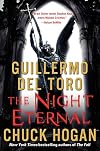
I can think of a lot of things that were theoretically wrong with this book, but the upshot is that I loved it. I don't usually engage with genre fiction so deeply, and this series was a rare treat. I found the ending to be a totally satisfying conclusion to the trilogy, although the epilogue was pretty lame. I actually wish there had been another book in the series to cover the two years preceding this one; I would love to see the globe-trotting adventures of Fet and Mr. Quinlan.
I found this book to contain much sensitive analysis and a pleasant style, but I traversed it with the sense that I lacked the patience and refinement to take much away from it. Ultimately, the ending cheered me and serves as a better review than anything I could write:
"I should claim, then, that for those who find this book contains novelties, it will make poetry more beautiful, without their ever having to remember the novelties, or endeavor to apply them. It seems a sufficient apology for many niggling pages."
"I should claim, then, that for those who find this book contains novelties, it will make poetry more beautiful, without their ever having to remember the novelties, or endeavor to apply them. It seems a sufficient apology for many niggling pages."
Human-Machine Reconfigurations: Plans and Situated Actions (Learning in Doing: Social, Cognitive and Computational Perspectives) by Lucy Suchman
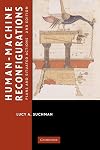
This book was a demanding read, but highly worthwhile. The theory that Suchman lays out in the opening chapters is useful and excellently presented; the empirical section was fascinating and helped me to concretely apply some of the design principles that I had gleaned from [b:The Design of Everyday Things|840|The Design of Everyday Things|Donald A. Norman|http://photo.goodreads.com/books/1283507332s/840.jpg|18518]. The intersection of very different disciplines featured here was challenging and productive. And in terms of structure, I wish that all second editions were like this: the introduction and footnotes that clarify ambiguities or express changes in the author's views, the original book still present in recognizable form, the following chapters that bring the book up to date.
As a few other reviewers have pointed out, the real gem here is the original book, which I think is greatly improved by the introduction and notes. One gets the impression that between its publication and the creation of the additional chapters, Suchman forgot how to write. (Or perhaps more fairly, she became accustomed to writing for academic specialists rather than professional generalists.) I don't have much of a background in science and technology studies, so the later chapters seemed to bring up some interesting ideas but were frequently incomprehensible to me. In addition to being thick with jargon, they seemed rather unfocused: they mostly consisted of literature reviews, with some show more informal observations thrown in that failed to substitute for structured research. It was nice to see Suchman's ideas applied to more contemporary developments, but I don't think readers would suffer a huge loss in sticking to the original edition of the book. show less
As a few other reviewers have pointed out, the real gem here is the original book, which I think is greatly improved by the introduction and notes. One gets the impression that between its publication and the creation of the additional chapters, Suchman forgot how to write. (Or perhaps more fairly, she became accustomed to writing for academic specialists rather than professional generalists.) I don't have much of a background in science and technology studies, so the later chapters seemed to bring up some interesting ideas but were frequently incomprehensible to me. In addition to being thick with jargon, they seemed rather unfocused: they mostly consisted of literature reviews, with some show more informal observations thrown in that failed to substitute for structured research. It was nice to see Suchman's ideas applied to more contemporary developments, but I don't think readers would suffer a huge loss in sticking to the original edition of the book. show less
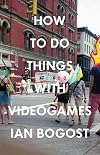
This short and easy book hits on a number of interesting ideas relating to what videogames can do for their players. Good to read for inspiration, it is sadly lacking in depth. I will check out Bogost's other work, but this book disappointed me somewhat with its lightness.
This is a beautiful book, if not always a clear source of theoretical insight. Given how short it is, there is really no reason not to give it a little of your time. The culminating section on "Voice" is particularly gorgeous: "In fact, it suffices that the cinema capture the sound of speech close up... and make us hear in their materiality, their sensuality, the breath, the gutturals, the fleshiness of the lips, a whole presence of the human muzzle... to succeed in shifting the signified a great distance and in throwing, so to speak, the anonymous body of the actor into my ear: it granulates, it crackles, it caresses, it grates, it cuts, it comes: that is bliss." The charming language of Barthes is obviously in good hands with this translation.
A classic that merits reading despite its age. Winograd and Flores bring together philosophy, linguistics, and biology in order to illuminate the endeavor of computer science. This little book is dense but somehow manages to remain clear and readable by students of many different disciplines.
Simulacra and Simulation (The Body, In Theory: Histories of Cultural Materialism) by Jean Baudrillard
Say "aleatory" again. Say "aleatory" again. I dare you. I double-dare you, motherfucker.
Okay, aside from that, I really liked this book. Much more entertaining than is the norm for poststructuralist theory: the little passage about theme parks ringing Los Angeles like power stations will stick with me for a while, like a tidbit from a favorite novel. Most of the content here isn't the sort that you can take away and use to live your life, but it's fun and relevant in a vague way. It's weird to see how much of the theory is more applicable now than at the time of its publication. "Whoa, this is totally about Facebook," and so on.
Okay, aside from that, I really liked this book. Much more entertaining than is the norm for poststructuralist theory: the little passage about theme parks ringing Los Angeles like power stations will stick with me for a while, like a tidbit from a favorite novel. Most of the content here isn't the sort that you can take away and use to live your life, but it's fun and relevant in a vague way. It's weird to see how much of the theory is more applicable now than at the time of its publication. "Whoa, this is totally about Facebook," and so on.
A very solid title. While I wouldn't recommend it for someone who wanted casual insight into the critical study of video games, it is a crucial resource for the researcher. There is much thorough and clear-headed analysis to serve as a springboard for future investigations.
Written in the late 1990s, this book is little worse for wear. It lays out a highly useful and understandable framework for how media borrow from each other and situate themselves in relation to other media. It is not difficult to fill in the blanks regarding more recent developments, and the authors' theories are not less useful for being dated. On the negative side, the book is a bit overlong; I'd agree with the below reviewer that the connections to critical theory can be superficial or dubious, and the ending chapters are not as strong as the rest of the book. However, this book addresses in detail a field of inquiry that is only touched upon by most of other sources I have read. I highly recommend it to anyone taking a theoretical approach to new media.

I don't have a background in psychology, so for me this book was quite dense. It is strongest when it reviews the literature on cognitive processes of reading; I found it to be sensitive and thorough, with some welcome influence from literary theory. Probably I'm not qualified to judge, but the empirical sections seemed to detail a lot of effort tainted by shoddy experiment design. I doubt that many people are still reading a study that came out of South Africa in the 1980s, but I found it helpful and would recommend it.
This book is unusual, as it finds Braudel writing outside his realm of expertise. I appreciated the endnotes that brought his treatment of prehistory up to date, although I wish these notes had been a bit more elaborate. Relying largely on the work of prior historians, Braudel comes off as a bit generic but is charming and erudite as always.