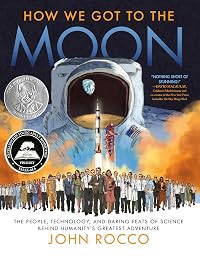
How We Got to the Moon: The People, Technology, and Daring Feats of Science Behind Humanity's Greatest Adventure
by John Rocco
On This Page
Description
"This beautifully illustrated, oversized guide to the people and technology of the moon landing by award-winning author/illustrator John Rocco is a must-have for space fans, classrooms, and tech geeks"--Tags
Recommendations




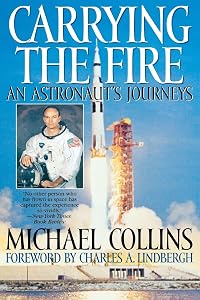


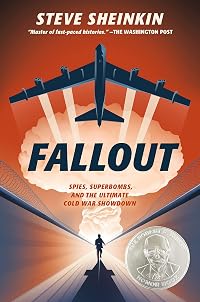

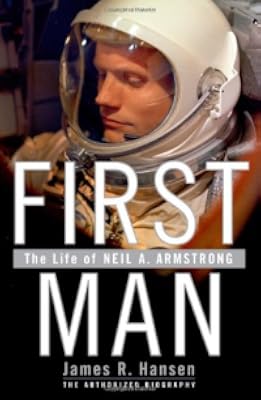

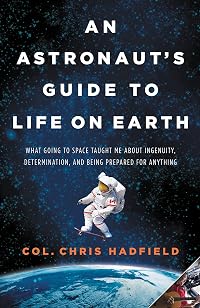

















Member Reviews
Everyone knows about Neil Armstrong’s “one small step for man, one giant leap for mankind.” And everyone knows the dangers associated with space travel and exploration.
But how do the astronauts get into space or walk on the moon?
“How We Got to the Moon” chronicles the contributions of the engineers, the welders, the factory workers, the seamstresses, the mathematicians . . . all working behind the scenes, all unsung heroes whose work gave birth to the equipment and the programs that put the astronauts into space and on the moon. It is because of their accomplishments that NASA was able to put together successful programs that put men into space, landed them on the moon, and ultimately sent them to live for a time in orbiting show more space stations.
So, how did it all come together to create all those successful missions?
=========
This beautifully illustrated book, subtitled “The People, Technology, and Daring Feats of Science Behind Humanity’s Greatest Adventure,” begins by looking at the race to the moon. Since the launch of Sputnik in 1957, the United States and Russia locked themselves in a space race . . . and Russia seemed to have the edge. After the launch of Sputnik, the space race began in earnest with the Designing of a Moon Rocket and the Building of a Launch Vehicle. Then there was the task of Building a Spacecraft and ensuring that astronauts would be Staying Alive in Space. All space flights had Support on the Ground and, finally, We Choose to Go to the Moon.
The targeted audience for this amazing book is quite large: young readers, ages ten through seventeen. However, any reader interested in the manned spaceflight program would find much to appreciate in this comprehensive volume that provides readers with a chronicle of mankind’s greatest adventure.
Highly recommended, especially for readers interested in space exploration, Project Apollo, and the moon landings. show less
But how do the astronauts get into space or walk on the moon?
“How We Got to the Moon” chronicles the contributions of the engineers, the welders, the factory workers, the seamstresses, the mathematicians . . . all working behind the scenes, all unsung heroes whose work gave birth to the equipment and the programs that put the astronauts into space and on the moon. It is because of their accomplishments that NASA was able to put together successful programs that put men into space, landed them on the moon, and ultimately sent them to live for a time in orbiting show more space stations.
So, how did it all come together to create all those successful missions?
=========
This beautifully illustrated book, subtitled “The People, Technology, and Daring Feats of Science Behind Humanity’s Greatest Adventure,” begins by looking at the race to the moon. Since the launch of Sputnik in 1957, the United States and Russia locked themselves in a space race . . . and Russia seemed to have the edge. After the launch of Sputnik, the space race began in earnest with the Designing of a Moon Rocket and the Building of a Launch Vehicle. Then there was the task of Building a Spacecraft and ensuring that astronauts would be Staying Alive in Space. All space flights had Support on the Ground and, finally, We Choose to Go to the Moon.
The targeted audience for this amazing book is quite large: young readers, ages ten through seventeen. However, any reader interested in the manned spaceflight program would find much to appreciate in this comprehensive volume that provides readers with a chronicle of mankind’s greatest adventure.
Highly recommended, especially for readers interested in space exploration, Project Apollo, and the moon landings. show less
Amazing book that tells about the people who don't normally get recognition for the part they played in the moon landing. The engineers, the people who made the suits, the people who manufactured and put together the pieces of the rockets. This is an amazing book for the students as it shows they can make a major difference doing many things, not just by being the people who get the glory.
This book is a huge and fascinating resource. I read it cover-to-cover, and thoroughly enjoyed it. Meticulously illustrated, this fusion of picture book and expansive textbook goes into depth about every aspect of the steps to get to the moon.
240 pages taking the reader from the launch of the Russian Sputnik all the way through the Apollo 11 mission where American astronauts actually walked on the moon. Beautiful artwork illustrating the complexity of some components as well as the people and their equipment. Each section takes a piece of the process and highlights the people and decision making that went into making it work.
This book covers how we got to the moon and the people behind it. It has a mixture of pictures and text to go with the pictures, it helps break down the science behind our rockets too. This book wouldn't make a good read-out-loud but it still has a place in the classroom. This can be a great book to help kids do research or dive deeper into the history of how we got to the moon. This would be great for grades 5th grade and up.
What did it take to land on the moon? This book takes a look at the unsung heroes of the space race; engineers, seamstresses, and factory workers. The book lays out everything that happened to get there with diagrams, experiments, and stories. I like this book because it shows all the work from all the people needed to complete one mission.
This book is about all of the different things that went into people getting to the moon. Everyone has heard about Neil Armstrong and how he was the first man on the moon, but have they heard about all of the other stuff that went on to help in getting to the moon? I would recommend this book simply because it is such a good read! This book is something that will help your students realize that there are so many things behind the scenes of how we got to the moon not just the men who made it to the moon.
Members
- Recently Added By
Lists

Mulhern's Test List
12 works; 1 member

Robert F. Sibert Informational Book Medal
102 works; 1 member
Author Information

16+ Works 6,666 Members
John Rocco grew up Barrington, Rhode Island. He studied illustration at the Rhode Island School of Design and School of Visual Arts in New York City. John collaborated with actor/comedian Whoopi Goldberg on the picture book Alice. Shortly after the project was finished he moved to Los Angeles where he worked as a creative director. At Walt Disney show more Imagineering John designed many attractions at Disney's Epcot, including the Post-Shows for Spaceship Earth and Mission Space. He also served as the art director for DisneyQuest, an interactive theme park in Downtown Disney. At Dreamworks, John was the pre-production art director for animated film Shrek. In 2005 John shifted his focus to writing and illustrating children's books and created Wolf! Wolf! which netted him the Borders Original Voices Award for best picture book. His next book was Moonpowder (May 2008) followed by Fu Finds the Way (Oct 2009). John continues to collaborate with authors and has illustrated Boy, Were We Wrong About the Solar System (Sep 2008) for Kathleen V. Kudlinski and The Lightening Thief (Dec 2009) for Rick Riodan. He also illustrates all the covers for Rick Riordan's bestselling YA series, Percy Jackson and the Olympians. In 2012, his title Blackout was a Caldecott Honor recipient and made the ALA Notable Children's Books list. (Bowker Author Biography) show less
Awards and Honors
Awards
Distinctions
Notable Lists
Classifications
- Genres
- Nonfiction, Tween, Kids
- DDC/MDS
- 629.45 — Applied science & technology Engineering Transportation Vehicles Spacecraft & Vehicles Manned space flight
- LCC
- TL789.8 .U6 .A5811459 — Technology Motor vehicles. Aeronautics. Astronautics Motor vehicles. Aeronautics. Astronautics Astronautics. Space travel
- BISAC
Statistics
- Members
- 174
- Popularity
- 188,292
- Reviews
- 13
- Rating
- (4.56)
- Languages
- English
- Media
- Paper, Ebook
- ISBNs
- 4
- ASINs
- 1