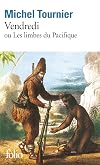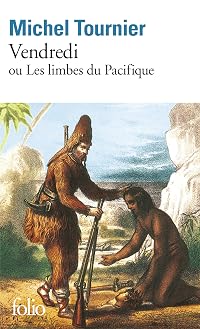
Friday, or, The Other Island
by Michel Tournier
On This Page
Description
Friday, winner of the 1967 Grand Prix du Roman of the Académie Française, is a sly, enchanting retelling of the legend of Robinson Crusoe by the man the New Yorker calls "France's best and probably best-known writer." Cast away on a tropical island, Michel Tournier's god-fearing Crusoe sets out to tame it, to remake it in the image of the civilization he has left behind. Alone and against incredible odds, he almost succeeds. Then a mulatto named Friday appears and teaches Robinson that show more there are, after all, better things in life than civilization. show lessTags
Recommendations




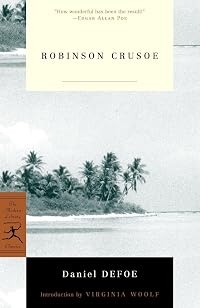
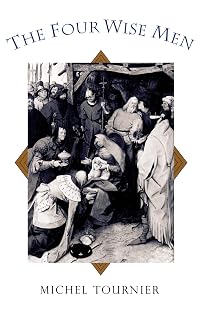
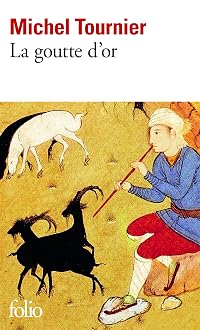




















Member Recommendations
Member Reviews
Where J M Coetzee's Foe is a playful reworking of the Robinson Crusoe story informed by late-20th-century ideas about gender, colonialism, and how narratives are created, Tournier's version is — as you might expect — a philosophical exploration of where the solitary castaway stands in a post-Sartre world in which "hell is other people". Does the world have any existence outside our own perceptions if there are no other people to challenge those perceptions?
Tournier starts out with a fairly straightforward recap of Defoe's picture of the indefatigable British capitalist gritting his teeth to re-create all the elements of a productive economy — except sexuality — on his uninhabited island, then gradually subverts it, as Robinson show more becomes obsessed with the technology of production and creates vast excesses of agricultural products he has no use or market for. And of course his Robinson is not an asexual being like Defoe's, but finds himself experimenting with various kinds of sexual relationship with the island of Speranza herself. What could be more 1960s than X-certificate tree-hugging..?
Robinson's rescue of Friday from the human sacrifice he's been designated for is an accident — Robinson has already made the rational decision to side with the stronger party, but his bullet goes astray — but the entry of this new person into the island is the key moment in Robinson's philosophical release from his previous life. Friday starts out as the willing slave, but he has something Robinson lacks, being prepared to commit himself to projects without a utilitarian purpose — in particular, to create playful works of art. This ends up transforming the way both of them see the world. It liberates Friday to return to a new life as a full-fledged adult, and it brings Robinson into a meaningful spiritual communion with the island, free from his capitalist baggage. show less
Tournier starts out with a fairly straightforward recap of Defoe's picture of the indefatigable British capitalist gritting his teeth to re-create all the elements of a productive economy — except sexuality — on his uninhabited island, then gradually subverts it, as Robinson show more becomes obsessed with the technology of production and creates vast excesses of agricultural products he has no use or market for. And of course his Robinson is not an asexual being like Defoe's, but finds himself experimenting with various kinds of sexual relationship with the island of Speranza herself. What could be more 1960s than X-certificate tree-hugging..?
Robinson's rescue of Friday from the human sacrifice he's been designated for is an accident — Robinson has already made the rational decision to side with the stronger party, but his bullet goes astray — but the entry of this new person into the island is the key moment in Robinson's philosophical release from his previous life. Friday starts out as the willing slave, but he has something Robinson lacks, being prepared to commit himself to projects without a utilitarian purpose — in particular, to create playful works of art. This ends up transforming the way both of them see the world. It liberates Friday to return to a new life as a full-fledged adult, and it brings Robinson into a meaningful spiritual communion with the island, free from his capitalist baggage. show less
I decided to read Friday as a companion novel to the Robinson Crusoe book my online book group was reading. I saw that it was listed as one of the 1001 Children’s Books You Must Read Before You Grow Up.
I spent the entire time reading this book thinking two things: (1) this is a brilliant, thoughtful book and (2) this is not a children’s book. I was relieved to learn later that the Friday I meant to read is a children’s adaptation of this book by the same author; this was the original grownup version.
So I’m not terribly sure what Tournier would have kept in the children’s version and what he would have left out. The book I read was brilliant and innovative and philosophical and very, very French. Robinson Crusoe is alone on show more the island and he suffers from this aloneness. He tries to recreate the world he left behind on the island when he meets an islander named Friday and fails. Gradually, Crusoe changes and becomes more and more like Friday, so much so that he flees his rescuers when they finally arrive.
Warning: This is not a children’s book. At one point, Crusoe makes love to the island. He later sees that plants are growing up out of the island and he believes these are his offspring. I think children would find all of this very, very odd. show less
I spent the entire time reading this book thinking two things: (1) this is a brilliant, thoughtful book and (2) this is not a children’s book. I was relieved to learn later that the Friday I meant to read is a children’s adaptation of this book by the same author; this was the original grownup version.
So I’m not terribly sure what Tournier would have kept in the children’s version and what he would have left out. The book I read was brilliant and innovative and philosophical and very, very French. Robinson Crusoe is alone on show more the island and he suffers from this aloneness. He tries to recreate the world he left behind on the island when he meets an islander named Friday and fails. Gradually, Crusoe changes and becomes more and more like Friday, so much so that he flees his rescuers when they finally arrive.
Warning: This is not a children’s book. At one point, Crusoe makes love to the island. He later sees that plants are growing up out of the island and he believes these are his offspring. I think children would find all of this very, very odd. show less
Ok, let me try and give a review of this novel in french. Hopefully I won't make too much of a mess :D
"Vendredi ou les limbes du Pacifique" est un roman de Michel Tournier (auteur des plusieurs romans que reprennent des figures mytologiques comme lequelles des gemeaux Caspar et Pollux dans "Les Météores" e les orques dans "Les Roi des Aulnes"): ce roman était publié en 1967 mais il est un roman complètement detaché dans le temps de l'Histoire. C'est une réécriture du "Robinson Crusoe" de Defoe (ou mieux, c'est une révision et une recostruction du mythe de Robinson.)
Ce roman ne respecte pas une doxa, un model traditionel imposé par le groups littéraires ; il n'est pas un roman d'introspection psychologique, il n'est pas un show more roman sociologique, il n'est pas engagée selon l'idée de roman engagée de Sartre. Mais il est un roman phylosophique, que va examiner la solitude d'un homme que se trouve seul dans une île, les liens entre les gens (Vendredi et Robinson) et la relation de Robinson avec soi même, l' île e le concept de Dieu.
- Les Tarots dessinent le futur de Robinson: le démiurge e le besoin d'organiser l'île pour se sentir humain, dans la solitude de l'île; l'ermite que descend dans le ventre de l'île e renaît un homme nouveau; Vénus e Vendredi, e la découverte d'une enfantine joie de vivre, sous la lumière d'un Soleil devenu Dieu; l'abandon de Vendredi e le renoncement de Robinson au retourner à la société: Robinson n'est plus un homme occidental, il est devenu un étranger pour la societé: 28 ans ont passé, il est un vieil homme. Il est presque déjà mort et aussi il a connu une sexualité différent et unique, que ne pourrais jamais être compris par autres gens. Robinson est de nouveau seul et seulement la mort semble être la solution de sa vie, mais il découvre que le jeune mousse de la navire que est de peu partie a décidé de rester près de lui. Robinson va baptiser le jeune garçon "Jeudi"
J'ai aimé bien ce roman... I loved this novel, hopefully I managed to write something meaningful about it, even though I did it in French, which I'm still studying and can't handle very well yet. :D show less
"Vendredi ou les limbes du Pacifique" est un roman de Michel Tournier (auteur des plusieurs romans que reprennent des figures mytologiques comme lequelles des gemeaux Caspar et Pollux dans "Les Météores" e les orques dans "Les Roi des Aulnes"): ce roman était publié en 1967 mais il est un roman complètement detaché dans le temps de l'Histoire. C'est une réécriture du "Robinson Crusoe" de Defoe (ou mieux, c'est une révision et une recostruction du mythe de Robinson.)
Ce roman ne respecte pas une doxa, un model traditionel imposé par le groups littéraires ; il n'est pas un roman d'introspection psychologique, il n'est pas un show more roman sociologique, il n'est pas engagée selon l'idée de roman engagée de Sartre. Mais il est un roman phylosophique, que va examiner la solitude d'un homme que se trouve seul dans une île, les liens entre les gens (Vendredi et Robinson) et la relation de Robinson avec soi même, l' île e le concept de Dieu.
- Les Tarots dessinent le futur de Robinson: le démiurge e le besoin d'organiser l'île pour se sentir humain, dans la solitude de l'île; l'ermite que descend dans le ventre de l'île e renaît un homme nouveau; Vénus e Vendredi, e la découverte d'une enfantine joie de vivre, sous la lumière d'un Soleil devenu Dieu; l'abandon de Vendredi e le renoncement de Robinson au retourner à la société: Robinson n'est plus un homme occidental, il est devenu un étranger pour la societé: 28 ans ont passé, il est un vieil homme. Il est presque déjà mort et aussi il a connu une sexualité différent et unique, que ne pourrais jamais être compris par autres gens. Robinson est de nouveau seul et seulement la mort semble être la solution de sa vie, mais il découvre que le jeune mousse de la navire que est de peu partie a décidé de rester près de lui. Robinson va baptiser le jeune garçon "Jeudi"
J'ai aimé bien ce roman... I loved this novel, hopefully I managed to write something meaningful about it, even though I did it in French, which I'm still studying and can't handle very well yet. :D show less
Michel Tournier, lindur në Paris më 1924. Është mbiquajtur "Kontrabandisti i Filozofisë" meqë u rrek të kalonte Platonin, Spinozën dhe Kantin në botën e historive dhe rrëfimeve. Ka jetuar në Vallèe de Chevreuse pranë Parisit. Për këtë roman është vlerësuar me Çmimin Grand Prix të Akademisë Franceze në 1967; Çmimin Goncourt (1970) për romanin "Mbreti i Verrishtave"; Anëtar i Akademisë Goncourt (1972) dhe Medalja Goethe (1993). Konsiderohet si një nga prozatorët më të mëdhenj me inspirim metafizik të gjysmës së dytë të shekullit XX.
re-telling of Robinson Cruseau with Friday as hero
Tous ceux qui m'ont connu, tous sans exception, me croient mort. Ma propre conviction que j'existe a contre elle l'unanimité. Quoi que je fasse, je n'empêcherai pas que, dans l'esprit de la totalité des hommes, il y a l'image du cadavre de Robinson. Cela suffit - non certes à me tuer - mais à me repousser aux confins de la vie, dans un lieu suspendu entre ciel et enfers, dans les limbes en somme... Plus près de la mort qu'aucun autre homme, je suis du même coup plus près des sources mêmes de la sexualité.
> Par Adrian (Laculturegenerale.com) : Les 150 classiques de la littérature française qu’il faut avoir lus !
07/05/2017 - Une apologie de la vie sauvage. Michel Tournier reprend le mythe de Robinson mais inverse ici les rapports classiques : le sauvage prend vite le dessus sur le civilisé.
07/05/2017 - Une apologie de la vie sauvage. Michel Tournier reprend le mythe de Robinson mais inverse ici les rapports classiques : le sauvage prend vite le dessus sur le civilisé.
Jan 27, 2019 (Edited)French
Members
- Recently Added By
Lists

Le Monde - Les 100 livres du siècle
121 works; 25 members

Parallel Novels
37 works; 6 members

Robinsonade Novels
55 works; 4 members
Harold Bloom - The Western Canon: D. The Chaotic Age
833 works; 24 members
Author Information

79+ Works 4,856 Members
Michel Édouard Tournier was born in Paris, France on December 19, 1924. He received a degree in philosophy and law from the Sorbonne and studied German philosophy at the University of Tübingen for four years. After failing the philosophy exam that would have certified him as a university teacher, he started producing radio and television show more programs and writing literary journalism. He was the press agent for a new radio station Europe 1 for four years. He then became the literary director of the publishing house Editions Plon. His first novel, Friday, was published in 1967 and won the Grand Prix du Roman by the Académie Française. His second novel, Le Roi des Aulnes, which was also published as The Ogre and The Erl-King, won the Prix Goncourt, France's top literary prize, in 1970. His other works included Friday and Robinson: Life on Speranza Island, Gemini, The Woodcock, The Fetishist, The Motionless Wanderer, The Four Wise Men, Gilles and Jeanne, The Golden Droplet, Keys and Locks, The Flight of the Vampire, and Mount Tabor and Mount Sinai. He died on January 18, 2016 at the age of 91. (Bowker Author Biography) show less
Some Editions
Awards and Honors
Notable Lists
Series
Belongs to Publisher Series
Dundrukserie (18)
Literair paspoort (25)
Work Relationships
Is contained in
Is a retelling of
Common Knowledge
- Canonical title
- Friday, or, The Other Island
- Original title
- Vendredi ou les limbes du Pacifique
- Original publication date
- 1967
- People/Characters
- Robinson Crusoe; Friday
- Important places*
- Esperanza
- Epigraph
- There is always another island.
JEAN GUÉHENNO - First words
- With the precision of a lead line the lantern hanging from the cabin roof measured by the extent of its swing the roll of the brig Virginia in a sea that was growing steadily worse. (Prologue)
A wave curled and running up the wet shore licked Robinson's toes as he lay face down on the sand. - Last words
- (Click to show. Warning: May contain spoilers.)He added, smiling: "To me you will always be Sunday's child."
(Click to show. Warning: May contain spoilers.)An instant later a black wall of water fell with a crash upon the deck, sweeping it from end to end and carrying everything away, man and gear alike. (Prologue) - Blurbers
- Howard, Richard
- Original language
- French
- Disambiguation notice
- Please do not combine Friday with Friday and Robinson. They are two separate books.
*Some information comes from Common Knowledge in other languages. Click "Edit" for more information.
Classifications
Statistics
- Members
- 874
- Popularity
- 31,192
- Reviews
- 10
- Rating
- (3.85)
- Languages
- 16 — Catalan, Czech, Danish, Dutch, English, Estonian, Finnish, French, German, Italian, Norwegian (Bokmål), Portuguese, Russian, Serbian, Spanish, Swedish
- Media
- Paper, Ebook
- ISBNs
- 46
- ASINs
- 10