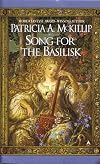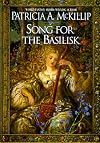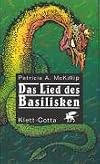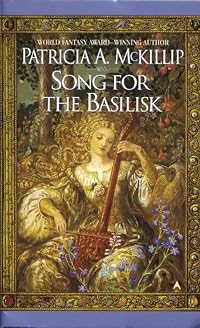
Song for the Basilisk
by Patricia A. McKillip
On This Page
Description
As a child, Rook had been taken in by the bards of Luly, and raised as one of their own. Of his past he knew nothing -- except faint memories of fire and death that he'd do anything to forget. But nightmares, and a new threat to the island that had become his own, would not let him escape the dreaded fate of his true family. Haunted by the music of the bards, he left the only home he knew to wander the land of the power-hungry basilisk who had destroyed his family. And perhaps, finally, to show more find a future in the fulfillment of his forgotten destiny. show lessTags
Recommendations





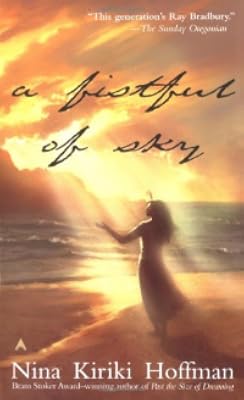
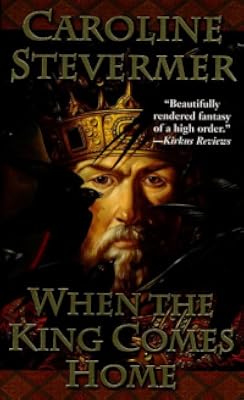

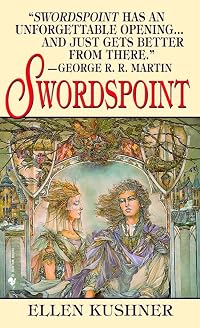
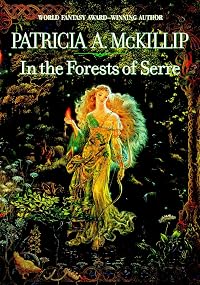



Member Recommendations
Member Reviews
Wow. It is rare to read a book that verges on "perfect" – but more often than not, that book will be one by McKillip. "Song for the Basilisk" is definitely one of her best. In a pseudo-Renaissance setting, rivalry flares into violence, and House Berylon, whose symbol is the basilisk, overthrows and slaughters House Tormalyne, whose symbol is the griffin. However, unbeknownst to the Basilisk, the heir to House Tormalyne survives. His relatives find him, and secretly send the boy to a remote island music school, renaming him Caladrius, "the bird whose song means death." Traumatized by his experience, the boy does not remember his heritage, and grows up with no desire to leave the island. He finds love, and has a son. But when, after show more years, both woman and son grow restless with his stay-at-home ways, and leave for the mainland, he begins to remember that he is Griffin Tormalyne... and destiny (or a desire simply for revenge) draws him back to House Berylon, where he finds a place as a music librarian, cataloguing the items stolen from Tormalyne. His son also finds himself there... and the musician and teacher Giulia begins to suspect there is more to these people than she might have guessed, as plots and intimations of revolution begin to swirl...
McKillip's writing is deeply symbolic and poetically beautiful, but always readable and also not without humor. show less
McKillip's writing is deeply symbolic and poetically beautiful, but always readable and also not without humor. show less
I read this book a while ago and decided to re-read it. I remember being a bit confused the first time through, remembering only elements like a one-stringed instrument held by the player and a music school where one of the main characters teaches.
And on this re-reading, I'm beginning to see why it was confusing. Don't get me wrong: I love Patricia A. McKillip's writings and her books kept me going through many decades (now). But this one did not, and I think it's a combination of things.
Her writing style is beautifully descriptive and evocative of feelings and place. And she has wonderful women who play prominent roles. But. This book was about the deepest of evils and a ruler whose symbol was a basilisk, and who burned the ruling show more family out of their home. Which is how this book begins, from the eyes of the heir to this ruling family hiding in the ashes of the hearth.
But all this story is hidden and barely becomes a story until close to the end, and instead one catches glimpses of events that are very hard to piece together. When there is a story that finally unfolds, it is told with McKillip's abilities and images. But there is too much going on with evil and court intrigues and just outright vileness for there to be so little of a story and so much of atmosphere and ponderings and descriptions.
So, sadly, this one got this rating from this reader. show less
And on this re-reading, I'm beginning to see why it was confusing. Don't get me wrong: I love Patricia A. McKillip's writings and her books kept me going through many decades (now). But this one did not, and I think it's a combination of things.
Her writing style is beautifully descriptive and evocative of feelings and place. And she has wonderful women who play prominent roles. But. This book was about the deepest of evils and a ruler whose symbol was a basilisk, and who burned the ruling show more family out of their home. Which is how this book begins, from the eyes of the heir to this ruling family hiding in the ashes of the hearth.
But all this story is hidden and barely becomes a story until close to the end, and instead one catches glimpses of events that are very hard to piece together. When there is a story that finally unfolds, it is told with McKillip's abilities and images. But there is too much going on with evil and court intrigues and just outright vileness for there to be so little of a story and so much of atmosphere and ponderings and descriptions.
So, sadly, this one got this rating from this reader. show less
This review is written with a GPL 4.0 license and the rights contained therein shall supersede all TOS by any and all websites in regards to copying and sharing without proper authorization and permissions. Crossposted at WordPress, Blogspot & Librarything by Bookstooge’s Exalted Permission
Title: Song for the Basilisk
Series: ------
Author: Patricia McKillip
Rating: 5 of 5 Stars
Genre: Fantasy
Pages: 318
Format: Digital Edition
Synopsis:
The city of Berylon was ruled by 4 Great Houses, which in turn were led by House Tourmalyne. 30 some years ago House Griffin [Tourmalyne] was overthrown by House Basilisk, led by Arioso Pellior. Pellior killed every direct member of House Griffin, or so he thinks. One young boy survives and is spirited away show more to the Isle of Luly to become a nameless bard.
Caladrius grows up, has a son and refuses to remember. Until he makes his trip off the island and realizes that he must revenge his family and destroy House Basilisk. He becomes a nobody musician and works his way into the palace. With a magic lute filled with killer fire, Caladrius plans on assassinating the Basilisk at his birthday celebration. What he doesn't count on is his son also coming to the city to find him.
He also doesn't count on the daughter of the Basilisk having the same powers as her father. But where the Basilisk is evil, it isn't so clear that his daughter is. Caladrius must decide if revenge for his past is the worth sacrificing the future of his son. And when it becomes apparent that the Basilisk plans to rule Berylon from beyond the grave through his daughter, she must decide if House Basilisk will stay ascendant over a dead city or bow its head to House Griffin and return things to their rightful place.
My Thoughts:
This book was about the power of magic within the guise of music. I don't know how to go about talking about this book without just fanboying. McKillip can write like no one else I've ever read. I think then next book of hers I will read selections outloud to see if there is rhythm to her sentences. Her words flow.
The story itself is good. A tale of revenge that redeems itself instead of creating more death and destruction. The use of multiple instruments to show characteristics of the various people was fun to realize. It was skillfully drawn and I couldn't remember which direction the Basilisk's daughter took, so the ending was new all over again. The benefits of waiting 11 years between re-reads I guess.
Last time I gave this 4 Stars, but this time around I'm calling this a solid 5. McKillip's writing is top notch. It is well crafted and more than that, it is artistic. It is a joy to read the story and a joy to read the wordcrafting itself.
Part of the reason I like most of McKillip's writing so much is that this is as close to poetry as I'm going to get and to enjoy. I've tried various books of poetry throughout the years and each time it has defeated me and left me bored. But I WANT to like Poetry.
★★★★★ show less
Title: Song for the Basilisk
Series: ------
Author: Patricia McKillip
Rating: 5 of 5 Stars
Genre: Fantasy
Pages: 318
Format: Digital Edition
Synopsis:
The city of Berylon was ruled by 4 Great Houses, which in turn were led by House Tourmalyne. 30 some years ago House Griffin [Tourmalyne] was overthrown by House Basilisk, led by Arioso Pellior. Pellior killed every direct member of House Griffin, or so he thinks. One young boy survives and is spirited away show more to the Isle of Luly to become a nameless bard.
Caladrius grows up, has a son and refuses to remember. Until he makes his trip off the island and realizes that he must revenge his family and destroy House Basilisk. He becomes a nobody musician and works his way into the palace. With a magic lute filled with killer fire, Caladrius plans on assassinating the Basilisk at his birthday celebration. What he doesn't count on is his son also coming to the city to find him.
He also doesn't count on the daughter of the Basilisk having the same powers as her father. But where the Basilisk is evil, it isn't so clear that his daughter is. Caladrius must decide if revenge for his past is the worth sacrificing the future of his son. And when it becomes apparent that the Basilisk plans to rule Berylon from beyond the grave through his daughter, she must decide if House Basilisk will stay ascendant over a dead city or bow its head to House Griffin and return things to their rightful place.
My Thoughts:
This book was about the power of magic within the guise of music. I don't know how to go about talking about this book without just fanboying. McKillip can write like no one else I've ever read. I think then next book of hers I will read selections outloud to see if there is rhythm to her sentences. Her words flow.
The story itself is good. A tale of revenge that redeems itself instead of creating more death and destruction. The use of multiple instruments to show characteristics of the various people was fun to realize. It was skillfully drawn and I couldn't remember which direction the Basilisk's daughter took, so the ending was new all over again. The benefits of waiting 11 years between re-reads I guess.
Last time I gave this 4 Stars, but this time around I'm calling this a solid 5. McKillip's writing is top notch. It is well crafted and more than that, it is artistic. It is a joy to read the story and a joy to read the wordcrafting itself.
Part of the reason I like most of McKillip's writing so much is that this is as close to poetry as I'm going to get and to enjoy. I've tried various books of poetry throughout the years and each time it has defeated me and left me bored. But I WANT to like Poetry.
★★★★★ show less
I love this story so far. Full of mystery and plotting, all within the rich writing style of McKillip's other books. She makes me care about the characters so that I think of them even when I'm not reading.
The story was extremely compelling to me, with enough left unsaid that I stayed up too late reading to see how she could possibly resolve it all. Like McKillip's other books, the magic is so subtle and interwoven into the characters that it seems dream-like. I love that.
The story was extremely compelling to me, with enough left unsaid that I stayed up too late reading to see how she could possibly resolve it all. Like McKillip's other books, the magic is so subtle and interwoven into the characters that it seems dream-like. I love that.
Patricia McKillip is an incredibly consistent writer. From The Forgotten Beasts of Eld, one of her earliest successes, to her latest, The Bell at Sealey Head, her novels stand out for the preternatural beauty of her prose, thoughtful characterizations, clever plotting, and many other virtues. Song for the Basilisk is a favorite of many, and I enjoyed it very much while I was reading it, but the fact that I can’t remember much of it now probably says something about its relative merits. Still, as always, it’s hard to go wrong with McKillip.
Thirty-seven years before the action of the story, the ruthless Arioso Pellior (nicknamed “the Basilisk”) destroyed the rival house of Tormalyne in a terrible bloodbath; however, one child show more escaped. Renamed Rook, he was taken to be raised by the bards of Luly, a great rock island in the north where music and magic seem to almost become one. Growing into adulthood, falling in love, and even fathering a son, Rook tries to forget his past. But like a flame it again spouts up before him. Soon he finds himself traveling south, bent on revenge. But as this is a McKillip novel, Rook’s story is only one thread in a larger pattern. In Berylon, the great city where the Pellior and Tormalyne palaces are located, rebels are stirring, hoping to overthrow the Basilisk. Meanwhile, he is up to his old tricks, poisoning and otherwise disposing of possible political threats, sometimes with the help of his daughter Luna. Court composer Hexel Barr has a problem of his own: he must compose an opera by Prince Arioso’s birthday, and the leading role must go to one of the prince’s other daughters, the tone-deaf Damiet!
All of the figures that people the pages of this novel are interesting in and of themselves, but two in particular stand out. Luna Pellior, with her unreadable, mask-like face and dubious intentions, is just the sort of ambiguous character that McKillip thrives at creating. More surprising is her sister Damiet, a splendid comic character who is more concerned about the color of her dress than whether she can sing her notes on key.
But even more than the characters, even more than the music, what struck me about this novel was the chapter set in the Hinterlands. Given that McKillip has referred to the other novels from this period of her career (Winter Rose and The Book of Atrix Wolfe) as “faerie tales,” I don’t think it’s too big of a stretch to say that the Hinterlands themselves are an incarnation of Faerie. In this chapter McKillip is able to indulge her love of symbolism and dreamy lyricism to a remarkable degree. In a way, it reminded me of George MacDonald at his best.
As with most of the author’s work, this is a book I can see myself returning to. show less
Thirty-seven years before the action of the story, the ruthless Arioso Pellior (nicknamed “the Basilisk”) destroyed the rival house of Tormalyne in a terrible bloodbath; however, one child show more escaped. Renamed Rook, he was taken to be raised by the bards of Luly, a great rock island in the north where music and magic seem to almost become one. Growing into adulthood, falling in love, and even fathering a son, Rook tries to forget his past. But like a flame it again spouts up before him. Soon he finds himself traveling south, bent on revenge. But as this is a McKillip novel, Rook’s story is only one thread in a larger pattern. In Berylon, the great city where the Pellior and Tormalyne palaces are located, rebels are stirring, hoping to overthrow the Basilisk. Meanwhile, he is up to his old tricks, poisoning and otherwise disposing of possible political threats, sometimes with the help of his daughter Luna. Court composer Hexel Barr has a problem of his own: he must compose an opera by Prince Arioso’s birthday, and the leading role must go to one of the prince’s other daughters, the tone-deaf Damiet!
All of the figures that people the pages of this novel are interesting in and of themselves, but two in particular stand out. Luna Pellior, with her unreadable, mask-like face and dubious intentions, is just the sort of ambiguous character that McKillip thrives at creating. More surprising is her sister Damiet, a splendid comic character who is more concerned about the color of her dress than whether she can sing her notes on key.
But even more than the characters, even more than the music, what struck me about this novel was the chapter set in the Hinterlands. Given that McKillip has referred to the other novels from this period of her career (Winter Rose and The Book of Atrix Wolfe) as “faerie tales,” I don’t think it’s too big of a stretch to say that the Hinterlands themselves are an incarnation of Faerie. In this chapter McKillip is able to indulge her love of symbolism and dreamy lyricism to a remarkable degree. In a way, it reminded me of George MacDonald at his best.
As with most of the author’s work, this is a book I can see myself returning to. show less
Not my favorite McKillip, but still quite good. The Basilisk isn't a creature, it is the Lord of a House. The story here is predictable, unfortunately. A young man is the only survivor of a purge of his house. He is hidden among bards, so of course he becomes one and then starts on the path of revenge. Music is the key to everything.
veeryyy mckillip in how bonkers and confusing it is. i do not like it quite as much as some of her others, but as always her characters are fantastic and the themes are strong. lovely prose, very puzzling. ravens and vengeance and fire and blood and Luna
read in the airport and then at like 5am when we were all trying and failing to pull an all nighter at queenie's yay
read in the airport and then at like 5am when we were all trying and failing to pull an all nighter at queenie's yay
Members
- Recently Added By
Lists

Rank your favorite Patricia A. McKillip books
26 works; 8 members

My Wishlist-SciFi-Fantasy
65 works; 3 members

al.vick-wishlist-scifi-fant
183 works; 2 members
Author Information

77+ Works 29,658 Members
Some Editions
Awards and Honors
Awards
Notable Lists
Work Relationships
Common Knowledge
- Original publication date
- 1998
- Original language
- English
Classifications
Statistics
- Members
- 952
- Popularity
- 28,004
- Reviews
- 20
- Rating
- (4.04)
- Languages
- English, Finnish, German
- Media
- Paper, Ebook
- ISBNs
- 7
- UPCs
- 1
- ASINs
- 4