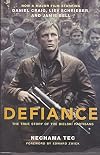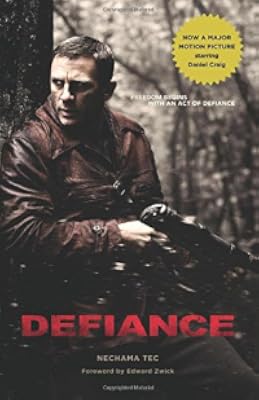
Defiance
by Nechama Tec
On This Page
Description
The prevailing image of European Jews during the Holocaust is one of helpless victims, but in fact many Jews struggled against the terrors of the Third Reich. In Defiance, Nechama Tec offers a riveting history of one such group, a forest community in western Belorussia that would number more than 1,200 Jews by 1944--the largest armed rescue operation of Jews by Jews in World War II. Tec reveals that this extraordinary community included both men and women, some with weapons, but mostly show more unarmed, ranging from infants to the elderly. She reconstructs for the first time the amazing details of how these partisans and their families--hungry, exposed to the harsh winter weather--managed not only to survive, but to offer protection to all Jewish fugitives who could find their way to them. Arguing that this success would have been unthinkable without the vision of one man, Tec offers penetrating insight into the group's commander, Tuvia Bielski. Tec brings to light the untold story of Bielski's struggle as a partisan who lost his parents, wife, and two brothers to the Nazis, yet never wavered in his conviction that it was more important to save one Jew than to kill twenty Germans. She shows how, under Bielski's guidance, the partisans smuggled Jews out of heavily guarded ghettos, scouted the roads for fugitives, and led retaliatory raids against Belorussian peasants who collaborated with the Nazis. Herself a Holocaust survivor, Nechama Tec here draws on wide-ranging research and never before published interviews with surviving partisans--including Tuvia Bielski himself--to reconstruct here the poignant and unforgettable story of those who chose to fight. show lessTags
Recommendations

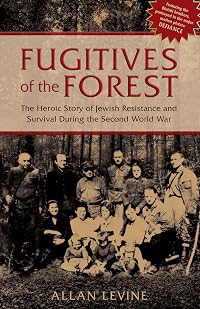
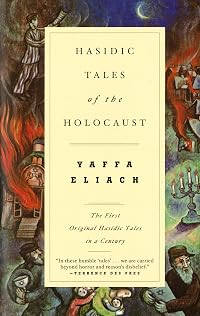

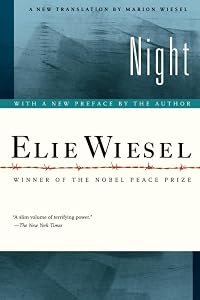
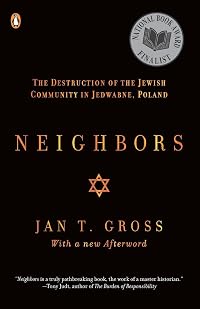

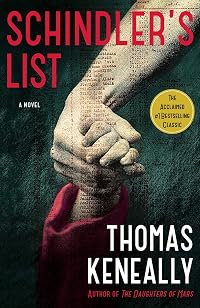












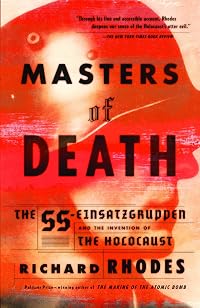
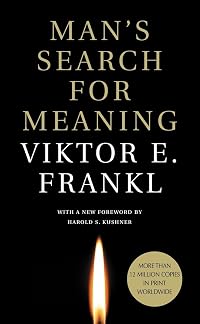
Member Recommendations
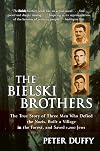

Member Reviews
Utterly inspiring account of three heroic Jewish brothers in WW2 Belarus; hiding from the Nazis in the vast, inhospitable forests, their initial small band of acquaintances rapidly becomes a small town, as more Jews flee the ghettos. Led by the charismatic Tuvia Bielski, his group stands out as one that turned no one away; while other detachments refused the frail, useless and unarmed...and were often guilty of anti-semitism...the Bielskis actively sought out all who wanted to come, their focus on saving lives than attacking the enemy (although there was, pleasingly, some of that too.)
"Bielski was for us what Israel is for the Jews now...an insurance."Through interviews with all the major players in the 1980s, Tec writes a seemingly show more balanced account; the Bielskis had their detractors, moments when maybe things could have been done better. There were confrontations with bands of Nazis, cold and privation, dissent in the ranks, and a need to rub along with the groups of Russian patriots in the area...
Sometimes (not often!) you finish a book so inspired by the character that you think "if I had a son right now, I'd name him after this person." show less
"Bielski was for us what Israel is for the Jews now...an insurance."Through interviews with all the major players in the 1980s, Tec writes a seemingly show more balanced account; the Bielskis had their detractors, moments when maybe things could have been done better. There were confrontations with bands of Nazis, cold and privation, dissent in the ranks, and a need to rub along with the groups of Russian patriots in the area...
Sometimes (not often!) you finish a book so inspired by the character that you think "if I had a son right now, I'd name him after this person." show less
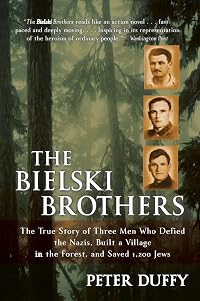
There are two books about the Bielski partisan group that I know of; the other is Peter Duffy's The Bielski Brothers. Both books were good but I found Tec's to be the better of the two. Her writing gave a better sense of what daily life was like in the Bielski camp, possibly because she herself was a "hidden child" Holocaust survivor. Tec was also able to interview Zus and Tuvia Bielski before their deaths, whereas Duffy didn't start writing his book until the brothers (excepting Aron, the youngest, who was only a child during World War II) were all dead.
The story is a fascinating one which deserves to be better known. The Bielski brothers are the closest thing to real-life Robin Hoods that I know of, and there ought to be a movie about show more them. Both books are worth reading but if you can only get one, get Defiance. show less
The story is a fascinating one which deserves to be better known. The Bielski brothers are the closest thing to real-life Robin Hoods that I know of, and there ought to be a movie about show more them. Both books are worth reading but if you can only get one, get Defiance. show less
Very good for those who want to know more about what happened to Jews during WWII, but don't like the stereotypes that have been showered on them for decades. This is the true story of a group of Jews who managed to save themselves from the Nazi killings, and then dedicated themselves to saving other Jews. You won't find perfect heros or perfect villains, just real people facing extreme circumstances.
I was drawn to the book by the Daniel Craig film, but the book, of course rewarded me with a more rich, nuanced, complex tale of an ad-hoc community largely surviving a visitation of hell on earth due to a charismatic and resourceful leader.
This is an epic and amazing story and that's why i gave it 4 stars. It mad me think a lot about the difference between justice and revenge and about those times when there really is no difference. I like it also because it is so counter to the classic image of Jews in WW2 simply going along with the extermination. The bad thing is that i didn't think it was very well written and at times it was just plain boring.
P.S. The movie sucks ass.
P.S. The movie sucks ass.
It’s not perfectly written by a long shot, but this is an extraordinary story about an extraordinary leader who rose to meet his times. Many lessons here for the past, present, and the ever more dystopian appearing future.
This is not a novelization of the movie, but an actual true story of the Bielsky brothers. The language is a bit heavy, but worth getting through. The book does not idealize the brothers, but shows them as real human beings, warts and all. I was fortunate enough to attend a lecture by Zus Bielsky's son, and he described his father and uncle as "tough guys and sometimes a-holes." Of course they would have to be such to pull off the amazing rescue of Jews right under the Nazi's noses, then protect them and maintain the tough discipline that was needed to survive. This is not a light read by any measure, but a worthy one.
Members
- Recently Added By
Lists

Holocaust
100 works; 13 members

r/History Recommended Reading List
603 works; 12 members

THE WAR ROOM
813 works; 24 members
Author Information

12+ Works 1,002 Members
Nechama Tec is Professor of Sociology at the University of Connecticut, Stamford.
Series
Belongs to Publisher Series
Common Knowledge
- Original title
- Defiance
- Original publication date
- 1993
- People/Characters
- Tuvia Bielski; Alexander (Zus) Bielski (Zus); Asael Bielski
- Important places
- Belarus; Poland
- Important events
- World War II
- Related movies
- Defiance (2008 | IMDb)
- Dedication
- To the memory of Arieh Gelblum
- First words
- An excited crowd surrounded the new arrivals.
- Quotations
- ... real heroism ... is a set of decisions, sometimes impulsive, often made by simple men of whom nothing of the sort could ever have been expected. Their story is not simply one of courage or fortitude in the face of advers... (show all)ity; it includes any number of daunting moral decisions – whether to seek vengeance or to rescue, how to re-create a sense of community among those who have lost everything, how to maintain hope when all seems forsaken.
Tuvia was not interested in military glory. To live, to keep his people alive, to bring more Jews into the otriad, these were his goals.
By the end of 1943 close to 3 million Polish Jews had perished, about 90 percent of the prewar Jewish population. - Last words
- (Click to show. Warning: May contain spoilers.)As commander of a forest community dedicated to the preservation of life, Tuvia Bielski gave to the Jewish people many precious gifts: hopes, dreams, and their very lives.
Classifications
Statistics
- Members
- 555
- Popularity
- 53,648
- Reviews
- 18
- Rating
- (3.84)
- Languages
- Dutch, English, German, Italian
- Media
- Paper, Audiobook, Ebook
- ISBNs
- 22
- ASINs
- 5