On This Page
Description
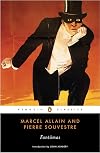
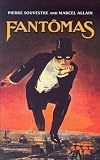
"Years after his first appearance, Fantômas is still scary." -- The Washington Post "A brilliant criminal ... a great romp." -- San Francisco Chronicle A noblewoman is hacked to death in her chateau, a Russian princess is boldly robbed in a posh hotel, and a lord's lifeless body is found stuffed inside a trunk. Everyone recognizes the deeds of Fantômas, a master of disguise whose daring and diabolical crimes paralyze Parisians with terror. One man has sworn to bring the phantom killer to show more justice: Inspector Juve, who ventures from dark alleys to brilliant salons in his relentless pursuit of the evil genius. The first in a series of wildly popular French thrillers, Fantômas created a sensation in pre-WWI Europe. The original pulp fiction, its appeal transcended every level of society. Cocteau, Colette, and Picasso were avid readers, and subsequent generations of artists, writers, and musicians have drawn inspiration from this enduringly stylish and suspenseful novel. show lessTags
Recommendations




















Member Reviews
Fantomas is the first entry in the series about a master criminal pitted against the equally ingenious Inspector Juve. It is melodramatic pulp at its finest--the murders are gory, the thefts stupendous, the twists dizzying, and everyone is a suspect (including, at one point, Juve), because of the genius touch at the heart of the mystery--we never hear nor see Fantomas directly. He is a true phantom, feared, abhorred, whispered about, suspected, but never seen, never touched, never caught.
Here is an example of one of the random ways in which I end up reading a book. I heard the name Fantômas in the film 'District 13' (Banlieue Trieze), which is a great favourite of mine. A character in that jokingly calls himself Fantômas. I inferred that the character is a sort of French Moriarty, and was thus curious. After reading the novel, Fantômas clearly is a French Moriarty, although his nemesis Juve isn't so much of a Sherlock Holmes. He reminded me more of Javert in Les Mis. Actually, the attitude to crime is rather more ambivalent in this tale than in the Sherlock Holmes stories. Various characters express admiration of the daring and skill that Fantômas displays, even though he is a vicious murderer and thief. The tone show more felt curiously Victorian, although mentions of cars and 1909 being in the past date it later.
A major twist in the plot seemed obvious to me from the start, however there was still plenty of suspense to be found in the story. In particular, I enjoyed guessing whether every new character to be introduced was actually Fantômas or Juve in disguise. Inevitably, new characters weren't what they seemed. The whole atmosphere of the novel is intensely melodramatic, with characters (especially but not exclusively women) fainting all over the place. It is a thriller and thus rather superficial, with characterisation in short supply. Nonetheless, 'Fantômas' is rather fun and often quite hilarious to read. show less
A major twist in the plot seemed obvious to me from the start, however there was still plenty of suspense to be found in the story. In particular, I enjoyed guessing whether every new character to be introduced was actually Fantômas or Juve in disguise. Inevitably, new characters weren't what they seemed. The whole atmosphere of the novel is intensely melodramatic, with characters (especially but not exclusively women) fainting all over the place. It is a thriller and thus rather superficial, with characterisation in short supply. Nonetheless, 'Fantômas' is rather fun and often quite hilarious to read. show less
Excellent. I don't know why I'd never heard of this series before. It's been around since 1911 and Wikipedia has a long description of it. It's more surprising that there's been nothing in English to speak of. Even more so considering something like six volumes were released in just the first year alone.
I lost track of the body count, but not counting the 150 or so who were blown up in a sabotaged ship, I think it was around 9, many of them gruesome. Wikipedia says that, played for comedy, the basic plot was taken as a basis for the Pink Panther movies, and I can see how that happened. The last of the murders was, by far, the most twisted (and clever). It was by proxy and serves as the mechanism for (spoiler) Fantomas escaping show more punishment and so the basis for the sequels.
This has it all: deception, disguises, (many) red herrings, false identities, murder, burglary, love, infatuation, vanity, and all the by good guys, bad guys, and in-between guys. My only real issue, and this is totally on me, is that this is very, very French. By that I mean that all the names and places are the most French they can possibly be. Not speaking French, it is a bit difficult to read all of those names and places without knowing how to pronounce them. Again, that's on me.
This was clearly translated almost immediately by someone very British. France at the time (1911) was very class conscious but I wonder how much the translator imposed the English class system on top of this. It certainly reads like it.
Anyway, it's very good. The wordsmithing is great and of its time. It looks as if the first four or five are the most popular. I may continue with those. show less
I lost track of the body count, but not counting the 150 or so who were blown up in a sabotaged ship, I think it was around 9, many of them gruesome. Wikipedia says that, played for comedy, the basic plot was taken as a basis for the Pink Panther movies, and I can see how that happened. The last of the murders was, by far, the most twisted (and clever). It was by proxy and serves as the mechanism for (spoiler) Fantomas escaping show more punishment and so the basis for the sequels.
This has it all: deception, disguises, (many) red herrings, false identities, murder, burglary, love, infatuation, vanity, and all the by good guys, bad guys, and in-between guys. My only real issue, and this is totally on me, is that this is very, very French. By that I mean that all the names and places are the most French they can possibly be. Not speaking French, it is a bit difficult to read all of those names and places without knowing how to pronounce them. Again, that's on me.
This was clearly translated almost immediately by someone very British. France at the time (1911) was very class conscious but I wonder how much the translator imposed the English class system on top of this. It certainly reads like it.
Anyway, it's very good. The wordsmithing is great and of its time. It looks as if the first four or five are the most popular. I may continue with those. show less
Many thanks to the 1001 book list because I would have never read this book had it not been on the list and missed out on a gem.
Fantomas is a master criminal, ruthless and brilliantly clever,able to take on any disguise seemingly at will, a real fictional anti-hero long before they became popular. Juve is a quirky but brilliant detective who has made it his life's work to catch this criminal, seeing links in seemingly unconnected crimes where no one else can spot them. But even at the very end of the book, which is both cleverly constructed and yet horrifying in its simplicity, you still have no real idea who Fantomas is or even whether or not that he even exists at all other than in Juve's mind. Is he real or a sort of Boogie Man show more created to scare the upper tiers of Parisian life?
This book was first published in 1911 and became an instant hit across all levels of French society, but then it is so much more than a simple criminal tale. It also shows Parisian in particular, and French in general, avant-garde life in all its many shades which in itself made it all the more interesting to me at least. At times the language and plot-line feels a little dated, a bit formulaic and as if it was written in a rush, which it was, Allain and Souvestre had a deadline to meet but this should not really detract from the overall quality of the read. I mean Agatha Christie and Sherlock Holmes are a little dated now too despite their many reincarnations on screen.
The only thing that stops it getting full marks is the fact that the story is incomplete, it is after all only the first one in the series and there are another 40+ books to follow and I am unsure whether or not I will ever get around to reading another. show less
Fantomas is a master criminal, ruthless and brilliantly clever,able to take on any disguise seemingly at will, a real fictional anti-hero long before they became popular. Juve is a quirky but brilliant detective who has made it his life's work to catch this criminal, seeing links in seemingly unconnected crimes where no one else can spot them. But even at the very end of the book, which is both cleverly constructed and yet horrifying in its simplicity, you still have no real idea who Fantomas is or even whether or not that he even exists at all other than in Juve's mind. Is he real or a sort of Boogie Man show more created to scare the upper tiers of Parisian life?
This book was first published in 1911 and became an instant hit across all levels of French society, but then it is so much more than a simple criminal tale. It also shows Parisian in particular, and French in general, avant-garde life in all its many shades which in itself made it all the more interesting to me at least. At times the language and plot-line feels a little dated, a bit formulaic and as if it was written in a rush, which it was, Allain and Souvestre had a deadline to meet but this should not really detract from the overall quality of the read. I mean Agatha Christie and Sherlock Holmes are a little dated now too despite their many reincarnations on screen.
The only thing that stops it getting full marks is the fact that the story is incomplete, it is after all only the first one in the series and there are another 40+ books to follow and I am unsure whether or not I will ever get around to reading another. show less
Fantômas was enjoyable enough, though a little too gruesome for me in a few parts. Since this is one of those books written in the early 1900s, it is easy to think it will be milder/nicer than current novels when, in fact, that is not necessarily the case. (I always think stuff like that until I remember humans have been bloodthirsty throughout history, such as past times when people would attend public executions as a fun family outing.) This was the first of what was apparently a wildly popular 'pulp fiction' series in France (which also spun-off into multiple silent films), starring a not-quite-Sherlock-Holmes-like police inspector called Juve. Being popular pulp fiction, the story is a little wild, the solving (by the mastermind show more detective) a little too convenient, & the escaping of the dastardly villain a little too easily gained multiple times (but I guess that's how Fantômas manages to keep Juve on the run for the many sequels in this series). Overall, Fantômas is fiendish, fast-paced, & slightly severe in parts. I probably won't be running out to read the sequels, but I'm glad I delved into this popular piece of French cultural history from the early 1900s. show less
The introduction is largely positive about the popular appeal and long-lasting influence of the Fantômas stories on French and European fiction, film, and culture, including the fascination of many artists in the Surrealist movement. At the same time, the writer is adamant about distancing himself from the actual novel, repeatedly pointing out the authors’ pulp origins, denigrating the quality of the writing, and sneering at the coincidences that the plot hinges on.
But, at least in this newly tuned-up translation, the book is a shining example of a pulp mystery -- shocking murders occur, scandalizing society and devastating families. Our hero, Inspector Juve, appears and disappears, trying to understand the pattern of events and draw show more together the seemingly independent threads to knot together a net to capture the evil mastermind that only he seems to truly believe in -- Fantômas!
As we’d expect from the first in what came to be along series of books, films, and other realizations, all is not what it seems, and seeming triumphs may not be all that we might hope for.
The novel’s Fantômas is really quite tame compared with the reputation the character builds over the ensuing tales. Evil, yes, but some of his motivations are quite pedestrian (illicit love, greed). Still, the crimes he seems to have committed in pursuit of these goals show the beginnings of a truly dangerous psychopath.
If you like pulp fiction, reading Fantômas is a must. Knowing a bit about the character’s cultural influences might make the task appealing even if the prose were not an enjoyable read, but for me, at least, I enjoyed every minute I spent on the book, and would gladly read more if the translations were available. show less
But, at least in this newly tuned-up translation, the book is a shining example of a pulp mystery -- shocking murders occur, scandalizing society and devastating families. Our hero, Inspector Juve, appears and disappears, trying to understand the pattern of events and draw show more together the seemingly independent threads to knot together a net to capture the evil mastermind that only he seems to truly believe in -- Fantômas!
As we’d expect from the first in what came to be along series of books, films, and other realizations, all is not what it seems, and seeming triumphs may not be all that we might hope for.
The novel’s Fantômas is really quite tame compared with the reputation the character builds over the ensuing tales. Evil, yes, but some of his motivations are quite pedestrian (illicit love, greed). Still, the crimes he seems to have committed in pursuit of these goals show the beginnings of a truly dangerous psychopath.
If you like pulp fiction, reading Fantômas is a must. Knowing a bit about the character’s cultural influences might make the task appealing even if the prose were not an enjoyable read, but for me, at least, I enjoyed every minute I spent on the book, and would gladly read more if the translations were available. show less
For more reviews and the 1001 Books Spreadsheet, visit http://arukiyomi.com
Every now and then on the 1001 Books list, a novel comes along which is a complete walk in the park, takes absolutely no effort to read and is over before you know it. Fantômas is just such a novel.
Written jointly by Marcel Allain and Pierre Souvestre, who often wrote separate chapters independently before weaving them together, the Fantômas series of novels took France by storm about 100 years ago.
Based around the idea that a series of crimes are actually the work of one criminal mastermind, and a villain whose identity proves elusive to even the best detective in the land, you are constantly on the move from suspect, to crime scene, to aftermath … it’s show more hard to keep up with it all.
There are enough twists in this short novel that you are going to be caught out by at least one of them. However, Allain and Souvestre leave enough clues for anyone who likes figuring out whodunnits while at the same time ensuring that you know little enough to keep reading.
In fact, as the novel kicked off a series of over 40 books, you should definitely not expect a resolution at the end of this one. Far, far from it.
This is not beautifully crafted literature by any means, and it’s not the best crime fiction you’ll ever read either. But it was so widely read and so hugely influential in its native France that it is not surprising that such influence spilled over into other genres such as comic books.
As such, it’s worth a read in much the same way as you might read Tarzan, knowing that it was the beginning of something special for the world of written and filmed entertainment. show less
Every now and then on the 1001 Books list, a novel comes along which is a complete walk in the park, takes absolutely no effort to read and is over before you know it. Fantômas is just such a novel.
Written jointly by Marcel Allain and Pierre Souvestre, who often wrote separate chapters independently before weaving them together, the Fantômas series of novels took France by storm about 100 years ago.
Based around the idea that a series of crimes are actually the work of one criminal mastermind, and a villain whose identity proves elusive to even the best detective in the land, you are constantly on the move from suspect, to crime scene, to aftermath … it’s show more hard to keep up with it all.
There are enough twists in this short novel that you are going to be caught out by at least one of them. However, Allain and Souvestre leave enough clues for anyone who likes figuring out whodunnits while at the same time ensuring that you know little enough to keep reading.
In fact, as the novel kicked off a series of over 40 books, you should definitely not expect a resolution at the end of this one. Far, far from it.
This is not beautifully crafted literature by any means, and it’s not the best crime fiction you’ll ever read either. But it was so widely read and so hugely influential in its native France that it is not surprising that such influence spilled over into other genres such as comic books.
As such, it’s worth a read in much the same way as you might read Tarzan, knowing that it was the beginning of something special for the world of written and filmed entertainment. show less
Members
- Recently Added By
Published Reviews
ThingScore 96
An unusual detective story... Vivid and tense.
added by Sylak
To have crime, mystery, and clever characterization in one volume is to have the material for a capital novel. And this is what we have in 'Fantômas.' ... The last capter leaves us full of puzzlement and hope for further series.
added by Sylak
Appreciators of detective novels should not miss 'Fantômas.' It is a story that grips the reader.... I loudly ask for more.
added by Sylak
Lists

The Guardian's 1000 Novels Everyone Must Read
1,005 works; 552 members

1001 Books You Must Read Before You Die
1,448 works; 1,137 members

1,001 BYMRBYD Concensus
723 works; 27 members

Best Horror Mega-List
342 works; 6 members

Works Referenced in The League of Extraordinary Gentlemen
122 works; 6 members

Jones and Newman's Horror: Another 100 Best Books
100 works; 7 members

My TBR
371 works; 3 members

Favorite French Fiction
251 works; 110 members
Author Information

64+ Works 1,182 Members

60+ Works 1,202 Members
Some Editions
Awards and Honors
Series

Belongs to Publisher Series
Work Relationships
Common Knowledge
- Canonical title
- Fantômas
- Original title
- Fantômas
- Original publication date
- 1911
- People/Characters
- Fantômas; Inspector Juve; Jérôme Fandor (Charles Rambert); Maud Beltham (Lady Beltham); Etionne Rambert; Thérèse Auvernois
- Important places
- Paris, France; France
- Related movies
- Shadow of the Guillotine (dir. Louis Feuillade | 1913 | 1/5); Juve vs. Fantomas (dir. Louis Feuillade | 1913 | 2/5); Fantomas vs. Fantomas (dir. Louis Feuillade | 1914 | 3/5); The False Magistrate (dir. Louis Feuillade | 1914 | 4/5); The Murderous Corpse (dir. Louis Feuillade | 1914 | 5/5); Fantômas (dir. Andre Hunebelle | 1964 | IMDb | 1/5) (show all 8); Fantômas se déchaîne (dir. Andre Hunebelle and Haroun Tazieff | 1965 | IMDb | 2/5); Fantômas contre Scotland Yard (dir. Andre Hunebelle | 1967 | IMDb | 3/5)
- First words
- "Fantômas."
"What did you say?"
"I said: Fantômas."
"And what does that mean?"
"Nothing . . . Everything!"
"But what is it?"
"Nobody . . . And yet, yes, it is somebody!"
"And what does the somebody do?"... (show all)
"Spreads terror!" - Last words
- (Click to show. Warning: May contain spoilers.)"I tell you Fantômas is alive!"
- Original language
- French
Classifications
- Genres
- Fiction and Literature, Mystery, General Fiction, Horror
- DDC/MDS
- 843.912 — Literature & rhetoric French Literature French fiction 1900- 20th Century 1900-1945
- LCC
- PQ2637 .O84 .F313 — Language and Literature French, Italian, Spanish and Portuguese literatures French literature Modern literature 1900-1960
- BISAC
Statistics
- Members
- 710
- Popularity
- 40,297
- Reviews
- 14
- Rating
- (3.62)
- Languages
- 7 — Czech, English, Estonian, French, Italian, Spanish, Turkish
- Media
- Paper, Audiobook, Ebook
- ISBNs
- 44
- UPCs
- 1
- ASINs
- 18