On This Page
Description
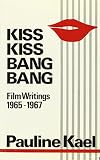
An informal history of the movies--Jacket.Tags
Recommendations
















Member Reviews
Well written reviews from a flourishing Age of the American cinema..and all good fun. "The Sound of Music", (AKA The sound of Money a la Kael ) Some James bond movies, "The Group", "Bonny and Clyde", Fiddler on the Roof', Blow-up" there are some very interesting moments in this volume.
Bitingly witty and knowledgeable.
DJ has some issues, book in VG cond. overall
Ratings
Members
- Recently Added By
Published Reviews
ThingScore 100
Miss Kael is the most quotable critic writing; but what is important and bracing is that she relates movies to other experience, to ideas and attitudes, to ambition, books, money, other movies, to politics and the evolving culture, to moods of the audience, to our sense of ourselves—to what movies do to us, the acute and self-scrutinizing awareness of which is always at the core of her show more judgment.
Miss Kael, currently a film critic for The New Yorker—the most recent piece in the book is here penetrating and controversial review of “Bonnie and Clyde”—has been finger-wagged for her irreverent cracks, for talking about herself too much, for being too flexible (unclassifiable?) in her tastes (she rather enjoyed “Hawaii”!), for not being properly awed by technique (she asks, ungratefully, that it serve substance and intention) and for various other failings that come with brains, wit, independence, spirit, humor, curiosity, candor and a flat refusal to be anybody’s toady. All can be relished in “Kiss Kiss Bang Bang” which, among other things, has the, niftiest title of the year. show less
Miss Kael, currently a film critic for The New Yorker—the most recent piece in the book is here penetrating and controversial review of “Bonnie and Clyde”—has been finger-wagged for her irreverent cracks, for talking about herself too much, for being too flexible (unclassifiable?) in her tastes (she rather enjoyed “Hawaii”!), for not being properly awed by technique (she asks, ungratefully, that it serve substance and intention) and for various other failings that come with brains, wit, independence, spirit, humor, curiosity, candor and a flat refusal to be anybody’s toady. All can be relished in “Kiss Kiss Bang Bang” which, among other things, has the, niftiest title of the year. show less
added by SnootyBaronet
Good as these pieces are, however, they are overshadowed by the accomplishment of Miss Kael’s long article on the making of The Group that was commissioned and then rejected by Life. Along with her piece on “Movies on Television,” this is one of the handful of truly indispensable things written about films. Patiently, with a scrupulously nuanced attention both to her own role as a show more partici-pant-observer and to the characters of the main protagonists, Miss Kael gives us a picture of the complex human situation out of which films are actually made, and from which her argument about the transformation of movies by television is allowed to emerge without the slightest imposition. show less
added by SnootyBaronet
Does anything rate a Kiss Kiss? Yea. . . Bravo Bonnie and Clyde, flawed to be sure but the movie that ""has put the sting back into death."" One of the most inherently hilarious and incisive sections deals with the plums that plummet. In this case it's The Group which Miss Kael personally observed from mis-casting to missed plaudits. It's a stunning analysis of what went wrong and why. Along show more with other capsule reviews of contemporary films Miss Kael includes a section on ""Careers"": the current self-parody of Brando, the missed masterpieces of Orson Welles, etc., and for the home viewer: run-ups run-downs of old movies. Kiss Kiss or Bang Bang. . . never a dull moment from one of the most provocative critics in the country. show less
added by SnootyBaronet
Author Information

41+ Works 2,921 Members
Awards and Honors
Notable Lists
Series

Common Knowledge
- Original publication date
- 1968-04
- First words
- Early this year a producer-writer who began by goading me with lucrative offers—first to ghostwrite a book for him on "a sensational idea" (which turned out to be a denunciation of Method acting), then to work up a treatmen... (show all)t for him on "an exciting new idea" (which turned out to be a spy spoof with a female spy), and then to do a quick (three-week) rewrite on a script he'd had sitting around for a decade—became rather hurt that I didn't rise to the bait.
- Quotations
- A great many important people now, and throughout history, would probably, up close, seem very crude to the people who admire them from a distance.
I had asked him [Sidney Lumet] during one of our first talks why he had given up acting and he had begun a long explanation about how acting was a faggot’s career and how he knew that if he was ever going to give a woman a ... (show all)real human relationship, etc., and I had simply jotted down “too short for acting career.”
Sidney Buchman, courtly and urbane, told me that after his third reading of the novel and after discussion with Granville Hicks, he and Hicks agreed that the theme of The Group was: “Higher education does not fit women for ... (show all)life.” Not being used to the role of an observer (I never did get used to it), I shot back, “What does? Does higher education fit men for life?” He didn’t reply and was taken up with another matter.
“Well,” he said, “in the actual case it was based on, the man did rape a child, but if I told the truth, I wouldn’t have any movie, I couldn’t get people to feel compassion for him.”
I didn’t want to tell... (show all) him that that was almost a definition of the artist’s task, so I just let it drop. But it occurred to me that this preposterous mixture of wanting to do good and yet evading the real problems — not even telling the simple truth if it might prejudice your case — was the basic cheat of Hollywood message movies.
Lumet is a man with a bad ear for dialogue and no eye. Genius? Yes, the genius necessary to convince people he’s a genius. Or, to put it more favorably, the determination to convince whoever needs convincing that, whatever ... (show all)it is, he can do it. And that is genius, of a kind. You don’t get to do much in this world without it. There are a great many sensitive, talented people around who will never do anything but treasure the superiority they feel to people like Lumet, who has pragmatic genius: he’ll get it done. It won’t be exquisite, it won’t be perfect, but it will reflect the energetic, “vulgar” confidence he put into it: it will have some charge or energy which may in some crazy way be more important than perfection anyway.
Will Blow-Up be taken seriously in 1968 only by the same sort of cultural diehards who are still sending out five-page single-spaced letters on their interpretation of Marienbad? (No two are alike, no one interesting.) I
What is it about the symbolic use of characters and details that impresses so many educated people? It’s not very hard to do: almost any detail or person or event in our lives can be pressed into symbolic service, but to wh... (show all)at end? I take my dogs for a walk in New York City in January and see examples of “alienation.” An old Negro woman is crooning, “The world out here is lonely and cold.” A shuffling old man mutters, “Never did and never will, never again and never will.” And there’s a crazy lady who glowers at my dogs and shouts, “They’re not fit to shine my canary’s shoes!” Do they tell us anything about a “decaying society”? No, but if you had some banal polemical, social, or moral point to make, you could turn them into cardboard figures marked with arrows. In so doing I think you would diminish their individuality and their range of meaning, but you would probably increase your chances of being acclaimed as a deep thinker.
When journalistic details are used symbolically — and that is how Antonioni uses “swinging” London — the artist does not create a frame of reference that gives meaning to the details; he simply exploits the ready-made... (show all) symbolic meanings people attach to certain details and leaves us in a profound mess. (The middlebrow moralists think it’s profound and the hippies enjoy the mess.) And when he tosses in a theatrical convention like a mimed tennis game without a ball — which connects with the journalistic data only in that it, too, is symbolic — he throws the movie game away. It becomes ah-sweet-mystery-of-life we-are-all-fools, which, pitched too high for human ears, might seem like great music beyond our grasp. - Last words
- (Click to show. Warning: May contain spoilers.)Many of the latest styles in film editing, which are generally said to derive from Alain Resnais or Richard Lester, have an earlier source in Zazie.
Classifications
Statistics
- Members
- 200
- Popularity
- 163,046
- Reviews
- 3
- Rating
- (3.88)
- Languages
- English
- Media
- Paper
- ISBNs
- 5
- ASINs
- 7