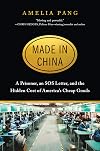
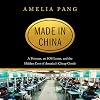
Made in China: A Prisoner, an SOS Letter, and the Hidden Cost of America’s Cheap Goods
by Amelia Pang
On This Page
Description
A Most-Anticipated Book of the Year: Newsweek * Refinery29“Timely and urgent . . . Pang is a dogged investigator.” —The New York Times
“Moving and powerful.” —Chris Hedges, Pulitzer Prize–winning journalist and author
Discover the truth behind the discounts
In 2012, an Oregon mother named Julie Keith opened up a package of Halloween decorations. The cheap foam headstones had been five dollars at Kmart, too good a deal to pass up. But when she opened the box, something show more shocking fell out: an SOS letter, handwritten in broken English.
“Sir: If you occassionally buy this product, please kindly resend this letter to the World Human Right Organization. Thousands people here who are under the persicuton of the Chinese Communist Party Government will thank and remember you forever.”
The note’s author, Sun Yi, was a mild-mannered Chinese engineer turned political prisoner, forced into grueling labor for campaigning for the freedom to join a forbidden meditation movement. He was imprisoned alongside petty criminals, civil rights activists, and tens of thousands of others the Chinese government had decided to “reeducate,” carving foam gravestones and stitching clothing for more than fifteen hours a day.
In Made in China, investigative journalist Amelia Pang pulls back the curtain on Sun’s story and the stories of others like him, including the persecuted Uyghur minority group whose abuse and exploitation is rapidly gathering steam. What she reveals is a closely guarded network of laogai—forced labor camps—that power the rapid pace of American consumerism. Through extensive interviews and firsthand reportage, Pang shows us the true cost of America’s cheap goods and shares what is ultimately a call to action—urging us to ask more questions and demand more answers from the companies we patronize.
. show less
Tags
Recommendations








Member Reviews
No wonder I don't read horror tales -- there are enough in non-fiction! If the forced labor and torture of dissidents wasn't bad enough, then came the chapter on organ harvesting. No need to wait years for a new organ. China provides them by the millions, fresh, with only a few days wait time. I'd heard of this but didn't know the extent of it till now.
Days after finishing the book, I'm still reeling from the shock. China's prison system is a gulag and many of the inmates are prisoners of conscience. Would we buy products made in Nazi concentration camps? Of course not! (I presume!) So why do we turn a blind eye to China's prison camps?
I will definitely research more of my purchases now, and try to find more made-in-USA products. No show more more cheap stuff. But China is the only source for many products, like microwave ovens, which are simply not made in the USA. A few years ago, I did manage to buy a new washing machine made in the U.S., and paid $900, rather than $700, though I think the other washers were made in South Korea which, to my knowledge, has no forced labor. But still...
How did this situation begin? In the 90s, I think. And who does it benefit? It fuels Americans' addiction to cheap stuff, poisons Chinese society with fear, and makes many corporations wealthy. Of course -- profits are the key! The book touched on this, but I'd like to read more. When did U.S. manufacturing go overseas and why?
I noted the author's praise for Gen Z and how these young people have less brand loyalty and love to go "thrifting." I had to smile, as my daughter is in Gen Z and she loves to go thrifting. This new generation may give us hope.
Highly recommended! show less
Days after finishing the book, I'm still reeling from the shock. China's prison system is a gulag and many of the inmates are prisoners of conscience. Would we buy products made in Nazi concentration camps? Of course not! (I presume!) So why do we turn a blind eye to China's prison camps?
I will definitely research more of my purchases now, and try to find more made-in-USA products. No show more more cheap stuff. But China is the only source for many products, like microwave ovens, which are simply not made in the USA. A few years ago, I did manage to buy a new washing machine made in the U.S., and paid $900, rather than $700, though I think the other washers were made in South Korea which, to my knowledge, has no forced labor. But still...
How did this situation begin? In the 90s, I think. And who does it benefit? It fuels Americans' addiction to cheap stuff, poisons Chinese society with fear, and makes many corporations wealthy. Of course -- profits are the key! The book touched on this, but I'd like to read more. When did U.S. manufacturing go overseas and why?
I noted the author's praise for Gen Z and how these young people have less brand loyalty and love to go "thrifting." I had to smile, as my daughter is in Gen Z and she loves to go thrifting. This new generation may give us hope.
Highly recommended! show less
Prepare to change your buying habits and read a lot of labels. This book shocked the hell out of me. Apparently I missed the news that "please help" hostage notes had been smuggled into cheap American consumer goods by desperate slaves in Chinese factories, and on more than one occasion.
Chinese citizens are being enslaved, poisoned and poisoned to make your dollar store junk and plastic disposable clothes. They are being forced to work impossible hours, kept in prison camps, tortured, and starved, until their number comes up in a database saying that their organs match. Then poof! They mysteriously disappear from the factories. Absolutely chilling. Even the Nazis didn't slaughter people and sell their organs, although no doubt they show more would have if it were possible to get wealthier by doing it.
How does author Amelia Pang know any of this? Because of some excellent muckraking and because a few miraculously escaped to tell their stories. Sometimes these former factory slaves are triggered by the sight of a dirt cheap item hanging in Walmart or Target, because they remember being forced to manufacture that very same thing in horrible working conditions, for twelve hours a day or longer.
The number of the enslaved includes something like a million Uighur Muslims, whom the Chinese hate for having the wrong religion (you are supposed to worship the state) and innumerable members of a religious sect called the Falun Gong.
The release of "Made in China" is timely, as it comes right on the heels of the Buy American campaign by President Biden. Read it and weep, then buy American. Better yet, buy LOCAL. show less
Chinese citizens are being enslaved, poisoned and poisoned to make your dollar store junk and plastic disposable clothes. They are being forced to work impossible hours, kept in prison camps, tortured, and starved, until their number comes up in a database saying that their organs match. Then poof! They mysteriously disappear from the factories. Absolutely chilling. Even the Nazis didn't slaughter people and sell their organs, although no doubt they show more would have if it were possible to get wealthier by doing it.
How does author Amelia Pang know any of this? Because of some excellent muckraking and because a few miraculously escaped to tell their stories. Sometimes these former factory slaves are triggered by the sight of a dirt cheap item hanging in Walmart or Target, because they remember being forced to manufacture that very same thing in horrible working conditions, for twelve hours a day or longer.
The number of the enslaved includes something like a million Uighur Muslims, whom the Chinese hate for having the wrong religion (you are supposed to worship the state) and innumerable members of a religious sect called the Falun Gong.
The release of "Made in China" is timely, as it comes right on the heels of the Buy American campaign by President Biden. Read it and weep, then buy American. Better yet, buy LOCAL. show less
nonfiction / minorities and political prisoners in Chinese forced-labor prisons (now "detox centers")
TW: torture, lots of torture, rape and assault
This was very tough to read at times, but I am glad to be better informed now. Will have to think twice before buying anything cheaply again (even binder clips!) and will try to question companies' labor sources more often (any factory in China can easily subcontract to a prison, and "socially responsible" audits actually do very little to detect these connections). I also learned about what's behind China's expanding organ transplant business (it's not a "voluntary" process and ethnic minorities and Falun Dong prisoners have been called to supply many organs on demand--i.e., they are show more executed and harvested according to what organs are needed). Even the Chinese Olympics become tragic when you realize that the people who protested the tearing down of their homes to make way for new arenas were subsequently arrested and jailed.
The thing that may be most influential in terms of hindering this huge industry is increased social awareness and customers using their buying power and calling on companies to change (as has helped in the past with Nike in one case). But since supply chains are so non-transparent it might make sense to view any cheap products (whether marked as a Chinese import or not) as suspect, and try to at least be more mindful of what you buy. show less
TW: torture, lots of torture, rape and assault
This was very tough to read at times, but I am glad to be better informed now. Will have to think twice before buying anything cheaply again (even binder clips!) and will try to question companies' labor sources more often (any factory in China can easily subcontract to a prison, and "socially responsible" audits actually do very little to detect these connections). I also learned about what's behind China's expanding organ transplant business (it's not a "voluntary" process and ethnic minorities and Falun Dong prisoners have been called to supply many organs on demand--i.e., they are show more executed and harvested according to what organs are needed). Even the Chinese Olympics become tragic when you realize that the people who protested the tearing down of their homes to make way for new arenas were subsequently arrested and jailed.
The thing that may be most influential in terms of hindering this huge industry is increased social awareness and customers using their buying power and calling on companies to change (as has helped in the past with Nike in one case). But since supply chains are so non-transparent it might make sense to view any cheap products (whether marked as a Chinese import or not) as suspect, and try to at least be more mindful of what you buy. show less
Lenin said communism meant soviet power plus electrification. On this book's account, the CCP's ideal is oligarchy plus consumer goods. Combining aggressive cooptation of talent, rising living standards, high-tech surveillance, and ruthless extra-legal punishment of dissidents, China may succeed in developing the most stable authoritarian regime of modern times. It is even getting away with slow motion cultural destruction of its minorities. WTO membership has not liberalized the Chinese economy so much as allowed it to entrench quasi-State businesses and forced labor products inside global markets. It's hard to see any hope for democratization now. This is simply a system of competently managed totalitarianism that shows no sign of show more breaking down. show less
Made in China: A Prisoner, an SOS Letter, and the Hidden Cost of America's Cheap Goods by Amelia Pang is very highly recommended exposition on China's labor/reeducation camps, human rights violations, and how our consumerism is a tacit approval of the system.
Everyone should read this book. Everyone. And then reexamine their own involvement with cheap Chinese merchandise. Take note that if you buy something made in China it was likely made with slave labor. That should cause you to take pause in and of itself, but it becomes even more crucial to take action if you combine it with the fact that China is the world’s largest producer of greenhouse gases, and their rates are vastly under reported.
When Julie Keith opened up a package of show more cheap decorations in 2012, she discovered a plea for help written by the prisoner who made the items. The note was written by Sun Yi who was taken prisoner and put in a reeducation camp/ forced labor camp by the Chinese Communist Party. His crime was practicing Falun Gong with a religious meditation group.
Pang shares the life of Sun Yi, including the horrendous torture he and others endure in the "laogai system" which is the world’s largest forced-labor system. The system is rarely labeled as prisons, rather they call the camps reeducation centers or detoxification centers. No matter the name, they are still forced labor centers where people are sent at the whim of the CCP. The people in forced labor include the Falun Gong practitioners, as well as Christians, Turks, Muslim Uighurs, and Tibetans. Companies who get their products that are made with the forced slave labor from China never receive them directly from the prisons, instead they are exported and purchased through an import-export company system. It also appears that China is now in the business of organ selling. They get the medical information from the prisoners and will harvest their organs. The transplant industry in China is a billion dollar industry.
With modern AI surveillance technologies, the CCP is targeting even more people as they can identify them. Think about this information as you blindly follow any social media platform: "As early on as 2004, China has built the most extensive surveillance and internet censorship system in the world, with currently an estimated one hundred thousand human censors inspecting the web for politically sensitive content and manually deleting posts on various Chinese social media platforms. They are employed not only by state propaganda departments, but also by Chinese companies that have privatized censorship. And then there are the commenters, who are paid to guide online discussions in a pro-government direction. A 2017 Harvard study estimated that 448 million paid comments appear on Chinese social media every year." China is said to be one big modern, technologically savvy labor camp.
This is not an easy book to read but it is vital that people know what is going on in China. If people show any dissent in China, this is how they handle it - imprison them into forced labor. Pang immersed herself into Sun's story and that of other labor camp survivors over three years. Note that according to a 2017 study by the Economic Policy Institute, "China’s accession to the WTO caused the United States to lose 3.4 million jobs. And as manufacturing migrated to China, it created more opportunities for Chinese factories to outsource work to labor camps." What we can do is limit how we spend our money and investigate the companies we buy from because China does respond to financial push back.
Disclosure: My review copy was courtesy of Algonquin Books of Chapel Hill
http://www.shetreadssoftly.com/2021/01/made-in-china.html
https://www.goodreads.com/review/show/3769523189 show less
Everyone should read this book. Everyone. And then reexamine their own involvement with cheap Chinese merchandise. Take note that if you buy something made in China it was likely made with slave labor. That should cause you to take pause in and of itself, but it becomes even more crucial to take action if you combine it with the fact that China is the world’s largest producer of greenhouse gases, and their rates are vastly under reported.
When Julie Keith opened up a package of show more cheap decorations in 2012, she discovered a plea for help written by the prisoner who made the items. The note was written by Sun Yi who was taken prisoner and put in a reeducation camp/ forced labor camp by the Chinese Communist Party. His crime was practicing Falun Gong with a religious meditation group.
Pang shares the life of Sun Yi, including the horrendous torture he and others endure in the "laogai system" which is the world’s largest forced-labor system. The system is rarely labeled as prisons, rather they call the camps reeducation centers or detoxification centers. No matter the name, they are still forced labor centers where people are sent at the whim of the CCP. The people in forced labor include the Falun Gong practitioners, as well as Christians, Turks, Muslim Uighurs, and Tibetans. Companies who get their products that are made with the forced slave labor from China never receive them directly from the prisons, instead they are exported and purchased through an import-export company system. It also appears that China is now in the business of organ selling. They get the medical information from the prisoners and will harvest their organs. The transplant industry in China is a billion dollar industry.
With modern AI surveillance technologies, the CCP is targeting even more people as they can identify them. Think about this information as you blindly follow any social media platform: "As early on as 2004, China has built the most extensive surveillance and internet censorship system in the world, with currently an estimated one hundred thousand human censors inspecting the web for politically sensitive content and manually deleting posts on various Chinese social media platforms. They are employed not only by state propaganda departments, but also by Chinese companies that have privatized censorship. And then there are the commenters, who are paid to guide online discussions in a pro-government direction. A 2017 Harvard study estimated that 448 million paid comments appear on Chinese social media every year." China is said to be one big modern, technologically savvy labor camp.
This is not an easy book to read but it is vital that people know what is going on in China. If people show any dissent in China, this is how they handle it - imprison them into forced labor. Pang immersed herself into Sun's story and that of other labor camp survivors over three years. Note that according to a 2017 study by the Economic Policy Institute, "China’s accession to the WTO caused the United States to lose 3.4 million jobs. And as manufacturing migrated to China, it created more opportunities for Chinese factories to outsource work to labor camps." What we can do is limit how we spend our money and investigate the companies we buy from because China does respond to financial push back.
Disclosure: My review copy was courtesy of Algonquin Books of Chapel Hill
http://www.shetreadssoftly.com/2021/01/made-in-china.html
https://www.goodreads.com/review/show/3769523189 show less
"Made in China: A Prisoner, an SOS Letter, and the Hidden Cost of America’s Cheap Goods" by Amelia Pang is a brief introduction to the laogai system of prison labor in China that specifically dates back to the Communist takeover.
Pang uses the true story of Sun Yi to illustrate how the system works when a note Sun wrote and inserted in a box of to-be-exported Halloween decorations is discovered by a consumer in the United States. It was not the first of these notes to be discovered in the West, but the case was well-documented.
Although Pang interviewed Sun over internet calls, she never met him and seemed to only do a little footwork in preparing this book. She spent a few weeks in China. For sources, she relies heavily on the show more Chinese Lens and a recently released documentary about Sun Yi, which Pang was given early access to.
Large sections of the book read exactly like tracts from Epoch Times, a Chinese language newspaper from New York that has turned into a multimedia empire that promotes COVID-19 misinformation and champions European far right causes while promoting and support former US President Donald Trump. Pang is a former writer for Epoch Times, which was originally created as the mouthpiece for the Falun Gong movement and Sun was a hardcore practitioner. Thus, readers get plenty of information about Falun Gong, China's twenty-five year crackdown on the movement, graphic depictions of torture, lengthy tangents on organ selling, and China's police state. Many of these tangents read like informative white papers. Amidst these peripheral topics, we learn a little about Sun and his wife.
Unfortunately, the most important part of the book, Pang's prescription to solve the problem, is a 5 page epilogue that advises readers to contact international suppliers through e-mail or telephone calls. The heart of the problem - I think - is rampant consumerism, but she offers no macroeconomic solutions for how to stop it.
The book itself is short, about 200 pages with generous font and spacing. That is definitely a bonus because Pang does a good job simplifying a very complex economic and social system.
Having read a few other books about this laogai system, I would recommend several of Liao Yiwu's books and Harry Wu's "Bitter Winds." In addition, there are excellent books that give a human face to China's new, harsh capitalism, especially Leslie Chang's "Factory Girls." show less
Pang uses the true story of Sun Yi to illustrate how the system works when a note Sun wrote and inserted in a box of to-be-exported Halloween decorations is discovered by a consumer in the United States. It was not the first of these notes to be discovered in the West, but the case was well-documented.
Although Pang interviewed Sun over internet calls, she never met him and seemed to only do a little footwork in preparing this book. She spent a few weeks in China. For sources, she relies heavily on the show more Chinese Lens and a recently released documentary about Sun Yi, which Pang was given early access to.
Large sections of the book read exactly like tracts from Epoch Times, a Chinese language newspaper from New York that has turned into a multimedia empire that promotes COVID-19 misinformation and champions European far right causes while promoting and support former US President Donald Trump. Pang is a former writer for Epoch Times, which was originally created as the mouthpiece for the Falun Gong movement and Sun was a hardcore practitioner. Thus, readers get plenty of information about Falun Gong, China's twenty-five year crackdown on the movement, graphic depictions of torture, lengthy tangents on organ selling, and China's police state. Many of these tangents read like informative white papers. Amidst these peripheral topics, we learn a little about Sun and his wife.
Unfortunately, the most important part of the book, Pang's prescription to solve the problem, is a 5 page epilogue that advises readers to contact international suppliers through e-mail or telephone calls. The heart of the problem - I think - is rampant consumerism, but she offers no macroeconomic solutions for how to stop it.
The book itself is short, about 200 pages with generous font and spacing. That is definitely a bonus because Pang does a good job simplifying a very complex economic and social system.
Having read a few other books about this laogai system, I would recommend several of Liao Yiwu's books and Harry Wu's "Bitter Winds." In addition, there are excellent books that give a human face to China's new, harsh capitalism, especially Leslie Chang's "Factory Girls." show less
This was an eye opening read. Especially with Christmas just last week and the urge to spend money on goods most of us really did not need. The lowest price does not mean it should be your first choice. I hope more people read this and think twice about where the goods they purchase come from and if it was ethically sourced.
Members
- Recently Added By
Lists

History: Asia
103 works; 1 member
Author Information
1 Work 159 Members
Awards and Honors
Common Knowledge
- Original publication date
- 2021
- Dedication
- For those buried in unmarked graves, waiting for wotou
- First words
- It was a slow Sunday afternoon in October 2012, and Julie Keith was thinking of going to the store to buy decorations.
- Last words
- (Click to show. Warning: May contain spoilers.)It all starts with small changes from each of us.
- Blurbers
- Hedges, Chris; Schell, Orville; Ash, Alec; Guangcheng, Chen
Classifications
- Genres
- Economics, Nonfiction, General Nonfiction, Business, History, Biography & Memoir, Religion & Spirituality
- DDC/MDS
- 331.11 — Society, government, & culture Economics Labor economics Labor force and market
- LCC
- HD9736 .C62 .P36 — Social sciences Industries. Land use. Labor Industries. Land use. Labor Special industries and trades Manufacturing industries
- BISAC
Statistics
- Members
- 159
- Popularity
- 206,107
- Reviews
- 8
- Rating
- (4.20)
- Languages
- English, French
- Media
- Paper, Audiobook, Ebook
- ISBNs
- 8
- ASINs
- 4