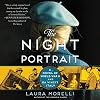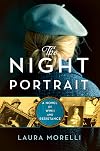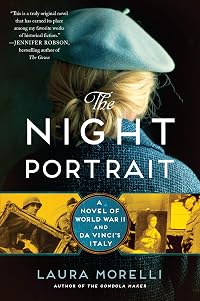
The Night Portrait
by Laura Morelli 
On This Page
Description
An exciting, dual-timeline historical novel about the creation of one of Leonardo da Vinci's most famous paintings, Portrait of a Lady with an Ermine, and the woman who fought to save it from Nazi destruction during World War II. Milan, 1492: When a 16-year old beauty becomes the mistress of the Duke of Milan, she must fight for her place in the palace-and against those who want her out. Soon, she finds herself sitting before Leonardo da Vinci, who wants to ensure his own place in the ducal show more palace by painting his most ambitious portrait to date. Munich, World War II: After a modest conservator unwittingly places a priceless Italian Renaissance portrait into the hands of a high-ranking Nazi leader, she risks her life to recover it, working with an American soldier, part of the famed Monuments Men team, to get it back. Two women, separated by 500 years, are swept up in the tide of history as one painting stands at the center of their quests for their own destinies. show lessTags
Recommendations




































Member Reviews
I just turned the last page of this incredible historical novel. Yes, it is ANOTHER World War II story. But, it is also ANOTHER superb one! The Night Portrait offers up a different angle on one of the various events that occurred during the war, one that recreates the story of the Nazi art thefts and the heroes of the The Monuments Men.
Four people tell this story:
Leonardo Da Vinci, who travels to the court of the Duke Regent of Milan wishing to impress the Duke with his war machine inventions but is commissioned to paint a portrait of the Duke's mistress Cecelia instead.
Cecelia, mistress to the Duke Regent who although has set her sights high on becoming the next Duchess, must endure her years in the court as just the favored mistress show more instead.
Dominic, a soldier in the war who is a budding artist himself, is promoted to being one of the heroic Monuments Men, a group of men assigned to seek out Hitler's hidden treasure troves secretly sprinkled across Europe looking for art and holy relics that were stolen for the future pleasure of the Reich.
Edith, a German reknowned art restorer who gets corralled and used as a pawn by the Nazis to help them research and locate where the most valuable pieces of art are to be found, including Leonardo's famous painting Lady with An Ermine.
I absolutely loved this book and found the author's ability to weave in and out from the 1400s to the 1940s with seamless effort quite amazing. Readers will fall in love with all 4 of major players and will feel that they are right there along side them experiencing their many heart-wrenching experiences as well as their small moments of joy. 5 stars from me! I now plan to order the other books by this author! show less
Four people tell this story:
Leonardo Da Vinci, who travels to the court of the Duke Regent of Milan wishing to impress the Duke with his war machine inventions but is commissioned to paint a portrait of the Duke's mistress Cecelia instead.
Cecelia, mistress to the Duke Regent who although has set her sights high on becoming the next Duchess, must endure her years in the court as just the favored mistress show more instead.
Dominic, a soldier in the war who is a budding artist himself, is promoted to being one of the heroic Monuments Men, a group of men assigned to seek out Hitler's hidden treasure troves secretly sprinkled across Europe looking for art and holy relics that were stolen for the future pleasure of the Reich.
Edith, a German reknowned art restorer who gets corralled and used as a pawn by the Nazis to help them research and locate where the most valuable pieces of art are to be found, including Leonardo's famous painting Lady with An Ermine.
I absolutely loved this book and found the author's ability to weave in and out from the 1400s to the 1940s with seamless effort quite amazing. Readers will fall in love with all 4 of major players and will feel that they are right there along side them experiencing their many heart-wrenching experiences as well as their small moments of joy. 5 stars from me! I now plan to order the other books by this author! show less
When evil leaders become powerful, as we've seen through history, it can lead to danger that is extremely destructive not only with human lives but also its surroundings with beauty and art. This story follows the portrait of "Lady with an Ermine" created by Leonardo da Vinci in the 1490s in Italy. This is a painting of Cecilia Gallerani, the beautiful mistress of the Duke of Milan when she was 16 years old.
In the late 1930s, the painting was part of a private collection in Poland. Art conservationist Edith Becker, an expert with Italian Renaissance paintings, was reassigned from her museum job to assist Hilter's movement by compiling a dossier of old masters in Polish collections. Her list and assistance helped the Nazis take priceless show more pieces of art and objects. In the 1940s, Dominic Bonelli, an American soldier was told he had a new job to work with the Monuments Men to get art works back from the Nazis and return it to their owners.
This WWII story is different from others as it's about the valuable pieces of stolen art and objects. The author did an incredible amount of research to create this emotional story told by four narrators which flows seamlessly. It's not necessarily one to read quickly as there is a lot to digest. In the book, Leonardo da Vinci says: "Man will always make war. But it is art and beauty, I think, that will give us something to live for." Once again, the author begs us to question: when will we learn?
My thanks to Laura Morelli, HarperCollins Publishers and NetGalley for allowing me to read this copy. show less
In the late 1930s, the painting was part of a private collection in Poland. Art conservationist Edith Becker, an expert with Italian Renaissance paintings, was reassigned from her museum job to assist Hilter's movement by compiling a dossier of old masters in Polish collections. Her list and assistance helped the Nazis take priceless show more pieces of art and objects. In the 1940s, Dominic Bonelli, an American soldier was told he had a new job to work with the Monuments Men to get art works back from the Nazis and return it to their owners.
This WWII story is different from others as it's about the valuable pieces of stolen art and objects. The author did an incredible amount of research to create this emotional story told by four narrators which flows seamlessly. It's not necessarily one to read quickly as there is a lot to digest. In the book, Leonardo da Vinci says: "Man will always make war. But it is art and beauty, I think, that will give us something to live for." Once again, the author begs us to question: when will we learn?
My thanks to Laura Morelli, HarperCollins Publishers and NetGalley for allowing me to read this copy. show less
The Night Portrait utilizes intertwining plots to carry parallel stories regarding Leonardo da Vinci’s painting, Lady with an Ermine. There exist only 19 known paintings of de Vinci’s and this is one of them. The novel entertains and engages with its fictional storylines and enlightens with its historical accuracy regarding both the painting and its history.
One storyline explores the creation of the painting, coupling the life of its actual subject, Cecilia Gallerani with the work of the artist and inventor as she sits for the portrait. The other story tells of the efforts to preserve and protect the painting from theft by the Nazis in WW II and to re-patriate it to Poland where it is displayed today.
Author Laura Morelli develops show more storylines of such credibility that it becomes difficult to separate the facts from her creative reporting of them. Her writing is mature, her characters well-developed and credible, and her interweaving of the two plots artful and seamless.
In short, it is a very worthwhile novel with few flaws to detracts from its overall excellence.
The largest flaw occurs in the overall plot. In the plot, the author felt compelled to move one of the major characters from his engagement as a guard for the Monuments Men to have him witness the liberation of the Dachau Death Camp. While this detour is plausibly written into the plot, it nevertheless feels like an intrusion distracting the reader from the fictional storylines. The fact that the Dachau chapters are so graphic, so detailed, and so emotionally wrenching testifies to the ability of the author and that overall quality of writing about the death camp is probably the only thing that makes this distraction from the main plots acceptable.
There are additional flaws in some of the narrative regarding military dog-tags and the D-Day landing, but these do not detract from the overall storyline.
I like historical fiction, especially when it involves art or music. Through it, I have learned many things I might not otherwise have known. In fact, the historical fiction novels I have read have led me to study both music and art more deeply and with greater understanding. Novels such as The Night Portrait provide yet another reason for people to do more reading. show less
When evil leaders become powerful, as we've seen through history, it can lead to danger that is extremely destructive not only with human lives but also its surroundings with beauty and art. This story follows the portrait of "Lady with an Ermine" created by Leonardo da Vinci in the 1490s in Italy. This is a painting of Cecilia Gallerani, the beautiful mistress of the Duke of Milan when she was 16 years old.
In the late 1930s, the painting was part of a private collection in Poland. Art conservationist Edith Becker, an expert with Italian Renaissance paintings, was reassigned from her museum job to assist Hilter's movement by compiling a dossier of old masters in Polish collections. Her list and assistance helped the Nazis take priceless show more pieces of art and objects. In the 1940s, Dominic Bonelli, an American soldier was told he had a new job to work with the Monuments Men to get art works back from the Nazis and return it to their owners.
This WWII story is different from others as it's about the valuable pieces of stolen art and objects. The author did an incredible amount of research to create this emotional story told by four narrators which flows seamlessly. It's not necessarily one to read quickly as there is a lot to digest. In the book, Leonardo da Vinci says: "Man will always make war. But it is art and beauty, I think, that will give us something to live for." Once again, the author begs us to question: when will we learn?
My thanks to Laura Morelli, HarperCollins Publishers and NetGalley for allowing me to read this copy. show less
In the late 1930s, the painting was part of a private collection in Poland. Art conservationist Edith Becker, an expert with Italian Renaissance paintings, was reassigned from her museum job to assist Hilter's movement by compiling a dossier of old masters in Polish collections. Her list and assistance helped the Nazis take priceless show more pieces of art and objects. In the 1940s, Dominic Bonelli, an American soldier was told he had a new job to work with the Monuments Men to get art works back from the Nazis and return it to their owners.
This WWII story is different from others as it's about the valuable pieces of stolen art and objects. The author did an incredible amount of research to create this emotional story told by four narrators which flows seamlessly. It's not necessarily one to read quickly as there is a lot to digest. In the book, Leonardo da Vinci says: "Man will always make war. But it is art and beauty, I think, that will give us something to live for." Once again, the author begs us to question: when will we learn?
My thanks to Laura Morelli, HarperCollins Publishers and NetGalley for allowing me to read this copy. show less
When evil leaders become powerful, as we've seen through history, it can lead to danger that is extremely destructive not only with human lives but also its surroundings with beauty and art. This story follows the portrait of "Lady with an Ermine" created by Leonardo da Vinci in the 1490s in Italy. This is a painting of Cecilia Gallerani, the beautiful mistress of the Duke of Milan when she was 16 years old.
In the late 1930s, the painting was part of a private collection in Poland. Art conservationist Edith Becker, an expert with Italian Renaissance paintings, was reassigned from her museum job to assist Hilter's movement by compiling a dossier of old masters in Polish collections. Her list and assistance helped the Nazis take priceless show more pieces of art and objects. In the 1940s, Dominic Bonelli, an American soldier was told he had a new job to work with the Monuments Men to get art works back from the Nazis and return it to their owners.
This WWII story is different from others as it's about the valuable pieces of stolen art and objects. The author did an incredible amount of research to create this emotional story told by four narrators which flows seamlessly. It's not necessarily one to read quickly as there is a lot to digest. In the book, Leonardo da Vinci says: "Man will always make war. But it is art and beauty, I think, that will give us something to live for." Once again, the author begs us to question: when will we learn?
My thanks to Laura Morelli, HarperCollins Publishers and NetGalley for allowing me to rad this copy. show less
In the late 1930s, the painting was part of a private collection in Poland. Art conservationist Edith Becker, an expert with Italian Renaissance paintings, was reassigned from her museum job to assist Hilter's movement by compiling a dossier of old masters in Polish collections. Her list and assistance helped the Nazis take priceless show more pieces of art and objects. In the 1940s, Dominic Bonelli, an American soldier was told he had a new job to work with the Monuments Men to get art works back from the Nazis and return it to their owners.
This WWII story is different from others as it's about the valuable pieces of stolen art and objects. The author did an incredible amount of research to create this emotional story told by four narrators which flows seamlessly. It's not necessarily one to read quickly as there is a lot to digest. In the book, Leonardo da Vinci says: "Man will always make war. But it is art and beauty, I think, that will give us something to live for." Once again, the author begs us to question: when will we learn?
My thanks to Laura Morelli, HarperCollins Publishers and NetGalley for allowing me to rad this copy. show less
When evil leaders become powerful, as we've seen through history, it can lead to danger that is extremely destructive not only with human lives but also its surroundings with beauty and art. This story follows the portrait of "Lady with an Ermine" created by Leonardo da Vinci in the 1490s in Italy. This is a painting of Cecilia Gallerani, the beautiful mistress of the Duke of Milan when she was 16 years old.
In the late 1930s, the painting was part of a private collection in Poland. Art conservationist Edith Becker, an expert with Italian Renaissance paintings, was reassigned from her museum job to assist Hilter's movement by compiling a dossier of old masters in Polish collections. Her list and assistance helped the Nazis take priceless show more pieces of art and objects. In the 1940s, Dominic Bonelli, an American soldier was told he had a new job to work with the Monuments Men to get art works back from the Nazis and return it to their owners.
This WWII story is different from others as it's about the valuable pieces of stolen art and objects. The author did an incredible amount of research to create this emotional story told by four narrators which flows seamlessly. It's not necessarily one to read quickly as there is a lot to digest. In the book, Leonardo da Vinci says: "Man will always make war. But it is art and beauty, I think, that will give us something to live for." Once again, the author begs us to question: when will we learn?
My thanks to Laura Morelli, HarperCollins Publishers and NetGalley for allowing me to rad this copy. show less
In the late 1930s, the painting was part of a private collection in Poland. Art conservationist Edith Becker, an expert with Italian Renaissance paintings, was reassigned from her museum job to assist Hilter's movement by compiling a dossier of old masters in Polish collections. Her list and assistance helped the Nazis take priceless show more pieces of art and objects. In the 1940s, Dominic Bonelli, an American soldier was told he had a new job to work with the Monuments Men to get art works back from the Nazis and return it to their owners.
This WWII story is different from others as it's about the valuable pieces of stolen art and objects. The author did an incredible amount of research to create this emotional story told by four narrators which flows seamlessly. It's not necessarily one to read quickly as there is a lot to digest. In the book, Leonardo da Vinci says: "Man will always make war. But it is art and beauty, I think, that will give us something to live for." Once again, the author begs us to question: when will we learn?
My thanks to Laura Morelli, HarperCollins Publishers and NetGalley for allowing me to rad this copy. show less
The Night Portrait: A Novel of WW II and Da Vinci’s Italy, by Laura Morelli.
What a delightful book this was to read! It is a story of two women separated by about 500 years. One is named Cecilia Gallerani (https://en.wikipedia.org/wiki/Cecilia_Gallerani), a true to life mistress of the Regent of Milan during Renaissance Italy. The other is Edith Becker, a fictional character who is an art conservator in Germany when World War 2 begins.
Cecilia was one of the favorite mistresses of the court and came from a decent background with no royal influence. She caught the eye of Ludovico Sforza, the real Regent of Milan, during a performance and their relationship grew from there. She wanted to become his wife and gain the type of future not show more possible before, but political realities intrude preventing her and her newborn son from realizing these dreams. Ludovico, however, did commission the remarkable Leonardo da Vinci to paint her portrait before the relationship had to end. The resulting painting was “Lady With an Ermine,” visible if you click on the above link. This much of the story is actually true.
Edith is swept up, tricked, actually, into helping the Nazi government steal valuable pieces of art through conquered Europe, supposedly to protect it from the ravages of war, just to finally realize that they were en route into the private collections of high ranking leaders like Hermann Goring and Hans Frank, the Governor of occupied Poland. When she realizes her complicity in this theft, she is mortified. But how can she stop. It’s not safe to say no to the Nazis. However, it seems to me that her fictional character might well have been inspired by the real life antics of one Rose Valland, who had a similar experience during the war (https://en.wikipedia.org/wiki/Rose_Valland).
The book weaves these two time lines, three, actually together: Renaissance Italy, early World War 2 as these works of art are being stolen, and late World War 2 as American troops are sweeping through Europe and a small number of them are tasked with locating, protecting, and returning these stolen pieces of art. They became known as The Monument Men. Leonardo da Vinci’s masterpiece is featured in all three timelines.
The author, Laura Morelli, does a beautiful job of creating all three stories lines with loving care. The history described is totally plausible where it was created, and historically accurate where it was related. Furthermore, one of the American Monument Men in this story, Dominic, a budding artist himself, seems to connect with the painting in much the same way that Edith does, and in this way, helping to bring back to life, even in a small way, the life of Cecilia.
I am a 71 year old man and few books can bring me to tears. But this book came close in a couple of places. The story line is that enchanting.
I won this uncorrected proof free of charge from Goodreads.com. Scheduled for release to the public on September 8, 2020. show less
What a delightful book this was to read! It is a story of two women separated by about 500 years. One is named Cecilia Gallerani (https://en.wikipedia.org/wiki/Cecilia_Gallerani), a true to life mistress of the Regent of Milan during Renaissance Italy. The other is Edith Becker, a fictional character who is an art conservator in Germany when World War 2 begins.
Cecilia was one of the favorite mistresses of the court and came from a decent background with no royal influence. She caught the eye of Ludovico Sforza, the real Regent of Milan, during a performance and their relationship grew from there. She wanted to become his wife and gain the type of future not show more possible before, but political realities intrude preventing her and her newborn son from realizing these dreams. Ludovico, however, did commission the remarkable Leonardo da Vinci to paint her portrait before the relationship had to end. The resulting painting was “Lady With an Ermine,” visible if you click on the above link. This much of the story is actually true.
Edith is swept up, tricked, actually, into helping the Nazi government steal valuable pieces of art through conquered Europe, supposedly to protect it from the ravages of war, just to finally realize that they were en route into the private collections of high ranking leaders like Hermann Goring and Hans Frank, the Governor of occupied Poland. When she realizes her complicity in this theft, she is mortified. But how can she stop. It’s not safe to say no to the Nazis. However, it seems to me that her fictional character might well have been inspired by the real life antics of one Rose Valland, who had a similar experience during the war (https://en.wikipedia.org/wiki/Rose_Valland).
The book weaves these two time lines, three, actually together: Renaissance Italy, early World War 2 as these works of art are being stolen, and late World War 2 as American troops are sweeping through Europe and a small number of them are tasked with locating, protecting, and returning these stolen pieces of art. They became known as The Monument Men. Leonardo da Vinci’s masterpiece is featured in all three timelines.
The author, Laura Morelli, does a beautiful job of creating all three stories lines with loving care. The history described is totally plausible where it was created, and historically accurate where it was related. Furthermore, one of the American Monument Men in this story, Dominic, a budding artist himself, seems to connect with the painting in much the same way that Edith does, and in this way, helping to bring back to life, even in a small way, the life of Cecilia.
I am a 71 year old man and few books can bring me to tears. But this book came close in a couple of places. The story line is that enchanting.
I won this uncorrected proof free of charge from Goodreads.com. Scheduled for release to the public on September 8, 2020. show less
Members
- Recently Added By
Lists

Violette's Best Historical Fiction 2020
10 works; 1 member

A High School Trip to Italy
55 works; 7 members

Books to Read
95 works; 2 members
Author Information

17 Works 1,004 Members
Laura Morelli is a LibraryThing Author, an author who lists their personal library on LibraryThing.
Common Knowledge
- Canonical title
- The Night Portrait
- Canonical DDC/MDS
- 813.6
- Canonical LCC
- PS3613.O71747
Classifications
Statistics
- Members
- 372
- Popularity
- 84,359
- Reviews
- 20
- Rating
- (3.98)
- Languages
- English
- Media
- Paper, Audiobook, Ebook
- ISBNs
- 12
- ASINs
- 3