
Kelly Rimmer
Author of The Things We Cannot Say
About the Author
Kelly Rimmer is a USA Today bestselling women's fiction author of five novels. She currently lives in Australia. Her most recent novel, Before I Let You Go, was released in 2018. Her novels have been translated into over 20 languages. (Bowker Author Biography)
Image credit: via Babelio
Series
Works by Kelly Rimmer
Tagged
Common Knowledge
- Birthdate
- 20th century
- Gender
- female
- Nationality
- Australia
- Associated Place (for map)
- Australia
Members
Reviews

Author Kelly Rimmer says that inspiration for her books often strikes when she least expects it. In the case of The German Wife, the idea for the story came to her in 2019 when she visited an exhibit about the history of the U.S. space program at the Parkes Observatory, the site of the radio telescope that assisted in the broadcasts from the Apollo 11 moon landing in 1969. She noted a reference to the contributions of German scientists, beginning in 1950, to development of the rockets that show more powered the spacecraft. She was “immediately struck by how unlikely” it was that German and U.S. scientists worked side by side so soon after the end of World War II. Her research soon revealed Operation Paperclip. Under the terms of the program, more than 1,600 German scientists and engineers from a variety of disciplines (chemistry, physics, architecture, medicine, rocketry, etc.) were brought to America and employed by the federal government. The truth about their pasts was obliterated, their stories rewritten. “Many were complicit in war crimes. Others were complicit through their silence.” Nonetheless, they were granted a fresh start courtesy of the U.S. government.
Thus, The German Wife opens in 1950 with the first-person narrative of Sofie von Meyer Rhodes, a German aristocrat who has just arrived in Huntsville, Alabama, with her two youngest children, Gisela and Felix. They will join her husband, Jürgen, a scientist and former professor who has been living and working in America for five years. Their older son, Georg, would be twenty years old had he lived, and Laura, their older daughter, was lost to them when she remained loyal to the Nazi regime. At last, Sofie will attempt to forge a new life with her family alongside other Germans granted a second chance by the U.S. government. Sofie is aware that Jürgen came to America as a prisoner of war but does not know the details surrounding his freedom and job at Fort Bliss. And soon Sofie will learn that many of her new American neighbors are neither forgiving nor welcoming. Adapting to life in a new country with unfamiliar customs among resentful residents will prove difficult.
But, of course, Sofie is a survivor. In a dual narrative beginning in 1930, Sofie relates her experiences in Germany as the Nazis come to power and increasingly impose their will upon stunned citizens. Having only married Jürgen a year earlier, Sofie is expecting their first child. But the results of the recent election have proven shocking and frightening, especially for Sofie’s Jewish best friend, Mayim, and her family, who have lost everything as a result of inflation and the 1929 stock market crash. Neither woman realizes how much more will be lost when war breaks out. Mayim and her family will be forced into hiding. And in order to protect them, as well as her own family, it will be necessary for Sofie to at least appear to shun her. Moreover, Jürgen will be conscripted into joining the Nazi party, and utilizing his knowledge and skills in a morally repugnant mission . . . or face the consequences.
Also commencing in 1930 is another first-person narrative. Lizzie and her brother, Henry, live in Dallam County, Texas, but times are hard. The rain has not come, but brutal dust storms have. Eventually, Lizzie and Henry also make their way to Huntsville. Lizzie describes her journey, including how she meets and marries her husband, Calvin Miller, who has transferred from El Paso and serves as the general manager of the rocket program. He refers to his coworkers as “our Germans,” a term that makes Lizzie want “to scream.” Henry served in Europe during World War II, but never speaks about it. Lizzie notes that he returned from the war -- at a time well before Post-Traumatic Stress Disorder (PTSD) was a recognized and treated condition -- “a broken man. And now my brother did not need to be living in a town lousy with Germans.” Henry sees the influx of German citizens as a threat and, although he seems to be doing well, Lizzie worries about him. For good reason, it turns out.
The male German and American scientists have been working together for some time and have developed collegial relationships. Oblivious to history, the children immediately begin playing together. But as the German and American wives are introduced to each other for the first time, tensions are high. Many of the American women are only in attendance at the gathering because their husbands have demanded their presence, and they are stubbornly standoffish instead of welcoming, further bewildering the German wives who do not yet speak English. Lizzie is one of the most outspoken, her outrage on full display. “These people should probably be on trial at Nuremberg, not sipping champagne in Huntsville. . . . We don’t have to welcome them. We can take a stand. I mean, for God’s sakes, someone has to.” Lizzie expresses what so many Americans felt after the war: German citizens who stood by as atrocities were committed and “did nothing” were as guilty as the members of the Nazi party who ordered and carried out unthinkable deeds. But Sofie protests, arguing it is unfair to assume that all Germans knew what was happening or were members of the Nazi party. What she does not verbalize is that she and Jürgen did, in fact, know what was happening . . . but were helpless to stop it.
The German Wife is a riveting, often heartbreaking and infuriating modern morality play. Through her compelling and fully developed characters, Rimmer explores the complexities of war, particularly the most heinous conflict in history. She uses the four narratives to illustrate her characters’ experiences and reactions to events, many of which are beyond their control. In Germany, Sofie and Jürgen are horrified by the abuse of power and crimes being committed, and seek ways to evade being swept up into the Nazi party. But Jürgen possesses unique skills, and the party leaders are intent upon using his talents in ways that are repulsive and abhorrent to him and Sofie. They are determined to keep their family safe, and soon learn the cost of resistance. As violence escalates, Jews are rounded up and sent to concentration camps, and the government takes control of the press, spewing propaganda, it becomes evident that "the Nazi party had gone too far. But no one said it. No one could say it. We had so long been afraid of the consequences of dissent that even as the nation descended into madness, any moral call to rise up against the chaos went unheeded." Out of options, Jürgen tries to shield Sofie from the truth, but it haunts him. He knows the ways in which Hitler plans to use the rockets being developed. He also knows about the camps, the gas, and the certain fate of those who attempt to resist. "Those men buid rockets according to my instructions," he confesses to Sofie. "When the story of the war is written, the pages will be full of men saying 'I was only following orders' and the world will know that is fiction. Every single time I opted not to take a stand, I was taking a stand -- for the wrong side." Their story is absorbing, terrifying, and deeply moving.
Lizzie’s early life is beset by hardships and tragedy, and Rimmer describes how she ultimately resolves to forge a life that is solid and dependable, if not founded upon love and passion. She cares for and protects Henry who, as Rimmer demonstrates, is indisputably a victim of war. Her bitterness is credible and understandable, as is Calvin’s patient longing to soften her heart. As the narratives advance and readers attain knowledge about the characters’ histories and emotions, Rimmer accelerates the story’s pace and heightens the dramatic tension that results in a shocking and violent event. In the aftermath, her characters must come to terms with their pasts in order to face the future. Will they be able to finally see each other as human beings, rather than "Germans" and "Americans" on opposite sides of a war that has already ended?
Through the lives of her characters, Rimmer deftly examines PTSD and survivor’s guilt, the life-altering and lasting impacts of war, prejudice and bigotry, whether healing is possible, and, if so, how it can come about. The German Wife is a unique work of historical fiction in that Rimmer presents the troubling story of a German family who strive to escape being caught up in the evil and corrupt agenda of a madman and his followers. Rimmer challenges readers to ponder, along with Sofie and Jürgen, whether, in light of all they endure, they did enough. “Is there a point where we are morally obliged to take a stand, whatever the cost?” Rimmer asks.
Rimmer poses similar questions about Operation Paperclip. Her characters reference the Space Race between the U.S. and the Soviet Union. As the two nations fought for superiority in spaceflight and to be the first to send an astronaut to the moon, that competition provided the impetus for the U.S. to overlook war crimes committed – often involuntarily – by German scientists in order to utilize their talents. America won the Space Race. But did the ends justify the means? Rimmer makes clear that Operation Paperclip was fraught from its conception and nothing about it “was simple – not the politics, the mechanics, or even the ethics.”
For fans of World War-era historical fiction, The German Wife is a must-read volume. Rimmer’s expertly crafted and thoroughly researched story is touching, complex, thought-provoking, and thoroughly engrossing, as well as remarkably contemporary and timely, given the current state of American politics.
Thanks to NetGalley for an Advance Reader's Copy of the book. show less
Thus, The German Wife opens in 1950 with the first-person narrative of Sofie von Meyer Rhodes, a German aristocrat who has just arrived in Huntsville, Alabama, with her two youngest children, Gisela and Felix. They will join her husband, Jürgen, a scientist and former professor who has been living and working in America for five years. Their older son, Georg, would be twenty years old had he lived, and Laura, their older daughter, was lost to them when she remained loyal to the Nazi regime. At last, Sofie will attempt to forge a new life with her family alongside other Germans granted a second chance by the U.S. government. Sofie is aware that Jürgen came to America as a prisoner of war but does not know the details surrounding his freedom and job at Fort Bliss. And soon Sofie will learn that many of her new American neighbors are neither forgiving nor welcoming. Adapting to life in a new country with unfamiliar customs among resentful residents will prove difficult.
But, of course, Sofie is a survivor. In a dual narrative beginning in 1930, Sofie relates her experiences in Germany as the Nazis come to power and increasingly impose their will upon stunned citizens. Having only married Jürgen a year earlier, Sofie is expecting their first child. But the results of the recent election have proven shocking and frightening, especially for Sofie’s Jewish best friend, Mayim, and her family, who have lost everything as a result of inflation and the 1929 stock market crash. Neither woman realizes how much more will be lost when war breaks out. Mayim and her family will be forced into hiding. And in order to protect them, as well as her own family, it will be necessary for Sofie to at least appear to shun her. Moreover, Jürgen will be conscripted into joining the Nazi party, and utilizing his knowledge and skills in a morally repugnant mission . . . or face the consequences.
Also commencing in 1930 is another first-person narrative. Lizzie and her brother, Henry, live in Dallam County, Texas, but times are hard. The rain has not come, but brutal dust storms have. Eventually, Lizzie and Henry also make their way to Huntsville. Lizzie describes her journey, including how she meets and marries her husband, Calvin Miller, who has transferred from El Paso and serves as the general manager of the rocket program. He refers to his coworkers as “our Germans,” a term that makes Lizzie want “to scream.” Henry served in Europe during World War II, but never speaks about it. Lizzie notes that he returned from the war -- at a time well before Post-Traumatic Stress Disorder (PTSD) was a recognized and treated condition -- “a broken man. And now my brother did not need to be living in a town lousy with Germans.” Henry sees the influx of German citizens as a threat and, although he seems to be doing well, Lizzie worries about him. For good reason, it turns out.
The male German and American scientists have been working together for some time and have developed collegial relationships. Oblivious to history, the children immediately begin playing together. But as the German and American wives are introduced to each other for the first time, tensions are high. Many of the American women are only in attendance at the gathering because their husbands have demanded their presence, and they are stubbornly standoffish instead of welcoming, further bewildering the German wives who do not yet speak English. Lizzie is one of the most outspoken, her outrage on full display. “These people should probably be on trial at Nuremberg, not sipping champagne in Huntsville. . . . We don’t have to welcome them. We can take a stand. I mean, for God’s sakes, someone has to.” Lizzie expresses what so many Americans felt after the war: German citizens who stood by as atrocities were committed and “did nothing” were as guilty as the members of the Nazi party who ordered and carried out unthinkable deeds. But Sofie protests, arguing it is unfair to assume that all Germans knew what was happening or were members of the Nazi party. What she does not verbalize is that she and Jürgen did, in fact, know what was happening . . . but were helpless to stop it.
The German Wife is a riveting, often heartbreaking and infuriating modern morality play. Through her compelling and fully developed characters, Rimmer explores the complexities of war, particularly the most heinous conflict in history. She uses the four narratives to illustrate her characters’ experiences and reactions to events, many of which are beyond their control. In Germany, Sofie and Jürgen are horrified by the abuse of power and crimes being committed, and seek ways to evade being swept up into the Nazi party. But Jürgen possesses unique skills, and the party leaders are intent upon using his talents in ways that are repulsive and abhorrent to him and Sofie. They are determined to keep their family safe, and soon learn the cost of resistance. As violence escalates, Jews are rounded up and sent to concentration camps, and the government takes control of the press, spewing propaganda, it becomes evident that "the Nazi party had gone too far. But no one said it. No one could say it. We had so long been afraid of the consequences of dissent that even as the nation descended into madness, any moral call to rise up against the chaos went unheeded." Out of options, Jürgen tries to shield Sofie from the truth, but it haunts him. He knows the ways in which Hitler plans to use the rockets being developed. He also knows about the camps, the gas, and the certain fate of those who attempt to resist. "Those men buid rockets according to my instructions," he confesses to Sofie. "When the story of the war is written, the pages will be full of men saying 'I was only following orders' and the world will know that is fiction. Every single time I opted not to take a stand, I was taking a stand -- for the wrong side." Their story is absorbing, terrifying, and deeply moving.
Lizzie’s early life is beset by hardships and tragedy, and Rimmer describes how she ultimately resolves to forge a life that is solid and dependable, if not founded upon love and passion. She cares for and protects Henry who, as Rimmer demonstrates, is indisputably a victim of war. Her bitterness is credible and understandable, as is Calvin’s patient longing to soften her heart. As the narratives advance and readers attain knowledge about the characters’ histories and emotions, Rimmer accelerates the story’s pace and heightens the dramatic tension that results in a shocking and violent event. In the aftermath, her characters must come to terms with their pasts in order to face the future. Will they be able to finally see each other as human beings, rather than "Germans" and "Americans" on opposite sides of a war that has already ended?
Through the lives of her characters, Rimmer deftly examines PTSD and survivor’s guilt, the life-altering and lasting impacts of war, prejudice and bigotry, whether healing is possible, and, if so, how it can come about. The German Wife is a unique work of historical fiction in that Rimmer presents the troubling story of a German family who strive to escape being caught up in the evil and corrupt agenda of a madman and his followers. Rimmer challenges readers to ponder, along with Sofie and Jürgen, whether, in light of all they endure, they did enough. “Is there a point where we are morally obliged to take a stand, whatever the cost?” Rimmer asks.
Rimmer poses similar questions about Operation Paperclip. Her characters reference the Space Race between the U.S. and the Soviet Union. As the two nations fought for superiority in spaceflight and to be the first to send an astronaut to the moon, that competition provided the impetus for the U.S. to overlook war crimes committed – often involuntarily – by German scientists in order to utilize their talents. America won the Space Race. But did the ends justify the means? Rimmer makes clear that Operation Paperclip was fraught from its conception and nothing about it “was simple – not the politics, the mechanics, or even the ethics.”
For fans of World War-era historical fiction, The German Wife is a must-read volume. Rimmer’s expertly crafted and thoroughly researched story is touching, complex, thought-provoking, and thoroughly engrossing, as well as remarkably contemporary and timely, given the current state of American politics.
Thanks to NetGalley for an Advance Reader's Copy of the book. show less
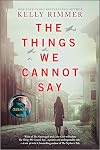
It's so wonderful when you find a book that is well-written, full of surprises, and speaks directly to your own personal interests! That's what this book was for me.
Author Kelly Rimmer has oh-so-skillfully crafted an intensely suspenseful story that melds together the drama of 1940s Nazi-occupied Poland and the deep emotional connections that can exist among members of one family (even when they are not in contact) -- along with the best elements of a page-turning mystery. It's simply a joy show more to read.
The two central characters are two formidable women from two different time periods -- Alina Dziak and Alice Michaels.
• In 1939, Alina is a teenager, deeply in love with her sole mate, when Nazis invade her beloved Poland. Despite her parents' efforts to protect her, Alina slowly comes to experience the growing menace of the Nazis and the ways in which their presence is forever changing the lives of both Jews and non-Jews. Alina comes of age, exploring what she is capable of, as a direct result of repeated tests to her love, courage and stamina. Hers is a story of great romance and sacrifice.
• Alice is a contemporary, stay-at-home Mom living in Florida, feeling distant from her hard-working husband, intimidated by the formidable brain in her 10 year old daughter, and consumed by the demands and responsibilities of raising a seven-year-old son diagnosed with autism spectrum disorder. And, as the book begins, Alice is thrown the added complication of a beloved grandmother in declining health, who is suddenly making strange demands that threaten Alice's well-ordered life.
The story unfolds so beautifully that I won't say more, for fear of spoiling the pleasure of this read. But this book explores some of our most universal human themes. As Alina faces death, her need to find answers to lingering questions from her past becomes urgent. Alice wrestles with divided family loyalties -- weighing her dedication to her roles as wife and mother against a strong desire to give her dying grandmother a peaceful death. And, in times of war, when people so often must face extreme deprivation and unspeakable loss, how much can they be expected to endure?
This is a deeply emotional, and at times, difficult read. I predict you will cry multiple times. But I found the main sentiments that lingered at the end were respect for the great resiliency innate to human beings and a comforting belief in the power of love. show less
Author Kelly Rimmer has oh-so-skillfully crafted an intensely suspenseful story that melds together the drama of 1940s Nazi-occupied Poland and the deep emotional connections that can exist among members of one family (even when they are not in contact) -- along with the best elements of a page-turning mystery. It's simply a joy show more to read.
The two central characters are two formidable women from two different time periods -- Alina Dziak and Alice Michaels.
• In 1939, Alina is a teenager, deeply in love with her sole mate, when Nazis invade her beloved Poland. Despite her parents' efforts to protect her, Alina slowly comes to experience the growing menace of the Nazis and the ways in which their presence is forever changing the lives of both Jews and non-Jews. Alina comes of age, exploring what she is capable of, as a direct result of repeated tests to her love, courage and stamina. Hers is a story of great romance and sacrifice.
• Alice is a contemporary, stay-at-home Mom living in Florida, feeling distant from her hard-working husband, intimidated by the formidable brain in her 10 year old daughter, and consumed by the demands and responsibilities of raising a seven-year-old son diagnosed with autism spectrum disorder. And, as the book begins, Alice is thrown the added complication of a beloved grandmother in declining health, who is suddenly making strange demands that threaten Alice's well-ordered life.
The story unfolds so beautifully that I won't say more, for fear of spoiling the pleasure of this read. But this book explores some of our most universal human themes. As Alina faces death, her need to find answers to lingering questions from her past becomes urgent. Alice wrestles with divided family loyalties -- weighing her dedication to her roles as wife and mother against a strong desire to give her dying grandmother a peaceful death. And, in times of war, when people so often must face extreme deprivation and unspeakable loss, how much can they be expected to endure?
This is a deeply emotional, and at times, difficult read. I predict you will cry multiple times. But I found the main sentiments that lingered at the end were respect for the great resiliency innate to human beings and a comforting belief in the power of love. show less

Powerful Multi-Timeline Story Weaves Multiple Threads Into Amazing Tapestry. You know those centuries old tapestries where when you look at them, you're almost *positive* they *had* to have been painted *after* being woven - and then you see the details and realize that, no, the threads really were placed together to the level of precision required to produce the scene you see from further away? This book is the literary equivalent of one of those types of tapestries.
Yes, particularly early show more in the tale it is somewhat hard to distinguish who is who in the alternating chapters, as while each chapter is headed by the lady's real name, more often the story is told (particularly of the actual spies during the war) using their code names. So it can take a while to piece together who is who, which is perhaps the only glaring weakness of this particular tapestry. (We'll detail a more minor one, that only some will have problems with, momentarily.)
But the piece overall is truly stunning in both its breadth and its attention to minutia level details, all while weaving together a story that while the reader *knows* it is fiction... almost seems all *too* real. Particularly in certain sequences... it gets quite uncomfortable. (Though, to be clear and to alleviate some concerns, never in a sexual way. More along the lines of V for Vendetta's more uncomfortable sequences... and then these get even worse.)
Indeed, the quibble level issues are that perhaps, given the story told, things are wrapped up a little *too* neatly in the end. If you like every possible string fully tied off, you're going to like this one. If you prefer more open ended sequences when those are called for... well, I just told you everything gets tied off into nice little bows. The other quibble that some might argue - and would usually argue is more than a quibble, but I'm actively downplaying it here because it *is* a minor issue in the grand scheme of this story and how it is told - is the presence of an LGBT character that could have been, so the argument goes, written with almost any other backstory to achieve the same result, resulting in a character that has that particular background for no other reason than, again going with how others are likely to present this argument, 2000s era sensibilities that perhaps would not have been period accurate.
Still, even accounting for the "inclusions", to draw from the term for a diamond's imperfections, this really is one of the stronger WWII historical fiction stories out there, and I've read a fair amount within that space. Yes, this is yet again France and in particular D-Day, but those tend to be the stories that get the most attention, both in the historical record and the overall zeitgeist. Overall, truly one of the better and stronger WWII historical fiction tales I've ever come across. Very much recommended. show less
Yes, particularly early show more in the tale it is somewhat hard to distinguish who is who in the alternating chapters, as while each chapter is headed by the lady's real name, more often the story is told (particularly of the actual spies during the war) using their code names. So it can take a while to piece together who is who, which is perhaps the only glaring weakness of this particular tapestry. (We'll detail a more minor one, that only some will have problems with, momentarily.)
But the piece overall is truly stunning in both its breadth and its attention to minutia level details, all while weaving together a story that while the reader *knows* it is fiction... almost seems all *too* real. Particularly in certain sequences... it gets quite uncomfortable. (Though, to be clear and to alleviate some concerns, never in a sexual way. More along the lines of V for Vendetta's more uncomfortable sequences... and then these get even worse.)
Indeed, the quibble level issues are that perhaps, given the story told, things are wrapped up a little *too* neatly in the end. If you like every possible string fully tied off, you're going to like this one. If you prefer more open ended sequences when those are called for... well, I just told you everything gets tied off into nice little bows. The other quibble that some might argue - and would usually argue is more than a quibble, but I'm actively downplaying it here because it *is* a minor issue in the grand scheme of this story and how it is told - is the presence of an LGBT character that could have been, so the argument goes, written with almost any other backstory to achieve the same result, resulting in a character that has that particular background for no other reason than, again going with how others are likely to present this argument, 2000s era sensibilities that perhaps would not have been period accurate.
Still, even accounting for the "inclusions", to draw from the term for a diamond's imperfections, this really is one of the stronger WWII historical fiction stories out there, and I've read a fair amount within that space. Yes, this is yet again France and in particular D-Day, but those tend to be the stories that get the most attention, both in the historical record and the overall zeitgeist. Overall, truly one of the better and stronger WWII historical fiction tales I've ever come across. Very much recommended. show less
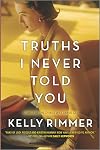
This book was fantastic! Told in dual timelines, we see the four children in the Walsh family coming together as their father needs to be moved into a memory care facility. The relationships between the four adult children were fantastic, at times warm, at others troubled, and wonderfully real. Beth, the youngest, has recently had her first child, and is struggling, though she doesn’t initially recognize why. She agrees to take on the ask of cleaning out their father’s house and finds show more clues to what may have happened to their mother decades before—and it may not have been what they were always told.
In the second timeline, we hear from Grace and her sister. Sometimes I struggle with flashbacks in novels, particularly when they take up a huge chunk of the narrative, but this one was FANTASTIC and gave a detailed, bleak look at what life was like for women back in a time where they had little agency. When Grace finds herself with four children under the age of four, an alcoholic husband, no money, and crushing postpartum depression, she receives no support. Doctors tell her to buck up. Her family does nothing to help because they do not approve of the marriage. She finds herself pregnant for a fifth time and facing the prospect of a fifth child under the age of five, coniders the terrible option of getting an illegal abortion by an unlicensed person claiming to be a doctor.
What struck me so hard was how the women in this story suffered so much. They had few resources, no way out. The author did a wonderful job of presenting the bleakness of their situation. All of the Walsh children revered their father and considered him a wonderful man and had only perfect memories of how he’d raised them. They were too young to remember the terrible neglect of their early years described in the flashbacks. It was just incredibly well written and devastating and made me grateful that the story in present day could turn out differently.
Trigger Warnings: child neglect, postpartum depression, alcoholism, dementia
Please excuse typos/name misspellings. Entered on screen reader. show less
In the second timeline, we hear from Grace and her sister. Sometimes I struggle with flashbacks in novels, particularly when they take up a huge chunk of the narrative, but this one was FANTASTIC and gave a detailed, bleak look at what life was like for women back in a time where they had little agency.
What struck me so hard was how the women in this story suffered so much. They had few resources, no way out. The author did a wonderful job of presenting the bleakness of their situation. All of the Walsh children revered their father and considered him a wonderful man and had only perfect memories of how he’d raised them. They were too young to remember the terrible neglect of their early years described in the flashbacks. It was just incredibly well written and devastating and made me grateful that the story in present day could turn out differently.
Trigger Warnings:
Please excuse typos/name misspellings. Entered on screen reader. show less
Lists
Awards

You May Also Like


Associated Authors
Statistics
- Works
- 18
- Members
- 4,151
- Popularity
- #6,062
- Rating
- 4.1
- Reviews
- 165
- ISBNs
- 188
- Languages
- 9