
Pam Jenoff
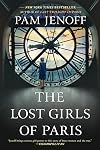
Author of The Lost Girls of Paris
About the Author
Pam Jenoff was born in Maryland and raised outside Philadelphia. She attended George Washington University in Washington, D.C., and Cambridge University in England where she earned her master's degree in history. She then was appointed as Special Assistenat to the Secretary of the Army. She worked show more helping victim's families of Pan Am Flight 103 secure their memorial at Arlington National Cemetery and observing recovery efforts at the site of the Oklahoma City bombing. Following her work at the Pentagon, Pam moved to the State Department. In 1996 she was assigned to the U.S. Consulate in Krakow, Poland. It was during this time that Pam developed her expertise in Polish-Jewish relations and the Holocaust, working on matters such as preservation of Auschwitz and the restitution of Jewish property in Poland. Pam left the Foreign Service in 1998 for law school and graduated from the University of Pennsylvania. She worked for several years as a labor and employment attorney and now teaches law school at Rutgers. Pam is the author of The Kommandant's Girl, which was an international bestseller and nominated for a Quill award, as well as The Winter Guest, The Diplomat's Wife, The Ambassador¿s Daughter, Almost Home, A Hidden Affair and The Things We Cherished. (Bowker Author Biography) show less
Series
Works by Pam Jenoff
L'assoluzione 1 copy
La valigia del Diplomatico 1 copy
Fiica ambasadorului 1 copy
Жената со сина ѕвезда 1 copy
Kit sobre o Holocausto 1 copy
The Diplomats Wife 1 copy
Associated Works
Grand Central: Original Stories of Postwar Love and Reunion (2014) — Contributor — 144 copies, 9 reviews
Tagged
Common Knowledge
- Canonical name
- Jenoff, Pam
- Birthdate
- 19??
- Gender
- female
- Education
- George Washington University, Cambridge University
- Occupations
- author
attorney
Vice Cousel for the U.S. State Department in Krakow, Poland
Special Assistant to the Secretary of the Army at the Pentagon - Nationality
- USA
- Places of residence
- Philadelphia, Pennsylvania, USA
- Associated Place (for map)
- Pennsylvania, USA
Members
Reviews

As the author explains in a note at the end of this profoundly touching novel:
“This book was inspired in part by the true story of a small group of Jews who survived World War II in the sewers of Lviv, Poland. The account that I have written and set in Krakow is wholly fictitious. . . . . If you would like to read more about the true story, I recommend the nonfiction book In the Sewers of Lvov by Robert Marshall.”
The book she recommends by Marshall relates how a group of Jews spent 14 show more months in 1943-1944 hiding in the sewer system in the Ukrainian city of Lvov. [Throughout its history, Lviv has had several names. The city was known as Lwów when the Poles ruled, the Austro-Hungarian Empire called it Lemberg, and Jewish residents referred to it as Lemberik. Currently, many languages have their own spelling and pronunciation. This is the case with ‘Lviv’ (Ukrainian) and ‘Lvov’ (Russian).] That group consisted of 20 people, including two children and a pregnant woman.
The fictional group in The Woman with the Blue Star is made up of two families: Sadie Gault, 18, and her pregnant mother; and Meyer Rosenberg, his elderly mother, and his son Saul, who is around Sadie’s age. Like the group in Lvov, they were helped by a sewer worker, and as the real-life group did, they learned to deal with darkness in confined spaces; the horrific odors; feces; rats; lack of adequate food; constant fear of abandonment and discovery; and sickness and death.
Sadie’s fate becomes unexpectedly joined with that of Ella Stepanek, 19. Ella, as a Christian Pole, is technically free, but lives in her own hell above ground.
The ways in which the lives of all these characters play out, and what happens to them, create an unforgettable saga. An Epilogue in 2016 ends the story with a surprising twist.
Evaluation: Pam Jenoff is an excellent writer, and this book is her best so far, in my opinion. The courage of the characters in spite of their dire circumstances and the poignancy of their stories will grab hold of your heart and shake up your conception of what is possible - both in terms of horrific actions people are capable of taking against each other, and how some manage to survive it in spite of everything. show less
“This book was inspired in part by the true story of a small group of Jews who survived World War II in the sewers of Lviv, Poland. The account that I have written and set in Krakow is wholly fictitious. . . . . If you would like to read more about the true story, I recommend the nonfiction book In the Sewers of Lvov by Robert Marshall.”
The book she recommends by Marshall relates how a group of Jews spent 14 show more months in 1943-1944 hiding in the sewer system in the Ukrainian city of Lvov. [Throughout its history, Lviv has had several names. The city was known as Lwów when the Poles ruled, the Austro-Hungarian Empire called it Lemberg, and Jewish residents referred to it as Lemberik. Currently, many languages have their own spelling and pronunciation. This is the case with ‘Lviv’ (Ukrainian) and ‘Lvov’ (Russian).] That group consisted of 20 people, including two children and a pregnant woman.
The fictional group in The Woman with the Blue Star is made up of two families: Sadie Gault, 18, and her pregnant mother; and Meyer Rosenberg, his elderly mother, and his son Saul, who is around Sadie’s age. Like the group in Lvov, they were helped by a sewer worker, and as the real-life group did, they learned to deal with darkness in confined spaces; the horrific odors; feces; rats; lack of adequate food; constant fear of abandonment and discovery; and sickness and death.
Sadie’s fate becomes unexpectedly joined with that of Ella Stepanek, 19. Ella, as a Christian Pole, is technically free, but lives in her own hell above ground.
The ways in which the lives of all these characters play out, and what happens to them, create an unforgettable saga. An Epilogue in 2016 ends the story with a surprising twist.
Evaluation: Pam Jenoff is an excellent writer, and this book is her best so far, in my opinion. The courage of the characters in spite of their dire circumstances and the poignancy of their stories will grab hold of your heart and shake up your conception of what is possible - both in terms of horrific actions people are capable of taking against each other, and how some manage to survive it in spite of everything. show less
It's New York City, 1946. Grace is late on her way to the office, made even later as she circumnavigates a fatal pedestrian-vehicle accident. She cuts through Grand Central station and notices an abandoned suitcase. She opens it and extracts 12 photographs of women, carefully wrapped in lace. She closes the suitcase and takes off with the photographs. Seriously?! Who does such a thing? Except that it's needed for the story-line to work.
In an alternating chapter, it's 1943, London. Eleanor, show more recently emigrated to London, while escaping Hitler, and is serving as a secretary in the SOE administration (British Covert Intelligence). She has convinced the Director that dropping female agents into France would be the better choice than sending young males in who stick out like sore thumbs as all able bodied Frenchmen are serving in uniform. But no, "The Geneva Convention expressly prohibits women combatants." informs Captain Michaels, one of the advisors at the table. What?! Women POWs are expressly covered under Article 3 of the Geneva Convention of 1929 (the Geneva Convention in place in 1943). Then Eleanor, presumably a very intelligent woman, goes along with the statement instead of refuting it and setting the record straight.
However, Eleanor's idea gets traction and she's put in charge of selecting the female agents who are to be grilled, drilled and prepared to be dropped into enemy territory. Yes, historically this did happen. There were female agents dropped in behind enemy lines and they blended in with local everyday women. But the rest is pure fiction.
I found it absurd that the following was referred to as a poem by Shakespeare when in fact it was a speech in Act IV, scene iii of Shakespeare's Henry V, wherein King Henry addresses his minimal troops before the Battle of Agincourt, (line 60-65):
"From this day to the ending of the world,
But we in it shall be remember'd—
We few, we happy few, we band of brothers;
For he today that sheds his blood with me
Shall be my brother; be he ne'er so vile,
This day shall gentle his condition;
And gentlemen in England now abed
Shall think themselves accursed they were not here,
And hold their manhoods cheap whiles any speaks
That fought with us upon Saint Crispin’s day.
Such cavalier handling of the historical record rubs this reader the wrong way when it is so easily verifiable and could be rectified. Having said that, if you are just looking for an entertaining book that is sort of historical fiction and details are not important, then this would probably be a most enjoyable read. Pam Jenoff writes very well and I found the story-line interesting as long as I treated it as pure fiction.
I am grateful to Park Row Books and Netgalley for having provided a free ebook copy of this book. Their generosity, however, did not influence this review - the words of which are mine alone. show less
In an alternating chapter, it's 1943, London. Eleanor, show more recently emigrated to London, while escaping Hitler, and is serving as a secretary in the SOE administration (British Covert Intelligence). She has convinced the Director that dropping female agents into France would be the better choice than sending young males in who stick out like sore thumbs as all able bodied Frenchmen are serving in uniform. But no, "The Geneva Convention expressly prohibits women combatants." informs Captain Michaels, one of the advisors at the table. What?! Women POWs are expressly covered under Article 3 of the Geneva Convention of 1929 (the Geneva Convention in place in 1943). Then Eleanor, presumably a very intelligent woman, goes along with the statement instead of refuting it and setting the record straight.
However, Eleanor's idea gets traction and she's put in charge of selecting the female agents who are to be grilled, drilled and prepared to be dropped into enemy territory. Yes, historically this did happen. There were female agents dropped in behind enemy lines and they blended in with local everyday women. But the rest is pure fiction.
I found it absurd that the following was referred to as a poem by Shakespeare when in fact it was a speech in Act IV, scene iii of Shakespeare's Henry V, wherein King Henry addresses his minimal troops before the Battle of Agincourt, (line 60-65):
"From this day to the ending of the world,
But we in it shall be remember'd—
We few, we happy few, we band of brothers;
For he today that sheds his blood with me
Shall be my brother; be he ne'er so vile,
This day shall gentle his condition;
And gentlemen in England now abed
Shall think themselves accursed they were not here,
And hold their manhoods cheap whiles any speaks
That fought with us upon Saint Crispin’s day.
Such cavalier handling of the historical record rubs this reader the wrong way when it is so easily verifiable and could be rectified. Having said that, if you are just looking for an entertaining book that is sort of historical fiction and details are not important, then this would probably be a most enjoyable read. Pam Jenoff writes very well and I found the story-line interesting as long as I treated it as pure fiction.
I am grateful to Park Row Books and Netgalley for having provided a free ebook copy of this book. Their generosity, however, did not influence this review - the words of which are mine alone. show less

Most of this novel is set in 1942 in Brussels, during the Nazi occupation. Hannah Martel, a German Jew, had been trying to escape Nazi Germany and left on a ship bound for the Americas, but the ship was turned back. (Jenoff states in an Afterword that she modeled this incident after the infamous case of the St. Louis, which sailed from Germany in 1939. Passengers were denied the right to disembark in either Cuba or the US. Around a third of the 900 Jewish passengers forced to return to show more Europe were subsequently murdered by the Nazis.)
Hannah had nowhere to go but to the Brussels home of her cousin Lily Abels, with whom she was once very close. Lily now had a husband, Nik and a son, Georgi. Hannah almost immediately joined with the local resistance in an attempt to try to escape once again. Lily believed that Belgian Jews would never be in danger, and that it was safest just to keep her head down and stay out of trouble. She objected to Hannah’s activities.
So Hannah started meeting with a local resistance group in secret she found through a man named Matteo she saw hiding a message. Matteo’s sister Micheline, a young woman around Hannah’s age, ran the Sapphire Line, a network formed to get downed British airman out of the country. Micheline reluctantly agreed to help Hannah if Hannah helped them with the network while Micheline looked into options for her.
In Hannah’s eagerness to help and avoid arrest herself, she committed a breach of trust that caused Lily and her family to be arrested. Hannah, wracked by guilt, was determined to save them from certain evacuation to the Auschwitz death camp.
Evaluation: Pam Jenoff is an excellent writer, and especially excels at bringing a horrific time in history alive with her novels set during the Nazi Holocaust. The courage of the characters in spite of their dire circumstances and the poignancy of their stories will grab hold of your heart and shake up your conception of what is possible - both in terms of horrific actions people are capable of taking against each other, and how some managed to survive it in spite of everything. show less
Hannah had nowhere to go but to the Brussels home of her cousin Lily Abels, with whom she was once very close. Lily now had a husband, Nik and a son, Georgi. Hannah almost immediately joined with the local resistance in an attempt to try to escape once again. Lily believed that Belgian Jews would never be in danger, and that it was safest just to keep her head down and stay out of trouble. She objected to Hannah’s activities.
So Hannah started meeting with a local resistance group in secret she found through a man named Matteo she saw hiding a message. Matteo’s sister Micheline, a young woman around Hannah’s age, ran the Sapphire Line, a network formed to get downed British airman out of the country. Micheline reluctantly agreed to help Hannah if Hannah helped them with the network while Micheline looked into options for her.
In Hannah’s eagerness to help and avoid arrest herself, she committed a breach of trust that caused Lily and her family to be arrested. Hannah, wracked by guilt, was determined to save them from certain evacuation to the Auschwitz death camp.
Evaluation: Pam Jenoff is an excellent writer, and especially excels at bringing a horrific time in history alive with her novels set during the Nazi Holocaust. The courage of the characters in spite of their dire circumstances and the poignancy of their stories will grab hold of your heart and shake up your conception of what is possible - both in terms of horrific actions people are capable of taking against each other, and how some managed to survive it in spite of everything. show less

Almost Home by Pam Jenoff is a novel of international intrigue, significant struggle, and humiliating heartbreak. Jordan Weiss is a Foreign Service Officer working in Washington, D.C., who receives a letter from her college friend Sarah asking her to return to London as Sarah struggles with Lou Gehrig's Disease (ALS). Once in London, a place Jordan never expected to see again after her tragic last semester, she takes a job as a investigative diplomat working to uncover financial connections show more between companies and the Albanian mob.
"Chris pulls out my chair and I sit down awkwardly, conscious of his presence, the way he hovers a second too long behind me as though afraid I will flee." (Page 64)
Jenoff really knows how to set the mood. Almost Home is full of dark imagery, fast-paced chases, and tension as thick as butter. Readers will be kept guessing as to who is on the wrong side of the equation. Jordan is likable and draws readers into the story, sweeping readers into her grief over the decades ago loss of her college sweetheart, Jared, and the mystery surrounding his death. There is tension between Jared and Jordan when they first meet as part of a rowing team, but eventually their mutual love of the river and the team gives way to their own passions.
"Trafalgar Square on a Monday morning is a swarming mass of activity. Cars and buses move along the roadway in fits and starts, jamming up at the traffic lights, filling the air with thick exhaust. Swarms of commuters, invisible beneath a sea of black umbrellas, jostle as they make their way from the buses to the city, from Charing Cross Tube station to Whitehall." (Page 131)
Tension and suspense are dominant atmospheres in Almost Home, but the novel is more than just a political thriller, it deals with deep grief and healing. There also are lighter moments between Jordan and Sarah that illustrate a part of Jordan that has been dormant since the tragic loss of Jared. The dynamic between the two is strong and full of sisterly love, which can transcend any situation.
Jenoff's experience as a diplomat is clearly present in the novel as Jordan deals with bureaucracy and cloak-and-dagger tactics. There are some points in the novel where Jordan appears to be out of her element and a novice diplomat, but given the recent debacle in Liberia and the death of a colleague; her flight to London to be with her sick friend; and all that is uncovered about the death of Jared, her mistakes and bad judgment should be expected. The pressures she feels and the memories that haunt her are too much for any one person to deal with a high-stress position with government. Jordan is a complex character dealing with new grief, renewed old grief, and a demanding job in a city she once abandoned. Overall, Almost Home is a fast-paced, highly emotional, well-written novel. show less
"Chris pulls out my chair and I sit down awkwardly, conscious of his presence, the way he hovers a second too long behind me as though afraid I will flee." (Page 64)
Jenoff really knows how to set the mood. Almost Home is full of dark imagery, fast-paced chases, and tension as thick as butter. Readers will be kept guessing as to who is on the wrong side of the equation. Jordan is likable and draws readers into the story, sweeping readers into her grief over the decades ago loss of her college sweetheart, Jared, and the mystery surrounding his death. There is tension between Jared and Jordan when they first meet as part of a rowing team, but eventually their mutual love of the river and the team gives way to their own passions.
"Trafalgar Square on a Monday morning is a swarming mass of activity. Cars and buses move along the roadway in fits and starts, jamming up at the traffic lights, filling the air with thick exhaust. Swarms of commuters, invisible beneath a sea of black umbrellas, jostle as they make their way from the buses to the city, from Charing Cross Tube station to Whitehall." (Page 131)
Tension and suspense are dominant atmospheres in Almost Home, but the novel is more than just a political thriller, it deals with deep grief and healing. There also are lighter moments between Jordan and Sarah that illustrate a part of Jordan that has been dormant since the tragic loss of Jared. The dynamic between the two is strong and full of sisterly love, which can transcend any situation.
Jenoff's experience as a diplomat is clearly present in the novel as Jordan deals with bureaucracy and cloak-and-dagger tactics. There are some points in the novel where Jordan appears to be out of her element and a novice diplomat, but given the recent debacle in Liberia and the death of a colleague; her flight to London to be with her sick friend; and all that is uncovered about the death of Jared, her mistakes and bad judgment should be expected. The pressures she feels and the memories that haunt her are too much for any one person to deal with a high-stress position with government. Jordan is a complex character dealing with new grief, renewed old grief, and a demanding job in a city she once abandoned. Overall, Almost Home is a fast-paced, highly emotional, well-written novel. show less
Lists
Awards


You May Also Like


Associated Authors
Statistics
- Works
- 26
- Also by
- 1
- Members
- 9,576
- Popularity
- #2,510
- Rating
- 3.8
- Reviews
- 485
- ISBNs
- 307
- Languages
- 16
- Favorited
- 8
