

Jennifer Robson
Author of The Gown
About the Author
Jennifer Robson is an internationally acclaimed bestselling author of historical fiction. She studied French literature and modern history as an undergraduate at King's College at the University of Western Ontario. She then attended Saint Anthony's College at the University of Oxford, where she show more obtained her Doctorate in British economic and social history. Robson worked as an editor for a number of years, but is now lucky enough to consider herself a full-time writer. She is the author of the historical novels After the War Is Over and Somewhere in France. (Bowker Author Biography) show less
Image credit: photo credit: natalie brown
Works by Jennifer Robson
Платье королевы 1 copy
Associated Works
Tagged
Common Knowledge
- Birthdate
- 1970-01-05
- Gender
- female
- Education
- King's College, University of Western Ontario
St. Anthony's College, University of Oxford - Occupations
- copy editor
novelist - Relationships
- Robson, Stuart (father)
- Short biography
- Jennifer Robson first learned about the Great War from her father, acclaimed historian Stuart Robson, and later served as an official guide at the Canadian National War Memorial at Vimy Ridge, France. A former copy editor, she holds a doctorate in British economic and social history from the University of Oxford. She lives in Toronto, Ontario, Canada, with her husband and young children.
- Nationality
- Canada
- Birthplace
- Peterborough, Ontario, Canada
- Places of residence
- Toronto, Ontario, Canada
- Associated Place (for map)
- Ontario, Canada
Members
Reviews

What does it mean to truly live? To pursue the thing(s) that make us feel most alive? To follow our dreams? How many people do that, especially in the face of social pressure? How many people have the courage to even try? The main character in Jennifer Robson's latest novel, Moonlight Over Paris, has the chance to do just that and to do it in the magic of Paris between the wars.
Lady Helena Montagu-Douglas-Parr is determined to escape her existence in England. She is still being shunned and show more whispered about five years after a broken engagement. It is of no matter to society that her fiance wanted out of their bloodless connection much more than she did and has gone on to marry for love and have children. Helena still takes the brunt of disapproval, becoming a virtual social pariah. After she nearly dies of scarlet fever, her Aunt Agatha writes her from France, offering Helena an escape from this shame-filled and judgmental existence. First Helena will travel to Antibes to fully recover from her illness and then go to Paris with her wealthy, unconventional aunt to spend a year studying art under a demanding and respected master. She will pursue her passion.
Under her aunt's wing, Helena is introduced to many of the major players of the Lost Generation, Sara and Gerald Murphy, Scott and Zelda Fitzgerald, Gertrude Stein and Alice B. Toklas, Ernest and Hadley Hemingway, and many more. She finds her world enlarged by this eclectic bunch of ex-pat artists and writers. She collects her own circle of friends from among the students at her art school and they enjoy the glittering, bohemian decadence of the era as Helena pursues her dream to become a true artist. As she breaks free of the judgment and censure that dogged her in England, she recognizes the value and importance of following her own path. One way of breaking with convention is her deepening friendship with American journalist Sam Howard. But she finds herself conflicted over what kind of relationship she can have with him now that she's finally her own person, in charge of her own destiny.
Robson has really captured the sparkling atmosphere of Paris and the ex-pat community there in the 1920s. Helena herself is a child of wealth and lives a very privileged life with her aunt, giving her entree into this fascinating group of people. She is stretched and attracted by the passion she finds in a life where she can grow to follow her own dreams. Despite her near death experience, she is still sometimes afraid to reach for what she really wants though. Helena's character feels younger than her years but perhaps that's because of the sheltered life she's lived and the way that she has previously just always acquiesced to what was expected of her. Her sister's brief visit gives the reader a chance to see what her life would have been like, had she not broken out. Sam as the romantic interest is pretty perfect. The parallels between their journeys to courage and self-fulfillment are quite clear and make them well matched in ways far beyond just their initial attraction. The push and pull between them feels real and recognizable. The writing is well done and engaging and readers and Lost Generation fans will be tickled by the glimpses of the famous personalities included in Helena's social milieu. The truth and economics of the art world are not explored in great detail but there are flashes of the not always pleasant reality of it that help ground Helena's dreams to make it all believable. There are a few interesting twists in the novel although the end itself is no surprise. This is over all a satisfying, romantic read about coming into your own and really living on your own terms to find your happily ever after. show less
Lady Helena Montagu-Douglas-Parr is determined to escape her existence in England. She is still being shunned and show more whispered about five years after a broken engagement. It is of no matter to society that her fiance wanted out of their bloodless connection much more than she did and has gone on to marry for love and have children. Helena still takes the brunt of disapproval, becoming a virtual social pariah. After she nearly dies of scarlet fever, her Aunt Agatha writes her from France, offering Helena an escape from this shame-filled and judgmental existence. First Helena will travel to Antibes to fully recover from her illness and then go to Paris with her wealthy, unconventional aunt to spend a year studying art under a demanding and respected master. She will pursue her passion.
Under her aunt's wing, Helena is introduced to many of the major players of the Lost Generation, Sara and Gerald Murphy, Scott and Zelda Fitzgerald, Gertrude Stein and Alice B. Toklas, Ernest and Hadley Hemingway, and many more. She finds her world enlarged by this eclectic bunch of ex-pat artists and writers. She collects her own circle of friends from among the students at her art school and they enjoy the glittering, bohemian decadence of the era as Helena pursues her dream to become a true artist. As she breaks free of the judgment and censure that dogged her in England, she recognizes the value and importance of following her own path. One way of breaking with convention is her deepening friendship with American journalist Sam Howard. But she finds herself conflicted over what kind of relationship she can have with him now that she's finally her own person, in charge of her own destiny.
Robson has really captured the sparkling atmosphere of Paris and the ex-pat community there in the 1920s. Helena herself is a child of wealth and lives a very privileged life with her aunt, giving her entree into this fascinating group of people. She is stretched and attracted by the passion she finds in a life where she can grow to follow her own dreams. Despite her near death experience, she is still sometimes afraid to reach for what she really wants though. Helena's character feels younger than her years but perhaps that's because of the sheltered life she's lived and the way that she has previously just always acquiesced to what was expected of her. Her sister's brief visit gives the reader a chance to see what her life would have been like, had she not broken out. Sam as the romantic interest is pretty perfect. The parallels between their journeys to courage and self-fulfillment are quite clear and make them well matched in ways far beyond just their initial attraction. The push and pull between them feels real and recognizable. The writing is well done and engaging and readers and Lost Generation fans will be tickled by the glimpses of the famous personalities included in Helena's social milieu. The truth and economics of the art world are not explored in great detail but there are flashes of the not always pleasant reality of it that help ground Helena's dreams to make it all believable. There are a few interesting twists in the novel although the end itself is no surprise. This is over all a satisfying, romantic read about coming into your own and really living on your own terms to find your happily ever after. show less
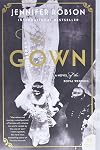
The Gown is set in post-World War II London where Ann Hughes and Miriam Dassin meet in the embroidery workroom of Norman Hartnell's famed fashion house. Ann is an English girl who began at Hartnell as an apprentice and risen through the ranks. Miriam has come from France, having survived the Holocaust, now seeking to put her prodigious embroidery skills to work. Though the hardship and scarcity of the war linger, the excitement of Princess Elizabeth's upcoming wedding finally gives the show more British people cause for celebration, and the gown will be made at Hartnell.
The historical tale was so rich, it hardly needed a modern day perspective of Ann's granddaughter unearthing her grandmother's long kept secrets, but the modern perspective didn't take away either. I loved this tale of friendship, its capturing of England's hesitant first steps away from the war, the setting of the fashion house, and the excitement of the wedding. The Gown is a beautifully told story of two friends and England's reawakening after the ravages of World War II. show less
The historical tale was so rich, it hardly needed a modern day perspective of Ann's granddaughter unearthing her grandmother's long kept secrets, but the modern perspective didn't take away either. I loved this tale of friendship, its capturing of England's hesitant first steps away from the war, the setting of the fashion house, and the excitement of the wedding. The Gown is a beautifully told story of two friends and England's reawakening after the ravages of World War II. show less
In 1947 London, Ann works as an embroiderer for Norman Hartnell, a major dressmaker whose clientele includes the Royal family. Miriam is newly arrived in England for a fresh start after the horrors she faced during the war and her inability to return to normal life in France. Meanwhile, in 2016 Toronto, Heather is reeling from the loss of her beloved grandmother and trying to figure out why her grandmother left her a box with beautiful embroidery samples within.
I received an ARC of this book show more at a library conference in early 2019 and finally got around to reading it over two years later (to be fair, it technically wasn't an ARC at the time I received it as the book was out at that point). It's a really lovely tale with three fascinating women as the protagonists. Each chapter is written in alternating points of view and the plots beautifully intertwine, with both the 1947 and 2016 timelines revealing details that reflect back and forth. The descriptions of embroidery work are beautiful, and while Queen Elizabeth's wedding dress is a major feature that ties the three women together, readers who aren't fans of the royal family are likely to find just as much to enjoy. A solid choice for book clubs, I really enjoyed my time with this historical fiction novel. show less
I received an ARC of this book show more at a library conference in early 2019 and finally got around to reading it over two years later (to be fair, it technically wasn't an ARC at the time I received it as the book was out at that point). It's a really lovely tale with three fascinating women as the protagonists. Each chapter is written in alternating points of view and the plots beautifully intertwine, with both the 1947 and 2016 timelines revealing details that reflect back and forth. The descriptions of embroidery work are beautiful, and while Queen Elizabeth's wedding dress is a major feature that ties the three women together, readers who aren't fans of the royal family are likely to find just as much to enjoy. A solid choice for book clubs, I really enjoyed my time with this historical fiction novel. show less
The author, who holds a doctorate in British economic and social history explains that she, her editor, and her agent were tossing around ideas for a novel that would be set soon after WWII. After several lackluster topics were discussed she started thinking about what was important to people of the time. That's when the possibility of writing about the wedding of Princess Elizabeth late in 1947 surfaced. Robson had no interest in writing about the wedding from the future Queen's viewpoint show more because she doesn't think it's possible to really know the Queen. Once she thought of the extraordinary wedding dress the Princess wore, she knew it could be a topic that a novel about the average woman's social and economic status could be woven around.
Two women are the primary focus of the story, both embroiderers of the beautiful gown. Ann is English and lives with her sister-in-law, her brother having been killed in the Blitz. Miriam's story unfolds slowly. She has arrived from France where she had worked for a couturier and is hired by the designer Hartnell where Ann has been employed 11 years. They become friends and when Minnie, Ann's sister-in-law immigrates to Canada, Miriam comes to live with Ann.
What makes the book more than a book about a dress is that Robson focuses the story on the daily life of Ann and Miriam. The hardships women faced rebuilding lives and the struggle to overcome the past are central to the plot. We eventually learn that Miriam is Jewish and had been imprisoned at Ravensbruck.
Although a novel, The Gown]is very believable and although I'm growing weary of books set in the WWII time frame, I thoroughly enjoyed it. There is a third person, Ann's granddaughter, that doesn't know her grandmother was even employed by a couturier, much less that she was involved with the wedding of the century. Chapters rotate between Ann, Miriam and Heather who isn't involved until 2016. My preference would be a more straightforward approach without the granddaughter's character.
Robson actually located and was able to interview a woman who had worked on the beautiful dress and questions and answers from the interview are included. Norman Hartnell, who also designed the Queen's coronation dress, comes across as a very kind man and an accomplished artist. I'm rather intrigued by him and would like to read his autobiography, which undoubtedly due to the success of this book, is being rereleased later this month. I should also note that Miriam, was Miriam Dassin, and later became a well known artist. show less
Two women are the primary focus of the story, both embroiderers of the beautiful gown. Ann is English and lives with her sister-in-law, her brother having been killed in the Blitz. Miriam's story unfolds slowly. She has arrived from France where she had worked for a couturier and is hired by the designer Hartnell where Ann has been employed 11 years. They become friends and when Minnie, Ann's sister-in-law immigrates to Canada, Miriam comes to live with Ann.
What makes the book more than a book about a dress is that Robson focuses the story on the daily life of Ann and Miriam. The hardships women faced rebuilding lives and the struggle to overcome the past are central to the plot. We eventually learn that Miriam is Jewish and had been imprisoned at Ravensbruck.
Although a novel, The Gown]is very believable and although I'm growing weary of books set in the WWII time frame, I thoroughly enjoyed it. There is a third person, Ann's granddaughter, that doesn't know her grandmother was even employed by a couturier, much less that she was involved with the wedding of the century. Chapters rotate between Ann, Miriam and Heather who isn't involved until 2016. My preference would be a more straightforward approach without the granddaughter's character.
Robson actually located and was able to interview a woman who had worked on the beautiful dress and questions and answers from the interview are included. Norman Hartnell, who also designed the Queen's coronation dress, comes across as a very kind man and an accomplished artist. I'm rather intrigued by him and would like to read his autobiography, which undoubtedly due to the success of this book, is being rereleased later this month. I should also note that Miriam, was Miriam Dassin, and later became a well known artist. show less
Lists
Awards


You May Also Like


Associated Authors
Statistics
- Works
- 10
- Also by
- 1
- Members
- 3,339
- Popularity
- #7,650
- Rating
- 3.8
- Reviews
- 192
- ISBNs
- 99
- Languages
- 5
- Favorited
- 2
