
Natasha Lester
Author of The Paris Seamstress
About the Author
Image credit: Stef King Photography
Works by Natasha Lester
Tagged
Common Knowledge
Members
Reviews

Thanks to Forever (Grand Central Publishing) & NetGalley for a digital advance reader copy. All comments and opinions are my own.
I have now read four of Nastasha Lester’s novels. Any book she writes is one I want to read - they are that good. Combining real people and events with her imagined characters brings history to life and makes me feel as if I’m right there in the thick of the action.
This novel is about Alix St. Pierre, an exceptional young woman – orphaned at 13 – who, after show more graduating from college, is recruited by the US as a spy at the beginning of WWII. Told in three timelines: before, during and after WWII, this page-turning story “takes readers from the dangerous, intrigue-filled rooms in Switzerland where the elite of both sides mingled and schemed during the war, to the glamorous halls of the House of Dior in the golden age of French fashion and journalism.”
Going back and forth in time, the novel is suffused with the wartime atmosphere of threat and menace. When the war is over, Alix returns to Paris determined to right the wrongs of the past - a past that holds tremendous personal grief and guilt.
I love how Lester often includes fashion in her novels – this time incorporating the launch of the House of Dior. In well-researched detail, she provides vivid descriptions of dresses, fabric, models, and Christian Dior himself – with the less familiar perspectives of fashion publicity and journalism. Lester authentically describes the House of Dior in its early days and combines it with the backstory of Alix’s role in the secret intelligence organization during the war.
Another theme woven throughout the novel is the feminist viewpoint – women’s determination for independence and equality – especially to be respected in the workplace, marriage, and fashion (pants as an acceptable everyday clothing option for women didn’t truly catch on until the mid-20th century). It is shocking to realize that “as late as the 1950s, even later, American women seeking to work for fulfillment, rather than out of necessity, often had to ask their husbands’ permission to do so. And many men refused it.” (From the author’s notes).
If you’re looking for a well-researched and engrossing World War II novel with vivid characters and a memorable story, you’ll want to read The Three Lives of Alix St. Pierre. show less
I have now read four of Nastasha Lester’s novels. Any book she writes is one I want to read - they are that good. Combining real people and events with her imagined characters brings history to life and makes me feel as if I’m right there in the thick of the action.
This novel is about Alix St. Pierre, an exceptional young woman – orphaned at 13 – who, after show more graduating from college, is recruited by the US as a spy at the beginning of WWII. Told in three timelines: before, during and after WWII, this page-turning story “takes readers from the dangerous, intrigue-filled rooms in Switzerland where the elite of both sides mingled and schemed during the war, to the glamorous halls of the House of Dior in the golden age of French fashion and journalism.”
Going back and forth in time, the novel is suffused with the wartime atmosphere of threat and menace. When the war is over, Alix returns to Paris determined to right the wrongs of the past - a past that holds tremendous personal grief and guilt.
I love how Lester often includes fashion in her novels – this time incorporating the launch of the House of Dior. In well-researched detail, she provides vivid descriptions of dresses, fabric, models, and Christian Dior himself – with the less familiar perspectives of fashion publicity and journalism. Lester authentically describes the House of Dior in its early days and combines it with the backstory of Alix’s role in the secret intelligence organization during the war.
Another theme woven throughout the novel is the feminist viewpoint – women’s determination for independence and equality – especially to be respected in the workplace, marriage, and fashion (pants as an acceptable everyday clothing option for women didn’t truly catch on until the mid-20th century). It is shocking to realize that “as late as the 1950s, even later, American women seeking to work for fulfillment, rather than out of necessity, often had to ask their husbands’ permission to do so. And many men refused it.” (From the author’s notes).
If you’re looking for a well-researched and engrossing World War II novel with vivid characters and a memorable story, you’ll want to read The Three Lives of Alix St. Pierre. show less
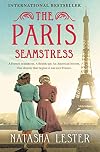
Estella Bissette and her mother take turns at night handing out soup at the train station to weary refugees arriving in Paris, fleeing the Germans. By day, the mother and daughter work for Monsieur Aumont in the atelier, creating flowers from fabric. Estella also moonlighted by selling sketches of haute couture dresses that the copy house or department store buyers from America highly desired. That was life for Estella and her mother in 1940 until a walk through the park on her way home from show more a jazz club changed everything.
In 2015, the annual gala at the Met features an exhibition, "The Seamstress of Paris," and granddaughter Fabienne Bissette is thrilled to attend wearing a gown by Stella Designs. However, there is much that Fabienne does not know about her grandmother's life before she came to New York. It is a life story filled with tragedy, heartache, and secrets opposite the beauty of the creations for which the grandmother is best known.
I love novels written in dual timelines, but especially in historical fiction. This well-written novel captured my appreciation not only for the characters but also for the thoughtful, descriptive writing on courage, love, living life, and the prospect of death—a story of friendship, love, sacrifice, grit, resilience, and second chances.
The Author's Note shares insights into reality vs. creativity and reflections on a question that remains a haunting inquiry that has changed the lives of too many women throughout history and continues, as is evident in current headlines and news articles. show less
In 2015, the annual gala at the Met features an exhibition, "The Seamstress of Paris," and granddaughter Fabienne Bissette is thrilled to attend wearing a gown by Stella Designs. However, there is much that Fabienne does not know about her grandmother's life before she came to New York. It is a life story filled with tragedy, heartache, and secrets opposite the beauty of the creations for which the grandmother is best known.
I love novels written in dual timelines, but especially in historical fiction. This well-written novel captured my appreciation not only for the characters but also for the thoughtful, descriptive writing on courage, love, living life, and the prospect of death—a story of friendship, love, sacrifice, grit, resilience, and second chances.
The Author's Note shares insights into reality vs. creativity and reflections on a question that remains a haunting inquiry that has changed the lives of too many women throughout history and continues, as is evident in current headlines and news articles. show less

Finally, a very courageous woman gets the recognition she deserves with this remarkable story.
Marie-Madeleine Méric was the leader of a 3,000 agent Resistance network in France during WWII. With intense research, Natasha Lester revealed how she ended up with this role during a time when most women were housewives taking care of their children. Not Madame Méric.
She was participating in car rallies with her husband’s disapproval. She wanted to be free and rather than stay with him in show more Morocco, she left with her two children and went to Paris. In 1940, at 30 years old, she had to do something about the Nazis taking control. She ended up stepping into the greatest journey of her life.
I almost didn’t get past the first page when it mentioned what would happen if she was arrested by the Nazis. It hit me hard thinking about the world news of today with fear spreading rapidly. This book had a progressive timeline of changes in Paris from 1940 to 1945.
Certainly, there was a lot going on and it had to be a difficult task to decide what to include in this story. It started strong yet, in the middle, there was a lot of detail and number of agents that made it move at a slower pace.
The best part was at the end when I wanted to reach out and hug this woman who was so brave. The Author Notes were full of warmth and wisdom like experiencing a wonderful dessert after a good meal.
My thanks to Ballantine Books and NetGalley for allowing me to read an advanced copy of this book with an expected release date of April 8, 2025. show less
Marie-Madeleine Méric was the leader of a 3,000 agent Resistance network in France during WWII. With intense research, Natasha Lester revealed how she ended up with this role during a time when most women were housewives taking care of their children. Not Madame Méric.
She was participating in car rallies with her husband’s disapproval. She wanted to be free and rather than stay with him in show more Morocco, she left with her two children and went to Paris. In 1940, at 30 years old, she had to do something about the Nazis taking control. She ended up stepping into the greatest journey of her life.
I almost didn’t get past the first page when it mentioned what would happen if she was arrested by the Nazis. It hit me hard thinking about the world news of today with fear spreading rapidly. This book had a progressive timeline of changes in Paris from 1940 to 1945.
Certainly, there was a lot going on and it had to be a difficult task to decide what to include in this story. It started strong yet, in the middle, there was a lot of detail and number of agents that made it move at a slower pace.
The best part was at the end when I wanted to reach out and hug this woman who was so brave. The Author Notes were full of warmth and wisdom like experiencing a wonderful dessert after a good meal.
My thanks to Ballantine Books and NetGalley for allowing me to read an advanced copy of this book with an expected release date of April 8, 2025. show less

Natasha Lester writes very detailed and well researched historical fiction, often combining topics of interest like fashion and cosmetics. The Disappearance of Astrid Bricard combines fashion across eras and decades with three generations of women involved in the industry in different ways. But all have something in common – they are overlooked by history for their work but renowned for their shortcomings.
Mizza Bricard was famously known as Dior’s muse but she was also a designer in her show more own right, as well as a Resistance fighter in World War II. She pretty much had to bring herself up and was determined to try to have power without it being bestowed by a man. (Note – Mizza is a true historical figure but the majority of the story is fictionalised). Her daughter, Astrid was brought up by conservative parents on Long Island but has always wanted to be a designer herself. She falls in love with fellow designer Hawk Jones, but her talent is overlooked by the media who prefer to label her as Hawk’s muse given her mother’s status. Astrid is a strong designer but she is cut down by the media repeatedly and relentlessly. Her daughter Blythe has always been in the spotlight after Astrid disappeared in France when she was a baby. Blythe has her own problems – she’s newly divorced and struggling to make ends meet with her business of repurposing vintage fashion. But going to Paris to spend time with her ex-mother-in-law has a number of opportunities open up for her, such as reviving Astrid’s clothing brand and seeing her ex. Will Blythe be the one to demonstrate the strength of the Bricard women?
This story has just the right amount of page time spent with each Bricard woman. I was particularly fascinated by Astrid’s life in New York in the 1970s as Lester captured so well the changing of how people saw women, war and love. The energy was palpable across the page, first with excitement and then pain was Astrid was hounded by the press incessantly. Mizza’s story is relatively sparse early on in the book, but fleshes out well as it gets into the war years and detailed why she gave up her own child. Blythe was perhaps the trickiest character to get to know (carrying the generations of hurt) but her story became a detailed exploration of family and abandonment issues, as well as a romance. As the novel goes on, the gender bias in fashion becomes apparent – women are the muses, but men design their clothes and control the business. It’s evident as Blythe’s timeline (her ex-husband and rival are both successful fashion businessmen) but the ego of the male designer is rampant in Astrid’s timeline. This is depicted clearly in the Battle of Versailles – American versus French designers, which really happened. There are some laughable moments (Halston speaking of himself in the third person) but the audacity of the designers to try to outrank each other is stupendous. The resolution of the story was a little simple, but believable.
Overall, the story is well paced and expertly combines fact and fiction in an engrossing story with beautiful clothes, spectacular backdrops and strong commentary on the mislabelling of women in fashion. There are also some familiar characters from other Natasha Lester novels (Alix and Remy) to delight regular readers. It’s a great story, perfect for the holidays.
http://samstillreading.wordpress.com show less
Mizza Bricard was famously known as Dior’s muse but she was also a designer in her show more own right, as well as a Resistance fighter in World War II. She pretty much had to bring herself up and was determined to try to have power without it being bestowed by a man. (Note – Mizza is a true historical figure but the majority of the story is fictionalised). Her daughter, Astrid was brought up by conservative parents on Long Island but has always wanted to be a designer herself. She falls in love with fellow designer Hawk Jones, but her talent is overlooked by the media who prefer to label her as Hawk’s muse given her mother’s status. Astrid is a strong designer but she is cut down by the media repeatedly and relentlessly. Her daughter Blythe has always been in the spotlight after Astrid disappeared in France when she was a baby. Blythe has her own problems – she’s newly divorced and struggling to make ends meet with her business of repurposing vintage fashion. But going to Paris to spend time with her ex-mother-in-law has a number of opportunities open up for her, such as reviving Astrid’s clothing brand and seeing her ex. Will Blythe be the one to demonstrate the strength of the Bricard women?
This story has just the right amount of page time spent with each Bricard woman. I was particularly fascinated by Astrid’s life in New York in the 1970s as Lester captured so well the changing of how people saw women, war and love. The energy was palpable across the page, first with excitement and then pain was Astrid was hounded by the press incessantly. Mizza’s story is relatively sparse early on in the book, but fleshes out well as it gets into the war years and detailed why she gave up her own child. Blythe was perhaps the trickiest character to get to know (carrying the generations of hurt) but her story became a detailed exploration of family and abandonment issues, as well as a romance. As the novel goes on, the gender bias in fashion becomes apparent – women are the muses, but men design their clothes and control the business. It’s evident as Blythe’s timeline (her ex-husband and rival are both successful fashion businessmen) but the ego of the male designer is rampant in Astrid’s timeline. This is depicted clearly in the Battle of Versailles – American versus French designers, which really happened. There are some laughable moments (Halston speaking of himself in the third person) but the audacity of the designers to try to outrank each other is stupendous. The resolution of the story was a little simple, but believable.
Overall, the story is well paced and expertly combines fact and fiction in an engrossing story with beautiful clothes, spectacular backdrops and strong commentary on the mislabelling of women in fashion. There are also some familiar characters from other Natasha Lester novels (Alix and Remy) to delight regular readers. It’s a great story, perfect for the holidays.
http://samstillreading.wordpress.com show less
Lists
Awards


You May Also Like


Associated Authors
Statistics
- Works
- 18
- Members
- 2,781
- Popularity
- #9,235
- Rating
- 4.1
- Reviews
- 126
- ISBNs
- 189
- Languages
- 9
- Favorited
- 5