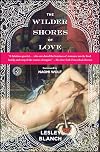
The Wilder Shores of Love
by Lesley Blanch
On This Page
Description
Originally published in 1954, "The Wilder Shores of Love "is the classic biography of four nineteenth-century European women who leave behind the industrialized west for Arabia in search of romance and fulfillment. Hailed by "The Daily Telegraph "as "enthralling to read," Lesley Blanch's first book tells the story of Isabel Burton, the wife and traveling companion of the explorer Richard Burton; Jane Digby, who exchanged European society for an adventure in loving; Aimee Dubucq de Rivery, a show more Frenchwoman captured by pirates who became a member of the Turkish sultan's harem; and Isabelle Eberhardt, a Swiss woman who dressed as a man and lived among the Arabs of Algeria. show lessTags
Recommendations

























Member Reviews
I found this book on the bookshelf when I was vacationing with my family in the South of France. (Wow, that is possibly one of the most pretentious sentences I've every written. But that's I was.) It's beautifully evocative, instantly transported you back through time, into the lives of these fascinating women. My only caveat is that it comes from that period of oriental exoticism which means it has some problematic racial issues for the modern reader
"Life's poetry never sank to prose", 1 February 2016
This review is from: On the Wilder Shores of Love: A Bohemian Life (Kindle Edition)
Couldnt put this down - biographies of four women who 'belonged to the West but dared to turn to the East for adventure and love.'
Thus such famous travellers as the more academic Lady Hester Stanhope are excluded, as the author focusses on more romantic tales.
Isabelle Burton's fevered love and devotion to her explorer husband.....Isabelle Eberhardt, child of a dysfunctional Russian emigre family, and her short and weird, hashish-fueled life in the Algerian desert.....and English aristocrat Lady Ellenborough, who worked her way East through a series of lovers and husbands to find true romance with her show more Sheihh.
Perhaps the fourth subject can hardly be said to have 'turned to the East', as she was forcibly abducted by Corsairs as she sailed home from her French convent school. Aimee Dubucq de Rivery ended up wife of the Sultan, but her westernizing influence on her son, the future Mahmoud II, was - the author contends - behind the stance Turkey adopted in numerous political events of the day.
The strict biographer might baulk at the author's use of imagination where she lacks documentary proof - "it is probable that Aimee... sometimes accompanied her son" etc. but I found this an unputdownable read. show less
This review is from: On the Wilder Shores of Love: A Bohemian Life (Kindle Edition)
Couldnt put this down - biographies of four women who 'belonged to the West but dared to turn to the East for adventure and love.'
Thus such famous travellers as the more academic Lady Hester Stanhope are excluded, as the author focusses on more romantic tales.
Isabelle Burton's fevered love and devotion to her explorer husband.....Isabelle Eberhardt, child of a dysfunctional Russian emigre family, and her short and weird, hashish-fueled life in the Algerian desert.....and English aristocrat Lady Ellenborough, who worked her way East through a series of lovers and husbands to find true romance with her show more Sheihh.
Perhaps the fourth subject can hardly be said to have 'turned to the East', as she was forcibly abducted by Corsairs as she sailed home from her French convent school. Aimee Dubucq de Rivery ended up wife of the Sultan, but her westernizing influence on her son, the future Mahmoud II, was - the author contends - behind the stance Turkey adopted in numerous political events of the day.
The strict biographer might baulk at the author's use of imagination where she lacks documentary proof - "it is probable that Aimee... sometimes accompanied her son" etc. but I found this an unputdownable read. show less
If I had to reduce my library to one shelf, this book would be on it. If all the other books were by and about men, Lesley Blanch's The Wilder Shores of Love, alone, would provide the gender balance. The suggestive title is misleading. This is not a romance novel, nor erotica. Think, instead, of Lytton Stachey's Lives of Eminent Victorians. This, also, is a quartet of diverse biographies, similarly concerning lives in the 19th century, equally readable and entertaining, and, too, a whole greater than the sum of its parts. It's unfortunate the book came out in 1954, during the Eisenhower era, when women's roles were just beginning to expand beyond secretary, factory worker and homemaker. Then its potential audience was limited. Today, show more well - it should be required reading in high school.
The four women featured share a biographic theme. Each, ultimately, came to be fascinated by, and fated to live an important part of their lives, in the Near East. But that was about all they had in common. Isabella Burton, wife of the famed explorer, was a devoted spouse who lived for and through her husband's glory. Lady Jane Digby el Mezrab, who kept her famed beauty until old age, followed romance where ever it led, acquiring and discarding more husbands than Zsa Zsa Gabor, until she found true love in Syria. Aimee Dubucq de Rivery, cousin of Josephine Bonaparte, was captured by pirates and consigned to a Turkish harem, but prevailed, through court intrigue, to become the mother of an emperor. Isabelle Eberhardt, unprepossessing in appearance, was more at home in the desert than society, chose to cross dress - though she had a male lover, and escaped to a life in North Africa as a free lance journalist. Her admirers included, equally, both Muslims and French Legionnaires.
There is, too, a fifth woman in the book, who led a life every bit as full and adventurous as her subjects - the author, Lesley Blanch. A talented artist, and journalist, she married author and diplomat Romain Gary and traveled widely with him. She experienced Hollywood society in its golden era, wrote a dozen books, and lived to 103. Her scholarly and romantic spirit gives a unique and brilliant illumination to the four lives she examines, almost to the point where they beckon, across the hot sands, like fata morgana castles in the air. show less
The four women featured share a biographic theme. Each, ultimately, came to be fascinated by, and fated to live an important part of their lives, in the Near East. But that was about all they had in common. Isabella Burton, wife of the famed explorer, was a devoted spouse who lived for and through her husband's glory. Lady Jane Digby el Mezrab, who kept her famed beauty until old age, followed romance where ever it led, acquiring and discarding more husbands than Zsa Zsa Gabor, until she found true love in Syria. Aimee Dubucq de Rivery, cousin of Josephine Bonaparte, was captured by pirates and consigned to a Turkish harem, but prevailed, through court intrigue, to become the mother of an emperor. Isabelle Eberhardt, unprepossessing in appearance, was more at home in the desert than society, chose to cross dress - though she had a male lover, and escaped to a life in North Africa as a free lance journalist. Her admirers included, equally, both Muslims and French Legionnaires.
There is, too, a fifth woman in the book, who led a life every bit as full and adventurous as her subjects - the author, Lesley Blanch. A talented artist, and journalist, she married author and diplomat Romain Gary and traveled widely with him. She experienced Hollywood society in its golden era, wrote a dozen books, and lived to 103. Her scholarly and romantic spirit gives a unique and brilliant illumination to the four lives she examines, almost to the point where they beckon, across the hot sands, like fata morgana castles in the air. show less
I found this book on the bookshelf when I was vacationing with my family in the South of France. (Wow, that is possibly one of the most pretentious sentences I've every written. But that's I was.) It's beautifully evocative, instantly transported you back through time, into the lives of these fascinating women. My only caveat is that it comes from that period of oriental exoticism which means it has some problematic racial issues for the modern reader
This book is a compilation of four mini-bios of women who lived from the 18th Century to the very early 20th Century. The thread that weaves these women's stories together is that their hearts and lives were inexorably bound to the Near East, and all bucked convention in one way or another.
As a biography, it was written far too subjectively to be very good. The author made too many conjectures about her subjects' motives and about the states of their minds without very strong supporting evidence.
On the other hand, I loved this book, which read more like historical fiction, to me. I must admit, here, to a guilty-pleasure weakness for romantic exoticism, and this was thoroughly satisfying on that level. It's also always satisfying to show more read about and root for women who were strong enough to live lives outside the narrow confines of the role of women from earlier eras. show less
As a biography, it was written far too subjectively to be very good. The author made too many conjectures about her subjects' motives and about the states of their minds without very strong supporting evidence.
On the other hand, I loved this book, which read more like historical fiction, to me. I must admit, here, to a guilty-pleasure weakness for romantic exoticism, and this was thoroughly satisfying on that level. It's also always satisfying to show more read about and root for women who were strong enough to live lives outside the narrow confines of the role of women from earlier eras. show less
Found it heavy going in terms of prose, which seemed a little archaic or awkwardly written. The characters were interesting but I couldn't make myself do more thean skim parts of it.
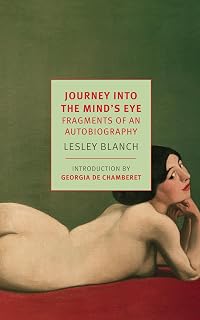
After reading her wonderful Journey Into the Mind's Eye, I was disappointed with this. The four women seemed like cardboard figures, Aimee Dubucq de Ribery seemed like Blanch's concoction since she had no material from that time to go by, except the documented life and accomplishments of her son and that court, and the writing was poor, and it was often confusing.
Members
- Recently Added By
Lists

Women in Islam
120 works; 8 members

Mustich's 1000 Books to Read Before You Die: A Life Changing List
1,001 works; 19 members
Author Information

17+ Works 916 Members
Awards and Honors
Distinctions
Notable Lists
Common Knowledge
- Canonical title
- The Wilder Shores of Love
- Original publication date
- 1954
- People/Characters
- Isabel Burton; Aimee Dubucq de Rivery; Jane Digby; Isabelle Eberhardt; Sir Richard Francis Burton; Elizabeth Craven
- Important places
- Middle East; North Africa
- Epigraph
- Love and Love always read from the same book, but not always from the same page -- Richard Garnett, de Flagello Myreteo
- Dedication
- To my husband
Romain Gary
For my husband Romain Gray. His actual name was Romain Gary. He was a French diplomat-writer, adventurer. A pen name was Emile Ajar. Was this a typo? - First words
- From the start she had known what she wanted, and proceeded single-minded, with the force of a steam-engine, towards her goal.
- Last words
- (Click to show. Warning: May contain spoilers.)Slimene leaving her to perish in the flood?
Classifications
- Genres
- Biography & Memoir, Nonfiction, Travel, General Nonfiction
- DDC/MDS
- 920.72 — History & geography Biographies, Genealogy, Healdry Biographies Famous People of Native Nations Women
- LCC
- CT3203 .B55 — Auxiliary Sciences of History Biography Biography Biography. By subject Biography of women (Collective)
- BISAC
Statistics
- Members
- 365
- Popularity
- 86,337
- Reviews
- 10
- Rating
- (3.64)
- Languages
- English, French, Italian, Swedish
- Media
- Paper, Ebook
- ISBNs
- 18
- ASINs
- 12