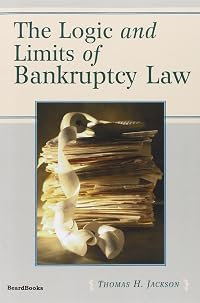
The Logic and Limits of Bankruptcy Law
by Thomas H. Jackson
On This Page
Description
As headlines about cash-rich corporations filing for Chapter 11 are appearing more and more frequently, bankruptcy law has come under sharp public scrutiny. Critics feel that irresponsible corporations and individuals may be using the law unfairly. In this clearly written book, legal scholar Thomas H. Jackson identifies the underlying principles of bankruptcy law and develops an economic/psychological analysis of its main problems-a framework that permits him to view the field as a whole show more rather than as a collection of disparate policies and historical artifacts. Dealing first with the use of bankruptcy to adjust creditors' relations among themselves, Jackson shows that individual creditors will attempt to recover as much of the bankrupt firm's assets as they can. But to maximize the value of the assets, the creditors must act collectively to apportion them according to the priority of entitlements that existed before the bankruptcy. This is a claim with sweeping implications, and Jackson not only supports it convincingly but examines in some detail the various consequences of adopting it. He takes up several of the most controversial issues in bankruptcy policy today, including the treatment in bankruptcy of collective labor agreements and the recognition of unmatured tort claims of the kind involved in the Manville bankruptcy. His thoughtful analysis arrives at results that are consistent with his economic framework but that espouse no single political ideology. Turning then to the right of a financial fresh start for debtors who are not firms but human beings, Jackson thaws on recent ideas in psychology to explain why the right exists and why it cannot be waived. He thus provides a comprehensive scheme for evaluating the principal features of the existing bankruptcy system and for comparing them with past and future alternatives. The book will be of keen interest not only to the specialist but also to those who want to know more about the institution of bankruptcy and its place in our legal system. show lessTags
Members
- Recently Added By
Author Information
2 Works 50 Members
Thomas H. Jackson was born in 1950. He graduated from Williams College in 1972, and earned his law degree from Yale Law School in 1975. He clerked for U.S. District Court Judge Marvin E. Frankel from 1975 to 1976, and for Supreme Court Justice William H. Rehnquist from 1976 to 1977. He was on the Stanford University faculty from 1977 to 1986, and show more professor of law at Harvard Law School from 1986 to 1988. In 1988 he became the Arnold H. Leon Professor of Law and Dean of Virginia's School of Law, and then became Vice President and Provost of the University of Virginia. Since July 1994 he has been President of the University of Rochester and also holds faculty positions in the University's Department of Political Science and in the Graduate School of Business Administration show less
Classifications
Statistics
- Members
- 11
- Popularity
- 1,995,076
- Languages
- English
- Media
- Paper
- ISBNs
- 2