On This Page
Description
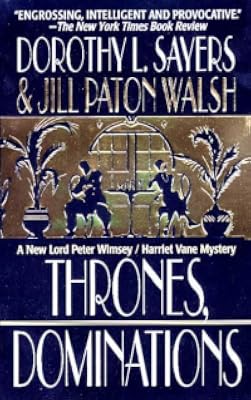
Lord Peter Wimsey and his wife Harriet Vane are settling into their new life together in 1930s London. But when murder strikes in their own social circle, Harriet becomes drawn into a very unexpected case...Lord Peter Wimsey and his wife Harriet Vane are settling into their new life together in 1930s London. But when murder strikes in their own social circle, Harriet becomes drawn into a very unexpected case...Dorothy L. Sayers began writing Thrones, Dominations in 1936...Tags
Recommendations














Member Reviews
I suppose it's a bit heretical to like the continuation of the Wimsey/Vane mysteries even better than the originals, but there it is. I love not having to look out for the blatantly racist language that peppers the books from another time, and I love Peter and Harriet together. Gaudy Night and Busman's Honeymoon were always my favorite books of the originals, and it's a tribute to Jill Paton Walsh that her work can flow so seamlessly into Sayers' drafts and plans. So grateful to have these latter day stories, and that are so faithful to the witty wordplay and characters of the earlier books. This audio book version was even read by the same actor as the others, and I am so happy to listen to that reader.
Seamless Reboot of Lord Peter Wimsey & Harriet Vane
Review of the Hodder & Stoughton paperback edition (2014) of the original Hodder & Stoughton hardcover (1936/1998).
Dorothy L. Sayers (1893-1957) is still listed as the primary author here, although her only contribution according to the publisher's synopsis was a forgotten "fragment" from 1936 that was found in her agent's safe which was provided to Jill Paton Walsh for completion and for the start of a continuation series.
Sayers had mostly publicly abandoned her aristocrat detective Lord Peter Wimsey and crime-fiction writer wife & detection partner Harriet Vane after Busman's Honeymoon (1937). The rest of her writing life was devoted to scholarly efforts such as a translation of show more Dante's Divine Comedy.
Jill Paton Walsh carries on completely seamlessly from Sayers here and it is impossible to tell where the source fragment might be. The main pleasure is the warm banter between Harriet and Peter throughout as here they are settling into domestic life after their wedding and honeymoon. Perhaps the only telling difference is that Sayers' later books became very elaborate and often overly complex with OCD details about such things as train-spotting in Have His Carcase (1932) and bell-ringing in The Nine Tailors (1934). Thrones, Dominations is a much more conventional crime mystery and was a delight to read. show less
Review of the Hodder & Stoughton paperback edition (2014) of the original Hodder & Stoughton hardcover (1936/1998).
Dorothy L. Sayers (1893-1957) is still listed as the primary author here, although her only contribution according to the publisher's synopsis was a forgotten "fragment" from 1936 that was found in her agent's safe which was provided to Jill Paton Walsh for completion and for the start of a continuation series.
Sayers had mostly publicly abandoned her aristocrat detective Lord Peter Wimsey and crime-fiction writer wife & detection partner Harriet Vane after Busman's Honeymoon (1937). The rest of her writing life was devoted to scholarly efforts such as a translation of show more Dante's Divine Comedy.
Jill Paton Walsh carries on completely seamlessly from Sayers here and it is impossible to tell where the source fragment might be. The main pleasure is the warm banter between Harriet and Peter throughout as here they are settling into domestic life after their wedding and honeymoon. Perhaps the only telling difference is that Sayers' later books became very elaborate and often overly complex with OCD details about such things as train-spotting in Have His Carcase (1932) and bell-ringing in The Nine Tailors (1934). Thrones, Dominations is a much more conventional crime mystery and was a delight to read. show less
Dorothy L. Sayers abandoned her Lord Peter Wimsey novels, for the most part, some 20 years before she died, but she left a half-completed Lord Peter Wimsey novel. Jill Paton Walsh, hired to finish the novel, captures Sayers’ voice so admirably in Thrones, Dominations that the reader can’t tell where Sayers ends or Walsh begins — no greater praise!
In this novel, set in 1936 with Edward VIII stumbling onto the throne, Lord Peter Wimsey and Harriet Vane return to London following the tumultuous honeymoon detailed in Busman’s Honeymoon (1937). Walsh mingles references to the anxiety provoked by the upcoming war and a feckless new king with a neat mystery and a commentary on the changed nature of marriage in the 20th century — just show more the sort of philosophically tinged narrative one would expect from Sayers.
As to the mystery, extremely beautiful but silly Rosamund Harwell has been rescued by the wealthy Laurence Harwell from her life as a mannequin in a dress shop. The Harwells coo and bill like love birds even after two years of marriage, making them the talk of London. When Rosamund goes off to Rose Cottage in Hampton for a respite, she turns up dead, smothered to death. Lord Peter’s brother-in-law, Detective Inspector Charles Parker, calls him in to assist in the investigation, and Lord Peter immediately begins to point out some odd aspects to the case.
While I thoroughly loved the cleverly plotted mystery itself, what truly delighted me was the exploration of Harriet Vane’s life as a new bride. Like modern women since, she struggles to juggle the demands of home, family, and her work as a novelist (much like Sayers herself?). I also loved the scenes featuring the snobbish, overbearing Helen, Duchess of Denver, wife of Lord Peter’s dim-witted elder brother, as she tries to steer her sister-in-law out of her career — a working wife being anathema in the aristocracy— into a life of parties with only the right people, bullying servants, paying visits to other wives, and producing children — in other words, the life expected of the decorative wife of a member of the peerage. The inevitable clash proved delicious beyond words! Helen has never approved of Harriet and her scandalous past, and I look forward to see how the relations between these two strong-willed women will play out in future books.
Thrones, Dominations gives readers hope of many more years of Lord Peter and Harriet Vane. I’ve already bought The Attenbury Emeralds and the newest, The Late Scholar, but I don’t have the immediate sequel, A Presumption of Death — yet! Now to find the time to read all these…. show less
In this novel, set in 1936 with Edward VIII stumbling onto the throne, Lord Peter Wimsey and Harriet Vane return to London following the tumultuous honeymoon detailed in Busman’s Honeymoon (1937). Walsh mingles references to the anxiety provoked by the upcoming war and a feckless new king with a neat mystery and a commentary on the changed nature of marriage in the 20th century — just show more the sort of philosophically tinged narrative one would expect from Sayers.
As to the mystery, extremely beautiful but silly Rosamund Harwell has been rescued by the wealthy Laurence Harwell from her life as a mannequin in a dress shop. The Harwells coo and bill like love birds even after two years of marriage, making them the talk of London. When Rosamund goes off to Rose Cottage in Hampton for a respite, she turns up dead, smothered to death. Lord Peter’s brother-in-law, Detective Inspector Charles Parker, calls him in to assist in the investigation, and Lord Peter immediately begins to point out some odd aspects to the case.
While I thoroughly loved the cleverly plotted mystery itself, what truly delighted me was the exploration of Harriet Vane’s life as a new bride. Like modern women since, she struggles to juggle the demands of home, family, and her work as a novelist (much like Sayers herself?). I also loved the scenes featuring the snobbish, overbearing Helen, Duchess of Denver, wife of Lord Peter’s dim-witted elder brother, as she tries to steer her sister-in-law out of her career — a working wife being anathema in the aristocracy— into a life of parties with only the right people, bullying servants, paying visits to other wives, and producing children — in other words, the life expected of the decorative wife of a member of the peerage. The inevitable clash proved delicious beyond words! Helen has never approved of Harriet and her scandalous past, and I look forward to see how the relations between these two strong-willed women will play out in future books.
Thrones, Dominations gives readers hope of many more years of Lord Peter and Harriet Vane. I’ve already bought The Attenbury Emeralds and the newest, The Late Scholar, but I don’t have the immediate sequel, A Presumption of Death — yet! Now to find the time to read all these…. show less
This book is toxic fluff, but it continues the trend really begun in Gaudy Night in many ways.
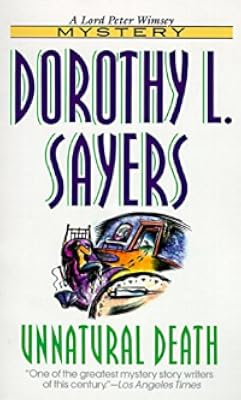
For example, the third-person narrative focuses on Harriet's internal musings and ignores Peter's. Sayers' early books seldom gave the reader access to Wimsey's thoughts, but when they did they did so with good effect. Some scenes, like Wimsey's discovery of the body in Unnatural Death, are quite gripping. However, in Gaudy Night we are exposed to Harriet's thoughts over and over, and they are tiresome. Thrones, Dominations is less excusable because it is not a contemporary novel where the author is, earnestly if clumsily, trying to explore The Role of Women. Instead, it is a pastiche in a non-contemporary setting, seemingly almost entirely show more about the the sexual behavior appropriate to well-dressed and affluent English people of leisure in the era in which it is set. This is not a gripping topic and the various literary allusions which are meant to make it more interesting or perhaps tolerable fail utterly.
It manages to retain its misogyny by suggesting that when a husband strangles his wife no one could blame him if they were known to have "that kind of relationship". Is that really what everybody still believes or is that what everybody is supposed to have believed then?
There is a brief excursion into the London sewers, which might have been interesting. It really leads to nothing and the adventurous part is perfunctory. It should have been left out or improved.
It was not edited so carefully before publication. In one scene "Wimsey and Charles" walk into some room. The last name of one followed by the first name of the other jarred on my ear. Many other phrases seem to fall awkwardly.
The, novelistically authentic details of life at that time, which are what make Gaudy Night bearable, are missing from this novel. The author seems to be substituting for these details significant historical events, but these obtrude on the action of the novel rather than enhancing its interest. Wimsey's occasional emergency employment by the foreign office is downright ridiculous. Again, this was handled better in Gaudy Night where he did not interact with people whose names are still remembered today but with his equivalents in other governments.
There is much talk by the characters in the novel about whether or not the newly married couple will have children. If two people are constantly having sex without engaging in any form of contraception then pregnancy is a likely result. And if they're actually considering whether or not they should have children then they should either lay off the sex or adapt it so that it is unlikely to result in conception. It makes all the talk seem like a bizarre and weaselly and probably RC argument about nothing at all.
The solution to the "mystery" was telegraphed without any subtlety. show less
For example, the third-person narrative focuses on Harriet's internal musings and ignores Peter's. Sayers' early books seldom gave the reader access to Wimsey's thoughts, but when they did they did so with good effect. Some scenes, like Wimsey's discovery of the body in Unnatural Death, are quite gripping. However, in Gaudy Night we are exposed to Harriet's thoughts over and over, and they are tiresome. Thrones, Dominations is less excusable because it is not a contemporary novel where the author is, earnestly if clumsily, trying to explore The Role of Women. Instead, it is a pastiche in a non-contemporary setting, seemingly almost entirely show more about the the sexual behavior appropriate to well-dressed and affluent English people of leisure in the era in which it is set. This is not a gripping topic and the various literary allusions which are meant to make it more interesting or perhaps tolerable fail utterly.
It manages to retain its misogyny by suggesting that when a husband strangles his wife no one could blame him if they were known to have "that kind of relationship". Is that really what everybody still believes or is that what everybody is supposed to have believed then?
There is a brief excursion into the London sewers, which might have been interesting. It really leads to nothing and the adventurous part is perfunctory. It should have been left out or improved.
It was not edited so carefully before publication. In one scene "Wimsey and Charles" walk into some room. The last name of one followed by the first name of the other jarred on my ear. Many other phrases seem to fall awkwardly.
The, novelistically authentic details of life at that time, which are what make Gaudy Night bearable, are missing from this novel. The author seems to be substituting for these details significant historical events, but these obtrude on the action of the novel rather than enhancing its interest. Wimsey's occasional emergency employment by the foreign office is downright ridiculous. Again, this was handled better in Gaudy Night where he did not interact with people whose names are still remembered today but with his equivalents in other governments.
There is much talk by the characters in the novel about whether or not the newly married couple will have children. If two people are constantly having sex without engaging in any form of contraception then pregnancy is a likely result. And if they're actually considering whether or not they should have children then they should either lay off the sex or adapt it so that it is unlikely to result in conception. It makes all the talk seem like a bizarre and weaselly and probably RC argument about nothing at all.
The solution to the "mystery" was telegraphed without any subtlety. show less
Fan sequels or continuations have a reputation for being awful, but Walsh really did almost get it right in this book. To my (contemporary American) ear, she gets Sayers' voice spot on, and delivers just the right combination of fun character drama and tangled mystery.
There are a few self-indulgent moments that feel more like homages or metatextual commentary on the series, and every scene dealing with current events makes me wonder if Our Heroes would really have had the perfectly-correct-from-hindsight opinions that Walsh paints them with (not that I really see Peter and Harriet being pro-appeasement or anything - but Walsh is still very careful to let us know that they're not). And while I'm glad she solved the Problem Of Bunter show more without
killing the bromance, I can't decide if I'm satisfied with the way she managed it.
Finally, the mystery was simply a little bit weaker than Sayer's original efforts, no question. Mostly it was very compelling, but there were a couple moments at which the characters had to be stupider than the reader, and a whole lot of coincidence to make things work (like seven different people randomly wandering around the bungalow that night? Really?)
But I really enjoyed it, and there was lots of Peter and Harriet being adorable. What more do I really need? :) show less
There are a few self-indulgent moments that feel more like homages or metatextual commentary on the series, and every scene dealing with current events makes me wonder if Our Heroes would really have had the perfectly-correct-from-hindsight opinions that Walsh paints them with (not that I really see Peter and Harriet being pro-appeasement or anything - but Walsh is still very careful to let us know that they're not). And while I'm glad she solved the Problem Of Bunter show more without
killing the bromance, I can't decide if I'm satisfied with the way she managed it.
Finally, the mystery was simply a little bit weaker than Sayer's original efforts, no question. Mostly it was very compelling, but there were a couple moments at which the characters had to be stupider than the reader, and a whole lot of coincidence to make things work (like seven different people randomly wandering around the bungalow that night? Really?)
But I really enjoyed it, and there was lots of Peter and Harriet being adorable. What more do I really need? :) show less
Peter and Harriet are a bit unreadably smug at times. A cautionary tale of why you should never find out too much about the author. It makes me want to like Helen more than she deserves, just because everyone else doesn't.
Interestingly enough, many other reviewers on this site don't like the book because they don't think Paton Walsh has got the Sayers' voices right. I don't like it because I think she did.
Interestingly enough, many other reviewers on this site don't like the book because they don't think Paton Walsh has got the Sayers' voices right. I don't like it because I think she did.
Slightly clunkier than the echt DLS read (for instance you can see the seams a bit when Harriet and Peter discuss some technical things for Harriet's latest novel and these same bits of research are useful in the main story too). Still, a good fun re-read as ever.
Members
- Recently Added By
Lists

British Mystery
469 works; 14 members

Detective Stories
343 works; 5 members
Author Information

277+ Works 70,791 Members
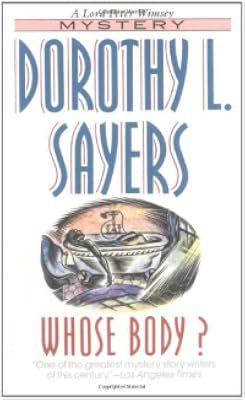
Dorothy Sayers's impressive reputation as a contemporary master of the classic detective story is eclipsed only by Agatha Christie's. Sayers was born in Oxford and attended Somerville College, where she received a B.A. in 1915 and an M.A. in 1920. During that period, Sayers worked as an instructor of modern languages at Hull High School for Girls show more in Yorkshire and as a reader for a publisher in Oxford. Her early literary work was in poetry; she published several volumes and served as an editor for the journal Oxford Poetry from 1917 to 1919. Sayers also worked as a copywriter for a major advertising firm in London. She was president of the Modern Language Association from 1939 to 1945 and of the Detection Club in the 1950s. Around 1920 Sayers developed the idea for her detective hero Lord Peter Wimsey, and she soon published her first mystery, Whose Body? (1923), in which Lord Peter is introduced. For the next dozen or so years, Sayers wrote prolifically about Wimsey, creating in the process what many critics of the genre consider to be the finest detective novels in the English language. Perhaps her most famous Wimsey mystery was The Nine Tailors (1934). Although Sayers essentially followed the classic form in her detective fiction---a formula in which the plot assumes a greater importance than do the characters---Sayers maintained that a detective hero's greatness depended on how effectively the character was portrayed. All but one of Sayers's mysteries feature Lord Peter Wimsey. By the late 1930s, Sayers had apparently tired of writing detective fiction. She stated in 1947 that she would write no more mysteries, that she wrote detective fiction only when she was young and in need of money. Thus saying, Sayers turned her attention to her early loves, medieval and religious literature, spending her remaining years lecturing on and translating Dante (see Vol. 2). (Bowker Author Biography) show less
Some Editions
Series

Common Knowledge
- Canonical title
- Thrones, Dominations
- Original title
- Thrones, Dominations
- Original publication date
- 1998
- People/Characters
- Peter Death Bredon Wimsey (Lord Peter Wimsey); Harriet Deborah Vane; Mervyn Bunter; Gaston Chaparelle; Paul Austin Delgardie (Uncle Pandarus, Uncle Paul); Hope Fanshaw (show all 15); Laurence Harwell; Rosamund Harwell; Gerald Christian Wimsey (Duke of Denver); Helen Wimsey (Duchess of Denver); Honoria Lucasta Delagardie (Dowager Duchess of Denver); Charles Parker (Inspector); Larry Porsena; Phoebe Sugden (Gloria Tallant); Mary Wimsey
- Important places
- Paris, France; Audley Square, London, England, UK; Cranbourne Theatre, London, England, UK; Rose Cottage, Hampton, England, UK; London, England, UK
- Important events
- Abdication of Edward VIII
- Epigraph
- Thrones, and imperial powers, off-spring of heaven,
Ethereal virtues; or these Titles now
Must we renounce, and changing stile be call'd
Princes of hell?
Thrones, Dominations, Princedoms, Virtues, Powers...
John Milton - First words
- "I do not," said Monsieur Theophile Daumier, "understand the English."
- Quotations
- It was evident that something of a portentous sort was coming to call - something that would never have called on Miss Harriet Vane, but was liable at any moment to descend without warning upon Lady Peter Wimsey. Her ladyship... (show all), repressing Miss Vane's natural inclination to crane her head out of the window, laid down author's pen and wondered whether she was suitably dressed to receive whatever fairy godmother should descend from this pumpkin equipage.
... he said. 'Besides, hasn't it occurred to you that to be beneficent, a vision does not have to be true?'....Detective stories keep alive a view of the world which ought to be true. Of course people read them for fun, for d... (show all)iversion, as they do crossword puzzles. But underneath they feed a hunger for justice, and heaven help us if ordinary people cease to feel that.'
'I once heard Peter say the first thing a principle does is to kill people,' said Harriet.
... sternly admonishing herself with the rule that the reader's interest in description is quickly exhausted...
... nice ebony inkstand with cut-glass inkwells and silver mounts, rather spoiled, I thought, by somewhat moth-eaten goose-quill pen, with all the feathering removed from one side. Foolishly wondered aloud why Peter had not b... (show all)ought a nice silver fountain pen in Garrard's while he was about it, but it seems the inkstand was bought just to set off the ancient quill pen, point of which is that it had belonged to Sheridan le Fanu. Felt somewhat out of depth. - Last words
- (Click to show. Warning: May contain spoilers.)Must be reading the wrong book---will ask Harriet to lend me War and Peace.
Classifications
Statistics
- Members
- 1,880
- Popularity
- 11,415
- Reviews
- 52
- Rating
- (3.59)
- Languages
- 6 — Czech, Danish, English, French, German, Swedish
- Media
- Paper, Audiobook, Ebook
- ISBNs
- 29
- UPCs
- 1
- ASINs
- 18
