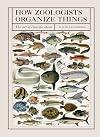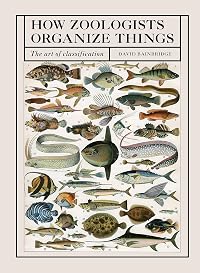
How Zoologists Organize Things: The Art of Classification
by David Bainbridge
On This Page
Description
Humankind's fascination with the animal kingdom began as a matter of survival - differentiating the edible from the toxic, the ferocious from the tractable. Since then, our compulsion to catalogue wildlife has played a key role in growing our understanding of the planet and ourselves, inspiring religious beliefs and evolving scientific theories. The book unveils wild truths and even wilder myths about animals, as perpetuated by zoologists - revealing how much more there is to learn, and show more unlearn. Long before Darwin, our ancestors were obsessed with the visual similarities and differences between the animals. Early scientists could sense there was an order that unified all life and formulated a variety of schemes to help illustrate this. This human quest to classify living beings has left us with a rich artistic legacy, from the folklore and religiosity of the ancient and Medieval world through the naturalistic cataloging of the Enlightenment to the modern, computer-generated classificatory labyrinth. This book tells the fascinating, visual story of this process. The wonderful zoological charts reflect prevailing artistic trends and scientific discoveries, as well as telling us as much about ourselves as they do about the creatures depicted. show lessTags
Recommendations












Member Reviews
How Zoologists Organize Things: The Art of Classification by David Bainbridge is a beautiful and fascinating look at the evolution of both science and art through history. Namely, through the lens of classification we see how the science has changed and how the visual presentation of that science, the art, has changed.
I first flipped, electronically, through the book, looking at the many images and reading a few little snippets. I intended to then set it aside, finish another couple of books I was reading, then come back to read it. Well, I ended up immediately starting it after going through it and fit it in with my other reading. The writing itself was adequate, maybe a little dry at times, but not overly so. The material, however, show more more than kept my interest and even the few times when I thought the writing was dry I never lost interest.
But to be honest I think the real value of the book is in the wealth of images. The text is absolutely necessary to contextualize everything and tell the story, but the pictures are what most readers will remember. I kept taking my tablet into the other room to show the pictures and talk about what they represented both historically and scientifically. A physical copy of this book would no doubt be even more appealing.
I would recommend this to both the science reader as well as the casual reader of nice coffee table books or books of photographs or artwork. The information is detailed enough to be useful if you're interested in learning and the images are just wonderful to look at.
Reviewed from a copy made available by the publisher via NetGalley. show less
I first flipped, electronically, through the book, looking at the many images and reading a few little snippets. I intended to then set it aside, finish another couple of books I was reading, then come back to read it. Well, I ended up immediately starting it after going through it and fit it in with my other reading. The writing itself was adequate, maybe a little dry at times, but not overly so. The material, however, show more more than kept my interest and even the few times when I thought the writing was dry I never lost interest.
But to be honest I think the real value of the book is in the wealth of images. The text is absolutely necessary to contextualize everything and tell the story, but the pictures are what most readers will remember. I kept taking my tablet into the other room to show the pictures and talk about what they represented both historically and scientifically. A physical copy of this book would no doubt be even more appealing.
I would recommend this to both the science reader as well as the casual reader of nice coffee table books or books of photographs or artwork. The information is detailed enough to be useful if you're interested in learning and the images are just wonderful to look at.
Reviewed from a copy made available by the publisher via NetGalley. show less
I received an ARC from the publisher in exchange for an honest review
This is a stunning book for art and nature lovers alike. Chronicling the art and science of classifying the natural world from the religiosity of medieval times, the naturalist enlightenment period, the evolution theories of the nineteenth century, and culminating in modern computer-empowered classification. This books is the equivalent of visiting a museum where entries are extremely beautiful art pieces and illustrations curated by a thorough researcher.
This is a stunning book for art and nature lovers alike. Chronicling the art and science of classifying the natural world from the religiosity of medieval times, the naturalist enlightenment period, the evolution theories of the nineteenth century, and culminating in modern computer-empowered classification. This books is the equivalent of visiting a museum where entries are extremely beautiful art pieces and illustrations curated by a thorough researcher.
Ratings
Members
- Recently Added By
Lists

Science: Zoology
107 works; 1 member
Author Information

9 Works 520 Members
David Bainbridge is University Clinical Veterinary Anatomist at the University of Cambridge and a Fellow of St. Catharines college. He is the author of The X in Sex: How the X chromosome Controls our Lives and Making Babies: The Science of pregnancy (both from Harvard).
Common Knowledge
- Original title
- How zoologists organize things. The art of classification
- Original publication date
- 2020
- Original language*
- Englisch
*Some information comes from Common Knowledge in other languages. Click "Edit" for more information.
Classifications
- Genres
- Science & Nature, Nonfiction, General Nonfiction
- DDC/MDS
- 590.12 — Natural sciences & mathematics Animals Animals Taxonomy
- LCC
- QL351 .B35 — Science Zoology Zoology General
- BISAC
Statistics
- Members
- 128
- Popularity
- 251,450
- Reviews
- 2
- Rating
- (4.42)
- Languages
- 5 — Dutch, English, French, German, Spanish
- Media
- Paper, Ebook
- ISBNs
- 8
- ASINs
- 2