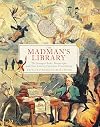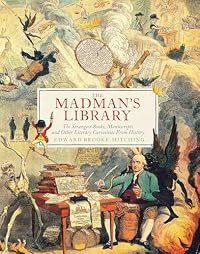
The Madman's Library: The Strangest Books, Manuscripts and Other Literary Curiosities from History
by Edward Brooke-Hitching
On This Page
Description
This fascinating and bizarre collection compiles the most unusual, obscure books from the far reaches of the human imagination throughout history. From the author of the critically acclaimed bestsellers The Phantom Atlas and The Sky Atlas comes a unique and beautifully illustrated journey through the history of literature. The Madman's Library delves into its darkest territories to hunt down the oddest books and manuscripts ever written, uncovering the intriguing stories behind their show more creation. From the Qur'an written in the blood of Saddam Hussein, to the gorgeously decorated fifteenth-century lawsuit filed by the Devil against Jesus, to the most enormous book ever created, The Madman's Library features many long forgotten, eccentric, and extraordinary volumes gathered from around the world. Books written in blood and books that kill, books of the insane and books that hoaxed the globe, books invisible to the naked eye and books so long they could destroy the Universe, books worn into battle and books of code and cypher whose secrets remain undiscovered. Spell books, alchemist scrolls, wearable books, edible books, books to summon demons, books written by ghosts, and more all come together in the most curiously strange library imaginable. Featuring hundreds of remarkable images and packed with entertaining facts and stories to discover, The Madman's Library is a captivating compendium perfect for bibliophiles, literature enthusiasts, and collectors intrigued by bizarre oddities, obscure history, and the macabre. - MUST-HAVE FOR BOOKLOVERS: Anyone who appreciates a good read will love delving into this weird world of books and adding this collection to their own bookshelf. - DISCOVER SOMETHING TRULY UNIQUE: The Madman's Library will let you in on the secret and obscure histories of the strangest books ever made. - EXPERT AUTHOR: Edward Brooke-Hitching is the son of an antiquarian book dealer, a lifelong rare book collector, and a master of taking visual deep dives into unusual historical subjects, such as the maps of imaginary geography in The Phantom Atlas or ancient pathways through the stars in The Sky Atlas. show lessTags
Recommendations








Member Reviews
The Madman's Library - The Strangest Books, Manuscripts and Other Literary Curiosities from History by Edward Brooke-Hitching is a weighty yet stunning hardback book bursting with glorious images and plates showing the books - and their pages - described within. According to his bio, Edward Brooke-Hitching lives in London and is the son of an antiquarian book dealer, which may shed light on his interest in unusual books, obscure books, famous and forgotten books.
It's immediately clear that the author is a well-researched book lover and bibliophile, and it doesn't take much effort for the reader to match his enthusiasm for books and of course reading them.
The author gives us a tantalising sample of what we can look forward to early show more on:
"Invisible books, books that kill, books so tall that motors are needed to turn their pages and books so long they could destroy the universe. Edible books. Wearable books. Books made of skin, bones, feathers and hair. Spell books, shaman manuals, alchemist scrolls, sin books and the ancient work known as the 'Cannibal Hymn'. Books to communicate with angels, and books to summon treasure-hunting demons. The lawsuit filed by the Devil, and a contract bearing his signature. Books worn into battle, books that tell the future, books found inside fish or wrapped around mummified Egyptians. Leechbooks, psychic books, treasure-finding texts and the code-writing hidden in the Bible." Introduction Page 16
The writing strikes a comfortable balance between being well researched and well written while never tipping over into the dry and academic style of writing that often ruins my interest level in books like this. Brooke-Hitching really gets it.
"But these books breathe. They hold thoughts, knowledge and humour otherwise long gone. Their stories - and to a degree, their authors - are alive upon opening them, undiminished by the violence of time." Introduction Page 16
Tell me you haven't shared these thoughts this too. The use of hornbooks pops up in my reading from time to time, and while I'd once Googled to clarify what they were, I don't recall ever seeing one, until now, which was a joy.
And while I knew what a hornbook was, I'd never heard of a xylothek or a wooden library, have you? According to the author, Xylotheks:
"... record arboreal biodiversity by forming a library from the trees themselves. Each volume is made of the wood of a different tree, their spines composed of the bark... and their contents containing specimens of the tree's leaves, seeds, branches and roots." Books that Aren't Books, Page 34
I defy any reader to view the accompanying photograph in the book and not instinctively want to reach out to touch and smell the volumes. Apparently xylothek collections of native flora can be found around the world and we have one here in Australia! Who knew?
I enjoyed studying the sheer ingenuity and variety in the emerging designs for the typewriter, and of course reading about the Voynich Manuscript; a book that has been studied around the world, but never been successfully decoded or deciphered.
I thoroughly enjoyed The Madman's Library and have already made plans to read his follow up published in 2022, entitled The Madman's Gallery - The Strangest Paintings, Sculptures and Other Curiosities from the History of Art. Here he turns his eye to the 'greatest curiosities from the global history of art' by gathering together more than a hundred 'magnificently eccentric antique paintings, engravings, illustrations and sculptures, each chosen for their striking beauty and the wonderfully bizarre story behind their creation.'
Colour me interested! show less
It's immediately clear that the author is a well-researched book lover and bibliophile, and it doesn't take much effort for the reader to match his enthusiasm for books and of course reading them.
The author gives us a tantalising sample of what we can look forward to early show more on:
"Invisible books, books that kill, books so tall that motors are needed to turn their pages and books so long they could destroy the universe. Edible books. Wearable books. Books made of skin, bones, feathers and hair. Spell books, shaman manuals, alchemist scrolls, sin books and the ancient work known as the 'Cannibal Hymn'. Books to communicate with angels, and books to summon treasure-hunting demons. The lawsuit filed by the Devil, and a contract bearing his signature. Books worn into battle, books that tell the future, books found inside fish or wrapped around mummified Egyptians. Leechbooks, psychic books, treasure-finding texts and the code-writing hidden in the Bible." Introduction Page 16
The writing strikes a comfortable balance between being well researched and well written while never tipping over into the dry and academic style of writing that often ruins my interest level in books like this. Brooke-Hitching really gets it.
"But these books breathe. They hold thoughts, knowledge and humour otherwise long gone. Their stories - and to a degree, their authors - are alive upon opening them, undiminished by the violence of time." Introduction Page 16
Tell me you haven't shared these thoughts this too. The use of hornbooks pops up in my reading from time to time, and while I'd once Googled to clarify what they were, I don't recall ever seeing one, until now, which was a joy.
And while I knew what a hornbook was, I'd never heard of a xylothek or a wooden library, have you? According to the author, Xylotheks:
"... record arboreal biodiversity by forming a library from the trees themselves. Each volume is made of the wood of a different tree, their spines composed of the bark... and their contents containing specimens of the tree's leaves, seeds, branches and roots." Books that Aren't Books, Page 34
I defy any reader to view the accompanying photograph in the book and not instinctively want to reach out to touch and smell the volumes. Apparently xylothek collections of native flora can be found around the world and we have one here in Australia! Who knew?
I enjoyed studying the sheer ingenuity and variety in the emerging designs for the typewriter, and of course reading about the Voynich Manuscript; a book that has been studied around the world, but never been successfully decoded or deciphered.
I thoroughly enjoyed The Madman's Library and have already made plans to read his follow up published in 2022, entitled The Madman's Gallery - The Strangest Paintings, Sculptures and Other Curiosities from the History of Art. Here he turns his eye to the 'greatest curiosities from the global history of art' by gathering together more than a hundred 'magnificently eccentric antique paintings, engravings, illustrations and sculptures, each chosen for their striking beauty and the wonderfully bizarre story behind their creation.'
Colour me interested! show less
This. Is. The. Best. Book. Ever.
Gathered and copiously illustrated by the QI writer Edward Brooke-Hitching, every single page is full of delights and bizarre stories and a dry wit that had me spitting my coffee out at the breakfast table.
I paced myself as soon as I’d read the first chapter, knowing that I needed to fully dip in to each page. It’s all about ‘extraordinary volumes’, from those written in blood and feathers to ones with type so tiny it wrecked the typesetter’s eyes, from literary hoaxes (delightful!) to curiosities of science (astonishing).
I was beyond thrilled to hear that one could write a million worded diary and donate it to a local college (tempting) with included nose hairs (for future study), that the show more shortest poem was mn, and sold for many pounds, that the small man used in a royal court as a sandwich filler by a giant snapped and shot a tormenter through the head (cheers!!).
Every, every page is full of treasure. I’ve recommended this book to everyone, even sent it to a few.
Buy it. It’s one you want on your bookshelves, if only to startle guests.
Magnificent.
Now I’m off to read one of his other tantalizingly-titled books: ‘Fox Tossing, Octopus Wrestling, and Other Forgotten Sports’. Who can resist such a title? (Ps: the Madman’s Library has a section of odd titles that I plan to use as inspiration for titles for what I write) show less
Gathered and copiously illustrated by the QI writer Edward Brooke-Hitching, every single page is full of delights and bizarre stories and a dry wit that had me spitting my coffee out at the breakfast table.
I paced myself as soon as I’d read the first chapter, knowing that I needed to fully dip in to each page. It’s all about ‘extraordinary volumes’, from those written in blood and feathers to ones with type so tiny it wrecked the typesetter’s eyes, from literary hoaxes (delightful!) to curiosities of science (astonishing).
I was beyond thrilled to hear that one could write a million worded diary and donate it to a local college (tempting) with included nose hairs (for future study), that the show more shortest poem was mn, and sold for many pounds, that the small man used in a royal court as a sandwich filler by a giant snapped and shot a tormenter through the head (cheers!!).
Every, every page is full of treasure. I’ve recommended this book to everyone, even sent it to a few.
Buy it. It’s one you want on your bookshelves, if only to startle guests.
Magnificent.
Now I’m off to read one of his other tantalizingly-titled books: ‘Fox Tossing, Octopus Wrestling, and Other Forgotten Sports’. Who can resist such a title? (Ps: the Madman’s Library has a section of odd titles that I plan to use as inspiration for titles for what I write) show less
“The Madman’s Library” is a delightful compendium of odd, bizarre and otherwise unlikely publications ranging from Ancient Egypt to modern computerized works. There are chapters on strange bindings and ink (human skin and blood, for example), books written as hoaxes, religious and scientific manifestos, and the largest and smallest books ever created, among other topics. The final chapter includes a list of strange titles through the ages; my favorite by far is a 1912 missive by Sanford Bennett, entitled “Old Age, Its Causes and Prevention.” Vibrantly illustrated throughout and written in a breezy, sometimes satiric style, this is a book to savor, reading a page or two here and there rather than gulping down in one piece. show more There are a lot of strange books out there, and this tome will lead you to the oddest of all; recommended! show less
If you love books, not just the texts, but everything about them, you really need The Madman’s Library by Edward Brooke-Hitching. It describes books of seemingly every possible (and occasionally seemingly impossible) material and text. There are books that are fantastic, beautiful, sacrilegious and religious; books made of every conceivable material including human skin and written in human blood; books that are indecipherable and books that are just plain odd. But they are all amazing to look at and read about.
Brooke-Hitching’s descriptions are both informative and entertaining and the full-colour illustrations that accompany them are absolutely stunning. I definitely recommend this book highly for all the book lovers out show more there.
Thanks to Netgalley and Chronicle Books for the opportunity to read this book in exchange for an honest review show less
Brooke-Hitching’s descriptions are both informative and entertaining and the full-colour illustrations that accompany them are absolutely stunning. I definitely recommend this book highly for all the book lovers out show more there.
Thanks to Netgalley and Chronicle Books for the opportunity to read this book in exchange for an honest review show less
Truly lives up to its title. If you ever find yourself bored or disillusioned by the society of today, rest assured that the same ennui and the same problems have persisted over the last few millennia, except that they were less well documented and often had novel, entertaining, or even barbaric variations. Even though we now have fairly authoritative disciplines in biology, chemistry, mathematics, etc., the basic human drive to map the unknown still persists, and it's likely some of our current practices will be deemed antiquated and backward by people of the far-flung future, just as we say the same of the works of medieval philosophers, physicians, and the occasional astrologer and/or quack. History never ceases to repeat itself, show more with subtle variations depending on the writer in question; and yet, intriguing creations can be found in every major period of our existence.
My personal favorite section is, unsurprisingly, "Cryptic Books" which includes a description of an endlessly captivating work, The Voynich Manuscript. A close second would be the beautiful paper instruments from the "Books that aren't Books" category. The historical background on anthropodermic bibliopegy, a euphemism for binding books in human skin, was creepy yet morbidly interesting, serving as a reminder that humans can accept just about anything if social and political circumstances dampen the blow. There simply isn't enough space to write down my thoughts about all the other sections, but suffice it to say that reality is stranger than fiction, and the history behind our literature is a fascinating one that is often lost behind the appearance of an ordinary-looking cover. Some of these works were truly artistic labors of love while others verge on the grotesque and horrific, but the personalities and stories are worth remembering. And, as if my TBR list isn't long enough, I should now have enough obscure, occult, mythological and artistic reading material to last me another couple of years.
In short, I'm glad to be reminded that books and literature are the physical manifestation of humanity's quest for answers, and though it's a long and arduous process for us to discover them, the process is worth knowing about - if only to become more aware of our origins, however dark and misinformed they might have been. It's all the more instructive and helps instill a sense of appreciation for how far we've made it, and how far we have yet to go. And I now want really badly to become a rare book dealer / art historian / archivist to get a firsthand look at some of the works that were presented. I'll end with a beautifully worded quote from the book:
"More than most, these are books with real stories to tell. Each redefines, in its own way, the concept of just what a book can be; each brings a skip to the heartbeat of the bibliophile, rewriting and expanding our sense of what it is we love about books. And yet for one reason or another these volumes were banished to the silted depths of obscurity. But these books breathe. They hold thoughts, knowledge, and humour otherwise long gone. Their stories - and to a degree, their authors - are alive upon opening them, undiminished by the violence of time. It seems only right to reach out and recover them, to bring them all together in the pages of this book, a dedicated library all their own. The oddballs, the deviants, the long-lost misfits - the forgotten recollected." show less
My personal favorite section is, unsurprisingly, "Cryptic Books" which includes a description of an endlessly captivating work, The Voynich Manuscript. A close second would be the beautiful paper instruments from the "Books that aren't Books" category. The historical background on anthropodermic bibliopegy, a euphemism for binding books in human skin, was creepy yet morbidly interesting, serving as a reminder that humans can accept just about anything if social and political circumstances dampen the blow. There simply isn't enough space to write down my thoughts about all the other sections, but suffice it to say that reality is stranger than fiction, and the history behind our literature is a fascinating one that is often lost behind the appearance of an ordinary-looking cover. Some of these works were truly artistic labors of love while others verge on the grotesque and horrific, but the personalities and stories are worth remembering. And, as if my TBR list isn't long enough, I should now have enough obscure, occult, mythological and artistic reading material to last me another couple of years.
In short, I'm glad to be reminded that books and literature are the physical manifestation of humanity's quest for answers, and though it's a long and arduous process for us to discover them, the process is worth knowing about - if only to become more aware of our origins, however dark and misinformed they might have been. It's all the more instructive and helps instill a sense of appreciation for how far we've made it, and how far we have yet to go. And I now want really badly to become a rare book dealer / art historian / archivist to get a firsthand look at some of the works that were presented. I'll end with a beautifully worded quote from the book:
"More than most, these are books with real stories to tell. Each redefines, in its own way, the concept of just what a book can be; each brings a skip to the heartbeat of the bibliophile, rewriting and expanding our sense of what it is we love about books. And yet for one reason or another these volumes were banished to the silted depths of obscurity. But these books breathe. They hold thoughts, knowledge, and humour otherwise long gone. Their stories - and to a degree, their authors - are alive upon opening them, undiminished by the violence of time. It seems only right to reach out and recover them, to bring them all together in the pages of this book, a dedicated library all their own. The oddballs, the deviants, the long-lost misfits - the forgotten recollected." show less
I was vaguely expecting something about the OED (The Professor and the Madman). Nope. This is about book oddities. It's divided into multiple sections, though some books seem to belong in more than one. There's Books of Flesh and Blood, which include books (and other things) made with human-skin leather, and some "books" tattooed onto a living person. There's Lilliputiana - tiny books, from psalters and the like meant to be carried and easily read from, down to "books" consisting of a few letters etched via electron microscope and completely invisible to the naked eye. Brobdignagia - huge books, in various dimensions - from books that stood several meters tall and needed a motor to turn the pages, to one that, lying on the ground, is show more thicker than a person's height - that many pages (it's tax laws, and was written to demonstrate the idiocy of same). There are discussions of books that were mis-copied (mostly Bibles), info about the first printed books (long, long before Gutenberg. It was _moveable_ type that he innovated; wood-block pages are thousands of years older). Books that fold accordion-style, and are meters long when unfolded. And so on, and so on...I found it fascinating. There's not much depth to it - it's just Look at this! and this! and this! - but it's a fun and interesting read. show less
I knew I wanted this book as soon as I saw it; gorgeously illustrated in full colour, and really well written, this is exactly what is purports to be. Broken into categorical chapters that include “Books that aren’t Books”; “Books Made of Flesh and Blood”; “Literary Hoaxes”, etc., the book covers a comprehensive span of the beautiful, the frightful and the unusual.
I enjoyed Brooke-Hitching’s writing style, appreciating his small infusions of humour as well as the information he imparted about each category and specific books. It was easy to read, but not easy reading; I found reading a chapter at a time worked well for my comprehension and enjoyment – the one time I tried to read more in one sitting, I found my eyes show more glazing over.
All in all, an enjoyable book and one that I’m happy to have on my bookshelves. show less
I enjoyed Brooke-Hitching’s writing style, appreciating his small infusions of humour as well as the information he imparted about each category and specific books. It was easy to read, but not easy reading; I found reading a chapter at a time worked well for my comprehension and enjoyment – the one time I tried to read more in one sitting, I found my eyes show more glazing over.
All in all, an enjoyable book and one that I’m happy to have on my bookshelves. show less
Members
- Recently Added By
Lists

TBR of Books I Don't Own
132 works; 1 member

Weirdo Nonfiction
138 works; 3 members
Author Information

15 Works 2,299 Members
Awards and Honors
Common Knowledge
- Original publication date
- 2021-04-26
- First words
- I had just turned one when my father first used me as a bidder's paddle at auction. -Introdution,
Writing in The Histories (4.131.2) Herodotus tells how the Persian King Darius invaded Scythia (now mostly Kazakhstan and Southern Ukraine) in c.513 BC, and send a message to demand the surrender of its ruler, Idanthyrsus. -B... (show all)ooks That Aren't Books - Canonical DDC/MDS
- 809.002
- Canonical LCC
- Z1021
Classifications
- Genres
- Literature Studies and Criticism, Nonfiction, History
- DDC/MDS
- 809.002 — Literature & rhetoric Literature, rhetoric & criticism History, description, critical appraisal of more than two literatures By Period Subdivisions Miscellany
- LCC
- Z1021 — Bibliography, Library Science and Information Resources General bibliography Special classes of books
- BISAC
Statistics
- Members
- 808
- Popularity
- 34,047
- Reviews
- 16
- Rating
- (4.31)
- Languages
- 5 — English, French, German, Polish, Spanish
- Media
- Paper, Ebook
- ISBNs
- 9
- ASINs
- 2