
Stuart Kells
Author of The Library: A Catalogue of Wonders
About the Author
Stuart Kells is an author based in Australia. He has a PhD from Monash University. He is also an antiquarian books authority and runs Books of Kells which issues fine and rare book catalogues and exhibits at book fairs. His own books include Rare: A life among antiquarian books and Penguin and the show more Lane Brothers: The Untold Story of a Publishing Revolution. He has a PhD from Monash University. (Bowker Author Biography) show less
Works by Stuart Kells
Associated Works
Tagged
Common Knowledge
- Canonical name
- Kells, Stuart
- Birthdate
- 20th century
- Gender
- male
- Nationality
- Australia
- Associated Place (for map)
- Australia
Members
Discussions
A wondrous history of libraries from Stuart Kells in Book talk (February 2020)
Reviews
All Theories of the Hyphen are as lame as these ones, and it is best to say as little about them as possible.
***
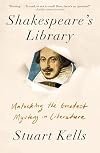
Kells makes a skeptical, well-researched, convincing, fascinating, amusing case for who Shakespeare really was, why we have never found his manuscripts, and many other adjacent issues. He has utterly convinced me, but then, I was more than halfway there to start with: I figure Shakespeare was a hack. Kells is rather more nuanced in his thesis than I am in mine.
Anyway, clever and show more funny. Now I am eager to read more by him. If only the stupid Bluefire would download the text of the library book for me.
Library copy show less
You need to know there isn't one. No library, no catalogue of what was in it, no books attested to have been owned by Shakespeare, not a bookplate. So is the book just literary clickbait? Yes.
There's 100 pages on the "hunt" for a Shakespeare library, starting within a century after his death. It's a long string of disappointments and forgeries. You do learn something about his contemporaries and the following eras of bibliophiles and Shakespeare aficionados, as well as what books Shakespeare show more is clearly referencing or even stealing outright from, and thus must have had access to.
In Part II we're into the authorship question. Was Shakespeare the Stratford one we know or a secret front/pseudonym for . There are entire books on this topic, but we don't even get an overview really because this part is about the author and author's friend who subscribed to a particular sect of fake-speares called the Nevillians. Not even one of the popular fake-speares. We get 100 pages on why they're wrong, followed by a pretty good section where a case is made for Shakespeare as plagiarist and spin doctor, taking other people’s work and adapting it into play form to great success, followed by many revisions by him and later editors to arrive at the “perfect” plays in their final form. This really subverts the entire authorship question by lobbing in the grenade of considering if he really was the super genius wordsmith they’re so busy trying to pin on someone with better credentials. A talented, but even more shrewd playwright becoming a legend by the polish of history. An intriguing idea, but only about a dozen pages are about this.
In Part III we finally get 70 pages of “visions of Shakespeare’s library”. So this is it, right? A learned take on what books such a library might have included based on the surviving plays and poems? No. Australian adventures in Shakespeare, an attack on the First Folio, controversy surrounding the bawdry passages, private press editions, followed by an Epilogue trying to tie a bow around all this as if there’s been a throughline in the work at all.
It's not just a book that sells a false premise, the content is so scattershot that despite desperate attempts to return to the idea of Shakespeare's library, it has so little to say about any one thing it's like reading a book of upcycled blogposts. show less
There's 100 pages on the "hunt" for a Shakespeare library, starting within a century after his death. It's a long string of disappointments and forgeries. You do learn something about his contemporaries and the following eras of bibliophiles and Shakespeare aficionados, as well as what books Shakespeare show more is clearly referencing or even stealing outright from, and thus must have had access to.
In Part II we're into the authorship question. Was Shakespeare the Stratford one we know or a secret front/pseudonym for . There are entire books on this topic, but we don't even get an overview really because this part is about the author and author's friend who subscribed to a particular sect of fake-speares called the Nevillians. Not even one of the popular fake-speares. We get 100 pages on why they're wrong, followed by a pretty good section where a case is made for Shakespeare as plagiarist and spin doctor, taking other people’s work and adapting it into play form to great success, followed by many revisions by him and later editors to arrive at the “perfect” plays in their final form. This really subverts the entire authorship question by lobbing in the grenade of considering if he really was the super genius wordsmith they’re so busy trying to pin on someone with better credentials. A talented, but even more shrewd playwright becoming a legend by the polish of history. An intriguing idea, but only about a dozen pages are about this.
In Part III we finally get 70 pages of “visions of Shakespeare’s library”. So this is it, right? A learned take on what books such a library might have included based on the surviving plays and poems? No. Australian adventures in Shakespeare, an attack on the First Folio, controversy surrounding the bawdry passages, private press editions, followed by an Epilogue trying to tie a bow around all this as if there’s been a throughline in the work at all.
It's not just a book that sells a false premise, the content is so scattershot that despite desperate attempts to return to the idea of Shakespeare's library, it has so little to say about any one thing it's like reading a book of upcycled blogposts. show less
My proposal for a book on Shakespeare’s life:
Chapter One: "He was as tough and romantic as the town he lived in" ... nah too preachy , let’s face it. I want to sell some books here ... "Inside his tights lay the coiled sexual tension of a jungle cat" (I love this!), "Stratford was his town ... and it always would be ..."
Chapter Two: "But at the very moment a visiting group of players draw back the curtain on a startling and spectacular thespian future,and he's smitten by a star-crossed show more love affair, then weighed down with the responsibilities of a parent before he can break with the Forest of Arden..."
Authorship dispute coming up with some bits about "Shakespeare's Library" on the side...
This book conveys the excitement of looking for evidence of his identity at the Folger Shake-speare Library (no, they don't actually use that hyphen, thank God!). Many eons ago, the New York Times reported that Roger Stritmatter got his Ph.D. in comparative literature for a dissertation on the Folger's copy of Edward de Vere's Geneva Bible. If Shakespeare scholarship were truly scholarly and objective, rather than an exercise in snake-oil tradition, pseudo-authority, and groupthink, Stritmatter's research would never have seen the light of day.
Following up on Professor Stritmatter's snake-oil research, I had the good fortune to find that the heavily annotated copy of the Whole Book of Psalms bound with Oxford's Geneva Bible is the key that unlocks the mysteries of many Sonnets, the "Rape of Lucrece", and passages in plays, that echo the distinctive psalm translations in that Elizabethan "hymnal." I just hope that Stuart Kells's implication that evidence, not faith, should settle who wrote Shakespeare will some day be adopted by the community of Shakespeare alternative "scholars."
We've now had everyone from William Kyd to Rodney Dangerfield proposed as the true Boss. I find it all great fun. I'm not entirely persuaded that the opposition to William of Stratford is solely based on class prejudice (though that certainly obtains). But the plays were written by someone who signed his name William Shakespeare (or some variation, spelling being a bit lax in those faraway times). And they're pretty good, on the whole. If someone, say, Francis Drake, were once proved of being WS, that would dominate the headlines for at least a week. Wouldn't change the plays. They were written by William Shakespeare. I've always admired the English for allowing their harmless lunatics to walk about freely.
Shakespeare - probably the number 3 after Brexit and Trump/Putin to bring out the fanatics beating drums....any mention that it might not have been the geezer from Stratford who wrote all those dramas and sonnets is assured a number of furious posts, all by people convinced that they know who did what several centuries ago. For some people it's much more entertaining than reading most of his plays...!
Bottom-line: I’m happy to assume that William Shakespeare, playwright and genius was William Shakespeare, playwright and genius and that it was this William Shakespeare, playwright and genius who wrote the plays by William Shakespeare, playwright and genius. I know that this statement is wildly controversial but hey - I’m that kind of guy. show less
Chapter One: "He was as tough and romantic as the town he lived in" ... nah too preachy , let’s face it. I want to sell some books here ... "Inside his tights lay the coiled sexual tension of a jungle cat" (I love this!), "Stratford was his town ... and it always would be ..."
Chapter Two: "But at the very moment a visiting group of players draw back the curtain on a startling and spectacular thespian future,and he's smitten by a star-crossed show more love affair, then weighed down with the responsibilities of a parent before he can break with the Forest of Arden..."
Authorship dispute coming up with some bits about "Shakespeare's Library" on the side...
This book conveys the excitement of looking for evidence of his identity at the Folger Shake-speare Library (no, they don't actually use that hyphen, thank God!). Many eons ago, the New York Times reported that Roger Stritmatter got his Ph.D. in comparative literature for a dissertation on the Folger's copy of Edward de Vere's Geneva Bible. If Shakespeare scholarship were truly scholarly and objective, rather than an exercise in snake-oil tradition, pseudo-authority, and groupthink, Stritmatter's research would never have seen the light of day.
Following up on Professor Stritmatter's snake-oil research, I had the good fortune to find that the heavily annotated copy of the Whole Book of Psalms bound with Oxford's Geneva Bible is the key that unlocks the mysteries of many Sonnets, the "Rape of Lucrece", and passages in plays, that echo the distinctive psalm translations in that Elizabethan "hymnal." I just hope that Stuart Kells's implication that evidence, not faith, should settle who wrote Shakespeare will some day be adopted by the community of Shakespeare alternative "scholars."
We've now had everyone from William Kyd to Rodney Dangerfield proposed as the true Boss. I find it all great fun. I'm not entirely persuaded that the opposition to William of Stratford is solely based on class prejudice (though that certainly obtains). But the plays were written by someone who signed his name William Shakespeare (or some variation, spelling being a bit lax in those faraway times). And they're pretty good, on the whole. If someone, say, Francis Drake, were once proved of being WS, that would dominate the headlines for at least a week. Wouldn't change the plays. They were written by William Shakespeare. I've always admired the English for allowing their harmless lunatics to walk about freely.
Shakespeare - probably the number 3 after Brexit and Trump/Putin to bring out the fanatics beating drums....any mention that it might not have been the geezer from Stratford who wrote all those dramas and sonnets is assured a number of furious posts, all by people convinced that they know who did what several centuries ago. For some people it's much more entertaining than reading most of his plays...!
Bottom-line: I’m happy to assume that William Shakespeare, playwright and genius was William Shakespeare, playwright and genius and that it was this William Shakespeare, playwright and genius who wrote the plays by William Shakespeare, playwright and genius. I know that this statement is wildly controversial but hey - I’m that kind of guy. show less
"If you think you know what a library is, this marvellously idiosyncratic book will make you think again." —The Sydney Morning Herald
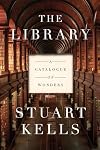
Libraries are much more than mere collections of volumes. The best are magical, fabled places whose fame has become part of the cultural wealth they are designed to preserve. Some still exist today; some are lost, like those of Herculaneum and Alexandria; some have been sold or dispersed; and some never existed, such as those libraries imagined by J.R.R. show more Tolkien, Umberto Eco, and Jorge Luis Borges, among others.
Ancient libraries, grand baroque libraries, scientific libraries, memorial libraries, personal libraries, clandestine libraries: Stuart Kells tells the stories of their creators, their prizes, their secrets, and their fate. To research this book, Kells traveled around the world with his young family like modern-day “Library Tourists.” Kells discovered that all the world’s libraries are connected in beautiful and complex ways, that in the history of libraries, fascinating patterns are created and repeated over centuries. More important, he learned that stories about libraries are stories about people, containing every possible human drama.
The Library is a fascinating and engaging exploration of libraries as places of beauty and wonder. It’s a celebration of books as objects, a celebration of the anthropology and physicality of books and bookish space, and an account of the human side of these hallowed spaces by a leading and passionate bibliophile.
Published August 27, 2017
MY THOUGHTS:
I received this book in exchange for my honest review.
Do you love books as much as I do? Do you love them to the point of wanting to know more about how they're stored, how many different methods of communication throughout history were used. How about learning more about places that treasure books for unusual reasons/purposes, reflect upon books in a library as a source of peace, comfort and a sanctuary for reflection, learning and the storage of unique knowledge.
This author traces oral traditions of various people to the first methods of recording and writing things down. You'll learn about the materials used, such as tablets, papyrus and animal skins and what they were used for. From there, the author moves throughout history to where words are written on paper with accompanying illustrations. Binding and covers are discussed and the methods used to easily locate the books.
Of course, this is just the tip of the iceberg that Kells unfolds for us. I've always wondered about the preservation of books, the collection and care of books of limited editions, etc. Kells researches all. To keep you from falling asleep, he adds anecdotes, humor and historical photos. You can feel the author's passion about books as you read the pages of this one.
Recording thoughts of wisdom, acts from history and words of experts has always been a part of human nature as part of their legacy and Kells shows how this must continue, especially with today's use of ebooks, through the medium of physical books and libraries. If technology dies, breaks down and is not useable any longer, what will come of all those electronic books? What about all the words written on their electronic pages... will they simply disappear?
Why do people collect books, who are they? How have books affected different cultures, and what extents are people willing to go to protect the most rare, and ancient of books. You'll learn about book banning, and how religion affected what people read in history as compared to now.
Damage to books is elaborated on, with discussions on water and insect damage and don't forget fire. Did you know there is actually an insect called a bookworm and that it's not just a cute caricature. Ew!
This book is so fascinating, and well-written enough to keep the reader invested in the content, being drawn in by the author's enthusiasm and passion for books. I think this tribute to everything to do about books and why we love them so much is much needed, reminding us of our heritage and who we are, why we must continue recording our thoughts and doing so in physical books.
Kells shows us how the library is a treasure trove, full of imagination, facts, emotions, and experiences. His writing is both enjoyable, inspirational, tongue-in-cheek funny and engaging, even whimsical at times. He reaches deep within the book lover in all of us, eloquently asking us from his unique perspective, to take his guided tour of libraries all over the world.
This is a one of a kind book for me, and I encourage all to read it! I love books; I can't seem to get enough of them and devour each story I am able to get my hands on, so I absolutely understand Kells' passion.
I was truly amazed to read about the extent that some collectors would go to in acquiring a specific book for their collection and Kell's writing of this made me laugh.
Anyone will enjoy this book if they read! I recommend it to schools too! show less
Libraries are much more than mere collections of volumes. The best are magical, fabled places whose fame has become part of the cultural wealth they are designed to preserve. Some still exist today; some are lost, like those of Herculaneum and Alexandria; some have been sold or dispersed; and some never existed, such as those libraries imagined by J.R.R. show more Tolkien, Umberto Eco, and Jorge Luis Borges, among others.
Ancient libraries, grand baroque libraries, scientific libraries, memorial libraries, personal libraries, clandestine libraries: Stuart Kells tells the stories of their creators, their prizes, their secrets, and their fate. To research this book, Kells traveled around the world with his young family like modern-day “Library Tourists.” Kells discovered that all the world’s libraries are connected in beautiful and complex ways, that in the history of libraries, fascinating patterns are created and repeated over centuries. More important, he learned that stories about libraries are stories about people, containing every possible human drama.
The Library is a fascinating and engaging exploration of libraries as places of beauty and wonder. It’s a celebration of books as objects, a celebration of the anthropology and physicality of books and bookish space, and an account of the human side of these hallowed spaces by a leading and passionate bibliophile.
Published August 27, 2017
MY THOUGHTS:
I received this book in exchange for my honest review.
Do you love books as much as I do? Do you love them to the point of wanting to know more about how they're stored, how many different methods of communication throughout history were used. How about learning more about places that treasure books for unusual reasons/purposes, reflect upon books in a library as a source of peace, comfort and a sanctuary for reflection, learning and the storage of unique knowledge.
This author traces oral traditions of various people to the first methods of recording and writing things down. You'll learn about the materials used, such as tablets, papyrus and animal skins and what they were used for. From there, the author moves throughout history to where words are written on paper with accompanying illustrations. Binding and covers are discussed and the methods used to easily locate the books.
Of course, this is just the tip of the iceberg that Kells unfolds for us. I've always wondered about the preservation of books, the collection and care of books of limited editions, etc. Kells researches all. To keep you from falling asleep, he adds anecdotes, humor and historical photos. You can feel the author's passion about books as you read the pages of this one.
Recording thoughts of wisdom, acts from history and words of experts has always been a part of human nature as part of their legacy and Kells shows how this must continue, especially with today's use of ebooks, through the medium of physical books and libraries. If technology dies, breaks down and is not useable any longer, what will come of all those electronic books? What about all the words written on their electronic pages... will they simply disappear?
Why do people collect books, who are they? How have books affected different cultures, and what extents are people willing to go to protect the most rare, and ancient of books. You'll learn about book banning, and how religion affected what people read in history as compared to now.
Damage to books is elaborated on, with discussions on water and insect damage and don't forget fire. Did you know there is actually an insect called a bookworm and that it's not just a cute caricature. Ew!
This book is so fascinating, and well-written enough to keep the reader invested in the content, being drawn in by the author's enthusiasm and passion for books. I think this tribute to everything to do about books and why we love them so much is much needed, reminding us of our heritage and who we are, why we must continue recording our thoughts and doing so in physical books.
Kells shows us how the library is a treasure trove, full of imagination, facts, emotions, and experiences. His writing is both enjoyable, inspirational, tongue-in-cheek funny and engaging, even whimsical at times. He reaches deep within the book lover in all of us, eloquently asking us from his unique perspective, to take his guided tour of libraries all over the world.
This is a one of a kind book for me, and I encourage all to read it! I love books; I can't seem to get enough of them and devour each story I am able to get my hands on, so I absolutely understand Kells' passion.
I was truly amazed to read about the extent that some collectors would go to in acquiring a specific book for their collection and Kell's writing of this made me laugh.
Anyone will enjoy this book if they read! I recommend it to schools too! show less
Awards


You May Also Like


Associated Authors
Statistics
- Works
- 12
- Also by
- 1
- Members
- 640
- Popularity
- #39,394
- Rating
- 3.4
- Reviews
- 11
- ISBNs
- 36
- Languages
- 1
- Favorited
- 2