
About the Author
Edward Wilson-Lee is a Fellow in English at Sidney Sussex College, Cambridge, where he teaches medieval and Renaissance literature. His research focuses on books, libraries, and travel, which during this project has involved journeys to and through Spain, Italy, India, and the Caribbean. He is also show more the author of Shakespeare in Swahililand. show less
Works by Edward Wilson-Lee
The Catalogue of Shipwrecked Books: Christopher Columbus, His Son, and the Quest to Build the World's Greatest Library (2019) 744 copies, 21 reviews
The Grammar of Angels: A Search for the Magical Powers of Language in Renaissance Italy (2025) 35 copies, 2 reviews
Tagged
Common Knowledge
- Canonical name
- Wilson-Lee, Edward
- Gender
- male
- Education
- University of Oxford
University of Cambridge
University College London - Occupations
- literature scholar
professor - Organizations
- Sidney Sussex College, University Cambridge
- Nationality
- UK
- Places of residence
- Cambridge, Cambridgeshire, England, UK
Switzerland
Mexico
Zimbabwe
USA
Kenya
Members
Reviews
The catalogue of shipwrecked books : Christopher Columbus, his son, and the quest to build the world's greatest library by Edward Wilson-Lee

I will never feel bad about buying a lot of books again.
Here's why:
"[Hernando Colón] had arrived back laden with purchases, as even though he had left his considerable Venetian spree behind for shipping home*, he continued to amass vast quantities of books on the return journey, beginning with seven hundred titles bought in Nuremberg during the month he spent there over Christmas . . . From Würzberg Hernando had passed through Cologne, buying two hundred more books in three days, and show more Mainz, where he bought a further thousand in a month."
In Venice, Hernando bought 1,637 books, and these were the ones lost in the shipwreck.
Aside from being a fascinating account of Hernando Colón's travels with his father, Christopher Columbus, it's the even more fascinating story of his efforts to create a library that would include everything ever printed.
Colón basically invented card catalogues, shelving books spine out, call numbers, AND the Internet (yes, and if you don't believe me, read the book). show less
Here's why:
"[Hernando Colón] had arrived back laden with purchases, as even though he had left his considerable Venetian spree behind for shipping home*, he continued to amass vast quantities of books on the return journey, beginning with seven hundred titles bought in Nuremberg during the month he spent there over Christmas . . . From Würzberg Hernando had passed through Cologne, buying two hundred more books in three days, and show more Mainz, where he bought a further thousand in a month."
In Venice, Hernando bought 1,637 books, and these were the ones lost in the shipwreck.
Aside from being a fascinating account of Hernando Colón's travels with his father, Christopher Columbus, it's the even more fascinating story of his efforts to create a library that would include everything ever printed.
Colón basically invented card catalogues, shelving books spine out, call numbers, AND the Internet (yes, and if you don't believe me, read the book). show less
A History of Water: Being an Account of a Murder, an Epic and Two Visions of Global History by Edward Wilson-Lee

Contrary to what you might expect from the title, this is in effect a parallel biography of two Portuguese 16th century figures, the poet Luís Vaz de Camões and the humanist scholar Damião de Góis.
Damião had a high-profile career as a trade envoy in the Low Countries and the Baltic before returning to Lisbon to work as archivist and official historian in the Torre do Tombo. During his travels around Europe he spent time in the universities of Louvain and Padua, and seems to have formed show more close ties with many of the leading figures of the age, including Erasmus and Luther, as well as with the founders of the Jesuit order. He also developed a fascination with other cultures, especially the non-Christian traditions of Lapland and the non-Western Christianity of Ethiopia, which he extended during his work as historian into a tendency to look at what colonised people said about the Portuguese as well as what the colonisers said to justify themselves. And, of course, it wasn't long before he had the Inquisition knocking on his door.
Wilson-Lee sees Damião's Chronicle as a kind of last-ditch attempt by humanism to present a view of the world in which Western European Christianity is merely one of many cultural traditions, with much to learn from the advanced cultures of places like India and China, and he contrasts it to the assertive, Eurocentric and imperialist neoclassical view projected by Camões in The Lusiads.
It's a cleverly-written book, that manages to turn a fairly abstract literary and historical debate into something very like a murder mystery, full of entertaining glimpses at Camões's experiences in the Lisbon underworld and at the sharp end of colonialism, mirrored by Damião's semi-clandestine encounters with forbidden knowledge (among the things that got him into trouble were his passions for the polyphony of Josquin and the paintings of Hieronymous Bosch...). Necessarily there's a little bit of oversimplification along the way, but it's an interesting glimpse into a period when it wasn't entirely obvious that Europe would be forcibly split between Catholics and Protestants or that Europeans would see it as their mission to finance our culture by robbing the rest of the world for the next few centuries. show less
Damião had a high-profile career as a trade envoy in the Low Countries and the Baltic before returning to Lisbon to work as archivist and official historian in the Torre do Tombo. During his travels around Europe he spent time in the universities of Louvain and Padua, and seems to have formed show more close ties with many of the leading figures of the age, including Erasmus and Luther, as well as with the founders of the Jesuit order. He also developed a fascination with other cultures, especially the non-Christian traditions of Lapland and the non-Western Christianity of Ethiopia, which he extended during his work as historian into a tendency to look at what colonised people said about the Portuguese as well as what the colonisers said to justify themselves. And, of course, it wasn't long before he had the Inquisition knocking on his door.
Wilson-Lee sees Damião's Chronicle as a kind of last-ditch attempt by humanism to present a view of the world in which Western European Christianity is merely one of many cultural traditions, with much to learn from the advanced cultures of places like India and China, and he contrasts it to the assertive, Eurocentric and imperialist neoclassical view projected by Camões in The Lusiads.
It's a cleverly-written book, that manages to turn a fairly abstract literary and historical debate into something very like a murder mystery, full of entertaining glimpses at Camões's experiences in the Lisbon underworld and at the sharp end of colonialism, mirrored by Damião's semi-clandestine encounters with forbidden knowledge (among the things that got him into trouble were his passions for the polyphony of Josquin and the paintings of Hieronymous Bosch...). Necessarily there's a little bit of oversimplification along the way, but it's an interesting glimpse into a period when it wasn't entirely obvious that Europe would be forcibly split between Catholics and Protestants or that Europeans would see it as their mission to finance our culture by robbing the rest of the world for the next few centuries. show less
The Grammar of Angels: A Search for the Magical Powers of Language in Renaissance Italy by Edward Wilson-Lee
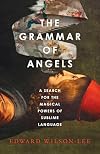
After the last two 'serious' books I had bought, I thought I had finally reached an ideology-free zone with 'The Grammar of Angels' but it was not to be, albeit that the 'opinion' as opposed to evidenced research was nicely delayed until the final chapter. If I want opinion, I think I will rely on X.
The search for books that do not try to persuade me to think along expected contemporary tramlines is proving rather expensive. I am starting to wonder whether I should just give up and watch show more movies instead ... but of this example more later. At least these tramlines went to a new destination.
In fact, the core of the book remains a well researched, highly learned account of the life and influence of the Renaissance polymath Pico della Mirandola. It contains many insights into the ways of thinking and culture of the fifteenth century Italian Renaissance.
The 'hook' is the idea derived, not merely from the re-discovery of Platonism, that language could contain what would later be called the 'sublime' and that it had power beyond what it denoted to move minds for good or will and, albeit implicitly, to change material reality.
This is not a stupid idea once you do not take it too literally. Observe language (broadly defined) in the world today and in history. You can see how it frames how we perceive reality. Tens of millions spent on state psychological operations and 'narrative' tell us something of its relationship to power.
Since power includes taxation, regulation, the deployment of the monopoly of force and so forth, the link between narrative and material reality is a real one to the extent of us possibly seeing the whole process as a form of performative magic. You do not need Hitler here. NATO will do.
In Pico's day, this was thinking at the intersection between philosophy as we understand it, spirituality beyond conventional religion and magic and its incantations. It binds the Platonic mind-set with dissenting Catholicism, 'Hermeticism' and the Kabbalah if not always well understood.
Pico actually comes across as a somewhat over-excitable if highly intelligent young man operating in an almost heroic environment of well-heeled individuals connected to the world of the Medicis and in Rome who were prepared to think new thoughts that might be absurd but that moved culture forward.
This also became the age of Savonarola who might epitomise what Wilson-Lee identifies as the problematic of language as tool or weapon - it is not necessarily true or good but it can be used (like nuclear science) for dark forces and downright evil.
It is the potentiality of such 'learning' or 'magical thought' for the Good that is the point where Wilson-Lee and I would part company. I suspect its use can never be intrinsically good. The good in my opinion can be defined as the ethical struggle against the demands of the human 'hive'.
The Good, in effect, is either the good of the species (effectively survival along Darwinian lines) or of classes, tribes and interest groups within it or it is what an individual ethically thinks is good (which is problematic for society because individuals all think differently).
Magical manipulation takes place either when the species creates its own ruthless leadership (like the ant colony) that submerges the individual into the whole or an individual emerges to impose (as Savonarola did) an imagined good on the human 'hive' (usually to the destruction of the whole).
The 'good person' imposing their imagined good cannot be trusted because that good is still their good as it is imposed on that of their fellows and risks damage to the whole out of ignorance of all the facts. The intellectual who thinks he has the answer to the Good is a dangerous insect.
The incantations and rhythms of language can certainly sink the individual into the mass. This might be interpreted as some magical transformation analogous to being drawn into the One that is God or it might simply be the human 'hive' losing its reason to the magician-manipulator.
The book, although it does not perhaps have the depth that it thinks it has, with its anthropological references (giving us a common human aspect of 'hive' being) and philosophical anecdote (with just about the best explanation of the meaning of Plato's 'Phaedrus' I have come across) is 'suggestive'.
And yet it seems not to draw the conclusions that I would have assumed the facts 'suggest' - this is that there is a terrible balance to be had between humans as 'hive' (easily led without thought as if Quatermass IV was documentary) and individual observation and resistance to their condition.
At one extreme, we have defensive super-individualists living in rational theory and unable to comprehend the raw matter of humanity in which they have perforce to survive and at the other the 'sehnsucht' of the contemporary 'spiritual' liberal for immersion in this sea only that it be 'good'.
The balance lies in being an individual with a realistic understanding of how 'hive' humanity operates sufficient to survive within it and with no neurotic desire to bend it to its will and accepting that the 'hive' is there because it is essential to the survival of the species and its gene pool as a whole.
Towards the end Wilson-Lee has a jarring reference to the ant colony as if we should be impressed with it as a thing to be admired (rather than accepted) and that leads immediately to a nervousness about where his final chapter's ideologising is leading. Ants do not act 'willingly'.
The point is missed that the sea of humanity cannot be good or evil by its very nature - it just 'is'. And, similarly individuals are what they are and the sea will tend to have the bad individuals direct its waves to bad ends while the good (if they have any will or intelligence) withdraw to shore and safety.
Wilson-Lee (like many of a contemporary anthropological turn) seems to transfer the appreciation of the sublime from the Kantian (the individual observing) to this sea of humanity, more in hope than evidenced knowledge, so that we are left with a last chapter of newly fashionable romanticism.
This is that turn against the Enlightenment which has 'gone too far' in recent decades in frustration that it cannot deliver some abstract utopia that it was never intended to deliver. The happy-clappy rationalists needed taking down a peg or two but so do the exponents of the 'sublime'.
This is more serious than we might think because it represents something potentially quite dark - the turn of the Western liberal intellectual to a form of magical thinking that, in despairing of the fate of university liberalism in the post-Trump world, is drawn to an incipient Platonic authoritarianism.
There is an inability still (Wilson-Lee is not by any means more than a hint of this problem) to see the human 'hive' for what it is - as what we are collectively - and still to hope for some reassertion of the authority of theory to turn us into angels drawn to the One (Good).
The romantic aspect becomes clear in the final sentences. There is the bow towards Hinduism and then the assertion that the author would not want to live in a world that was entirely fixed, known and without mystery. Well, he may not speak for humanity when he says this.
Suddenly, we are forced to look back through the 221 pages of the text we have read and realise that everything was centred on this negative messaging, this romantic 'sehnsucht' for belief, this text-based and word-based desire for meaning where there may be none.
And yet 206 pages are well researched and intelligent descriptions of the facts of the matter, bringing the late fifteenth century Renaissance to life and certainly improving my understanding of the social and intellectual dynamics of the period and culture.
Unfortunately ideology and opinion makes me start to doubt what I am reading, much as (since I probably know more about some things than its journalists) I came to doubt the BBC on Ukraine and for a long period on Gaza. It is best to give us facts and then let us decide on meaning ourselves.
Anyway, my trick of checking forewards and epilogues for giveaway references to Trump, Putin, Farage, Brexit, climate change, imperialism, intersectionality, colonialism, feminism, gender failed me a bit this time around (none of those terms appeared here). I will have to try harder. show less
The search for books that do not try to persuade me to think along expected contemporary tramlines is proving rather expensive. I am starting to wonder whether I should just give up and watch show more movies instead ... but of this example more later. At least these tramlines went to a new destination.
In fact, the core of the book remains a well researched, highly learned account of the life and influence of the Renaissance polymath Pico della Mirandola. It contains many insights into the ways of thinking and culture of the fifteenth century Italian Renaissance.
The 'hook' is the idea derived, not merely from the re-discovery of Platonism, that language could contain what would later be called the 'sublime' and that it had power beyond what it denoted to move minds for good or will and, albeit implicitly, to change material reality.
This is not a stupid idea once you do not take it too literally. Observe language (broadly defined) in the world today and in history. You can see how it frames how we perceive reality. Tens of millions spent on state psychological operations and 'narrative' tell us something of its relationship to power.
Since power includes taxation, regulation, the deployment of the monopoly of force and so forth, the link between narrative and material reality is a real one to the extent of us possibly seeing the whole process as a form of performative magic. You do not need Hitler here. NATO will do.
In Pico's day, this was thinking at the intersection between philosophy as we understand it, spirituality beyond conventional religion and magic and its incantations. It binds the Platonic mind-set with dissenting Catholicism, 'Hermeticism' and the Kabbalah if not always well understood.
Pico actually comes across as a somewhat over-excitable if highly intelligent young man operating in an almost heroic environment of well-heeled individuals connected to the world of the Medicis and in Rome who were prepared to think new thoughts that might be absurd but that moved culture forward.
This also became the age of Savonarola who might epitomise what Wilson-Lee identifies as the problematic of language as tool or weapon - it is not necessarily true or good but it can be used (like nuclear science) for dark forces and downright evil.
It is the potentiality of such 'learning' or 'magical thought' for the Good that is the point where Wilson-Lee and I would part company. I suspect its use can never be intrinsically good. The good in my opinion can be defined as the ethical struggle against the demands of the human 'hive'.
The Good, in effect, is either the good of the species (effectively survival along Darwinian lines) or of classes, tribes and interest groups within it or it is what an individual ethically thinks is good (which is problematic for society because individuals all think differently).
Magical manipulation takes place either when the species creates its own ruthless leadership (like the ant colony) that submerges the individual into the whole or an individual emerges to impose (as Savonarola did) an imagined good on the human 'hive' (usually to the destruction of the whole).
The 'good person' imposing their imagined good cannot be trusted because that good is still their good as it is imposed on that of their fellows and risks damage to the whole out of ignorance of all the facts. The intellectual who thinks he has the answer to the Good is a dangerous insect.
The incantations and rhythms of language can certainly sink the individual into the mass. This might be interpreted as some magical transformation analogous to being drawn into the One that is God or it might simply be the human 'hive' losing its reason to the magician-manipulator.
The book, although it does not perhaps have the depth that it thinks it has, with its anthropological references (giving us a common human aspect of 'hive' being) and philosophical anecdote (with just about the best explanation of the meaning of Plato's 'Phaedrus' I have come across) is 'suggestive'.
And yet it seems not to draw the conclusions that I would have assumed the facts 'suggest' - this is that there is a terrible balance to be had between humans as 'hive' (easily led without thought as if Quatermass IV was documentary) and individual observation and resistance to their condition.
At one extreme, we have defensive super-individualists living in rational theory and unable to comprehend the raw matter of humanity in which they have perforce to survive and at the other the 'sehnsucht' of the contemporary 'spiritual' liberal for immersion in this sea only that it be 'good'.
The balance lies in being an individual with a realistic understanding of how 'hive' humanity operates sufficient to survive within it and with no neurotic desire to bend it to its will and accepting that the 'hive' is there because it is essential to the survival of the species and its gene pool as a whole.
Towards the end Wilson-Lee has a jarring reference to the ant colony as if we should be impressed with it as a thing to be admired (rather than accepted) and that leads immediately to a nervousness about where his final chapter's ideologising is leading. Ants do not act 'willingly'.
The point is missed that the sea of humanity cannot be good or evil by its very nature - it just 'is'. And, similarly individuals are what they are and the sea will tend to have the bad individuals direct its waves to bad ends while the good (if they have any will or intelligence) withdraw to shore and safety.
Wilson-Lee (like many of a contemporary anthropological turn) seems to transfer the appreciation of the sublime from the Kantian (the individual observing) to this sea of humanity, more in hope than evidenced knowledge, so that we are left with a last chapter of newly fashionable romanticism.
This is that turn against the Enlightenment which has 'gone too far' in recent decades in frustration that it cannot deliver some abstract utopia that it was never intended to deliver. The happy-clappy rationalists needed taking down a peg or two but so do the exponents of the 'sublime'.
This is more serious than we might think because it represents something potentially quite dark - the turn of the Western liberal intellectual to a form of magical thinking that, in despairing of the fate of university liberalism in the post-Trump world, is drawn to an incipient Platonic authoritarianism.
There is an inability still (Wilson-Lee is not by any means more than a hint of this problem) to see the human 'hive' for what it is - as what we are collectively - and still to hope for some reassertion of the authority of theory to turn us into angels drawn to the One (Good).
The romantic aspect becomes clear in the final sentences. There is the bow towards Hinduism and then the assertion that the author would not want to live in a world that was entirely fixed, known and without mystery. Well, he may not speak for humanity when he says this.
Suddenly, we are forced to look back through the 221 pages of the text we have read and realise that everything was centred on this negative messaging, this romantic 'sehnsucht' for belief, this text-based and word-based desire for meaning where there may be none.
And yet 206 pages are well researched and intelligent descriptions of the facts of the matter, bringing the late fifteenth century Renaissance to life and certainly improving my understanding of the social and intellectual dynamics of the period and culture.
Unfortunately ideology and opinion makes me start to doubt what I am reading, much as (since I probably know more about some things than its journalists) I came to doubt the BBC on Ukraine and for a long period on Gaza. It is best to give us facts and then let us decide on meaning ourselves.
Anyway, my trick of checking forewards and epilogues for giveaway references to Trump, Putin, Farage, Brexit, climate change, imperialism, intersectionality, colonialism, feminism, gender failed me a bit this time around (none of those terms appeared here). I will have to try harder. show less
The Catalogue of Shipwrecked Books: Christopher Columbus, His Son, and the Quest to Build the World's Greatest Library by Edward Wilson-Lee
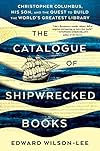
As a professional archivist I found this to be a very cool work, considering that Hernando Colon (the illegitimate son of Christopher Columbus) seems to be a man after my own heart, with his obsessions regarding books and information and how to organize the positive onslaught of stuff that was already pouring forth from the printing presses of Europe in the early to mid 1500s. Though with a little more luck Colon might have been remembered as the father of library science, his real impact show more was to create the Christopher Columbus of popular myth; this spinning of the image of the great man being necessary to maintain the Colon family's fortunes as courtiers of the royal House of Spain. While I found this to be a lively story, the reality is that Wilson-Lee assumes that you have some background in the period, and will otherwise, dare I say it, be somewhat left out to sea. show less
Lists
Awards


You May Also Like


Associated Authors
Statistics
- Works
- 6
- Members
- 962
- Popularity
- #26,759
- Rating
- 4.0
- Reviews
- 27
- ISBNs
- 39
- Languages
- 5
- Favorited
- 1