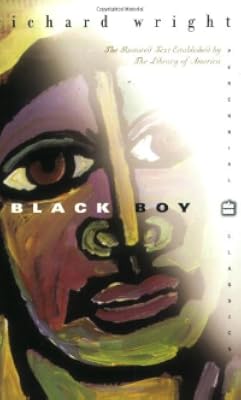
Black Boy
by Richard Wright
On This Page
Description
The author grew up in the woods of Mississippi amid poverty, hunger, fear, and hatred. He lied, stole, and raged at those around him; at six he was a "drunkard", hanging about in taverns. Surly, brutal, cold, suspicious, and self-pitying, he was surrounded on one side by whites who were either indifferent to him, pitying, or cruel, and on the other side by blacks who resented anyone trying to rise above the common law. This is the author's powerful account of his journey from innocence to show more experience in the Jim Crow South. It is an unashamed confession and a profound indictment, a poignant and disturbing record of social injustice and human suffering. show lessTags
Recommendations


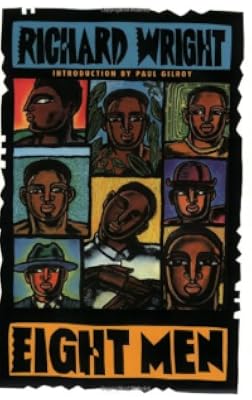

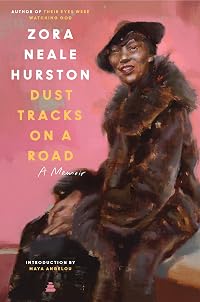
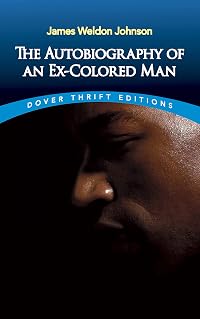
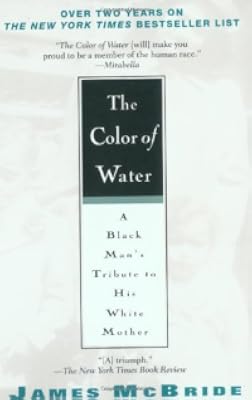




Member Reviews
I think this book will sit with me forever. Wright has such intuitive self-awareness. He brings you right down to the raw experience of his life and doesn’t spare himself or others. He is unflinchingly honest.
28. Black Boy by Richard Wright
contributors: Foreword by John Edgar Wideman, Afterward by Malcolm Wright, “A Tribute to my Father” by Julia Wright (all for this edition, 2020), and extracts from a 1993 introduction by Jerry W. Ward, Jr.
OPD: 1945
format: Harper Perennial Modern Classics 75th-anniversary edition paperback with restored text.
acquired: November read: Apr 16-30 time reading: 15:13, 2.0 mpp
rating: 5
genre/style: Classic autobiography theme: Richard Wright
locations: Jackson, MS, Memphis, TN, Arkansas & Chicago.
about the author: American author born on a Mississippi plantation, 1908-1960
This is a special book. An eye-witness account of the 1920's Jim Crowe south from black perspective, and by a really talented writer. show more Wright's mind was built for this and the life story comes across so crystalline. He has this way of making himself a regular person in the deranged world. It‘s dystopian, and nonfictional. Add in his poverty, and constant hunger. His family sometimes simply didn't have food. His response, his strength, but also his tone towards those around him - expressing that shock of “What are these people thinking?!…Is this real?” - is incredibly powerful. It‘s simply an amazing window into that reality, our history.
The book was originally written in two parts, but only part one was published in 1945, titled Black Boy. This was Wright's account of growing up in the Jim Crowe South early in the 20th-century, Civil Rights nowhere in sight. It's a sparkling account and unrivaled classic. The second part, later published posthumously in 1977 as [American Hunger], covers Wright's experiences in Chicago during the Great Depression, struggling to get by, and hungry enough he was unable to pass a post office weight requirement. It focuses heavily on his relationship and experiences with the Chicago Communist community, which was also his link to a white intellectual community, including artists of prominence. This part, to me, is a curiosity, but lacks the raw power of [Black Boy].
It's certainly interesting that the Communist element was edited out of the book in 1945 and not published until after Wright died, but there is no question the better part was the part published. One interesting aspect is that the reconstructed book ends softly. However, when he agreed to only publish part one, he added a conclusion that is really quite beautiful and powerful, although relegated to a footnote in this reconstructed original text edition. The 1945 edition of [Black Boy] ends on a hopeful note, with Wright looking towards his life in the North. It doesn't address the drudgery of the life. He closes:
2023
https://www.librarything.com/topic/348551#8135965 show less
contributors: Foreword by John Edgar Wideman, Afterward by Malcolm Wright, “A Tribute to my Father” by Julia Wright (all for this edition, 2020), and extracts from a 1993 introduction by Jerry W. Ward, Jr.
OPD: 1945
format: Harper Perennial Modern Classics 75th-anniversary edition paperback with restored text.
acquired: November read: Apr 16-30 time reading: 15:13, 2.0 mpp
rating: 5
genre/style: Classic autobiography theme: Richard Wright
locations: Jackson, MS, Memphis, TN, Arkansas & Chicago.
about the author: American author born on a Mississippi plantation, 1908-1960
This is a special book. An eye-witness account of the 1920's Jim Crowe south from black perspective, and by a really talented writer. show more Wright's mind was built for this and the life story comes across so crystalline. He has this way of making himself a regular person in the deranged world. It‘s dystopian, and nonfictional. Add in his poverty, and constant hunger. His family sometimes simply didn't have food. His response, his strength, but also his tone towards those around him - expressing that shock of “What are these people thinking?!…Is this real?” - is incredibly powerful. It‘s simply an amazing window into that reality, our history.
The book was originally written in two parts, but only part one was published in 1945, titled Black Boy. This was Wright's account of growing up in the Jim Crowe South early in the 20th-century, Civil Rights nowhere in sight. It's a sparkling account and unrivaled classic. The second part, later published posthumously in 1977 as [American Hunger], covers Wright's experiences in Chicago during the Great Depression, struggling to get by, and hungry enough he was unable to pass a post office weight requirement. It focuses heavily on his relationship and experiences with the Chicago Communist community, which was also his link to a white intellectual community, including artists of prominence. This part, to me, is a curiosity, but lacks the raw power of [Black Boy].
It's certainly interesting that the Communist element was edited out of the book in 1945 and not published until after Wright died, but there is no question the better part was the part published. One interesting aspect is that the reconstructed book ends softly. However, when he agreed to only publish part one, he added a conclusion that is really quite beautiful and powerful, although relegated to a footnote in this reconstructed original text edition. The 1945 edition of [Black Boy] ends on a hopeful note, with Wright looking towards his life in the North. It doesn't address the drudgery of the life. He closes:
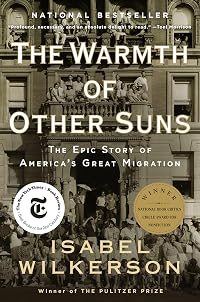
"Yet, deep down, I knew that I could never really leave the South, for my feelings had already been formed by the South, for there had been slowly instilled into my personality and consciousness, black though I was, the culture of the South. So, in leaving, I was taking a part of the South to transplant in alien soil, to see if it could grow differently, if it could drink of new and cool rains, bend in strange winds, respond to the warmth of other suns, and, perhaps, to bloom...And if that miracle ever happened, then I would know that there was yet hope in that southern swamp of despair and violence, that light could emerge even out of the blackest of the southern night. I would know that the South too could overcome its fear, its hate, its cowardice, its heritage of guilt and blood, its burden of anxiety and compulsive cruelty."
2023
https://www.librarything.com/topic/348551#8135965 show less
Such a powerful memoir of growing up in the south. The author of Native Son tells his own story, full of hunger and pain. It's hard to believe that it was published 75 years ago and so many of his points are still relevant now.
“The things that influenced my conduct as a negro didn’t have to happen to me directly. I needed but to hear of them, to feel their full effects in the deepest layers of my consciousness. Indeed, the white brutality that I had not seen was more effective control of my behavior than that which I knew.”
“Reading was like a drug, a dope. The novels created moods in which I lived for days.”
“Ought one to surrender to authority even if one believed that that authority was wrong? If the answer was yes, then show more I knew that I would always be wrong, because I could never do it. Then how could one live in a world in which one's mind and perceptions meant nothing and authority and tradition meant everything? There were no answers.”
“I feel that for white America to understand the significance of the problem of the Negro will take a bigger and tougher America than any we have yet known. I feel that America's past is too shallow, her national character too superficially optimistic, her very morality too suffused with color hate for her to accomplish so vast and complex a task. Culturally the Negro represents a paradox: Though he is an organic part of the nation, he is excluded by the ride and direction of American culture. Frankly, it is felt to be right to exclude him, and it if felt to be wrong to admit him freely. Therefore if, within the confines of its present culture, the nation ever seeks to purge itself of its color hate, it will find itself at war with itself, convulsed by a spasm of emotional and moral confusion. If the nation ever finds itself examining its real relation to the Negro, it will find itself doing infinitely more than that; for the anti-Negro attitude of whites represents but a tiny part - though a symbolically significant one - of the moral attitude of the nation. Our too-young and too-new America, lusty because it is lonely, aggressive because it is afraid, insists upon seeing the world in terms of good and bad, the holy and the evil, the high and the low, the white and the black; our America is frightened of fact, of history, of processes, of necessity. It hugs the easy way of damning those whom it cannot understand, of excluding those who look different, and it salves its conscience with a self-draped cloak of righteousness." show less
“The things that influenced my conduct as a negro didn’t have to happen to me directly. I needed but to hear of them, to feel their full effects in the deepest layers of my consciousness. Indeed, the white brutality that I had not seen was more effective control of my behavior than that which I knew.”
“Reading was like a drug, a dope. The novels created moods in which I lived for days.”
“Ought one to surrender to authority even if one believed that that authority was wrong? If the answer was yes, then show more I knew that I would always be wrong, because I could never do it. Then how could one live in a world in which one's mind and perceptions meant nothing and authority and tradition meant everything? There were no answers.”
“I feel that for white America to understand the significance of the problem of the Negro will take a bigger and tougher America than any we have yet known. I feel that America's past is too shallow, her national character too superficially optimistic, her very morality too suffused with color hate for her to accomplish so vast and complex a task. Culturally the Negro represents a paradox: Though he is an organic part of the nation, he is excluded by the ride and direction of American culture. Frankly, it is felt to be right to exclude him, and it if felt to be wrong to admit him freely. Therefore if, within the confines of its present culture, the nation ever seeks to purge itself of its color hate, it will find itself at war with itself, convulsed by a spasm of emotional and moral confusion. If the nation ever finds itself examining its real relation to the Negro, it will find itself doing infinitely more than that; for the anti-Negro attitude of whites represents but a tiny part - though a symbolically significant one - of the moral attitude of the nation. Our too-young and too-new America, lusty because it is lonely, aggressive because it is afraid, insists upon seeing the world in terms of good and bad, the holy and the evil, the high and the low, the white and the black; our America is frightened of fact, of history, of processes, of necessity. It hugs the easy way of damning those whom it cannot understand, of excluding those who look different, and it salves its conscience with a self-draped cloak of righteousness." show less
Moving account of growing up under Jim Crow and being unable and unwilling to buckle under. Two things particularly struck me: (1) Southern whites would take offense at Wright without him doing anything overt, merely because he carried himself with a dignity they could sense, and hate; (2) Wright could not get books critiquing social issues out of the library without forging a white person's request for him to pick them up. He's says he'd rather be a feudal peasant than black in that place and time. You really get a feeling of race as indelible caste here: the elemental Jim Crow crime was to think you had equal human status with whites.
Rightfully a classic.
In this book, written in the 1930s, Wright describes his childhood in the south. In his early years he lived a life free of white-black conflict, and therefore did not develop any particular feeling toward whites. So when he was a little older, living in Mississippi, and starting to see the differences in the ways whites behaved toward blacks and vice versa, he had trouble with it.
Unlike so many others, he never did shake that feeling that something was wrong. He never accepted the position of inferior, even when he tried to fake it. And he was not good at faking it. Time and again black and white people alike chastized him for not reacting properly and he simply did not get it.
As he grew older and more aware, show more he became angrier. He would ask other blacks why they accepted being treated as slaves. He would answer white people's questions honestly and see the quick thread of fear and anger as the white person realized he knew what was going on.
He realized too that both colors were caught in this situation. Yes, the whites had the privileges, but they had to keep up a pretense that all blacks were lazy and stupid, and many of them knew somewhere inside that it wasn't true. Which made them defensive and angrier.
Wright's understanding of his position, his reading of others, is remarkable. Out of a lifetime of being put down, not only by white but by his own family, he stands up, he remains confident and assured of his worth. In this beautifully-written autobiography he lays it all out for the rest of us to see and digest. show less
In this book, written in the 1930s, Wright describes his childhood in the south. In his early years he lived a life free of white-black conflict, and therefore did not develop any particular feeling toward whites. So when he was a little older, living in Mississippi, and starting to see the differences in the ways whites behaved toward blacks and vice versa, he had trouble with it.
Unlike so many others, he never did shake that feeling that something was wrong. He never accepted the position of inferior, even when he tried to fake it. And he was not good at faking it. Time and again black and white people alike chastized him for not reacting properly and he simply did not get it.
As he grew older and more aware, show more he became angrier. He would ask other blacks why they accepted being treated as slaves. He would answer white people's questions honestly and see the quick thread of fear and anger as the white person realized he knew what was going on.
He realized too that both colors were caught in this situation. Yes, the whites had the privileges, but they had to keep up a pretense that all blacks were lazy and stupid, and many of them knew somewhere inside that it wasn't true. Which made them defensive and angrier.
Wright's understanding of his position, his reading of others, is remarkable. Out of a lifetime of being put down, not only by white but by his own family, he stands up, he remains confident and assured of his worth. In this beautifully-written autobiography he lays it all out for the rest of us to see and digest. show less
Black Boy is one that I read in high school without ever truly appreciating it. This re-read definitely corrected my ignorance and failure at respect, for Mr. Wright is more than worthy of a reader's respect. Surrounded by ignorance, abject poverty, and an entire society that considered him less than human, Mr. Wright was able to overcome all odds and escaped to the North without ever allowing the Jim Crow South to beat him. Even more worthy of accolades is the fact that Black Boy was first published in 1945, a time when racial relations were still not discussed and were not going to improve for another twenty-plus years. The fact that he took a chance at sharing his poignant, painful and shocking story, and that Harper was willing to show more publish it, shows a level of bravery most people can only dream of obtaining.
Any bibliophile can appreciate the power of the written word. As expressed by Mr. Wright, one can understand why education is such an important experience for the poverty-stricken. Without the written word, one could even argue that Mr. Wright would have never gathered the courage to leave the South.
"Yes, this man was fighting, fighting with words. He was using words as weapons, using them as one would use a club. Could words be weapons? Well, yes, for here they were. Then, maybe, perhaps, I could use them as a weapon?" (pg. 272)
Without this exposure to novels that he obtains through his illegal library card, he very literally would not become the man that he did. He very literally uses novels as a method of obtaining hope. What makes his story all the more special, as if it needs any further reason, is the sheer reverence he expresses towards the written word. Any fellow reader can appreciate the otherworldly awareness that Mr. Wright experiences when hearing his first real novel:
"The tale made the world around me be, throb, live. As she spoke, reality changed, the look of things altered, and the world became peopled with magical presences. My sense of life deepened and the feel of things was different, somehow." (pg. 47)
Mr. Wright shares his story with a forthrightness that a reader can appreciate, even when his story is painful or just downright uncomfortable. He confronts the truth directly, not shying away from sharing the hard lessons he faced. A reader is left both shocked and awed by his prose, as well as his story.
As I was reading, I could not help but consider the lessons of Black Boy and the lessons to be learned by today's children. While racial inequalities still exist, they are no where as severe as they were in the 1930s. Would today's younger generations understand? Would they get the importance of the novel? Would they appreciate the struggles depicted? Can they glean an understanding of today's racial divide just by looking to the past? When put into this perspective, it becomes clear just how little time separates Mr. Wright's South from Rosa Parks' South from the South of today. Has enough really been accomplished?
"Whenever I thought of the essential bleakness of black life in America, I knew that Negroes had never been allowed to catch the full spirit of Western civilization, that they lived somehow in it but not of it. And when I brooded upon the cultural barrenness of black life, I wondered if clean, positive tenderness, love, honor, loyalty, and the capacity to remember were native with man. I asked myself if these human qualities were not fostered, won, struggled and suffered for, preserved in ritual from one generation to another." (pg. 45)
These are great questions that still have relevance today.
Mr. Wright's story is remarkable in his depictions of his struggles. He fought not only to survive but to be an individual at a time and in a society where individuality was a deadly trait. His family tried to beat this individuality out of him; society tried to scare it out of him. Yet, he prevailed. Mr Wright could have easily succumbed to the pressures of society, but he stood firm. This is a lesson people of all ages and races can learn. show less
Any bibliophile can appreciate the power of the written word. As expressed by Mr. Wright, one can understand why education is such an important experience for the poverty-stricken. Without the written word, one could even argue that Mr. Wright would have never gathered the courage to leave the South.
"Yes, this man was fighting, fighting with words. He was using words as weapons, using them as one would use a club. Could words be weapons? Well, yes, for here they were. Then, maybe, perhaps, I could use them as a weapon?" (pg. 272)
Without this exposure to novels that he obtains through his illegal library card, he very literally would not become the man that he did. He very literally uses novels as a method of obtaining hope. What makes his story all the more special, as if it needs any further reason, is the sheer reverence he expresses towards the written word. Any fellow reader can appreciate the otherworldly awareness that Mr. Wright experiences when hearing his first real novel:
"The tale made the world around me be, throb, live. As she spoke, reality changed, the look of things altered, and the world became peopled with magical presences. My sense of life deepened and the feel of things was different, somehow." (pg. 47)
Mr. Wright shares his story with a forthrightness that a reader can appreciate, even when his story is painful or just downright uncomfortable. He confronts the truth directly, not shying away from sharing the hard lessons he faced. A reader is left both shocked and awed by his prose, as well as his story.
As I was reading, I could not help but consider the lessons of Black Boy and the lessons to be learned by today's children. While racial inequalities still exist, they are no where as severe as they were in the 1930s. Would today's younger generations understand? Would they get the importance of the novel? Would they appreciate the struggles depicted? Can they glean an understanding of today's racial divide just by looking to the past? When put into this perspective, it becomes clear just how little time separates Mr. Wright's South from Rosa Parks' South from the South of today. Has enough really been accomplished?
"Whenever I thought of the essential bleakness of black life in America, I knew that Negroes had never been allowed to catch the full spirit of Western civilization, that they lived somehow in it but not of it. And when I brooded upon the cultural barrenness of black life, I wondered if clean, positive tenderness, love, honor, loyalty, and the capacity to remember were native with man. I asked myself if these human qualities were not fostered, won, struggled and suffered for, preserved in ritual from one generation to another." (pg. 45)
These are great questions that still have relevance today.
Mr. Wright's story is remarkable in his depictions of his struggles. He fought not only to survive but to be an individual at a time and in a society where individuality was a deadly trait. His family tried to beat this individuality out of him; society tried to scare it out of him. Yet, he prevailed. Mr Wright could have easily succumbed to the pressures of society, but he stood firm. This is a lesson people of all ages and races can learn. show less
Richard Wright earned his political extremism. It is no wonder that, after leaving the violence and racial kabuki theater of Jim Crow South, he finds the comfort in the supposedly egalitarian arms of the communist party in Chicago. Wright would eventually disavow the party for its unthinking dogma, its distrust of intellectuals, and its suppression of factions and disagreement.
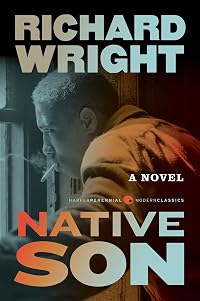
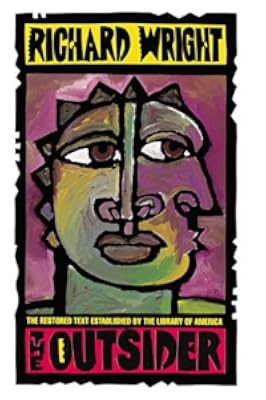
These issues are also explored in Wright's great work of fiction, Native Son. There is something uncomfortable about Wright's prose, not just for its exposure of shocking racial injustice that is one of the great ironies of the American experience. You also get the sense that Wright is a man who will never truly find his place in society, and that this is the show more curse of the true intellectual. It is no wonder that Wright was drawn to French existentialist writers Camus and Sartre, and that he tried to write his own existentialist work titled The Outsider. The thinking man grows to understand his isolation from others, and that any union or community is illusory, built on a foundation of lies and self-deception. show less
These issues are also explored in Wright's great work of fiction, Native Son. There is something uncomfortable about Wright's prose, not just for its exposure of shocking racial injustice that is one of the great ironies of the American experience. You also get the sense that Wright is a man who will never truly find his place in society, and that this is the show more curse of the true intellectual. It is no wonder that Wright was drawn to French existentialist writers Camus and Sartre, and that he tried to write his own existentialist work titled The Outsider. The thinking man grows to understand his isolation from others, and that any union or community is illusory, built on a foundation of lies and self-deception. show less
Members
- Recently Added By
Lists

100 Biographies and Memoirs to Read in a (Single) Lifetime
98 works; 12 members

Black Authors
384 works; 32 members

Memoirs - Mary Karr
14 works; 1 member

Modern Library 100 Best Nonfiction Books
100 works; 8 members

Favorite Coming of Age Novels.
164 works; 51 members

Trinity College Booklist (1951): Class Six, Biography
119 works; 4 members
Ten Books That Have Stayed With Me
160 works; 30 members

David Bowie’s Top 100 Favourite Reads
100 works; 3 members

Recommended Reading : 600 Classics Reviewed, Editors of Salem Press, 2015
634 works; 6 members

Publisher's Weekly NON-Fiction list - 1912 - 1975
486 works; 4 members

AP Lit
363 works; 6 members

KIB Non-Fiction Book Cloud
41 works; 1 member
Southern Fiction
212 works; 52 members
Harold Bloom - The Western Canon: D. The Chaotic Age
833 works; 24 members

Recommendations for Ezra
12 works; 1 member

Non-Fiction Worth Reading
1,016 works; 262 members

20th Century Literature
1,161 works; 55 members
Banned Books Week 2014
268 works; 63 members
Read These Too
458 works; 9 members

Carole's List
445 works; 13 members

Best African and African diaspora books
111 works; 4 members
David Bowie's Top 100
97 works; 23 members

David Bowie's List of Top 100 Books
94 works; 6 members
Best African American Literature
53 works; 9 members

Books featuring grandmothers
56 works; 12 members

Schomburg Centennial Reading List
100 works; 4 members
Author Information

55+ Works 19,438 Members
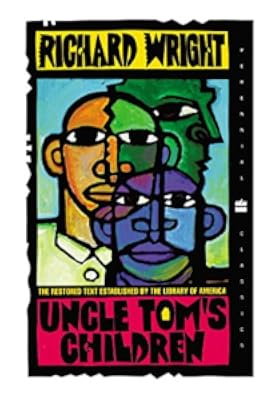
Richard Wright was generally thought of as one of the most gifted contemporary African American writers until the rise of James Baldwin. "With Wright, the pain of being a Negro is basically economic---its sight is mainly in the pocket. With Baldwin, the pain suffuses the whole man. . . . If Baldwin's sights are higher than Wright's, it is in part show more because Wright helped to raise them" (Time). Wright was born on a plantation near Natchez, Mississippi, the son of a sharecropper. At the age of 15, he started to work in Memphis, then in Chicago, then "bummed all over the country," supporting himself by various odd jobs. His early writing was in the smaller magazines---first poetry, then prose. He won Story Story's $500 prize---for the best story written by a worker on the Writer's Project---with "Uncle Tom's Children" in 1938, his first important publication. He wrote Native Son (1940) in eight months, and it made his reputation. Based in part on the actual case of a young black murderer of a white woman, it was one of the first of the African American protest novels, violent and shocking in its scenes of cruelty, hunger, rape, murder, flight, and prison. Black Boy (1945) is the simple, vivid, and poignant story of Wright's early years in the South. It appeared at the beginning of a new postwar awareness of the evils of racial prejudice and did much to call attention to the plight of the African American. The Outsider (1953) is a novel based on Wright's own experience as a member of the Communist party, an affiliation he terminated in 1944. He remained politically inactive thereafter and from 1946 until his death made his principal residence in Paris. His nonfiction writings on problems of his race include Black Power: A Record of Reactions in a Land of Pathos (1954), about a visit to the Gold Coast, White Man, Listen (1957), and Twelve Million Black Voices: A Folk History of the Negro in the United States. (Bowker Author Biography) Richard Wright was born on a plantation near Natchez, Mississippi. His father left the family when Wright was only five years old, and he was raised first by his mother and then by a series of relatives. What little schooling he had ended with his graduation from ninth grade in Memphis, Tennessee. At age 15, he started to work in Memphis, and later worked in Chicago before traveling across the country supporting himself with odd jobs. When Wright finally returned to Chicago, he got a job with the federal Writer's Project, a government-supported arts program. He was quite successful, winning a $500 prize from a magazine for the best fiction written by a participant in that program. In Chicago, he was also introduced to leftist politics and became a member of the Communist Party. In 1937, Wright left Chicago for New York, where he became Harlem editor for the Communist national newspaper, The Daily Worker, and where he met future novelist, Ralph Ellison. Wright became a celebrated author with the publication of Native Son (1940), a novel he wrote in only eight months. Based on the actual case of a young black murderer of a white woman, it was one of the first of the modern black protest novels, violent and shocking in its sense of cruelty, hunger, rape, murder, flight, and prison. This novel brought Wright both fame and financial security. He followed it with his autobiography, Black Boy (1945), which was also successful. In 1942, Wright and his wife broke with the Communist Party, and in 1947, they moved to France, where Wright lived the rest of his life. His novel The Outsider (1953) is based on his experiences as a member of the Communist Party. Wright is regarded as a major modern American writer, one of the first black writers to reach a large white audience, and thereby raise the level of national awareness of the continuing problem of racism in America. In many respects Wright paved the way for all black writers who followed him. (Bowker Author Biography) show less
Some Editions
Awards and Honors
Distinctions
Notable Lists
Series
Belongs to Publisher Series
Gyldendals Tranebøger (200)
Harper Perennial Olive Editions (2015 Olive)
Lanterne (L 37)
Nuovi Coralli [Einaudi] (211)
Gallimard, Folio (592)
Work Relationships
Is contained in
Has the adaptation
Is abridged in
Has as a commentary on the text
Has as a student's study guide
Common Knowledge
- Canonical title
- Black Boy
- Original title
- Black Boy: A Record of Childhood and Youth
- Original publication date
- 1945
- Important places
- Mississippi, USA
- Epigraph
- They meet with darkness in the daytime And they grope at noonday as in the night... -- Job
His strength shall be hunger-bitten,
And destruction shall be ready at his side.
--JOB - Dedication
- For
ELLEN and JULIA,
who always live in my heart. - First words
- One winter morning in the long-ago, four-year old days of my life I found myself standing before a fireplace, warming my hands over a mound of glowing coals, listening to the wind whistle past the house outside.
- Last words
- (Click to show. Warning: May contain spoilers.)With ever watchful eyes and bearing scars, visible and invisible, I headed North, full of a hazy notion that life could be lived with dignity, that the personalities of others shold not be violated, that men should be able to confront other men without fear or shame, and that if men were lucky in their living on earth they might win some redeeming meaning for their having struggled and suffered here beneath the stars.
(Click to show. Warning: May contain spoilers.)I would send other words to tell, to march, to fight, to create a sense of the hunger for life that gnaws in us all, to keep alive in our hearts a sense of the inexpressibly human. - Original language
- English US
Classifications
Statistics
- Members
- 5,892
- Popularity
- 2,200
- Reviews
- 73
- Rating
- (4.00)
- Languages
- 12 — Danish, English, Finnish, French, German, Italian, Norwegian (Nynorsk), Norwegian (Bokmål), Norwegian, Portuguese, Spanish, Swedish
- Media
- Paper, Audiobook, Ebook
- ISBNs
- 87
- UPCs
- 1
- ASINs
- 79