
Edward P. Jones
Author of The Known World
About the Author
Image credit: Courtesy of the Pulitzer Prizes.
Works by Edward P. Jones
A Rich Man [short fiction] 1 copy
A New Man [short fiction] 1 copy
Hue and Cry: Stories 1 copy
The World Above 1 copy
Associated Works
The Scribner Anthology of Contemporary Short Fiction: Fifty North American American Stories Since 1970 (1999) — Contributor — 588 copies, 4 reviews
The Vintage Book of Contemporary American Short Stories (1994) — Contributor — 548 copies, 2 reviews
You've Got to Read This: Contemporary American Writers Introduce Stories that Held Them in Awe (1994) — Introduction — 415 copies, 3 reviews
The Art of the Story: An International Anthology of Contemporary Short Stories (1999) — Contributor — 395 copies, 5 reviews
The Ecco Anthology of Contemporary American Short Fiction (2008) — Contributor — 142 copies, 2 reviews
Children of the Night: The Best Short Stories by Black Writers, 1967 to the Present (1995) — Contributor — 127 copies
Who's Writing This? Notations on the Authorial I, with Self-Portraits {not Antæus} (1995) — Contributor — 76 copies
Black Noir: Mystery, Crime, and Suspense Fiction by African-American Writers (2009) — Contributor — 61 copies, 1 review
The Word: Black Writers Talk About the Transformative Power of Reading and Writing (2011) — Contributor — 35 copies, 2 reviews
Tagged
Common Knowledge
- Legal name
- Jones, Edward Paul
- Birthdate
- 1950-10-05
- Gender
- male
- Education
- College of the Holy Cross
University of Virginia - Organizations
- Fellowship of Southern Writers
- Awards and honors
- Lannan Literary Award (Fiction, 1994, 2003)
American Academy of Arts and Letters Academy Award (Literature, 2005) - Agent
- Eric Simonoff
- Nationality
- USA
- Birthplace
- Washington, D.C., USA
- Places of residence
- Washington, D.C., USA
Arlington, Virginia, USA - Associated Place (for map)
- USA
Members
Reviews
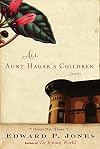
I finished reading All Aunt’s Hagar Children a few days ago and had to come back to write a little blurb about it because those stories are still lingering around me. Of course, as in any collection of stories, 3 or 4 make a bigger impact then the rest, however I was quite surprised of how even this selection is overall. Not a small task in a book with 14 stories.
Those are complex stories, with a multitude of secondary characters – neighbors, relatives, ancestors – showing up and show more furnishing the main story line with flavor and color and creating whole universes. The language is poetic. The prose is full of subtle – and not so subtle - magic realism: the devil shows up at a grocery store; a woman paints pictures of people dead in different countries and time; and yet another woman becomes blind while taking the bus home. But, most often, the stories are about people dealing with the tragedies of their lives, small and big disappointments and endless hope for whatever is to come.
I do love short stories, a genre I realize not every reader appreciates. And Edward P. Jones excels at the genre. I did love his novel “The Known World”, but I crave for more of his short stories. show less
Those are complex stories, with a multitude of secondary characters – neighbors, relatives, ancestors – showing up and show more furnishing the main story line with flavor and color and creating whole universes. The language is poetic. The prose is full of subtle – and not so subtle - magic realism: the devil shows up at a grocery store; a woman paints pictures of people dead in different countries and time; and yet another woman becomes blind while taking the bus home. But, most often, the stories are about people dealing with the tragedies of their lives, small and big disappointments and endless hope for whatever is to come.
I do love short stories, a genre I realize not every reader appreciates. And Edward P. Jones excels at the genre. I did love his novel “The Known World”, but I crave for more of his short stories. show less
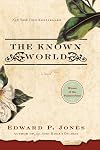
[The Known World] is a complex look at slavery, set in a fictional county in Virginia in the 1830s. Jones's book goes deeper than the typical Southern white wealthy family owning hundreds of black slaves longing for freedom. In fact, several of the main characters here are free blacks who own slaves. Throughout the book, there is gray area on race - expectations of character, behavior, and wealth are turned on its head. There were lots of times, especially as I was settling into the show more characters, that I couldn't remember if the characters were black or white without thinking about it - not necessarily typical for a book set in this time period and location, where race meant everything. In addition to the moral complexities, Jones plays with time in a way I really enjoyed. The novel is basically linear, except that he'll insert quick glimpses into a character's future and even the future of his/her descendants.
So, what is the book about? Henry Townsend is a former slave whose father worked to free himself, his wife, and then his son from the wealthiest man in Manchester County, William Robbins. Robbins sees some promise in Henry and mentors him. Robbins has a complex relationship with his slaves, taking a mistress from his slaves and freeing her and their mixed race (considered black at the time) children. Henry marries Caldonia, another free black woman, who studied with the same black (though she could pass for white) teacher, Fern Elston. Henry dies young after amassing a fairly large farm and large number of slaves, to his parents' dismay. Caldonia is left to run the farm with Henry's first slave and overseer, Moses. There are many other stories being explored simultaneously and they all weave together to create a rich texture and complex novel.
I thought this book was fantastic and important both for the craft of the writing and the topic. I can see it becoming part of the southern American canon with Toni Morrison and Faulkner. show less
So, what is the book about? Henry Townsend is a former slave whose father worked to free himself, his wife, and then his son from the wealthiest man in Manchester County, William Robbins. Robbins sees some promise in Henry and mentors him. Robbins has a complex relationship with his slaves, taking a mistress from his slaves and freeing her and their mixed race (considered black at the time) children. Henry marries Caldonia, another free black woman, who studied with the same black (though she could pass for white) teacher, Fern Elston. Henry dies young after amassing a fairly large farm and large number of slaves, to his parents' dismay. Caldonia is left to run the farm with Henry's first slave and overseer, Moses. There are many other stories being explored simultaneously and they all weave together to create a rich texture and complex novel.
I thought this book was fantastic and important both for the craft of the writing and the topic. I can see it becoming part of the southern American canon with Toni Morrison and Faulkner. show less
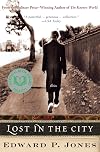
These stories were hard for me to read because they hardly seem like fiction. Almost every character seemed like a person I've met, and every one seemed real. This is heavy and complicated stuff, the way that people's lives are destroyed or made unbearably difficult by circumstances beyond their control and, sometimes, confounded by their own choices. Even when good things happen, there's an undercurrent of pain, in the racism and oppression that infiltrates the lives of every character, no show more matter how educated or successful by conventional measures. show less
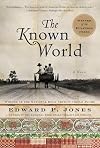
This book demands that you read it slowly and intently. Like eating a huge Thanksgiving dinner, you need to pause and digest before you have the next course. At the outset, the plot seems to be all over the place, bouncing from character to character, telling too many stories, not telling enough and then seeming to tell too much. Ah, but then, you make a little progress and the rhythm begins to assert itself, the stories begin to weave together, the minute details begin to become a diorama, show more the picture stops being a blur and comes into sharp focus. This isn’t one man’s story, or even the story of one place, this is the story of all men and this is the tale of a world.
This book is not so much about race as it is about the abject insanity and evil of the institution of slavery, wherever it is found, whoever is practicing it. In this system, there are free black masters holding black slaves, some of them well-meaning, but it does not make the practice any less immoral. There are white men who love their black mistresses and the children they bear, but it does not remove the fact that they hold a dominion over them that is not borne of love in any of its guises. There are also individuals who are victims of the system and others who refuse to be victims of the system, even at the cost of their lives.
I loved many of Jones’ characters, notably Augustus and Mildred Townsend. They exemplify what is the best in us. I felt sorry for some of them, like Sheriff John Skiffington, who would like to be better than this society allows him to be, and Caldonia Townsend’s brother, Calvin, who wishes to go to New York so that he will not have to bear witness to the cruelties around him, cruelties he must realized have escaped him only because of a trick of fortune. I despised some of them, and I recognized most of them. The petty and jealous, who must have dominion over someone to feel they have worth; the ungrateful and traitorous, who would turn upon a friend to put some silver in their own pockets; the meek and hopeless, who bow to the yoke and try simply to find a corner in which they are allowed to exist; the defiant and strong-minded, who fight with their last breath because to do otherwise is to prop up the indefensible; all are here.
What I loved most about this novel is its genuineness, its lack of exaggeration or hyperbole, where surely none is needed, its emphasis on the day-to-day injustice of an institution that is accepted as insurmountable or even correct only because it is what is. Edward P. Jones has leveled an attack at the heart of mankind and defied one to imagine what they would have done, what they would have dared to do, in such a place and time. show less
This book is not so much about race as it is about the abject insanity and evil of the institution of slavery, wherever it is found, whoever is practicing it. In this system, there are free black masters holding black slaves, some of them well-meaning, but it does not make the practice any less immoral. There are white men who love their black mistresses and the children they bear, but it does not remove the fact that they hold a dominion over them that is not borne of love in any of its guises. There are also individuals who are victims of the system and others who refuse to be victims of the system, even at the cost of their lives.
I loved many of Jones’ characters, notably Augustus and Mildred Townsend. They exemplify what is the best in us. I felt sorry for some of them, like Sheriff John Skiffington, who would like to be better than this society allows him to be, and Caldonia Townsend’s brother, Calvin, who wishes to go to New York so that he will not have to bear witness to the cruelties around him, cruelties he must realized have escaped him only because of a trick of fortune. I despised some of them, and I recognized most of them. The petty and jealous, who must have dominion over someone to feel they have worth; the ungrateful and traitorous, who would turn upon a friend to put some silver in their own pockets; the meek and hopeless, who bow to the yoke and try simply to find a corner in which they are allowed to exist; the defiant and strong-minded, who fight with their last breath because to do otherwise is to prop up the indefensible; all are here.
What I loved most about this novel is its genuineness, its lack of exaggeration or hyperbole, where surely none is needed, its emphasis on the day-to-day injustice of an institution that is accepted as insurmountable or even correct only because it is what is. Edward P. Jones has leveled an attack at the heart of mankind and defied one to imagine what they would have done, what they would have dared to do, in such a place and time. show less
Lists
To Read (1)
To read (1)
Southern Fiction (1)
USA Road Trip (1)
Carole's List (1)
AP Lit (1)
First Novels (1)
Awards


You May Also Like


Associated Authors
Statistics
- Works
- 13
- Also by
- 29
- Members
- 9,412
- Popularity
- #2,553
- Rating
- 3.9
- Reviews
- 198
- ISBNs
- 90
- Languages
- 10
- Favorited
- 18


