
ZZ Packer
Author of Drinking Coffee Elsewhere
About the Author
ZZ Packer's stories have appeared in The New Yorker, Harper's, and Story. Packer is a recipient of a Whiting Writers' Award and a Rona Jaffe Foundation Writers' Award. A graduate of Yale, the Iowa Writers' Workshop, and the Writing Seminar at Johns Hopkins University, she has been a Wallace Stegner show more -- Truman Capote fellow at Stanford University, where she is currently a Jones lecturer. She lives in the San Francisco Bay area show less
Image credit: Larry D. Moore
Works by ZZ Packer
Associated Works
The Workshop: Seven Decades of the Iowa Writers Workshop - 43 Stories, Recollections, & Essays on Iowa's Place in Twentieth-Century American Literature (1999) — Contributor — 197 copies, 1 review
One Big Happy Family: 18 Writers Talk About Open Adoption, Mixed Marriage, Polyamory, Househusbandry, Single Motherhood, and Other Realities of Truly Modern Love (2009) — Contributor — 116 copies, 6 reviews
Mentors, Muses & Monsters: 30 Writers on the People Who Changed Their Lives (2009) — Contributor — 71 copies, 2 reviews
More Stories We Tell: The Best Contemporary Short Stories by North American Women (2004) — Contributor — 66 copies
Shaking the Tree: A Collection of Fiction and Memoir by Black Women (2003) — Contributor — 55 copies
Tagged
Common Knowledge
- Legal name
- Packer, Zuwena
- Birthdate
- 1973-01-12
- Gender
- female
- Education
- Yale College (BA|1994)
Johns Hopkins University (MA|1995)
University of Iowa Writers' Workshop (MFA|1999) - Occupations
- writer
- Organizations
- California College of the Arts
San Jose State University
Tulane University - Awards and honors
- Stegner Fellow in Fiction (Stanford University)
San Francisco Writers' Grotto (member)
Granta's Best of Young American Novelists (2007)
Whiting Writers' Award (1999)
Rona Jaffe Foundation Writers’ Award ( [1997])
National Book Foundation "5 Under 35" (2006) - Nationality
- USA
- Birthplace
- Chicago, Illinois, USA
- Places of residence
- Atlanta, Georgia, USA
Louisville, Kentucky, USA
Pacifica, California, USA
Austin, Texas, USA - Associated Place (for map)
- USA
Members
Discussions
26Shorts2026: prompt --- coming-of-age in 26 Short Stories for 2026 (June 13)
Reviews
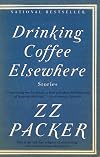
The eight stories in Drinking Coffee Elsewhere reveal an author finding her voice and, perhaps, revelling in its timbre. The best of these stories — I’m thinking of “Brownies,”, “Drinking Coffee Elsewhere,” and “Geese” — show remarkable poise, thoughtfulness, and trust; trust in her readers and in herself. None of the stories is especially innovative. Rather they show a young writer coming into her strength. Rightly lauded by a host of literary luminaries, she is a writer show more on the verge. What comes next will, I think, be truly exciting.
Packer takes on different narrative personae, but in many of her best stories in this collection the voice is of a highly intelligent black woman (whether very young or more mature) gingerly exploring the world around her, more or less successfully. Not always self-aware, the narrative voice is nonetheless urgent and beguiling. It is as though the future is just around the corner and our protagonist is determined to race forward to it rather than wait for its arrival. Inevitably this leads to situations that are unpredictable for the narrator, whether that confusion is due to the subtleties (or lack thereof) of racial demarcation, sexual orientation, or ethno-economic exoticism. When you stride out to meet the future, it often finds you unprepared and scrambling to regain your footing.
Gently recommended. And looking forward to whatever ZZ Packer decides to write next. show less
Packer takes on different narrative personae, but in many of her best stories in this collection the voice is of a highly intelligent black woman (whether very young or more mature) gingerly exploring the world around her, more or less successfully. Not always self-aware, the narrative voice is nonetheless urgent and beguiling. It is as though the future is just around the corner and our protagonist is determined to race forward to it rather than wait for its arrival. Inevitably this leads to situations that are unpredictable for the narrator, whether that confusion is due to the subtleties (or lack thereof) of racial demarcation, sexual orientation, or ethno-economic exoticism. When you stride out to meet the future, it often finds you unprepared and scrambling to regain your footing.
Gently recommended. And looking forward to whatever ZZ Packer decides to write next. show less
This is a splendid collection of African-American stories with a zing. They are biting, funny, and extremely well told.
In “Brownies”, a troop of Brownie scouts at camp decide to beat up the members of the all-white Brownie troop 909 by claiming they heard one of the troop members saying the word “nigger”. The meeting ground was the girls bathroom. The black Brownies’ encounter with Troop 909 was not at all like what they had imagined. This story is uproariously funny, but it has a show more sincere message.
In “Our Lady of Peace”, Lanea suffers through her first year of teaching at a Baltimore inner city school where she reveals mixed feelings to Sheba, a tough, tall unwed mother whose residence is in Our Lady of Peace.
“The Ant of the Self” follows Spurgeon who borrows his mom’s car to take his dad out of jail after posting bail. Little does Spurgeon know, at that time, that he and his dad would be headed to the Million Man March in Washington, DC, to engage in his dad’s entrepreneurial idea. show less
In “Brownies”, a troop of Brownie scouts at camp decide to beat up the members of the all-white Brownie troop 909 by claiming they heard one of the troop members saying the word “nigger”. The meeting ground was the girls bathroom. The black Brownies’ encounter with Troop 909 was not at all like what they had imagined. This story is uproariously funny, but it has a show more sincere message.
In “Our Lady of Peace”, Lanea suffers through her first year of teaching at a Baltimore inner city school where she reveals mixed feelings to Sheba, a tough, tall unwed mother whose residence is in Our Lady of Peace.
“The Ant of the Self” follows Spurgeon who borrows his mom’s car to take his dad out of jail after posting bail. Little does Spurgeon know, at that time, that he and his dad would be headed to the Million Man March in Washington, DC, to engage in his dad’s entrepreneurial idea. show less
This story collection really surprised me. "Before You Suffocate Your Own Fool Self," which I read recently, also featured talented young people of color trying to find their way in the world. What I found so interesting about "Drinking Coffee Elsewhere" was that the stories did not end triumphantly. They explore what happens when a person does not immediately transcend his or her difficult background. The title story in particular takes a hard look at the social isolation of arriving in a show more privileged world from such a low-income background. "Geese" took that idea to an even greater extreme, leaving its main character failing to fend for herself in distant Japan. The characters in these stories don't emerge with their spirits intact on the other side, and it's difficult to see a real way out for most of them. show less
This is an excellent collection of short stories by an author who was skilled at her craft. The characters are vividly drawn, yet the economy of words that is required in the short story genre is still maintained. The plots are engaging and I was never able to stop reading in the middle of a story and return to it later. They engaged me throughout.
The stories are about the experiences of being black in a culture dominated by whites. Because of this, this book is a valuable contribution to show more understanding the immense disservice racism does both the the perpertrators and to the victims.
This book tells stories which I will long remember and leaves me a little wiser and more empathetic about a situation that is a cancer in the American character and where the current political attituds are likely to make things even worse. show less
The stories are about the experiences of being black in a culture dominated by whites. Because of this, this book is a valuable contribution to show more understanding the immense disservice racism does both the the perpertrators and to the victims.
This book tells stories which I will long remember and leaves me a little wiser and more empathetic about a situation that is a cancer in the American character and where the current political attituds are likely to make things even worse. show less
Lists
Awards


You May Also Like


Associated Authors
Statistics
- Works
- 6
- Also by
- 20
- Members
- 1,599
- Popularity
- #16,124
- Rating
- 3.8
- Reviews
- 36
- ISBNs
- 29
- Languages
- 5
- Favorited
- 6
