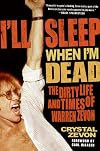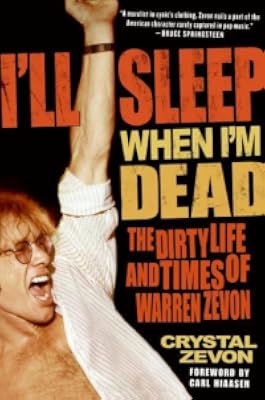
I'll Sleep When I'm Dead: The Dirty Life and Times of Warren Zevon
by Crystal Zevon
On This Page
Description
When Warren Zevon died in 2003, he left behind a rich catalog of dark, witty rock 'n' roll classics, including "Lawyers, Guns and Money," "Excitable Boy," and the immortal "Werewolves of London." He also left behind a fanatical cult following and veritable rock opera of drugs, women, celebrity, genius, and epic bad behavior. As Warren once said, "I got to be Jim Morrison a lot longer than he did." Narrated by his former wife and longtime co-conspirator, Crystal Zevon, this intimate and show more unusual oral history draws on interviews with Bruce Springsteen, Stephen King, Bonnie Raitt, and numerous others who fell under Warren's mischievous spell. Told in the words and images of the friends, lovers, and legends who knew him best, I'll Sleep When I'm Dead captures Warren Zevon in all his turbulent glory. show lessTags
Recommendations










Member Reviews
I wanted to read this book for 18 years. I was reminded of the great Warren Zevon while binge-watching "Action", a mostly forgotten FOX sitcom with Jay Mohr and Ileanna Douglas satirizing the movie business. The opening theme is by Zevon, and I was pleased to note that he's credited at the end in most of the episodes. What I didn't know, and what is explained in Ill Sleep When I'm Dead, is he originally wrote another song for the show, but they didn't like it, preferring another of his songs, "Even a Dog Can Shake Hands", which fits perfectly. I don't know what happened to the other song.
Warren Zevon was never an A-lister, though he worked with a number of them. Bruce Springsteen praised the humor in his lyrics, because it took a show more special touch to do it the way he did.
It would seem, from reading this book compiled by his wife Crystal(even though they divorced in the 80s, he continued to call her his wife and neither remarried) that Warren Zevon was good at one thing and bad at pretty much everything else.
Born Jan. 27 1947 in Chicago to a Ukrainian-Jewish father and a Mormon mother, he came of age mostly in Fresno CA. His father worked for Mickey Cohen, and this is what led to the relocation. He attended 7 different California high schools and was also skipped grades, a practice fairly common in those days(my opinion: it was often a way for inadequate school systems to deal with gifted children they weren't equipped to handle) H e claimed to have tested very high.
He would say later that his tutelage with Stravinsky was exaggerated, but Stravinsky was a neighbor and an influence on him.
At 17, he formed the folk duo lyme and cybelle with a high school girlfriend, and she is one of the many contributors to this book.
He also wrote songs for the Turtles, and worked with the Everly brothers. One or both Everlys contributed to his greatest hit "Werewolves of London". It was conceived as a dance craze. I've always disliked this song, but it was interesting to learn how it came into being. This book is full of stories of how to came to write Mohammed's Radio, The Hockey Song and many others.
This book is written in the "oral history" format, which means direct quotes and some fairly long first person passages from people who participated, strung together with notes from Crystal, diary entries and correspondence(remember baby boomers were letter writers), some illustrated with Warren's drawings. The best book I've ever read in oral history format is The Only Plane in the Sky by by Garrett Graff, which is about 9-11, but I'll Sleep When I'm Dead is darn good. Most importantly, Warren himself, when he knew he was dying, asked her to write it, and not to leave out anything. This means that it is difficult reading for some fans(although a few like me like him even better after hearing about his many demons) The toughest passages are about his physical abuse of Crystal. He also treated friends and collaborators shabbily. Usually what was disputed was song credits or money. One of the more stomach-turning stories is how he and an associate manipulated a groupie he had impregnated into having an abortion. Since Warren was chronically behind on child support for his already born daughter Ariel, and also owed the IRS much of the time, I suppose it makes sense that he was determined not to have more children. Still his main girlfriend (he had hierarchies of girlfriends, usually more than one at once) stood by him through this. I don't think I would have.
Sometimes in the 80s, after several tries, he stopped his prodigious pill and alcohol habit and replaced it with compulsive sexual behavior. Along with meals eaten and the expected music biz minutia of gigs and so on, many diary entries chronicles his sexual escapades, which became increasingly perverse. He suffered from migraines. His OCD, which some speculate had been kept in check by pills, also became more noticable. He would wash his hands raw, but at the same time, was a fairly bad housekeeper. Always into clothes and shopping, for a time towards the end of his life he obsessed on gray clothing, from the skin out, but some garments were discarded or not worn because of his odd superstitions. After his death, the family discovered unopened packages of gray Calvin Klein t shirts, which Crystal parcelled out to loved ones as keepsakes.
After the mesothelioma diagnosis in 2002, he went off the wagon after 17 years, mixing his prescribed liquid morphine with booze. He famously recorded his last album "The Wind"(if some of these songs don't make you cry, you may not have a pulse) and was the only guest on an episode of Letterman. "You're the best friend my music ever had," he told Dave. The somewhat darker side of this last year was when he locked himself in his apartment, not taking calls. Finally his son Jordan and a friend got in when a grocery delivery arrived, and found him in squalor. They cleaned the place and literally gave him a bath. At the very end, he often only had the strength to watch TV and talk on the phone with Ariel, who was pregnant with twins. He lived long enough to see them born. The only regret he would admit to, it seemed, was not having been a better father when his children were young.
I had the pleasure of seeing Warren Zevon perform at the legendary Parker's Ballroom in Seattle in the 90s. I'm pretty sure he was wearing gray. I know he delivered a great show to an audience that included many hardcore fans.Parker's was torn down in 2012. WZ died in 2003. And the strip club where he relaxed before the show(according to the Seattle music press) is also gone.
It is my ardent hope that new young audiences discover Warren Zevon, whose music never loses it's relevance. Lots of it can be found on YouTube, along with comments from the fans who loved him. I especially recommend long live versions of the mercenary ghost story ballad Roland the Headless Thompson Gunner recoded in Australia and Norway.
"I'm very well well acquainted with
the seven deadly sins
I keep a busy schedule tryin' to
fit them in
I'm proud to be a glutton and
I don't have time for sloth
I'm greedy and I'm angry
and I don't care who I cross."
Warren Zevon
"Mr. Bad Example" show less
Warren Zevon was never an A-lister, though he worked with a number of them. Bruce Springsteen praised the humor in his lyrics, because it took a show more special touch to do it the way he did.
It would seem, from reading this book compiled by his wife Crystal(even though they divorced in the 80s, he continued to call her his wife and neither remarried) that Warren Zevon was good at one thing and bad at pretty much everything else.
Born Jan. 27 1947 in Chicago to a Ukrainian-Jewish father and a Mormon mother, he came of age mostly in Fresno CA. His father worked for Mickey Cohen, and this is what led to the relocation. He attended 7 different California high schools and was also skipped grades, a practice fairly common in those days(my opinion: it was often a way for inadequate school systems to deal with gifted children they weren't equipped to handle) H e claimed to have tested very high.
He would say later that his tutelage with Stravinsky was exaggerated, but Stravinsky was a neighbor and an influence on him.
At 17, he formed the folk duo lyme and cybelle with a high school girlfriend, and she is one of the many contributors to this book.
He also wrote songs for the Turtles, and worked with the Everly brothers. One or both Everlys contributed to his greatest hit "Werewolves of London". It was conceived as a dance craze. I've always disliked this song, but it was interesting to learn how it came into being. This book is full of stories of how to came to write Mohammed's Radio, The Hockey Song and many others.
This book is written in the "oral history" format, which means direct quotes and some fairly long first person passages from people who participated, strung together with notes from Crystal, diary entries and correspondence(remember baby boomers were letter writers), some illustrated with Warren's drawings. The best book I've ever read in oral history format is The Only Plane in the Sky by by Garrett Graff, which is about 9-11, but I'll Sleep When I'm Dead is darn good. Most importantly, Warren himself, when he knew he was dying, asked her to write it, and not to leave out anything. This means that it is difficult reading for some fans(although a few like me like him even better after hearing about his many demons) The toughest passages are about his physical abuse of Crystal. He also treated friends and collaborators shabbily. Usually what was disputed was song credits or money. One of the more stomach-turning stories is how he and an associate manipulated a groupie he had impregnated into having an abortion. Since Warren was chronically behind on child support for his already born daughter Ariel, and also owed the IRS much of the time, I suppose it makes sense that he was determined not to have more children. Still his main girlfriend (he had hierarchies of girlfriends, usually more than one at once) stood by him through this. I don't think I would have.
Sometimes in the 80s, after several tries, he stopped his prodigious pill and alcohol habit and replaced it with compulsive sexual behavior. Along with meals eaten and the expected music biz minutia of gigs and so on, many diary entries chronicles his sexual escapades, which became increasingly perverse. He suffered from migraines. His OCD, which some speculate had been kept in check by pills, also became more noticable. He would wash his hands raw, but at the same time, was a fairly bad housekeeper. Always into clothes and shopping, for a time towards the end of his life he obsessed on gray clothing, from the skin out, but some garments were discarded or not worn because of his odd superstitions. After his death, the family discovered unopened packages of gray Calvin Klein t shirts, which Crystal parcelled out to loved ones as keepsakes.
After the mesothelioma diagnosis in 2002, he went off the wagon after 17 years, mixing his prescribed liquid morphine with booze. He famously recorded his last album "The Wind"(if some of these songs don't make you cry, you may not have a pulse) and was the only guest on an episode of Letterman. "You're the best friend my music ever had," he told Dave. The somewhat darker side of this last year was when he locked himself in his apartment, not taking calls. Finally his son Jordan and a friend got in when a grocery delivery arrived, and found him in squalor. They cleaned the place and literally gave him a bath. At the very end, he often only had the strength to watch TV and talk on the phone with Ariel, who was pregnant with twins. He lived long enough to see them born. The only regret he would admit to, it seemed, was not having been a better father when his children were young.
I had the pleasure of seeing Warren Zevon perform at the legendary Parker's Ballroom in Seattle in the 90s. I'm pretty sure he was wearing gray. I know he delivered a great show to an audience that included many hardcore fans.Parker's was torn down in 2012. WZ died in 2003. And the strip club where he relaxed before the show(according to the Seattle music press) is also gone.
It is my ardent hope that new young audiences discover Warren Zevon, whose music never loses it's relevance. Lots of it can be found on YouTube, along with comments from the fans who loved him. I especially recommend long live versions of the mercenary ghost story ballad Roland the Headless Thompson Gunner recoded in Australia and Norway.
"I'm very well well acquainted with
the seven deadly sins
I keep a busy schedule tryin' to
fit them in
I'm proud to be a glutton and
I don't have time for sloth
I'm greedy and I'm angry
and I don't care who I cross."
Warren Zevon
"Mr. Bad Example" show less
I enjoyed some of Warren Zevon's music but I didn't realize just how much of it and how many artists that I love, that he was connected with. But that's not why this book received five stars.
The book is written in a series of anecdotal paragraphs from different people in Zevon's life. In some cases, one story will be told from the different perspectives of all the people involved in a story. This more personal form of story telling makes you feel the more immediate impact of what was happening. This was a great time period in rock and roll in Los Angeles. It was the 1970's and the big players like Jackson Browne, Linda Ronstadt, Joni Mitchell, Neil Young etc. are all there making an appearance.
History is littered with tortured show more geniuses. Zevon is one of those. Rather than looking at someone through the long lens of time, this is a look at the immediate ramifications of someone who was brilliant but tortured. The impact of his behavior and actions was huge and left indelible marks on the people in his life: collaborators, children, wives and lovers and friends.
Zevon was a raging alcoholic and although he was able to write music and lyrics during these periods, he was ill equipped to handle almost any other aspect of his life. To that end, we see all the people in his life, although often damaged by his actions, creating a scenario in which they both enabled the alcoholism and enabled the work to continue.
To that end, this book isn't for everyone. The behavior of Zevon was at turns tragic, hilarious and selfish. Throughout the book I wondered why those who really cared and loved the man, allowed him to treat them the way that he did while rarely calling him on it. This might be the result of genius: one is afraid to touch any aspect of it for fear that changing one thing will change the nature of the work.
Readers will be surprised at how much of the work they recognize and realize that like many genius's throughout history, Zevon's work will most likely come to be appreciated more in death than it ever was in life. He was respected and revered by artists who reached greater commercial success and this made him frustrated. He was a mess but oh, what a gloriously talented mess.
Easily one of the best rock biographies I have read. Worth any amount of time and money spent on it and you will end up looking for Zevon's work and appreciating it more than you ever thought possible. show less
The book is written in a series of anecdotal paragraphs from different people in Zevon's life. In some cases, one story will be told from the different perspectives of all the people involved in a story. This more personal form of story telling makes you feel the more immediate impact of what was happening. This was a great time period in rock and roll in Los Angeles. It was the 1970's and the big players like Jackson Browne, Linda Ronstadt, Joni Mitchell, Neil Young etc. are all there making an appearance.
History is littered with tortured show more geniuses. Zevon is one of those. Rather than looking at someone through the long lens of time, this is a look at the immediate ramifications of someone who was brilliant but tortured. The impact of his behavior and actions was huge and left indelible marks on the people in his life: collaborators, children, wives and lovers and friends.
Zevon was a raging alcoholic and although he was able to write music and lyrics during these periods, he was ill equipped to handle almost any other aspect of his life. To that end, we see all the people in his life, although often damaged by his actions, creating a scenario in which they both enabled the alcoholism and enabled the work to continue.
To that end, this book isn't for everyone. The behavior of Zevon was at turns tragic, hilarious and selfish. Throughout the book I wondered why those who really cared and loved the man, allowed him to treat them the way that he did while rarely calling him on it. This might be the result of genius: one is afraid to touch any aspect of it for fear that changing one thing will change the nature of the work.
Readers will be surprised at how much of the work they recognize and realize that like many genius's throughout history, Zevon's work will most likely come to be appreciated more in death than it ever was in life. He was respected and revered by artists who reached greater commercial success and this made him frustrated. He was a mess but oh, what a gloriously talented mess.
Easily one of the best rock biographies I have read. Worth any amount of time and money spent on it and you will end up looking for Zevon's work and appreciating it more than you ever thought possible. show less
This readable "oral biography" gives a panoramic and fairly thorough portrait of Warren Zevon, built by contributions from those who knew him. As Warren himself requested of his former wife Crystal, who edited this book, we see all of the good and the bad, and yes, the ugly of a troubled but incredibly gifted man. This biography does not fall prey to rock star cliches, because Warren was nothing if not original. This is an important document of one of America's greatest and most under-appreciated songwriters. With this book, we get some of the stories behind the songs, and we see that Zevon was a flesh and blood man with many flaws and a massive amount of genius. If you are devoted to this man's music, you will find something worthwhile show more in reading this biography. show less
I found this difficult to read, but ultimately quite interesting and revealing.
Warren Zevon was a musical genius who was clearly a disturbed pain in the ass. An extraordinary musical career, mirrored by an absolute fuck-up mess of a private life. To his credit, he made amends with some people later in life, after he sobered up.
Warren Zevon was a musical genius who was clearly a disturbed pain in the ass. An extraordinary musical career, mirrored by an absolute fuck-up mess of a private life. To his credit, he made amends with some people later in life, after he sobered up.
When Warren Zevon died in 2003, he left behind both a fanatical cult following and a rich catalog of dark, witty rock-n-roll classics that includes "Lawyers, Guns, and Money," "Excitable Boy," and the immortal "Werewolves of London." He also left a trove of misadventures and anecdotes, a veritable rock opera of drugs, women, celebrity, high times, and hard ways. As Warren once said, "I got to be Jim Morrison a lot longer than he did."
I'll Sleep When I'm Dead is an intimate and unusual oral history of one of our most original and distinctive rock-and-roll antiheroes. Narrated by his former wife and longtime co-conspirator, Crystal Zevon, the book draws on over eighty interviews with the likes of Bruce Springsteen, Stephen King, Billy show more Bob Thornton, Jackson Browne, Bonnie Raitt, and countless others who came under his mischievous spell. The result is a raucous and moving tale of love and obsession, creative genius and epic bad behavior. Told in the words and images of the friends, lovers, and legends who knew him best, I'll Sleep When I'm Dead captures Warren Zevon in all his turbulent glory. show less
I'll Sleep When I'm Dead is an intimate and unusual oral history of one of our most original and distinctive rock-and-roll antiheroes. Narrated by his former wife and longtime co-conspirator, Crystal Zevon, the book draws on over eighty interviews with the likes of Bruce Springsteen, Stephen King, Billy show more Bob Thornton, Jackson Browne, Bonnie Raitt, and countless others who came under his mischievous spell. The result is a raucous and moving tale of love and obsession, creative genius and epic bad behavior. Told in the words and images of the friends, lovers, and legends who knew him best, I'll Sleep When I'm Dead captures Warren Zevon in all his turbulent glory. show less
Let me give you one example of everything that is wrong with this incredible book. On page 426 of its 431 pages there is a picture of Warren’s daughter (Ariel) and her groom on their wedding day. Warren was already died, and there is no reference to the wedding in the book - discussion of their engagement and the birth of his grandchildren - but nothing about the wedding. Far too often, Warren’s ex-wife Crystal (the only person he ever married) decides that things in her life and things in their daughter’s life are important to the telling of Warren’s story when they are not.
Wait, I have to give you another example of this imbalance. Lots of discussion of Warren’s alcoholism (definitely an important part of who he is), pages show more of discussion on Crystal’s alcoholism (starting to wonder why I care, this was all after they had split and really didn’t have that much to do with Warren), and pages of discussion on Ariel’s alcoholism (a bit more important – definite effect on Warren). Then, there is a one-sentence line about Jordan (Warren’s son from an earlier relationship) talking to Warren about being an alcoholic. That’s all she wrote – no impact, no nothing. Come on, why isn’t there more Jordan and less Crystal and Ariel? Rule #1 – people who really knew the subject shouldn’t write biographies, even those hiding behind the sobriquet of “oral biographies.”
And I really dislike oral biographies. This is only the second I’ve read (the first being about two months ago – Gonzo – about Hunter S. Thompson.) But, they strike me as the cheap way to rush out an insufficient biography. They hide behind the ruse of “we’ll just put together the quotes to tell the story” and refuse to accept responsibility for the conclusions that are drawn. No, Mr. or Mrs. Author, you did not write the book, you only edited it. But you DID edit it.
But, the previous is a lot of warning about what is a fantastic voyage through the person that was Warren Zevon. For anyone who enjoys Warren’s music, for anyone who has an interest in the life that could lead to this music, and even for those who want a little insight into “how did he come up with that song”, this book fits the bill. Go ahead and ignore when the former Mrs. Zevon goes off on her pet stories, and don’t worry that she was the wrong one to edit this book – it has the goods. These are the stories of how close he came, of how the Excitable Boy became that way, and of how a genius songwriter comes to the end of a life filled with fame and little money. And this is a book that is hard to put down - Warren was one weird dude. Of course, that makes sense; such weirdly brilliant songs do not come from Charlie Milquetoast.
In fact, the information is so good, the subject so compelling, it almost reaches five-star level, coming close to overcoming all the problems inherent with a wife writing an oral biography. (So close to five stars, you want to cry for what could have been, but you’re too excited about what is here.) And, in its own twisted way, it is inspiring. (Now, what did I do with that idea for a song about a fifty-year-old who fell in love with a twenty-year-old stripper?) show less
Wait, I have to give you another example of this imbalance. Lots of discussion of Warren’s alcoholism (definitely an important part of who he is), pages show more of discussion on Crystal’s alcoholism (starting to wonder why I care, this was all after they had split and really didn’t have that much to do with Warren), and pages of discussion on Ariel’s alcoholism (a bit more important – definite effect on Warren). Then, there is a one-sentence line about Jordan (Warren’s son from an earlier relationship) talking to Warren about being an alcoholic. That’s all she wrote – no impact, no nothing. Come on, why isn’t there more Jordan and less Crystal and Ariel? Rule #1 – people who really knew the subject shouldn’t write biographies, even those hiding behind the sobriquet of “oral biographies.”
And I really dislike oral biographies. This is only the second I’ve read (the first being about two months ago – Gonzo – about Hunter S. Thompson.) But, they strike me as the cheap way to rush out an insufficient biography. They hide behind the ruse of “we’ll just put together the quotes to tell the story” and refuse to accept responsibility for the conclusions that are drawn. No, Mr. or Mrs. Author, you did not write the book, you only edited it. But you DID edit it.
But, the previous is a lot of warning about what is a fantastic voyage through the person that was Warren Zevon. For anyone who enjoys Warren’s music, for anyone who has an interest in the life that could lead to this music, and even for those who want a little insight into “how did he come up with that song”, this book fits the bill. Go ahead and ignore when the former Mrs. Zevon goes off on her pet stories, and don’t worry that she was the wrong one to edit this book – it has the goods. These are the stories of how close he came, of how the Excitable Boy became that way, and of how a genius songwriter comes to the end of a life filled with fame and little money. And this is a book that is hard to put down - Warren was one weird dude. Of course, that makes sense; such weirdly brilliant songs do not come from Charlie Milquetoast.
In fact, the information is so good, the subject so compelling, it almost reaches five-star level, coming close to overcoming all the problems inherent with a wife writing an oral biography. (So close to five stars, you want to cry for what could have been, but you’re too excited about what is here.) And, in its own twisted way, it is inspiring. (Now, what did I do with that idea for a song about a fifty-year-old who fell in love with a twenty-year-old stripper?) show less
A lot of wild stories along with some ugliness -- Zevon was a severe alcoholic. He was also just sort of a freak. And a genius. I found myself singing his songs all while reading this.
It's not something I'd recommend to anyone but a Zevon fan, but it's an intriguing peek into an era and one of the most unique and creative songwriters and performers of rock and roll.
It's not something I'd recommend to anyone but a Zevon fan, but it's an intriguing peek into an era and one of the most unique and creative songwriters and performers of rock and roll.
Members
- Recently Added By
Lists

Books Read in 2010
631 works; 11 members

Backlisted Podcast
65 works; 3 members
Backlisted
109 works; 9 members

Books We Resisted Reading
178 works; 110 members
Author Information

All Editions
Awards and Honors
Notable Lists
Common Knowledge
- Canonical title
- I'll Sleep When I'm Dead: The Dirty Life and Times of Warren Zevon
- Original title
- I'll Sleep When I'm Dead: The Dirty Life and Times of Warren Zevon
- Original publication date
- 2007
- People/Characters
- Warren Zevon; Mitch Albom; Eve Babitz; Dave Barry
- Important places
- Los Angeles, California, USA
- Dedication
- For our grandsons
Max and Gus - Blurbers
- Springsteen, Bruce; Barry, Dave; Marsh, Dave; Albom, Mitch; Browne, Jackson
Classifications
- Genres
- Music, Biography & Memoir, Nonfiction, General Nonfiction
- DDC/MDS
- 782.42166092 — Arts & recreation Music Vocal music Secular forms of vocal music Songs General principles and musical forms Traditions of secular songs {genres} Rock songs modified standard subdivisions History, geographic treatment, biography Biography
- LCC
- ML420 .Z475 .Z58 — Music Literature on music Literature on music History and criticism Biography
- BISAC
Statistics
- Members
- 382
- Popularity
- 82,117
- Reviews
- 19
- Rating
- (3.71)
- Languages
- English
- Media
- Paper, Ebook
- ISBNs
- 5
- ASINs
- 4