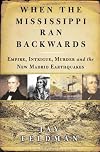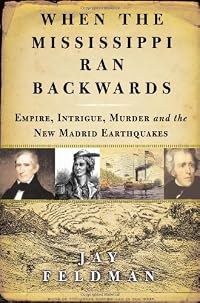
When the Mississippi Ran Backwards: Empire, Intrigue, Murder, and the New Madrid Earthquakes
by Jay Feldman
On This Page
Description
An account of the ecological and historical impact of a series of Mississippi River Valley earthquakes in 1811 and 1812 documents how towns were destroyed and political loyalties were altered, changing the course of the War of 1812.Tags
Recommendations


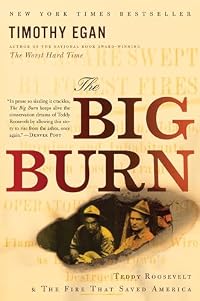
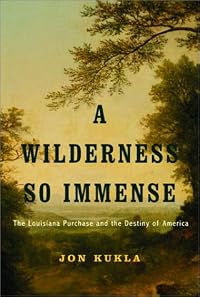
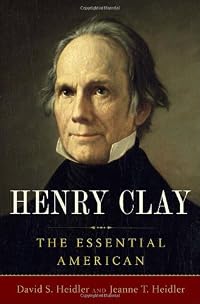
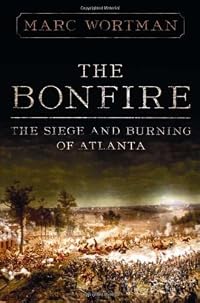

Member Recommendations
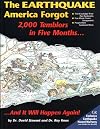
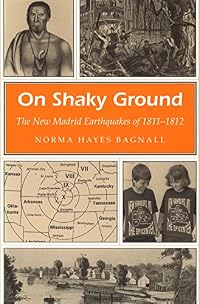
The Earthquake America Forgot: Two Thousand Temblors in Five Months and It will Happen Again by David Stewart
sjmccreary This book provides more complete coverage about the New Madrid earthquakes. Not as polished as the Feldman book, but very informative.
20
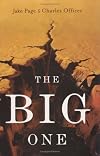
The Big One: The Earthquake That Rocked Early America and Helped Create a Science by Charles Officer
MM_Jones Wonderfully comprehensive look at early earthquake science
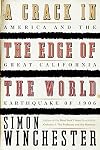
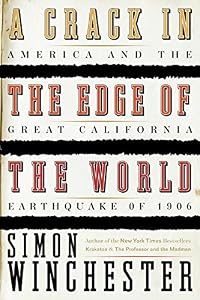
A Crack in the Edge of the World: America and the Great California Earthquake of 1906 by Simon Winchester
geophile Those interested in the history and events surrounding either of these great earthquakes may be interested in learning about the other. While the San Francisco earthquake is well known, fewer people know about the New Madrid earthquake.

geophile Those who enjoy reading about the New Madrid earthquakes may enjoy Sally Watson's historical novel about the event, and those who enjoy the historical novel, may be interested in finding out more of the facts.
Member Reviews
This is not the book I thought it would be. It's definitely interesting but I'd thought the focus would be on the New Madrid earthquakes of 1811/1812. But it wasn't. I learned plenty about frontier life and wars, steamboats, Tecumseh, and William Henry Harrison, just to name a few topics.
I wish there had been more about the geology of the earthquakes and stories about the victims. A brief mention in the epilogue about how many people "found God" due to the earthquakes (but later abandoned their churches) was interesting. (These were called "earthquake Christians.")
Interesting but not what I wanted or expected. If you know what it's about, going in, you might enjoy it. I didn't, not really.
I wish there had been more about the geology of the earthquakes and stories about the victims. A brief mention in the epilogue about how many people "found God" due to the earthquakes (but later abandoned their churches) was interesting. (These were called "earthquake Christians.")
Interesting but not what I wanted or expected. If you know what it's about, going in, you might enjoy it. I didn't, not really.
Jay Feldman has written a very-well researched story of the New Madrid earthquakes in 1811-1812, However, he has taken it much further than that, and included other related incidents, a la Erik Larsen, to create a book that goes far beyond just the earthquakes. Some of his connections are a little tenuous, but that doesn't make them any less interesting. We learn about Tecumseh and his attempts to secure the Indians' territories against the efforts of William Henry Harrison to destroy them. We learn of the brutal murder of a slave by nephews of Thomas Jefferson, and how the earthquakes revealed it. And we learn about the US government in the years between the Revolutionary War and the War of 1912. I found the history fascinating, and show more although I was expecting a book about New Madrid and the earthquakes, I was not disappointed with the extras I received. show less
An engaging tale of the events surrounding one of the largest seismic events in US history, the series of earthquakes in late 1811/early 1812 centered near the town of New Madrid, Missouri.
Although the earthquakes are the centerpiece, this is mostly a popular history book, not a seismology text. Author Jay Feldman weaves a number of story threads together. First up is the pre-quake settlement of New Madrid by Revolutionary War veteran George Morgan (it was part of Spanish Louisiana then, hence the name, and it’s pronounced with the accent on the first syllable). In order to have an antagonist, Feldman introduces James Wilkinson, another Revolutionary War veteran who, at one point, apparently tried to sell Kentucky to the Spanish. show more Although Wilkinson is made out to be Morgan’s nemesis, denouncing him to the Spanish and trying to thwart the New Madrid colony (supposedly because it would somehow interfere with his own plans) there’s really not much to support this. Wilkinson did write to the Spanish governor suggesting he keep an eye on Morgan but there’s no real case for the Spanish acting on this.
The next three threads brings together Tecumseh, the Shawnee who attempted to forge a native alliance against American encroachment; Nicholas Roosevelt (great-great-granduncle of Teddy), who built the first steamboat, New Orleans, on the western rivers; and Lilburne Lewis, a nephew of Thomas Jefferson, who murdered his slave George and burned the remains in his fireplace. The earthquakes connect them; Tecumseh prophesied that he would stamp his foot and cause the lodges of those who opposed him to fall down; Roosevelt and the New Orleans were close enough to the epicenter that when the initial quake struck, the island that they had tied up to for the night sank; and the earthquakes took after Lewis like the Furies (the first collapsed his chimney, revealing George; Lewis collected him and bricked him up in the replacement chimney, whereupon the second quake collapsed that, too, allowing a local dog to drag parts of George out to the road for discovery by a passerby.)
Feldman’s strength is in characterization. Tecumseh comes across a great man and you might suspect some modern political correctness, except it’s pretty clear contemporary non-natives thought pretty well of him, too. Although everybody knows “Tippecanoe and Tyler Too” was William Henry Harrison’s campaign slogan, I wasn’t aware that Martin Van Buren’s vice president, Richard Johnson, had come up with “Rumpsey Dumpsey, Rumpsey Dumpsey, Colonel Johnson Killed Tecumseh”. Roosevelt also comes across well, as does his young wife Lydia, who accompanied him down the river despite being in her eighth month of pregnancy. Lilburne Lewis and his accomplice and younger brother Isham don’t get fleshed out quite as well; I never really got a feel for them. Feldman s spends a lot of time discussing the Lewis’s prosecution for murder, which he suggests was unusual for the time and place. I suspect it was Lilburne’s attempt to conceal the body and the unpleasant way it was discovered that turned his neighbors against him enough to bring a true bill. A master was allowed to kill a slave through “moderate correction” and I get the impression that beheading was considered “moderate” by contemporary Kentuckians.
The final thread concerns post-quake events; the outcome of the War of 1812, including Jackson’s campaign against the Creeks and the Battle of New Orleans. Feldman gets a little carried away here, making it seem like the American victory was the miraculous triumph of outnumbered militia over veteran redcoats (Feldman says “many had fought with Wellington at Waterloo”, which is interesting, since the battle of New Orleans was fought on January 8, 1815, and Waterloo wasn’t until June 18). In fact, Pakenham ordered a frontal assault in daytime against a well-fortified position backed up by the world’s finest riflemen, and the outcome was a foregone conclusion.
While the history and characterizations are well done, the seismology is very weak. Feldman acknowledges several professional geologists as sources and reviewers, but either they didn’t do a good job or were ignored. The basics are that the New Madrid fault zone is a very old (Proterozoic) failed rift arm that has somehow reactivated. Feldman describes the rift as a “valley deep beneath the earth’s surface”, which creates the impression that there’s actually some sort of hollow space down there; describes the Mississippi as “filling the ancient rift valley”, which is completely misleading; says some of the explanation for the much larger affected area for the Missouri earthquakes than the San Francisco earthquakes is that western rocks are “warmer”, and makes shock-induced soil liquefaction completely unintelligible. However, this is not supposed to be a geology textbook; look elsewhere for fault zone mechanics.
A good light read; four stars. show less
Although the earthquakes are the centerpiece, this is mostly a popular history book, not a seismology text. Author Jay Feldman weaves a number of story threads together. First up is the pre-quake settlement of New Madrid by Revolutionary War veteran George Morgan (it was part of Spanish Louisiana then, hence the name, and it’s pronounced with the accent on the first syllable). In order to have an antagonist, Feldman introduces James Wilkinson, another Revolutionary War veteran who, at one point, apparently tried to sell Kentucky to the Spanish. show more Although Wilkinson is made out to be Morgan’s nemesis, denouncing him to the Spanish and trying to thwart the New Madrid colony (supposedly because it would somehow interfere with his own plans) there’s really not much to support this. Wilkinson did write to the Spanish governor suggesting he keep an eye on Morgan but there’s no real case for the Spanish acting on this.
The next three threads brings together Tecumseh, the Shawnee who attempted to forge a native alliance against American encroachment; Nicholas Roosevelt (great-great-granduncle of Teddy), who built the first steamboat, New Orleans, on the western rivers; and Lilburne Lewis, a nephew of Thomas Jefferson, who murdered his slave George and burned the remains in his fireplace. The earthquakes connect them; Tecumseh prophesied that he would stamp his foot and cause the lodges of those who opposed him to fall down; Roosevelt and the New Orleans were close enough to the epicenter that when the initial quake struck, the island that they had tied up to for the night sank; and the earthquakes took after Lewis like the Furies (the first collapsed his chimney, revealing George; Lewis collected him and bricked him up in the replacement chimney, whereupon the second quake collapsed that, too, allowing a local dog to drag parts of George out to the road for discovery by a passerby.)
Feldman’s strength is in characterization. Tecumseh comes across a great man and you might suspect some modern political correctness, except it’s pretty clear contemporary non-natives thought pretty well of him, too. Although everybody knows “Tippecanoe and Tyler Too” was William Henry Harrison’s campaign slogan, I wasn’t aware that Martin Van Buren’s vice president, Richard Johnson, had come up with “Rumpsey Dumpsey, Rumpsey Dumpsey, Colonel Johnson Killed Tecumseh”. Roosevelt also comes across well, as does his young wife Lydia, who accompanied him down the river despite being in her eighth month of pregnancy. Lilburne Lewis and his accomplice and younger brother Isham don’t get fleshed out quite as well; I never really got a feel for them. Feldman s spends a lot of time discussing the Lewis’s prosecution for murder, which he suggests was unusual for the time and place. I suspect it was Lilburne’s attempt to conceal the body and the unpleasant way it was discovered that turned his neighbors against him enough to bring a true bill. A master was allowed to kill a slave through “moderate correction” and I get the impression that beheading was considered “moderate” by contemporary Kentuckians.
The final thread concerns post-quake events; the outcome of the War of 1812, including Jackson’s campaign against the Creeks and the Battle of New Orleans. Feldman gets a little carried away here, making it seem like the American victory was the miraculous triumph of outnumbered militia over veteran redcoats (Feldman says “many had fought with Wellington at Waterloo”, which is interesting, since the battle of New Orleans was fought on January 8, 1815, and Waterloo wasn’t until June 18). In fact, Pakenham ordered a frontal assault in daytime against a well-fortified position backed up by the world’s finest riflemen, and the outcome was a foregone conclusion.
While the history and characterizations are well done, the seismology is very weak. Feldman acknowledges several professional geologists as sources and reviewers, but either they didn’t do a good job or were ignored. The basics are that the New Madrid fault zone is a very old (Proterozoic) failed rift arm that has somehow reactivated. Feldman describes the rift as a “valley deep beneath the earth’s surface”, which creates the impression that there’s actually some sort of hollow space down there; describes the Mississippi as “filling the ancient rift valley”, which is completely misleading; says some of the explanation for the much larger affected area for the Missouri earthquakes than the San Francisco earthquakes is that western rocks are “warmer”, and makes shock-induced soil liquefaction completely unintelligible. However, this is not supposed to be a geology textbook; look elsewhere for fault zone mechanics.
A good light read; four stars. show less
Setting: New Madrid, Missouri and surrounding area, 1811
The shocks that devastated the Mississippi River town of New Madrid,
Missouri and environs in the winter of 1812 were among the strongest
earthquakes in America's history. In human terms they were fairly
inconsequential since only about 100 people died in the lightly populated
area, so Feldman had to search a bit to flesh out his history. What he found
is indeed interesting and ties in quite well with the earthquakes.
Feldman explains the geology and seismology of the area very well and uses
firsthand accounts to describe the titanic upheavals of earth and water that
terrified onlookers. That doesn't take up much space, though, so the
interwoven stories come into play. These other threads show more are (1) Tecumseh's
role in gathering disparate Native American tribes together in an attempt to
hang on to their lands, (2) the maiden voyage of the Mississippi's first
steamboat by an ancestor of Theodore Roosevelt (the steamboat survived the
quakes better than anything else in the area), (3) the murder of a slave in
Kentucky by nephews of Thomas Jefferson which was uncovered when the chimney
where the body was hidden collapsed during the quakes, and (4) the Battle of
New Orleans.
These stories don't meld together seamlessly, but they're all fascinating
and full of colorful characters. The entire book is well-paced and vivid.
Having almost had an earlobe snipped off during a 1970s rumble of the New
Madrid fault line, I really enjoyed learning more about the technical
aspects of the earthquake as well as the people who lived in the area.
By the way, some of you may not be "in the know". If you're pronouncing New
Madrid as Noo Muh-DRID, beep! Thank you for playing. The correct
pronunciation is Noo MAD-rid. And wait till I tell ya about Cairo! LOL
;-)
More trivia-of-the-day: The first Federal disaster relief act in US history
was passed in 1815--the New Madrid Relief Act. It was carried out about as
well as the relief for Hurricane Katrina.... show less
The shocks that devastated the Mississippi River town of New Madrid,
Missouri and environs in the winter of 1812 were among the strongest
earthquakes in America's history. In human terms they were fairly
inconsequential since only about 100 people died in the lightly populated
area, so Feldman had to search a bit to flesh out his history. What he found
is indeed interesting and ties in quite well with the earthquakes.
Feldman explains the geology and seismology of the area very well and uses
firsthand accounts to describe the titanic upheavals of earth and water that
terrified onlookers. That doesn't take up much space, though, so the
interwoven stories come into play. These other threads show more are (1) Tecumseh's
role in gathering disparate Native American tribes together in an attempt to
hang on to their lands, (2) the maiden voyage of the Mississippi's first
steamboat by an ancestor of Theodore Roosevelt (the steamboat survived the
quakes better than anything else in the area), (3) the murder of a slave in
Kentucky by nephews of Thomas Jefferson which was uncovered when the chimney
where the body was hidden collapsed during the quakes, and (4) the Battle of
New Orleans.
These stories don't meld together seamlessly, but they're all fascinating
and full of colorful characters. The entire book is well-paced and vivid.
Having almost had an earlobe snipped off during a 1970s rumble of the New
Madrid fault line, I really enjoyed learning more about the technical
aspects of the earthquake as well as the people who lived in the area.
By the way, some of you may not be "in the know". If you're pronouncing New
Madrid as Noo Muh-DRID, beep! Thank you for playing. The correct
pronunciation is Noo MAD-rid. And wait till I tell ya about Cairo! LOL
;-)
More trivia-of-the-day: The first Federal disaster relief act in US history
was passed in 1815--the New Madrid Relief Act. It was carried out about as
well as the relief for Hurricane Katrina.... show less
I’ve been interested in the New Madrid earthquakes since studying Tennessee history in 7th grade social studies. I was fascinated to learn that Reelfoot Lake, the largest natural lake in Tennessee, was formed as a result of the New Madrid earthquakes. I read this book hoping to learn more about other effects of this disaster, but my curiosity was only partially satisfied.
The author focused on just a few individuals and circumstances to illustrate the effect the earthquakes had on technological developments, slavery, and Indian relations and Westward expansion. He used Tecumseh’s legendary prophecy of the earthquakes to launch into a lengthy discussion of Tecumseh’s pan-tribal movement and territorial conflicts between Native show more Americans, the U.S., and Great Britain, all leading up to the War of 1812. The author’s cause/effect argument for the earthquakes contributing to the start of the War of 1812 is the weakest of the topics explored in the book, yet he devotes the most time to developing this topic, following Tecumseh to his death in 1813 and the war to its conclusion in late 1814 (or early 1815 if you count the Battle of New Orleans, fought after the war had technically ended).
I wish that the author had instead focused on two topics that he briefly introduced in the epilogue. He mentioned that in the year following the earthquakes the number of Methodists increased by 50% in the areas where the earthquake would have been felt more strongly, while their numbers increased by only 5% in the rest of the nation. I would have liked more exploration of the religious/spiritual and psychological effects of the quake. The author also mentioned that Congress passed its first disaster relief act in 1815 to aid the victims of the New Madrid earthquakes, but that many of the victims sold their land/claims for a pittance before they heard the news of the act. Readers will need to look elsewhere for the victims’ stories. show less
The author focused on just a few individuals and circumstances to illustrate the effect the earthquakes had on technological developments, slavery, and Indian relations and Westward expansion. He used Tecumseh’s legendary prophecy of the earthquakes to launch into a lengthy discussion of Tecumseh’s pan-tribal movement and territorial conflicts between Native show more Americans, the U.S., and Great Britain, all leading up to the War of 1812. The author’s cause/effect argument for the earthquakes contributing to the start of the War of 1812 is the weakest of the topics explored in the book, yet he devotes the most time to developing this topic, following Tecumseh to his death in 1813 and the war to its conclusion in late 1814 (or early 1815 if you count the Battle of New Orleans, fought after the war had technically ended).
I wish that the author had instead focused on two topics that he briefly introduced in the epilogue. He mentioned that in the year following the earthquakes the number of Methodists increased by 50% in the areas where the earthquake would have been felt more strongly, while their numbers increased by only 5% in the rest of the nation. I would have liked more exploration of the religious/spiritual and psychological effects of the quake. The author also mentioned that Congress passed its first disaster relief act in 1815 to aid the victims of the New Madrid earthquakes, but that many of the victims sold their land/claims for a pittance before they heard the news of the act. Readers will need to look elsewhere for the victims’ stories. show less
This is a non-fiction book with plenty of history and documentation, so is not a light read, but it IS a good read. The book was not at all what I expected, but I enjoyed it very much. From the title, I expected it to be more about the earthquakes of New Madrid. While growing up in St. Louis, I had both heard about the big quakes and felt a tremor or 2 from the fault since. I've grown up knowing that this area is seismologically active. But what was fascinating for me is all the history that was occurring at the time of the earthquakes. I learned a lot by reading this book. I really didn't know much about Tecumseh, but learned enough about him in this book that I'd like to learn more. I knew little or nothing about William Henry show more Harrison, who does not come off well at all in this book. Neither does Andrew Jackson, one of my favorite presidents. (My view of him was based on 'The President's Lady by Irving Stone, which I read in elementary school.) I knew nothing about Nicholas Roosevelt, the great-uncle of Teddy, who was instrumental in advancing steamboat travel. And I'd never heard of Thomas Jefferson's nephews, who gruesomely murdered one of their slaves. All of these play a role in this book.
The one thing that was disappointing to me was the author's treatment of the Iben Browning earthquake prediction of a New Madrid earthquake. The author painted the entire population as hysterical and unreasoning. It is true that the media made a huge deal of the prediction, just like they do about most anything else, and a few people I knew considered not sending their children to school and a few refused to drive across bridges, but the majority of area residents did not over-react and actually found some humor in the predictions. The area did become more aware of the possibility and the need to be prepared, but almost no one expected a major disaster to occur. The way the author misinterpreted this situation DOES make me wonder if his analysis of other parts of the book are accurate. In any event, I did enjoy the book very much! show less
The one thing that was disappointing to me was the author's treatment of the Iben Browning earthquake prediction of a New Madrid earthquake. The author painted the entire population as hysterical and unreasoning. It is true that the media made a huge deal of the prediction, just like they do about most anything else, and a few people I knew considered not sending their children to school and a few refused to drive across bridges, but the majority of area residents did not over-react and actually found some humor in the predictions. The area did become more aware of the possibility and the need to be prepared, but almost no one expected a major disaster to occur. The way the author misinterpreted this situation DOES make me wonder if his analysis of other parts of the book are accurate. In any event, I did enjoy the book very much! show less
Very interesting story about the worst earthquake to ever hit the continental United States. This happened in 1811. Everyone knows that California has fault lines and there is always talk of when the 'big one' hits but very few people are aware of the fault line in the Mississippi River Valley area. The book combines the earthquake story with the politics of the time and the push west by settlers. Two main players in the story are Tecumseh and William Henry Harrison and their conflict. Highly recommend.
Members
- Recently Added By
Lists

Disaster Books
74 works; 19 members

Best History Books about Disasters
33 works; 19 members

French and Indian War through the War of 1812 (non-fiction)
31 works; 3 members

BingoDOG - Books With Natural Disasters: Nonfiction
18 works; 5 members

Accidents, Disasters, and Tragedies
175 works; 7 members

Mississippi River in Books
20 works; 3 members
Author Information

4 Works 432 Members
Common Knowledge
- Original title
- When the Mississippi Ran Backwards: Empire, Intrigue, Murder, and the New Madrid Earthquakes
- Original publication date
- 2005
- People/Characters
- William Henry Harrison; Lilburne Lewis; George Morgan; Nicholas Roosevelt; Tecumseh; Tenskwatawa (show all 7); James Wilkinson
- Important places
- Missouri, USA; New Madrid, Missouri, USA; Mississippi River, USA
- Important events
- New Madrid Earthquakes (1811-1812)
- Epigraph
- The night has been unruly: where we lay,
Our chimneys were blown down; and, as they say,
Lamentings heard i' the air; strange screams of death,
And prophesying with accents terrible
Of dire combustion and confused... (show all) events
New hatch'd to the woeful time. The obscure bird
Clamour'd the livelong night: some say, the earth
Was feverous and did shake.
William Shakespeare,
Macbeth - Dedication
- To my wife Marti
and my parents Ben & Edna
for all their love and support. - First words
- Accompanied by an entourage of Shawnee, Kickapoo, and Winnebago warriors, the Shawnee chief strode decisively through the Creek village of Tuckhabatchee.
- Last words
- (Click to show. Warning: May contain spoilers.)Or it could be tomorrow.
- Canonical DDC/MDS
- 551.2209778985
- Canonical LCC
- QE535.2.U6
Classifications
Statistics
- Members
- 357
- Popularity
- 87,950
- Reviews
- 14
- Rating
- (3.73)
- Languages
- English
- Media
- Paper, Ebook
- ISBNs
- 4
- ASINs
- 2