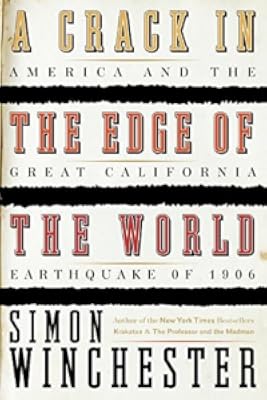
A Crack in the Edge of the World: America and the Great California Earthquake of 1906
by Simon Winchester
On This Page
Description
A crack in the edge of the world is the definitive account of the San Francisco earthquake and a fascinating exploration of a legendary event that changed the way we look at the planet on which we live.Tags
Recommendations

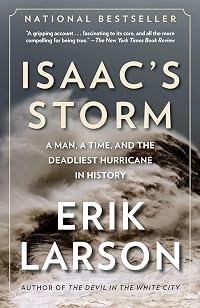
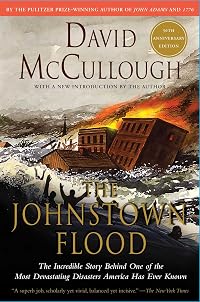
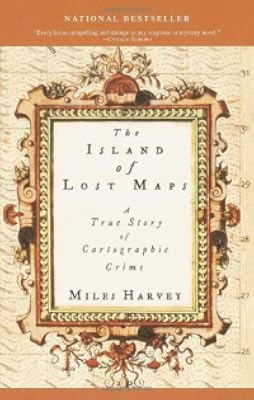
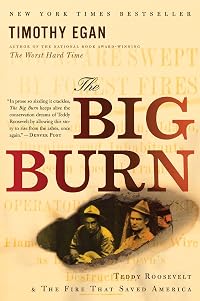


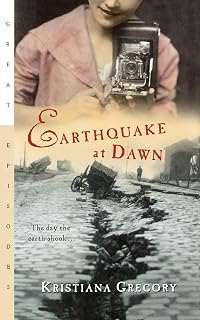
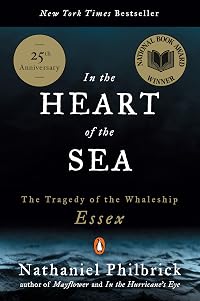
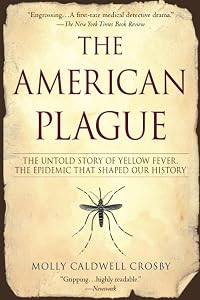
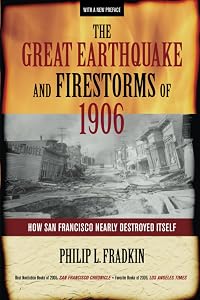
Member Recommendations
When the Mississippi Ran Backwards: Empire, Intrigue, Murder, and the New Madrid Earthquakes by Jay Feldman
geophile Those interested in the history and events surrounding either of these great earthquakes may be interested in learning about the other. While the San Francisco earthquake is well known, fewer people know about the New Madrid earthquake.
geophile Readers who enjoy one of these books may like a different viewpoint of the same event by another author.
Member Reviews
You really need to know what you'll be getting when you choose to read a Simon Winchester book. With the correct expectations, you should really love this book.
I believe a good portion of the lower reviews here are from readers who chose this book seeking a succinct history of the San Francisco Earthquake of 1906. Simon Winchester is one of the best storytellers I've come across, and for this reason his books are not as straightforward as some may desire. In 'A Crack in the Edge of the World', Simon spends time discussing the earthquake, complete with interviews and stories from those who were there, but it is couched by a plethora of other topics as well: a fascinating section on the planet's geographical history, smatterings of the show more author's own travels to western North American locations relevant to this earthquake, a history of not only San Francisco but California as a whole, among other loosely-related topics.
This is, in other words, a book that is focused on the San Francisco earthquake, but like a spider web extends well beyond that focal point and involves much more than just the event itself.
I find this to be a terrific way to write a book. I love to learn while reading, and Simon Winchester's writing style is one in which you'll end up learning a lot more than you ever expected to, about topics you may never have thought would be related to the earthquake. This books reads like a finely woven story, truly bringing life and color to the event (as opposed to a more sterile discussion of the event).
You'll like this book if you want to learn about the 1906 earthquake, but also want to learn about secondary topics (i.e. the history of geology itself, the geologic history of the planet, the best and worst towns in the Yukon while on a road trip) while you read. You won't like this book if you just want a narrow, focused look at the earthquake.
Five stars for a book that is almost entrancing in the way it discusses the 1906 earthquake and a whole gamut of other, related subjects. You just need to be prepared for the kind of author Simon Winchester is before diving into his books. show less
I believe a good portion of the lower reviews here are from readers who chose this book seeking a succinct history of the San Francisco Earthquake of 1906. Simon Winchester is one of the best storytellers I've come across, and for this reason his books are not as straightforward as some may desire. In 'A Crack in the Edge of the World', Simon spends time discussing the earthquake, complete with interviews and stories from those who were there, but it is couched by a plethora of other topics as well: a fascinating section on the planet's geographical history, smatterings of the show more author's own travels to western North American locations relevant to this earthquake, a history of not only San Francisco but California as a whole, among other loosely-related topics.
This is, in other words, a book that is focused on the San Francisco earthquake, but like a spider web extends well beyond that focal point and involves much more than just the event itself.
I find this to be a terrific way to write a book. I love to learn while reading, and Simon Winchester's writing style is one in which you'll end up learning a lot more than you ever expected to, about topics you may never have thought would be related to the earthquake. This books reads like a finely woven story, truly bringing life and color to the event (as opposed to a more sterile discussion of the event).
You'll like this book if you want to learn about the 1906 earthquake, but also want to learn about secondary topics (i.e. the history of geology itself, the geologic history of the planet, the best and worst towns in the Yukon while on a road trip) while you read. You won't like this book if you just want a narrow, focused look at the earthquake.
Five stars for a book that is almost entrancing in the way it discusses the 1906 earthquake and a whole gamut of other, related subjects. You just need to be prepared for the kind of author Simon Winchester is before diving into his books. show less
I love science, history, and trivia, but this book is terrible. It's dull, to start with, and right off the bat I felt like I was slogging through it. It's not about the 1906 earthquake; I have no idea what it is about. It is way more about Winchester than the 1906 earthquake, I can tell you that much. I couldn't even finish (and I almost never stop a book before finishing). I tried to keep reading because there were interesting tidbits scattered throughout, but it just wasn't interesting or useful enough to keep reading. I even started making a list of the things I didn't like:
- Offensive nostalgia for the 19th century and its portrayal as a simpler time with no acknowledgment of things like slavery or lack of women's rights, among show more others.
- Criminal lack of focus including the moon landing, the author's multiple road trips, his Oxford explorer's club trip to Iceland, the history of many other earthquakes, the history of California and the gold rush.
- Lots of disdain for southern and western Americans, but a song of love towards San Francisco and California in general. I've lived in San Francisco; it has downsides too.
- The author seems to think he is a lot funnier than he is.
- On p125 he decries the savagery of the greed and "barbarism" of the frontier towns during the Gold Rush, comparing them unfavorably to the "civilized" Eastern and Midwestern cities. Anyone who has read a history of Chicago or New York City in the mid-1800s should laugh at this notion. "There was murder, mayhem, robbery, alcoholism, depression, and suicide" - I'm sorry, what urban area in ANY era didn't have these things?
- Slut-shaming on p 126.
- P130; the actual sentence "indolent handful of Mexicans"
- Talking about the unpeopled west when native Americans definitely lived there. And a whole thing about "at this point [probably the 1800s, during western exploration by Americans] the Colorado River had been seen by relatively few people." I'm... pretty sure plenty of people had seen the Colorado River by the point it was the 1800s. Just not by white people. Speaking of which, this book was published in 2005 and he still uses "Indians" to refer to Native Americans. Really.
- Maligning someone for dying of syphilis; TONS of people used to die of syphilis.
- A story about him visiting a meteorite impact site and being told it was owned by people with a specific last name, and he recalls knowing a couple with that last name, so he calls them from the site and finds out of course it's the same people! So he puts the owner on speaker and the owner thanks the visitors for paying the fee because it keeps them in good champagne, which makes me want to have a class war and nationalize the site to make it a national park. Because how obnoxious is that. show less
- Offensive nostalgia for the 19th century and its portrayal as a simpler time with no acknowledgment of things like slavery or lack of women's rights, among show more others.
- Criminal lack of focus including the moon landing, the author's multiple road trips, his Oxford explorer's club trip to Iceland, the history of many other earthquakes, the history of California and the gold rush.
- Lots of disdain for southern and western Americans, but a song of love towards San Francisco and California in general. I've lived in San Francisco; it has downsides too.
- The author seems to think he is a lot funnier than he is.
- On p125 he decries the savagery of the greed and "barbarism" of the frontier towns during the Gold Rush, comparing them unfavorably to the "civilized" Eastern and Midwestern cities. Anyone who has read a history of Chicago or New York City in the mid-1800s should laugh at this notion. "There was murder, mayhem, robbery, alcoholism, depression, and suicide" - I'm sorry, what urban area in ANY era didn't have these things?
- Slut-shaming on p 126.
- P130; the actual sentence "indolent handful of Mexicans"
- Talking about the unpeopled west when native Americans definitely lived there. And a whole thing about "at this point [probably the 1800s, during western exploration by Americans] the Colorado River had been seen by relatively few people." I'm... pretty sure plenty of people had seen the Colorado River by the point it was the 1800s. Just not by white people. Speaking of which, this book was published in 2005 and he still uses "Indians" to refer to Native Americans. Really.
- Maligning someone for dying of syphilis; TONS of people used to die of syphilis.
- A story about him visiting a meteorite impact site and being told it was owned by people with a specific last name, and he recalls knowing a couple with that last name, so he calls them from the site and finds out of course it's the same people! So he puts the owner on speaker and the owner thanks the visitors for paying the fee because it keeps them in good champagne, which makes me want to have a class war and nationalize the site to make it a national park. Because how obnoxious is that. show less
This is a topic that I'm really interested in, but I couldn't get past Winchester's obnoxious, overblown writing style. He's so focused on creating an impressive dramatic lead-up to his story that he obscures his actual point to a ridiculous extent. At the beginning of the book, he goes on and on about a dramatic recent revolution in geology, dragging it out for pages and pages before actually telling us what he's talking about.
"[G]eology has suddenly and seriously changed, and at a pace so rapid as to bewilder and astonish all who come up against it anew, or return to it after a long while away. It is probably fair to say that never before has any long-existing science been remodeled and reworked so profoundly, so suddenly, and in so show more short a time. Wholly unimagined visions and possibilities allow us to contemplate our planet in brand-new ways." Blah, blah, blah, blah, blah. I have zero interest in reading paragraph upon paragraph that contains zero actual content.
"Thanks to the new attitudes and instruments and scientific philosophies of the new science, all the events of great geographical moment... can now be seen and interpreted in an entirely fresh context, and in a manner that had rarely before occurred to those who practiced the confusing and cobweb-bound older science with which (from memories of school and university) we are still so vaguely familiar."
I have to admit that the excessive build-up did make me curious about what had changed so dramatically in recent times. So it was a huge letdown to learn that the major difference between the Old Geology and the New Geology was the introduction of plate tectonics—something that I learned about in elementary school 20 years ago. All this dramatic build-up was essentially for nothing; the amazing New Geology was the only geology I had ever known. That whole dramatic build-up led me literally nowhere; it was nothing more than the rambling reminiscences of an older man who had learned a now-outdated school curriculum 50 or 60 years ago.
Apparently this whole geological revolution was inspired by the moon landing, which gave people the unprecedented idea of looking at the world as a whole. I have my doubts. Wikipedia tells me that plate tectonics were accepted in the scientific world in the late 1950s/early 1960s, while Neil Armstrong didn't step foot on the moon until 1969. The whole introduction was just garbage.
Maybe the book got better after that, but I wasn't about to trust this author with any more of my time. I didn't read past the prologue. show less
"[G]eology has suddenly and seriously changed, and at a pace so rapid as to bewilder and astonish all who come up against it anew, or return to it after a long while away. It is probably fair to say that never before has any long-existing science been remodeled and reworked so profoundly, so suddenly, and in so show more short a time. Wholly unimagined visions and possibilities allow us to contemplate our planet in brand-new ways." Blah, blah, blah, blah, blah. I have zero interest in reading paragraph upon paragraph that contains zero actual content.
"Thanks to the new attitudes and instruments and scientific philosophies of the new science, all the events of great geographical moment... can now be seen and interpreted in an entirely fresh context, and in a manner that had rarely before occurred to those who practiced the confusing and cobweb-bound older science with which (from memories of school and university) we are still so vaguely familiar."
I have to admit that the excessive build-up did make me curious about what had changed so dramatically in recent times. So it was a huge letdown to learn that the major difference between the Old Geology and the New Geology was the introduction of plate tectonics—something that I learned about in elementary school 20 years ago. All this dramatic build-up was essentially for nothing; the amazing New Geology was the only geology I had ever known. That whole dramatic build-up led me literally nowhere; it was nothing more than the rambling reminiscences of an older man who had learned a now-outdated school curriculum 50 or 60 years ago.
Apparently this whole geological revolution was inspired by the moon landing, which gave people the unprecedented idea of looking at the world as a whole. I have my doubts. Wikipedia tells me that plate tectonics were accepted in the scientific world in the late 1950s/early 1960s, while Neil Armstrong didn't step foot on the moon until 1969. The whole introduction was just garbage.
Maybe the book got better after that, but I wasn't about to trust this author with any more of my time. I didn't read past the prologue. show less
From soup to nuts, Simon Winchester's Crack in the Edge of the World tells the complete story of the great San Francisco earthquake of 1906 with humor, intelligence, and clarity. He begins with the humble birth of the city coupled with the scientific explanation for earth's volatile nature.
Curiously, when talking about other disasters which have wiped out entire regions Winchester mentions Hiroshima and Nagasaki, but only hints at the destruction of a large portion of Manhattan after the attacks of 9/11. And speaking of the attacks on the World Trade Center, I imagine that witnessing the aftermath of the 1906 earthquake was similar to east coast residents watching the events of 9/11 unfold on their smartphones and television sets. If show more you were not suffering personal tragedy and your barometer for compassion was at an all-time low, you looked upon the destruction with awe and a strange but removed fascination.
My favorite post-disaster response. The post office was the hero of my childhood, keeping me connected to friends and family miles away. San Francisco's post office employees made and all-out effort to save their building. As a result they were able to resume service two days after the earthquake. The postmaster understood the importance of communicating with loved ones; an early version of "marked safe." show less
Curiously, when talking about other disasters which have wiped out entire regions Winchester mentions Hiroshima and Nagasaki, but only hints at the destruction of a large portion of Manhattan after the attacks of 9/11. And speaking of the attacks on the World Trade Center, I imagine that witnessing the aftermath of the 1906 earthquake was similar to east coast residents watching the events of 9/11 unfold on their smartphones and television sets. If show more you were not suffering personal tragedy and your barometer for compassion was at an all-time low, you looked upon the destruction with awe and a strange but removed fascination.
My favorite post-disaster response. The post office was the hero of my childhood, keeping me connected to friends and family miles away. San Francisco's post office employees made and all-out effort to save their building. As a result they were able to resume service two days after the earthquake. The postmaster understood the importance of communicating with loved ones; an early version of "marked safe." show less
I suppose I've had a latent interest in geology most of my adult life. I never did much about it though. On vacations my wife and I would be sure to check out interesting serpentine or chert formations we might stumble upon. We had a favorite rock shop in far northern California that we loved to drop in on when we camped up north. My wife spent a summer working at the grand canyon while in college whereas I trekked all around Lassen Volcanic national Park. (She too). Then of course there is Yosemite. And the earthquake faults all around us. But still, I didn't really actively pursue my interest as people often do who are really into something. I've always seemed to have too many interests!
So this book ... it will be one of the most show more enjoyable reads of the year for me. It is a long book. Readers who expected to read all about the San Francisco earthquake of 1906 might be sorely disappointed. As I noted on one of the non-fiction threads when I started this, a large part of the book is only nominally about the 1906 earthquake. What this seems to really be about is the birth of modern geology in the late 60's and early 70's as well as a lot more, a sort of condensed overview of aspects and historical figures of the "old" geology and how the geologic world got shaken to a new way of thinking by plate tectonics. I was surprised and pleased to find about a 7 page sequence and a photo on Eldridge Moores. When I was in college at UC Davis in the early 70's I took a geology course on what was then a very new theory, plate tectonics, and it was given by James Valentine and Eldridge Moores. It turned out to be one of the best classes I ever took. I could hardly wait for each lecture. Both men were excellent teachers and it was exciting. Moores has since become a giant in the field. He just died a few months ago and I was saddened when I read that. https://geology.ucdavis.edu/people/inmemoriam/moores
Winchester meanders on subjects as a writer. That can be frustrating if one wants to zero in on a subject. In this case the meandering worked extremely well for me. I recognize that it might not work for others. This book as I said is a history of geology told in an unconventional way, as well as a travelogue by the Author across America and the geology of the country, particularly the West, and it does cover the San Francisco earthquake to reward the patient reader. Oddly for me that became less important as I read and learned about the geologic world immediately around me. The author spends a lot of time on the geology of the area where I live. Three of my grandparents were born in San Francisco in just a very few years after the quake. Three of my four sets of great grandparents lived in San Francisco before the quake and the 4th was nearby. And yet there were never any stories passed down in the family about the quake. That seems a little odd to me now. History gets lost. In a small way this gave me some.
There is a large list of references at the end for further reading. show less
So this book ... it will be one of the most show more enjoyable reads of the year for me. It is a long book. Readers who expected to read all about the San Francisco earthquake of 1906 might be sorely disappointed. As I noted on one of the non-fiction threads when I started this, a large part of the book is only nominally about the 1906 earthquake. What this seems to really be about is the birth of modern geology in the late 60's and early 70's as well as a lot more, a sort of condensed overview of aspects and historical figures of the "old" geology and how the geologic world got shaken to a new way of thinking by plate tectonics. I was surprised and pleased to find about a 7 page sequence and a photo on Eldridge Moores. When I was in college at UC Davis in the early 70's I took a geology course on what was then a very new theory, plate tectonics, and it was given by James Valentine and Eldridge Moores. It turned out to be one of the best classes I ever took. I could hardly wait for each lecture. Both men were excellent teachers and it was exciting. Moores has since become a giant in the field. He just died a few months ago and I was saddened when I read that. https://geology.ucdavis.edu/people/inmemoriam/moores
Winchester meanders on subjects as a writer. That can be frustrating if one wants to zero in on a subject. In this case the meandering worked extremely well for me. I recognize that it might not work for others. This book as I said is a history of geology told in an unconventional way, as well as a travelogue by the Author across America and the geology of the country, particularly the West, and it does cover the San Francisco earthquake to reward the patient reader. Oddly for me that became less important as I read and learned about the geologic world immediately around me. The author spends a lot of time on the geology of the area where I live. Three of my grandparents were born in San Francisco in just a very few years after the quake. Three of my four sets of great grandparents lived in San Francisco before the quake and the 4th was nearby. And yet there were never any stories passed down in the family about the quake. That seems a little odd to me now. History gets lost. In a small way this gave me some.
There is a large list of references at the end for further reading. show less
I suppose I've had a latent interest in geology most of my adult life. I never did much about it though. On vacations my wife and I would be sure to check out interesting serpentine or chert formations we might stumble upon. We had a favorite rock shop in far northern California that we loved to drop in on when we camped up north. My wife spent a summer working at the grand canyon while in college whereas I trekked all around Lassen Volcanic national Park. (She too). Then of course there is Yosemite. And the earthquake faults all around us. But still, I didn't really actively pursue my interest as people often do who are really into something. I've always seemed to have too many interests!
So this book ... it will be one of the most show more enjoyable reads of the year for me. It is a long book. Readers who expected to read all about the San Francisco earthquake of 1906 might be sorely disappointed. As I noted on one of the non-fiction threads when I started this, a large part of the book is only nominally about the 1906 earthquake. What this seems to really be about is the birth of modern geology in the late 60's and early 70's as well as a lot more, a sort of condensed overview of aspects and historical figures of the "old" geology and how the geologic world got shaken to a new way of thinking by plate tectonics. I was surprised and pleased to find about a 7 page sequence and a photo on Eldridge Moores. When I was in college at UC Davis in the early 70's I took a geology course on what was then a very new theory, plate tectonics, and it was given by James Valentine and Eldridge Moores. It turned out to be one of the best classes I ever took. I could hardly wait for each lecture. Both men were excellent teachers and it was exciting. Moores has since become a giant in the field. He just died a few months ago and I was saddened when I read that. https://geology.ucdavis.edu/people/inmemoriam/moores
Winchester meanders on subjects as a writer. That can be frustrating if one wants to zero in on a subject. In this case the meandering worked extremely well for me. I recognize that it might not work for others. This book as I said is a history of geology told in an unconventional way, as well as a travelogue by the Author across America and the geology of the country, particularly the West, and it does cover the San Francisco earthquake to reward the patient reader. Oddly for me that became less important as I read and learned about the geologic world immediately around me. The author spends a lot of time on the geology of the area where I live. Three of my grandparents were born in San Francisco in just a very few years after the quake. Three of my four sets of great grandparents lived in San Francisco before the quake and the 4th was nearby. And yet there were never any stories passed down in the family about the quake. That seems a little odd to me now. History gets lost. In a small way this gave me some.
There is a large list of references at the end for further reading. show less
So this book ... it will be one of the most show more enjoyable reads of the year for me. It is a long book. Readers who expected to read all about the San Francisco earthquake of 1906 might be sorely disappointed. As I noted on one of the non-fiction threads when I started this, a large part of the book is only nominally about the 1906 earthquake. What this seems to really be about is the birth of modern geology in the late 60's and early 70's as well as a lot more, a sort of condensed overview of aspects and historical figures of the "old" geology and how the geologic world got shaken to a new way of thinking by plate tectonics. I was surprised and pleased to find about a 7 page sequence and a photo on Eldridge Moores. When I was in college at UC Davis in the early 70's I took a geology course on what was then a very new theory, plate tectonics, and it was given by James Valentine and Eldridge Moores. It turned out to be one of the best classes I ever took. I could hardly wait for each lecture. Both men were excellent teachers and it was exciting. Moores has since become a giant in the field. He just died a few months ago and I was saddened when I read that. https://geology.ucdavis.edu/people/inmemoriam/moores
Winchester meanders on subjects as a writer. That can be frustrating if one wants to zero in on a subject. In this case the meandering worked extremely well for me. I recognize that it might not work for others. This book as I said is a history of geology told in an unconventional way, as well as a travelogue by the Author across America and the geology of the country, particularly the West, and it does cover the San Francisco earthquake to reward the patient reader. Oddly for me that became less important as I read and learned about the geologic world immediately around me. The author spends a lot of time on the geology of the area where I live. Three of my grandparents were born in San Francisco in just a very few years after the quake. Three of my four sets of great grandparents lived in San Francisco before the quake and the 4th was nearby. And yet there were never any stories passed down in the family about the quake. That seems a little odd to me now. History gets lost. In a small way this gave me some.
There is a large list of references at the end for further reading. show less
Simon Winchester has elevated the language of science to the language of poetry. His eloquence will hold the attention of and also captivate the reader with his brilliant explanation of the formation of the earth, the ocean floor, the plates that shift and slide to wreak havoc or as he might say cause mischief in so many places. He describes such things as the molten lava “breathing” beneath our surface in such a way that you see the river of fire. He describes the movement of the faults so that you see them slipping and sliding under each other, layered irregularly atop each other, forming ridges like those in a carpet, as commonplace as a crease in a piece of fabric. He uses metaphors and similes to enlighten the reader and make show more the subject fluid rather than as arid as science can sometimes be for the layman.
When Winchester likens the movements of the plates to a freight train stuck on the tracks with only the center moving outward, the reader can surely see the force of that pressure as it moves the front of the cars forward, finally, in a burst, resulting in the return of that bulge to the center, although in the front there may be concomitant damage; and when he describes the ripple that erupts in a carpet, sometimes, after walking on it repeatedly, the reader will see that “pleat”, as he calls it, forming a mountain one day as it continues to rise. When he describes the splitting water mains and the rupturing gas lines, the reader can feel the disaster in San Francisco approaching, along with the heat, strong tremors and fear, as well as the astonishment and wonderment also felt by some victims. Winchester brought the dry science behind an earthquake and other natural disasters to life. I could visualize the earth forming, the continents moving and the oceans spreading as the earth moved beneath me. With a vocabulary that has become obsolete in the pens of most writers, as they concentrate on sound bites and acronyms, he has mastered the art of prose, making often unfathomable subject matter less bone-dry with his use of language.
Winchester speaks of Freud, Einstein, and Caruso in a casual manner as he creates the foundation for his story with vignettes that sometimes make the reader smile. He begins with the moon landing of Neil Armstong and tells the story of our magnificent planet. Viewing the earth from that bird’s eye view, he describes the inner core beneath the earth’s crust so well that you think you are listening to the secrets of a mystery novel that are slowly being fleshed out, when actually you are being presented with scientific facts. Traveling up and down the western coast of the United States, his explanations burst with information that are at once comprehensible rather than opaque. His research gleaned from journals, diaries and letters is impeccable and his knowledge coupled with his writing skill has made this a very enjoyable, informative read. I know that he placed me in San Francisco at the moment of the quake. I could almost feel the turmoil as the earth raged beneath its surface wreaking havoc above it.
Today, the technology has improved so much that analysis is done by machines more often then people, but the first hand accounts did not contain the coldness of the machine, and therefore the story was connected to emotion. I learned of the reputation San Francisco had when it was born, I could see the cavalier attitude that prevailed, the indifference to any impending disaster, although there had already been some in the previous century. He even draws a relationship between the rise of radical faiths like Islam and Pentacostal Evangelists during catastrophic times, equating the catastrophes to a sign of G-d’s displeasure and a need for doubling down on their dogma. His analysis of the behavior of the insurance companies during the disaster is still relevant today!
Although I cannot profess to have understood every word of this highly detailed and descriptive book, concentrating on the April, 17, 1906, San Francisco earthquake, I can say that I thoroughly enjoyed listening to this author read his own book with just the right tone and emotion to capture my ear completely. The book is both entertaining and informative. show less
When Winchester likens the movements of the plates to a freight train stuck on the tracks with only the center moving outward, the reader can surely see the force of that pressure as it moves the front of the cars forward, finally, in a burst, resulting in the return of that bulge to the center, although in the front there may be concomitant damage; and when he describes the ripple that erupts in a carpet, sometimes, after walking on it repeatedly, the reader will see that “pleat”, as he calls it, forming a mountain one day as it continues to rise. When he describes the splitting water mains and the rupturing gas lines, the reader can feel the disaster in San Francisco approaching, along with the heat, strong tremors and fear, as well as the astonishment and wonderment also felt by some victims. Winchester brought the dry science behind an earthquake and other natural disasters to life. I could visualize the earth forming, the continents moving and the oceans spreading as the earth moved beneath me. With a vocabulary that has become obsolete in the pens of most writers, as they concentrate on sound bites and acronyms, he has mastered the art of prose, making often unfathomable subject matter less bone-dry with his use of language.
Winchester speaks of Freud, Einstein, and Caruso in a casual manner as he creates the foundation for his story with vignettes that sometimes make the reader smile. He begins with the moon landing of Neil Armstong and tells the story of our magnificent planet. Viewing the earth from that bird’s eye view, he describes the inner core beneath the earth’s crust so well that you think you are listening to the secrets of a mystery novel that are slowly being fleshed out, when actually you are being presented with scientific facts. Traveling up and down the western coast of the United States, his explanations burst with information that are at once comprehensible rather than opaque. His research gleaned from journals, diaries and letters is impeccable and his knowledge coupled with his writing skill has made this a very enjoyable, informative read. I know that he placed me in San Francisco at the moment of the quake. I could almost feel the turmoil as the earth raged beneath its surface wreaking havoc above it.
Today, the technology has improved so much that analysis is done by machines more often then people, but the first hand accounts did not contain the coldness of the machine, and therefore the story was connected to emotion. I learned of the reputation San Francisco had when it was born, I could see the cavalier attitude that prevailed, the indifference to any impending disaster, although there had already been some in the previous century. He even draws a relationship between the rise of radical faiths like Islam and Pentacostal Evangelists during catastrophic times, equating the catastrophes to a sign of G-d’s displeasure and a need for doubling down on their dogma. His analysis of the behavior of the insurance companies during the disaster is still relevant today!
Although I cannot profess to have understood every word of this highly detailed and descriptive book, concentrating on the April, 17, 1906, San Francisco earthquake, I can say that I thoroughly enjoyed listening to this author read his own book with just the right tone and emotion to capture my ear completely. The book is both entertaining and informative. show less
Members
- Recently Added By
Published Reviews
ThingScore 65
Geology is not, at first glance, the most inviting of subjects, but in this book Simon Winchester makes it engagingly, captivatingly readable.
added by jlelliott
Without slighting the human suffering of the victims of earthquakes, tsunamis, and other natural disasters, and with full attention to the irreducible particularity of their pain, Winchester places their tragedies in an almost cosmic context. The earth is not a stable structure, he teaches us, but a living system.
added by jlelliott
Me, I hated it. I wanted to drop-kick this book across the backyard. If Doris Kearns Goodwin or David McCullough can lay claim to being the Miles Davis of popular history, Winchester is becoming the Kenny G.
added by jlelliott
Lists

Disaster Books
74 works; 19 members

Best History Books about Disasters
33 works; 19 members

Accidents, Disasters, and Tragedies
175 works; 7 members

For Science!
39 works; 5 members

Geology - Disaster/Epic Change
8 works; 3 members
Author Information

53+ Works 38,625 Members
Simon Winchester was born in London, England on September 28, 1944. He read geology at St. Catherine's College, Oxford. After graduation in 1966, he joined a Canadian mining company and worked as field geologist in Uganda. The following year he decided to become a journalist. His first reporting job was for The Journal, Newcastle upon Tyne. In show more 1969, he joined The Guardian and was named Britain's Journalist of the Year in 1971. He also worked for the Daily Mail and the Sunday Times before becoming a freelancer. He is the author of numerous books including In Holy Terror, The River at the Center of the World, The Alice Behind Wonderland, The Professor and the Madman: A Tale of Murder, Insanity, the Making of the Oxford English Dictionary, and.Exactly: How Precision Engineers Created the Modern World. In 2006, he was made an Officer of the Order of the British Empire for services to journalism and literature. (Bowker Author Biography) show less
Awards and Honors
Awards
Common Knowledge
- Canonical title*
- A Crack in the Edge of the World: America and the Great California Earthquake of 1906
- Original title
- A Crack in the Edge of the World: America and the Great California Earthquake of 1906
- Original publication date
- 2005
- People/Characters
- Leland Stanford
- Important places
- San Francisco, California, USA; California, USA; Los Angeles, California, USA
- Important events
- San Francisco Earthquake and Fire
- Epigraph
- Now the spoiler has come: does it care?
Not faintly. It has all time. It knows the people are a tide
That swells and in time will ebb, and all
Their works dissolve.
Robinson Jeffers, 'Carmel Point', 1954 - Dedication
- With this book I both welcome into this world my first grandchild,
Coco
and offer an admiring farewell to
Iris Chang
whose nobility, passion and courage should serve as a model for all, writers and... (show all) newborn alike - First words
- Some time ago, when I was half-idly browsing my way around the internet, I stumbled across the home page of an obscure small town in western Ohio with the arresting name of Wapakoneta.
So far as the ancients of China are concerned, 1906 was a year of the Fire Horse - a time of grave unpredictability that comes along every six decades, and a time when all manner of strange events have the mind to occur. - Quotations
- Then he decided he should be taking pictures - except that he swiftly realized he had no camera. So he went to his dealer, a man name Kahn on Montgomery Street, and asked to borrow one. Kahn was only too well aware of the fir... (show all)es licking hungrily toward him, so told Genthe to take anything he wanted - anyway, it would all be molten scrap in a few hours at best. And so Genthe took a 3A Kodak Special, hurried off up the hills that looked down on the city-center destruction, and began to work. Later he wrote of the one picture taken from the upper end of Sacramento Street, close to where his house would soon be consumed by fire. He was peculiarly fond of it: There is particularly the one scene that I recorded the first morning of the first day of the fire (on Sacramento Street, looking toward the Bay) which shows, in a pictorially effective composition, the results of the earthquake, the beginning of the fire and the attitude of the people. On the right is a house, the front of which had collapsed onto the street. The occupants are sitting on chairs calmly watching the approach of the fire. Groups of people are standing in the street, motionless, gazing at the clouds of smoke. It is hard to believe that such a scene actually occurred in the way the photograph represents it. Several people upon seeing it have exclaimed, "Oh, is that a still from a Cecil DeMille picture?" To which the answer has been" "No, the director of this scene was the Lord himself."
- Last words
- (Click to show. Warning: May contain spoilers.)It is a reminder, too, that this consent is a privilege, and one that may be snatched away suddenly, and without any warning at all.
- Canonical DDC/MDS
- 979.461051
- Canonical LCC
- F869.S357
*Some information comes from Common Knowledge in other languages. Click "Edit" for more information.
Classifications
- Genres
- History, Science & Nature, General Nonfiction, Nonfiction
- DDC/MDS
- 979.461051 — History & geography History of North America Great Basin and Pacific Slope region of United States California West central counties; San Francisco group San Francisco
- LCC
- F869 .S357 — Local History of the United States, Canada and Latin America United States local history California
- BISAC
Statistics
- Members
- 2,478
- Popularity
- 7,765
- Reviews
- 76
- Rating
- (3.66)
- Languages
- English, German
- Media
- Paper, Audiobook, Ebook
- ISBNs
- 28
- ASINs
- 13