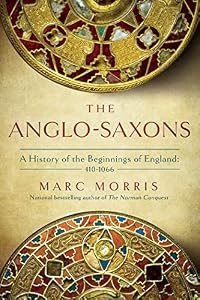
The Anglo-Saxons: The Making of England, 410-1066
by Marc Morris
On This Page
Description
"Sixteen hundred years ago Britain left the Roman Empire and swiftly fell into ruin. Grand cities and luxurious villas were deserted and left to crumble--and civil society collapsed into chaos. Into this violent and unstable world came foreign invaders from across the sea, and established themselves as its new masters. The Anglo-Saxons traces the turbulent history of these people across the next six centuries. It explains how their earliest rulers fought relentlessly against each other for show more glory and supremacy, and then were almost destroyed by the onslaught of the Vikings. It explores how they abandoned their old gods for Christianity, established hundreds of churches and created dazzlingly intricate works of art. This authoritative narrative charts the revival of towns and trade, as well as the origins of a familiar landscape of shires, boroughs and bishoprics. The Anglo-Saxons is a tale of famous figures like King Offa, Alfred the Great and Edward the Confessor, but the book also features a host of lesser known characters--ambitious queens, revolutionary saints, intolerant monks and grasping nobles. Through their remarkable careers we see how a new society, a new culture and a single unified nation came into being"--Dust jacket flap. show lessTags
Recommendations
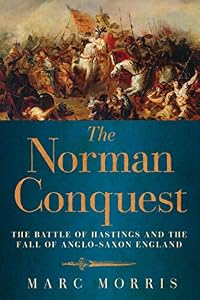




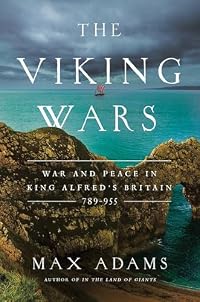
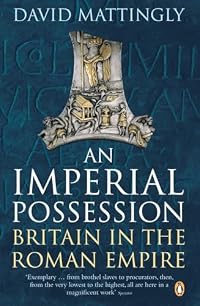
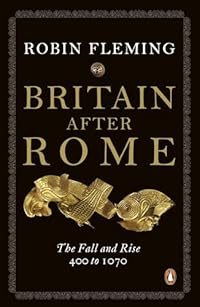
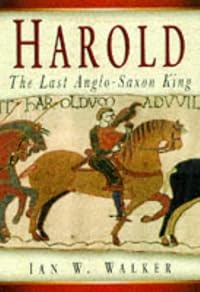





Member Reviews
This is a wonderfully done volume. Mr. Morris has managed to capture the timeline of Anglo-Saxon Britain. The text is very thorough with a ton of legitimate references to veer the reader off into areas of interest. He does not go off the subject and confuse the reader and makes it very clear that this book is about post Roman Britain. Some reviews take a star of two off for the constant mention of Rome. Well...that is kind of important. The fact that they documented everything and left a world where nearly nothing was documented is very important to the development of the timeline. The author does make a point to emphasize who did and did not attempt to move this time line forward in a positive and constructive manner. It does seem that show more he sugar coated the fact that the Church did everything in their power to stymie overall growth, knowledge and development outside its own walls. Morris does a good job mentioning the rulers and chroniclers that sought to make their world bigger for not only themselves but for their subjects.
The fly in the ointment for the Kingdoms of Britain of course were the Vikings. Many myths are debunked and the light is shed on just who the Danes were and what they were attempting to achieve. 60 percent plunder 40 percent migration. These parts of the book leave us with questions about why the Danes were moving and while not giving us all the answers Morris encourages the reader to look over the horizon for the solution.
The last chapters with the Normans come to a bloody roar and a skin peeling stop. Mr. Morris knows where to draw the line in the sand and upon reading the last page you instantly want to jump into the hard and concrete beginnings of the departure of Britain into England. show less
The fly in the ointment for the Kingdoms of Britain of course were the Vikings. Many myths are debunked and the light is shed on just who the Danes were and what they were attempting to achieve. 60 percent plunder 40 percent migration. These parts of the book leave us with questions about why the Danes were moving and while not giving us all the answers Morris encourages the reader to look over the horizon for the solution.
The last chapters with the Normans come to a bloody roar and a skin peeling stop. Mr. Morris knows where to draw the line in the sand and upon reading the last page you instantly want to jump into the hard and concrete beginnings of the departure of Britain into England. show less
It’s interesting to read this book so soon after The First Kingdom by Max Adams, as that book explains in greater detail the first couple of chapters of this book.
This book is an extremely readable gallop through over six hundred years of history, focusing upon a number of prominent individuals to carry the story. Morris therefore necessarily has to take a broad brush approach, leaving me dissatisfied with my overall understanding of this period. My main criticism is that the breakdown of Roman Britain, creation of a mass of minor chiefdoms, which become smaller kingdoms that slowly coalescing to form four larger Anglo-Saxon kingdoms is described briefly, but perhaps too simplistically compared to the more nuanced treatment possible show more in the more detailed The First Kingdom. I would also have liked more consideration of the replacement of British Gaelic with Anglo-Saxon language, but accept that this would have slowed this book’s more political narrative of great men.
What Morris does well is the telling of good individual stories which can be linked to provide an overview of the period. However I came to feel that this created a series of snapshots of prominent wealthy men (Morris apologises at the outset that this is due to the paucity of the records of females) at different places and times. The book also felt imbalanced towards describing events during the end of the period, with the second half of the book covering about 200 years out of the more than 600 years covered by the book. But this gives time to pleasingly explain how the political structural weakness created by the Danish invasion of Cnut helped create the circumstances for the Norman invasion.
Morris has created a very readable and largely enjoyable overview of the period, providing copious notes of available references to allow further more detailed reading, but it did read like a “taster” for the history of the period.
I do now want to read Morris’s book on The Norman Conquest, as I would hope that his apparent narrative skills will work better in concentrating on a shorter period. show less
This book is an extremely readable gallop through over six hundred years of history, focusing upon a number of prominent individuals to carry the story. Morris therefore necessarily has to take a broad brush approach, leaving me dissatisfied with my overall understanding of this period. My main criticism is that the breakdown of Roman Britain, creation of a mass of minor chiefdoms, which become smaller kingdoms that slowly coalescing to form four larger Anglo-Saxon kingdoms is described briefly, but perhaps too simplistically compared to the more nuanced treatment possible show more in the more detailed The First Kingdom. I would also have liked more consideration of the replacement of British Gaelic with Anglo-Saxon language, but accept that this would have slowed this book’s more political narrative of great men.
What Morris does well is the telling of good individual stories which can be linked to provide an overview of the period. However I came to feel that this created a series of snapshots of prominent wealthy men (Morris apologises at the outset that this is due to the paucity of the records of females) at different places and times. The book also felt imbalanced towards describing events during the end of the period, with the second half of the book covering about 200 years out of the more than 600 years covered by the book. But this gives time to pleasingly explain how the political structural weakness created by the Danish invasion of Cnut helped create the circumstances for the Norman invasion.
Morris has created a very readable and largely enjoyable overview of the period, providing copious notes of available references to allow further more detailed reading, but it did read like a “taster” for the history of the period.
I do now want to read Morris’s book on The Norman Conquest, as I would hope that his apparent narrative skills will work better in concentrating on a shorter period. show less
This book covers the centuries between the end of the Roman rule in Britain to the Norman conquest in 1066, focusing mostly on specific people in each chapter. This approach sometimes highlights how big the gaps in what is actually known are, but also succeeds in providing a more in-depth look into themes such as the growth and expression of Christianity in the period, the length of the period of Scandinavian attacks and influence and its wide geographical spread, and the supposed greatness or otherwise of Alfred. And the final chapters did more than anything I've read or seen before to clarify how unstable the lines of succession were in the final decades pre-Normans.
I read the physical book a few years ago and it is without doubt the best book I have read about the Anglo-Saxon period - Marc Morris is an excellent writer and provides a focus to the long a complicated history of the beginnings of England.
Clearly the content is every bit as good as the physical book that I read earlier.
However, even though the AudioBook is extremely well narrated, the preponderance of names beginning Aelf...is even harder to follow (which is saying something!).
I enjoyed this, even if the final few weeks of the period feel somewhat hurried.
Clearly the content is every bit as good as the physical book that I read earlier.
However, even though the AudioBook is extremely well narrated, the preponderance of names beginning Aelf...is even harder to follow (which is saying something!).
I enjoyed this, even if the final few weeks of the period feel somewhat hurried.
After reading the author's book on the Norman Conquest, I was excited to read his history of the Anglo-Saxons. The author's approach of balancing narrative and biography throughout the book is one of its greatest strengths. Given the turmoil in the world today, I found the aftermath of the fall of the Roman Empire part of the book particularly fascinating. The illustrations also added an interesting detail to the text by showing buildings, artifacts, and more.
There are two areas where I would have liked further coverage. I would have liked more coverage of the military history - there are descriptions of battles and armies here but these are mainly covered from a political point of view. I would have also liked a bit more cultural show more history. I recognize that covering these subjects for this time period is exceptionally difficult due to the limitations of historical sources available. show less
There are two areas where I would have liked further coverage. I would have liked more coverage of the military history - there are descriptions of battles and armies here but these are mainly covered from a political point of view. I would have also liked a bit more cultural show more history. I recognize that covering these subjects for this time period is exceptionally difficult due to the limitations of historical sources available. show less
At around 400, Britannia featured three decently Christianized Roman provinces. By 600, “Pope” Gregory had to send missionaries to convert the pagans of the lands of the Angles and Saxons. Around 800, the Anglo-Saxons had so thoroughly embraced Christianity that their monks and bishops were some of the most highly valued and honored in western Christendom. After 1066, the rulers and nobles would come from the Normans and the French. In this way, in the latter half of the first millennium, Britannia became England, with the fewest vestiges of Roman heritage among all the former parts of the western Roman Empire.
And for me and many others, this becomes the story of at least some of our ancestors. Marc Morris well tells the tale in show more The Anglo-Saxons: A History of the Beginning of England, 400-1066.
The author well combines the various histories and chronicles which have been preserved as well as data from archaeological explorations throughout England.
One gets a feel for how challenging it is to talk about the end of the Roman period and the beginning of the Anglo-Saxon period from the dearth of sources and information for the period from 400-600, but the author tells as much as can be told. Some more data exists for the 600-800 period, and the author does well at telling the stories of the great pagan kings and bretwalda of the Anglo-Saxons, their conversions to Christianity, and the interaction of secular and spiritual power well related in terms of Wilfrid.
The narrative is able to grow in depth for the period from 800-1066 with the Viking raids and colonization, the rise of the House of Wessex, the peak in the days of Edgar, the long collapse in the days of Aethelstan, and the final end of Anglo-Saxon authority under Harold Godwineson.
Along the way one learns much about the origins of many terms and concepts which would remain prevalent throughout the rest of English history, and by extension, the United States.
A highly enjoyable read if you are at all interested in the early history of England. show less
And for me and many others, this becomes the story of at least some of our ancestors. Marc Morris well tells the tale in show more The Anglo-Saxons: A History of the Beginning of England, 400-1066.
The author well combines the various histories and chronicles which have been preserved as well as data from archaeological explorations throughout England.
One gets a feel for how challenging it is to talk about the end of the Roman period and the beginning of the Anglo-Saxon period from the dearth of sources and information for the period from 400-600, but the author tells as much as can be told. Some more data exists for the 600-800 period, and the author does well at telling the stories of the great pagan kings and bretwalda of the Anglo-Saxons, their conversions to Christianity, and the interaction of secular and spiritual power well related in terms of Wilfrid.
The narrative is able to grow in depth for the period from 800-1066 with the Viking raids and colonization, the rise of the House of Wessex, the peak in the days of Edgar, the long collapse in the days of Aethelstan, and the final end of Anglo-Saxon authority under Harold Godwineson.
Along the way one learns much about the origins of many terms and concepts which would remain prevalent throughout the rest of English history, and by extension, the United States.
A highly enjoyable read if you are at all interested in the early history of England. show less
Morris' book is a well-written introduction to the period that manages to keep alive a genuine love in readers without being too dense. I recommend it to all my students who are just beginning to study the period, although it will likely be too simplistic for those with a pre-existing knowledge.
Members
- Recently Added By
Lists

Books Read in 2023
5,547 works; 145 members

Non Fiction
4 works; 1 member

TBR of Books I Don't Own
132 works; 1 member

Library Non-Fiction
157 works; 1 member

England
2 works; 1 member

TBR Insta
81 works; 1 member
Author Information

9+ Works 3,089 Members
Marc Morris is a historian specializing in the Middle Ages. He is also the author of A Great and Terrible King, King John, and the Wall Street Journal and USA Today bestselling The Norman Conquest. Marc lives in England.
Common Knowledge
- Canonical title
- The Anglo-Saxons: The Making of England, 410-1066
- Original publication date
- 2020
- People/Characters
- Wilfrid, Bishop of York and Ripon (Saint); Offa, King of Mercia; Aethelwulf, King of Wessex; Alfred the Great; Edward the Elder; Aethelstan (show all 11); Dunstan (Saint); Aethelred the Unready; Aethelflaed; Edmund Ironside; Cnut
Classifications
- Genres
- History, General Nonfiction, Nonfiction, Religion & Spirituality
- DDC/MDS
- 942.01 — History & geography History of Europe England and Wales England Anglo-Saxon B.C. 55 - A.D. 1066
- LCC
- DA152 .M673 — History of Europe, Asia, Africa and Oceania Great Britain History of Great Britain England History By period Early and medieval to 1485 Celts. Romans. Saxons. Danes. Normans
- BISAC
Statistics
- Members
- 779
- Popularity
- 35,649
- Reviews
- 12
- Rating
- (4.15)
- Languages
- English, Spanish
- Media
- Paper, Audiobook, Ebook
- ISBNs
- 10
- ASINs
- 5