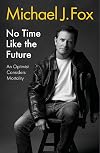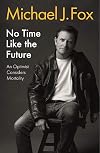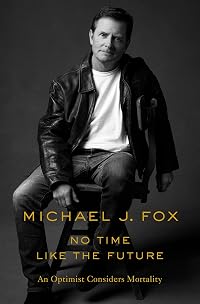
No Time Like the Future: An Optimist Considers Mortality
by Michael J. Fox
On This Page
Description
This program is read by Michael J. Fox.A moving account of resilience, hope, fear and mortality, and how these things resonate in our lives, by actor and advocate Michael J. Fox.
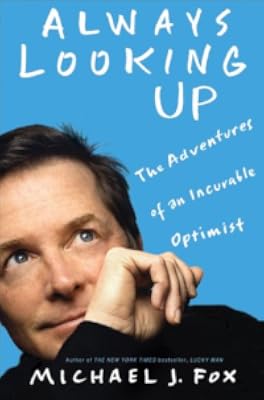
The entire world knows Michael J. Fox as Marty McFly, the teenage sidekick of Doc Brown in Back to the Future; as Alex P. Keaton in Family Ties; as Mike Flaherty in Spin City; and through numerous other movie roles and guest appearances on shows such as The Good Wife and Curb Your Enthusiasm. Diagnosed at age 29, show more Michael is equally engaged in Parkinson's advocacy work, raising global awareness of the disease and helping find a cure through The Michael J. Fox Foundation for Parkinson's Research, the world's leading non-profit funder of PD science. His two previous bestselling memoirs, Lucky Man and Always Looking Up, dealt with how he came to terms with the illness, all the while exhibiting his iconic optimism. His new memoir reassesses this outlook, as events in the past decade presented additional challenges.
In No Time Like the Future: An Optimist Considers Mortality, Michael shares personal stories and observations about illness and health, aging, the strength of family and friends, and how our perceptions about time affect the way we approach mortality. Thoughtful and moving, but with Fox's trademark sense of humor, his audiobook provides a vehicle for reflection about our lives, our loves, and our losses.
Running through the narrative is the drama of the medical madness Fox recently experienced, that included his daily negotiations with the Parkinson's disease he's had since 1991, and a spinal cord issue that necessitated immediate surgery. His challenge to learn how to walk again, only to suffer a devastating fall, nearly caused him to ditch his trademark optimism and "get out of the lemonade business altogether."
Does he make it all of the way back? Listen to the audiobook.
A Macmillan Audio production from Flatiron Books
. show less
Tags
Recommendations










Member Reviews
'If we were all to put our worst problem inside of a circle and then allowed to draw one out, we’d all take our own problem back.'
Fox has a reputation for optimism. In his first memoir, Lucky Man, his decade-old diagnosis of young-onset Parkinson’s Disease doesn’t even make his list of problems that spiral him into personal and career crisis. Nearly 20 years later now, his blunt struggle with PD makes me wonder about recommending this memoir to those who have more recently been diagnosed with it. And yet…
Here again, what makes 2018 his annus horribilis is not PD but rather the surgeries and rehabs from a complicated upper-arm fracture and a threatening spinal tumor. He loves spending time with his wife and adult children; still show more loves golfing (badly) with buddies Harlan Coben and George Stephanopoulis; is all-in when acting roles come his way; and is dedicated to his PD research foundation. (True, let me be clear: he has the financial and social resources to manage his problems that few others do.) But he attributes optimism to gratitude, and not only is his Acknowledgements a deep gratitude to the people in his life, but that appreciation is on every page. show less
Fox has a reputation for optimism. In his first memoir, Lucky Man, his decade-old diagnosis of young-onset Parkinson’s Disease doesn’t even make his list of problems that spiral him into personal and career crisis. Nearly 20 years later now, his blunt struggle with PD makes me wonder about recommending this memoir to those who have more recently been diagnosed with it. And yet…
Here again, what makes 2018 his annus horribilis is not PD but rather the surgeries and rehabs from a complicated upper-arm fracture and a threatening spinal tumor. He loves spending time with his wife and adult children; still show more loves golfing (badly) with buddies Harlan Coben and George Stephanopoulis; is all-in when acting roles come his way; and is dedicated to his PD research foundation. (True, let me be clear: he has the financial and social resources to manage his problems that few others do.) But he attributes optimism to gratitude, and not only is his Acknowledgements a deep gratitude to the people in his life, but that appreciation is on every page. show less
A library book picked on a whim, because I'm "between books." I read Fox's LUCKY MAN maybe twenty years ago and enjoyed it. I didn't know he'd written a couple more books after that. NO TIME LIKE THE FUTURE is his latest, published during the pandemic. It focuses intently on a single year in his life, 2018. It was a terrible and trying year for Fox. In addition to the usual trials and creeping indignities and frailties of his Parkinson's, he underwent a very risky surgery to remove a tumor from his spinal column. It took him months to recover and rehab from that operation, and then he fell and shattered his left arm. More surgery and recovery time. He was also facing more uncertainties from the relentless progression of Parkinson's, show more which was affecting his balance and walking, causing him to fall often, and make additional use of canes, a walker, and even a wheelchair. All of these troubles are described in meticulous detail, often causing you to wince in sympathy. Fox faced all of this with courage and a healthy sense of humor, but his optimism began to fade as age, accidents and disease took their toll on his mind and body. Finally, he found himself unable to to learn lines for his increasingly rare acting roles, so he has reluctantly declared himself retired from acting, a life he has loved, and which has, not incidentally, made him very comfortably wealthy. That wealth is reflected here in the special care and many health aides, therapists and personal assistants he has made use of. The book comes with an Epilogue commenting on how he and his family coped with the pandemic lockdown in 2020, retreating from their luxury Manhattan apartment to their country estate on Long Island where they lived comfortably and companionably for the duration. Fox has nothing but praise for his family - his four adult children, and especially his wife of thirty-plus years, Tracy Pollan, who has been at his side for all of it, including the worst of his troubles. Michal J. Fox is a darn good writer - smart, funny and articulate - and this is a bit surprising, considering he never finished high school, but it is obvious that he reads widely, a self-educated man. He is also an extremely likable narrator, making the reading of this book a pure pleasure. My very highest recommendation.
- Tim Bazzett, author of the memoir, BOOKLOVER show less
- Tim Bazzett, author of the memoir, BOOKLOVER show less
Michael J. Fox’s personality comes through loud and clear in this absorbing short memoir covering his most recent acting endeavors and health challenges, so even though much of the time is spent on serious stuff there’s a generous sprinkling of humor throughout his struggles.
Post-Spin City featured some of my favorite roles for the actor including Rescue Me and The Good Fight, so I very much enjoyed learning more about how those jobs came together, his thoughts on the characters, etc., and I also appreciated that he talked a little about how and why his last attempt at starring in a sitcom unfortunately didn’t work out.
With two Michael J. Fox books prior to this one, you might wonder whether there is really enough life story show more material left for a third volume, this does contain the occasional bit of filler, but you’ll have no doubt that there are valid reasons for this book’s existence when you read about his spinal surgery, his falls and various rehabs, the everyday trials of living with Parkinsons and his wavering optimism. I think this is what people are talking about when they say a book is a window for some readers and a mirror for others with its honest recounting of what he’s endured mentally and physically. There are definitely some celebrity moments here, privileges that would only come to those with wealth and fame but for the most part you forget the trappings of his life, and depending on your own situation, you’ll either empathize or identify with his experiences. show less
Post-Spin City featured some of my favorite roles for the actor including Rescue Me and The Good Fight, so I very much enjoyed learning more about how those jobs came together, his thoughts on the characters, etc., and I also appreciated that he talked a little about how and why his last attempt at starring in a sitcom unfortunately didn’t work out.
With two Michael J. Fox books prior to this one, you might wonder whether there is really enough life story show more material left for a third volume, this does contain the occasional bit of filler, but you’ll have no doubt that there are valid reasons for this book’s existence when you read about his spinal surgery, his falls and various rehabs, the everyday trials of living with Parkinsons and his wavering optimism. I think this is what people are talking about when they say a book is a window for some readers and a mirror for others with its honest recounting of what he’s endured mentally and physically. There are definitely some celebrity moments here, privileges that would only come to those with wealth and fame but for the most part you forget the trappings of his life, and depending on your own situation, you’ll either empathize or identify with his experiences. show less
No Time Like The Future follows a more linear plot that Always Looking Up and is therefore more reminiscent of Lucky Man. However unlike those previous memoirs, this one has a decidedly darker tone. Written at almost sixty years old, about thirty years after his Parkinson's diagnosis, MJF faces a lot of difficulties. Parkinson's is a degenerative disease so things can only get worse (he loses his ability to drive, golf or act), but he also has to face a spinal tumour that might leave him paralysed and a bad fall that shatters not only bones but his optimistic life outlook, as well as the facing of mortality (particularly of loved ones) that comes naturally with age. It is noticeable that although he still fully believes Parkinson's will show more be cured, he is no longer giving an estimate on when. He described life with his Parkinson's symptoms in the previous books but gives them much more focus here, perhaps because they are more consuming now. He describes in eye-opening detail the difficulty he has walking from his office to his apartment block, which are just round the corner from each other. His depiction of being treated like luggage while in a wheelchair is chilling. He also casually throws in there how he falls at least twice a day. While he has described battles with mental illness before, it feels more potent here possibly because the story was written much closer to the struggle he went through and also because it is underscored by his fear of the fact that mental disorders and dementia can be symptoms of Parkinson's. It's a heavy but very compelling read and characteristic of the author there is still hope and levity in the book. Meanwhile, his loving portrait of his family is overwhelmingly heartwarming. show less
The latest book by fifty-nine-year-old Michael J. Fox is "No Time Like the Future," in which the actor, philanthropist, husband, and dad covers a wide range of topics. He writes extensively about his early-onset Parkinson's (he was diagnosed in 1991, when he was twenty-nine), and how this disease has changed his life. Fox, whose fluid and engaging prose is laced with self-deprecating humor, candidly describes mistakes he has made, embarrassing experiences that made him cringe, and medical emergencies that required surgery and extensive rehabilitation. On the plus side, Fox has enjoyed appearing in such shows as "The Good Wife," "Scrubs," and "Rescue Me" and, thanks to the dedication of many wonderful men and women, the Michael J. Fox show more Foundation has funded one billion dollars in Parkinson's research. Along the way, Fox has derived comfort from the support of his wife, Tracy, and their four grown children.
"No Time Like the Future" is not just a memoir, but also an exploration of time—how to appreciate and use it wisely. Fox admits that, in his younger days, he was reckless and drank heavily. Fearful that alcoholism might rob him of everything good in his life, he joined a twelve-step program and has since remained sober. As yet, there is no cure for Parkinson's, but Fox takes medication to alleviate his symptoms. In addition, he knows that he is, in many ways, more privileged than most. He has the means to live in a comfortable home; employs people to help him around the clock, if necessary; has access to superb medical care; and is secure in the knowledge that his family will always go the extra mile for him.
In spite of his inborn optimism, Fox has endured bouts of depression and anger at having to cope with a debilitating illness that has made walking, climbing stairs, and even carrying a drink across the room difficult. Fortunately, he has skilled and dedicated physical therapists who push him to his limits, although the routines that he must follow are exhausting. Those who feel bored with their humdrum lives or resent missing large gatherings during this tragic Covid era can derive much inspiration from this poignant book. We must never take the gift of good health for granted, and we should do all in our power to nurture our invaluable personal relationships. Fox chides himself for not always dealing well with adversity, but no one can deny that, for the past three decades, this talented man has displayed admirable resilience, adaptability, and a desire to help others. show less
"No Time Like the Future" is not just a memoir, but also an exploration of time—how to appreciate and use it wisely. Fox admits that, in his younger days, he was reckless and drank heavily. Fearful that alcoholism might rob him of everything good in his life, he joined a twelve-step program and has since remained sober. As yet, there is no cure for Parkinson's, but Fox takes medication to alleviate his symptoms. In addition, he knows that he is, in many ways, more privileged than most. He has the means to live in a comfortable home; employs people to help him around the clock, if necessary; has access to superb medical care; and is secure in the knowledge that his family will always go the extra mile for him.
In spite of his inborn optimism, Fox has endured bouts of depression and anger at having to cope with a debilitating illness that has made walking, climbing stairs, and even carrying a drink across the room difficult. Fortunately, he has skilled and dedicated physical therapists who push him to his limits, although the routines that he must follow are exhausting. Those who feel bored with their humdrum lives or resent missing large gatherings during this tragic Covid era can derive much inspiration from this poignant book. We must never take the gift of good health for granted, and we should do all in our power to nurture our invaluable personal relationships. Fox chides himself for not always dealing well with adversity, but no one can deny that, for the past three decades, this talented man has displayed admirable resilience, adaptability, and a desire to help others. show less
An open and honest look at a sometimes grim situation. I found a ton of common ground with Michael J Fox - minus the fame and fortune, our lives have followed some weird parallel paths. I am of similar age. I have been married for about the same length of time with four grown kids and a dog that I love too much.
I have an inherited neuropathy. I spent years living with the diagnosis of an 'invisible' disability -just trying to get by and pass as 'normal'. Then came a recent bout with what I was told at the time was an incurable cancer diagnosis (it's been five years and I am still beating it). The cancer treatments have complicated my neuropathy to the point that I can no longer walk without crutches. I am also unable to drive myself show more and reliant on my family for a lot of things most people take for granted.
I found an odd sense of hope in these pages. Not a blind belief in some other power - god, positivity, miracles of faith -whatever you want to call it. This book carries the very real message that we all travel incredible, hard paths of our own. It is more than a little encouraging to read a positive voice that maintains a grounded view of the reality around it. Neither Michael J Fox, nor I, are ever going to be a scratch golfer. However, it is possible to enjoy and even relish something that you are famously bad at by remaining in the moment itself- that one shot. The message contained in this book arrived in my life at a time when I desperately needed to hear it.
I doubt Mr. Fox reads his own reviews. If he does read them he should stop immediately because -and I don't know if you are aware of this - there are some real idiots writing these reviews, present company included. But if he were to see this one ever -I would just say thank you for writing this and thank you even more for sharing it. show less
I have an inherited neuropathy. I spent years living with the diagnosis of an 'invisible' disability -just trying to get by and pass as 'normal'. Then came a recent bout with what I was told at the time was an incurable cancer diagnosis (it's been five years and I am still beating it). The cancer treatments have complicated my neuropathy to the point that I can no longer walk without crutches. I am also unable to drive myself show more and reliant on my family for a lot of things most people take for granted.
I found an odd sense of hope in these pages. Not a blind belief in some other power - god, positivity, miracles of faith -whatever you want to call it. This book carries the very real message that we all travel incredible, hard paths of our own. It is more than a little encouraging to read a positive voice that maintains a grounded view of the reality around it. Neither Michael J Fox, nor I, are ever going to be a scratch golfer. However, it is possible to enjoy and even relish something that you are famously bad at by remaining in the moment itself- that one shot. The message contained in this book arrived in my life at a time when I desperately needed to hear it.
I doubt Mr. Fox reads his own reviews. If he does read them he should stop immediately because -and I don't know if you are aware of this - there are some real idiots writing these reviews, present company included. But if he were to see this one ever -I would just say thank you for writing this and thank you even more for sharing it. show less
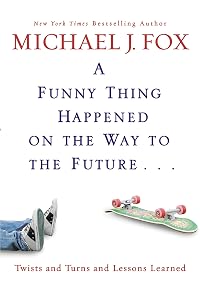
Candid, vulnerable, painful, wise, personable...the adjectives can't sum this up well enough. I'd read Mr. Fox's A Funny Thing Happened on the Way to the Future...: Twists and Turns and Lessons Learned seven years ago and gave him a too short (I didn't start expanding my "reviews" until a year or two later) thumbs up. This one comes from a later point in his life after his Parkinson's has both taken a toll and become necessarily what he has had top learn to adapt to. He says, as his disease has progressed, "I can’t spin more than one plate at a time these days. I have issues with executive function; I can’t multitask." and "George Bernard Shaw said that youth is wasted on the young, but it wasn’t wasted on me. I just didn’t know show more that I’d go straight from young to old."
Devoting a large part of the story to many of his challenges (PD, spinal surgery, falling and shattering his arm) - in an informative, not self-pitying way, Fox, brings us into small parts of his world. Following the spinal surgery to remove a tumor, he reluctantly acquiesced to the use of a wheel chair, but came to see it as not a weakness:
Fox loves golf and says
In the Epilogue, he briefly addresses COVID-19:
Throughout this book, you'll see what Tracy means to him. At a Vampire Weekend (I'd not heard of them before this) concert in Madison Square Garden, with his wife and two of his daughters, he says of Tracy
Devoting a large part of the story to many of his challenges (PD, spinal surgery, falling and shattering his arm) - in an informative, not self-pitying way, Fox, brings us into small parts of his world. Following the spinal surgery to remove a tumor, he reluctantly acquiesced to the use of a wheel chair, but came to see it as not a weakness:
We refer to people in wheelchairs as wheelchair-bound. What does that mean, exactly? Wheelchair-bound suggests that one is bound to the chair; held hostage. It contains you. Perhaps the person who is used to mobility (and the unrestricted use of their body parts) looks at the chair as a concession, as an instrument of surrender. Whereas, to one who is disabled to a point where independent movement is not an option, the chair is a means of freedom to move.Freedom to move. There's perspective for you.
Fox loves golf and says
Golf summons up the same resolve that I rely upon in managing my Parkinson’s. I could easily create a Venn diagram exploring the nexus between golf and life with PD: They overlap in hubris and humility, delusion and desire, futility and resilience. I just deal with whatever presents itself. Sometimes I end up in the bunker, in the deep rough, or in the water. Carry on. If you're going to do something, just do it. And don't use too much club.He still plays in his own deprecating way - someone asked what his handicap was, and he replied "Isn't it obvious?" I can't relate to golf, but I can relate to this. Fox was performing with Paul Simon for a fundraiser and said during a rehearsal of a lyric in "Me and Julio Down by the Schoolyard, "It's so cryptic." To which Simon said, "Yes, Michael, it is."
Poets and artists will always answer your questions about meaning with one of their own: Well, what does it mean to you? Don’t count on them to stick around for your reply.
In the Epilogue, he briefly addresses COVID-19:
After more than a year spent examining my life from an eyeball-to-navel perspective [writing this book], my worldview was suddenly supersized, looking downward from thirty thousand feet at a planet in crisis.Good guys wear masks now. I know that one small positive in the last fours years is that it's a lot easier to know who to avoid just by looking at them, whether wearing those red hats, a flag of a 150 year old dead insurrection, or no masks in the face of a pandemic.
[...]
I never thought of it this way, but for years I’ve been practicing my own version of social distancing—in my case, the length of an arm plus a cane between myself and others, as a means to protect people from the dangers of me. Frankly, I also kept an emotional distance, as in: You can’t relate to my problems.
[...on the virtual funeral of a colleague and friend...]
Those gathered at the service were all masked, so that when each appeared in a tiny box on my screen, I couldn’t identify the faces, only eyes and muzzled voices. Strange that the good guys wear the masks now.
Throughout this book, you'll see what Tracy means to him. At a Vampire Weekend (I'd not heard of them before this) concert in Madison Square Garden, with his wife and two of his daughters, he says of Tracy
To my right, Tracy is, by now, flat-out grooving, soaking the music into her pores and letting it out with paroxysms of hip-swinging, arm-waving, and ass-shaking. The girl can dance.Right there with you, Mike! The story is somewhat nonlinear - he'll timejump between different, related, points in his recent life in an order that means something to him. And in all of it, he tells us about Tracy. On vacation in Turks and Caicos on New Year's Eve, 2017, he was in severe pain while still toasting the New Year with Keith Richards (Oh god, Keith Richards looks better than I feel.) , and knows he has to cut the vacation short, get back to NY and assess his health. Tracy
Me, not so much. My dancing has never been good and my best moves are unintentional.
doesn't hesitate; she holds me for a minute, and with a kiss, is off to tell the kids to start packing.He says earlier, that
I love that she clearly gets it. Shes responsive, not reactive. It's not that Tracy "feels my pain"; it's that she acknowledges it, and would do anything to relieve it. We try to accept life on life's terms. I've relied on Tracy's acceptance more and more, as my own has begun to waver.
I depend on Tracy more than ever. Every aspect of my life, every action, movement, or emotion, is colored not only by the way I process what's happening with my health challenges, by the way Tracy processes and reacts to it. I wouldn't be here now, in whatever shape, were it not for Tracy's infinite capacity to accept me as I am in the moment.It's not all fait accompli; Fox tells some light stories, some with a little humor. But a lot of reality in this memoir. show less
Members
- Recently Added By
Published Reviews
ThingScore 100
Life was already tough for the star of Back to the Future, who was diagnosed with Parkinson's at the age of 29. Then, in 2018, he had surgery to remove a tumour from his spine. In this moving, often funny memoir he reveals how he regained his sense of optimism, and reflects on age, family and living with a disability.
added by Cynfelyn
Lists

Globe and Mail | Canadian Non-Fiction: Feb. 19, 2022
10 works; 1 member

Globe and Mail | Canadian Non-Fiction: Jan. 22, 2022
10 works; 1 member
Globe and Mail | Canadian Non-Fiction: Feb. 12, 2022
10 works; 1 member
Globe and Mail | Canadian Non-Fiction: Jan. 29, 2022
10 works; 1 member

The Guardian Books of the Year 2020
126 works; 8 members
Author Information

9+ Works 4,815 Members
Michael J. Fox was born Michael Andrew Fox in Edmonton, Alberta, Canada on June 9, 1961. He made his acting debut in the comedy Leo and Me at the age of 15. He moved to Los Angeles at 18, appearing in small roles and the television series Palmerstown, U.S.A. in 1980, before landing the role of Alex P. Keaton in the television series Family Ties in show more 1982. He won three consecutive Emmy Awards and a Golden Globe Award for the role. In the late 1980's, he started acting in movies including The Secret of My Success; Bright Lights, Big City; Teen Wolf; Doc Hollywood; and all three of the Back to the Future movies. He has also done voice work providing the voice of Stuart Little in the movie of the same name and its sequel, of Chance in Homeward Bound: The Incredible Journey and its sequel Homeward Bound II: Lost in San Francisco and of Milo Thatch in Atlantis: The Lost Empire. When Fox was diagnosed with Parkinson's disease in 1991, he was playing the role of Mike Flaherty on the television series Spin City, for which he won an Emmy, three Golden Globes, and two Screen Actors Guild Awards. He quit work on the series as a result of the diagnosis. Since then he has written some books including Lucky Man: A Memoir; Always Looking Up: The Adventures of an Incurable Optimist; and A Funny Thing Happened on the Way to the Future: Twists and Turns and Lessons Learned. (Bowker Author Biography) show less
Common Knowledge
- Canonical title*
- Il futuro è stato bellissimo
- Original title
- No Time Like The Future
- People/Characters
- Michael J. Fox
- Epigraph*
- A partire dal 1998, e precisamente dal giorno in cui Michael J. Fox ha reso pubblica la sua diagnosi, a un occhio esterno la sua vita è sembrata quasi ammantarsi di fortune impreviste. La Fondazione che ha costituito ha r... (show all)accolto l'incredibile cifra di ottocento milioni di dollari per la lotta al morbo di Parkinson. Ha scritto tre autobiografie che sono diventate tutte best seller e ha continuato a recitare in ruoli importanti. La sua vita famigliare, che condivide da trent'anni con la moglie Tracy Pollan, è a detta di tutti una vita da sogno. Il suo è stato
un secondo atto straordinariamente positivo.
David Marchese, The New York Times Magazine,
1º marzo 2019
Prima o poi il mondo vi manda una merda di sbirro a mettervi
i bastoni tra le ruote e a farvi vedere chi comanda.
Stephen King, L'ultimo Cavaliere - Dedication*
- A Stephen, Gary, Nanci e Bob
Grazie - First words*
- Cado. È un crollo improvviso.
- Last words*
- (Click to show. Warning: May contain spoilers.)Se c'è la gratitudine, l'ottimismo diventa una pratica sostenibile.
- Original language
- English
*Some information comes from Common Knowledge in other languages. Click "Edit" for more information.
Classifications
- Genres
- Biography & Memoir, Nonfiction, General Nonfiction
- DDC/MDS
- 791.4302 — Arts & recreation Recreation, sports, and performing arts Public performances Motion pictures, radio, television, podcasting Motion pictures Standard subdivisions
- LCC
- PN2308 .F69 .A3 — Language and Literature Literature (General) Literature (General) Drama Dramatic representation. The theater Special regions or countries
- BISAC
Statistics
- Members
- 587
- Popularity
- 50,154
- Reviews
- 28
- Rating
- (3.91)
- Languages
- Dutch, English, Italian
- Media
- Paper, Audiobook, Ebook
- ISBNs
- 14
- ASINs
- 6