
The Witness for the Prosecution [short story]
by Agatha Christie
On This Page
Description
When wealthy spinster Emily French is found murdered, suspicion falls on Leonard Vole, the man to whom she hastily bequeathed her riches before she died. Leonard assures the investigators that his wife, Romaine Heilger, can provide them with an alibi. However, when questioned, Romaine informs the police that Vole returned home late that night covered in blood. During the trial, Ms. French's housekeeper, Janet, gives damning evidence against Vole, and, as Romaine's cross-examination begins, show more her motives come under scrutiny from the courtroom. One question remains, will justice prevail? show lessTags
Recommendations











Member Reviews
This BBC radio drama attempts to present the essential elements of Agatha Christie's Witness for the Prosecution in less than half an hour. It's only partially successful. While key parts of the plot are present, too much of the context has been stripped out of the drama. I've seen the play and the films based on it enough times to be familiar with all of the plot twists and I still had trouble making sense of the radio drama. I even re-listened to a couple of segments and still felt like I was missing something. I'd love to have heard the cast in an unabridged audio production of the play. If you haven't seen, heard, or read the play as written by Christie, avoid this plot-spoiling bare bones adaptation.
Caveat emptor - Beware of this edition
Review of the General Press Kindle ebook edition (September 5, 2022) of the original short story (January 31, 1925).
Canada's Shaw Festival 2024 is featuring Agatha Christie's Witness for the Prosecution: A Play in Three Acts (1953) in its program this year. I always enjoy reading a play either before or after seeing a production in order to better appreciate the nuances between the page and the stage. So it seemed like a signal from the fates when The Witness for the Prosecution was offered yesterday as a Kindle Deal of the Day for 99 cents. And the deal seemed to offer both the original short story AND the play with a count of 197 pages. Sounds like a bargain right?
See Amazon listing at show more target="_top">https://scontent-ord5-2.xx.fbcdn.net/v/t39.30808-6/448753157_26755413037390795_5...
The Amazon listing for this edition of "The Witness for the Prosecution." Image sourced from Amazon.
Well, what you get here is ONLY the short story in 20 pages. That's it except for several pages of filler advertising. So for 99 cents still a reasonable bargain, but between Amazon and Goodreads (where it is merged with a Hercule Poirot #28 short story collection which really is 197 pages) the casual buyer is sure to feel hoodwinked.
The original short story does still give you the jist of the plot which most people likely know either through the Witness for the Prosecution (1957) movie directed by Billy Wilder with Charles Laughton and Marlene Dietrich or the several more recent TV productions. It is certainly up there with the best of Agatha Christie's twist endings, especially so in the original story. But as for this edition, know what you are getting before you buy. show less
Review of the General Press Kindle ebook edition (September 5, 2022) of the original short story (January 31, 1925).
Canada's Shaw Festival 2024 is featuring Agatha Christie's Witness for the Prosecution: A Play in Three Acts (1953) in its program this year. I always enjoy reading a play either before or after seeing a production in order to better appreciate the nuances between the page and the stage. So it seemed like a signal from the fates when The Witness for the Prosecution was offered yesterday as a Kindle Deal of the Day for 99 cents. And the deal seemed to offer both the original short story AND the play with a count of 197 pages. Sounds like a bargain right?
See Amazon listing at show more target="_top">https://scontent-ord5-2.xx.fbcdn.net/v/t39.30808-6/448753157_26755413037390795_5...

The Amazon listing for this edition of "The Witness for the Prosecution." Image sourced from Amazon.
Well, what you get here is ONLY the short story in 20 pages. That's it except for several pages of filler advertising. So for 99 cents still a reasonable bargain, but between Amazon and Goodreads (where it is merged with a Hercule Poirot #28 short story collection which really is 197 pages) the casual buyer is sure to feel hoodwinked.
The original short story does still give you the jist of the plot which most people likely know either through the Witness for the Prosecution (1957) movie directed by Billy Wilder with Charles Laughton and Marlene Dietrich or the several more recent TV productions. It is certainly up there with the best of Agatha Christie's twist endings, especially so in the original story. But as for this edition, know what you are getting before you buy. show less
This is a reread of this classic Agatha Christie short story on the train back home from seeing the play version at County Hall in London. The play obviously expanded the storyline a lot, but the basic plotline and much of the dialogue was the same. The written story almost feels like a summary of the stage version, it's a very taut piece of writing, with not a word going to waste.
************
This Agatha Christie short story is packed full of twists and turns around the case of Leonard Vole, accused of murdering an old lady to get her money. I think this story demonstrates the strength of the short story model. No need for superfluous characters, just a straightforward but gripping story.
************
This Agatha Christie short story is packed full of twists and turns around the case of Leonard Vole, accused of murdering an old lady to get her money. I think this story demonstrates the strength of the short story model. No need for superfluous characters, just a straightforward but gripping story.
I have been on a bit of an Agatha Christie roll lately. Having never read anything by her before last year (and never watched any of the TV or film adaptations), I was inspired to read And Then There Were None, after watching the superb TV adaptation of that novel at the end of 2016. Since then, I’ve been catching up on other TV films and have several of her novels stockpiled to read.
My reason for wanting to read this particular book was that the title story, The Witness for the Prosecution, has also been adapted by the BBC, and I wanted to read the story first. I was slightly surprised that it was a short story (and that it was as short as it was), but I enjoyed it. That said, I did not think the twist was quite as spectacular as I show more had been led to believe by other reviews, and it wasn’t my favourite story in the collection.
The other stories with brief descriptions, are as follows:
*The Red Signal* (I had read this one before): A story of mental illness and unhappy marriages. Sounds cheery doesn’t it?! I liked it a lot though.
*The Fourth Man*: Four men are on a train, and three of them know each other. The fourth man is drawn into their conversation and reveals some interesting details about an infamous woman they are discussing. Enjoyable on the whole, although it was an entirely different story to what I was anticipating from the set-up.
*SOS*: A man’s car breaks down and he seeks refuge for the night with a family who are clearly hiding secrets. He endeavours to find out what they are (and naturally does so). I liked it. It had an air of sinisterness about it – which admittedly is Agatha Christie’s forte – which worked well.
*Wireless*: This was probably my favourite one in the whole collection. An elderly woman has heart problems and is warned that she must not get too excitable and also must not brood on her troubles. Her nephew buys her a wireless to take her mind off things, but then strange events start happening. Although I thought it was fairly easy to guess who was responsible, an added twist at the end made this thoroughly enjoyable.
*The Mystery of the Blue Jar* (another one I had read before): A young man is driven mad when he hears a voice call out ‘Murder’ at the same time every morning while he is on the golf course. He befriends a young woman and her father who live nearby and together they try to work out what is happening. Probably my second favourite in this collection.
*Sing a Song of Sixpence*: Bit of an odd one this. The mystery itself was clever enough – a woman is murdered and the four members of her family who are the potential suspects all seem to be innocent, but there appears to be no possibility that it could be anyone else – however, I did feel that the reader had been tricked a bit when the final denouement was revealed. Also, I did not like the chauvinistic detective figure in this one!
*Mr Eastwood’s Adventure (aka The Mystery of the Second Cucumber)*: This was a lot of fun, and another contender for my second favourite of the collection. A man receives a mysterious phone call, clearly meant for someone else, and cannot resist investigating. Naturally he gets himself entangled in all manner of problems. This was quite amusing. I would have stuck with the original title of The Mystery of the Second Cucumber though.
*Philomel Cottage*: A woman marries a man after a brief romance. She then learns that he is a murderous psychopath and has to plan a way to get out alive. This was probably the weakest of the collection for me, which is not to say that I didn’t enjoy reading it. I had forgotten the ending when I came to write this review though, which is never a good sign!
*Accident*: Two men are discussing a woman who one of them is convinced is a murderer who has started her life anew under a different name. They believe that her current husband is at risk of being killed by her, and one of them sets out to try and stop that happening.
*The Second Gong*: A family gather for dinner but the uncle is found shot dead in a locked room. It appears that he has committed suicide but Hercule Poirot is convinced that there has been foul play. And Poirot of course always gets his man. I like Poirot stories partly because I love David Suchet and always think of him in the role. This was very cleverly done, and I enjoyed it a lot.
*Hercule Poirot and the Regatta Mystery*: Another Poirot story – a group of people are gather together and a valuable diamond goes missing. The indefatigable Belgian detective is called in to work out who has taken it. Naturally he figures it out.
I’ll be honest here and say that as a general rule, I am not a huge fan of short stories. I prefer novels, where we get to know characters better and plot-lines are more developed. However, as an undemanding diversion these stories worked perfectly well – as can only be expected, some are more enjoyable than others, and probably every reader will have their own ideas of which were the best and which were the worst. It’s also worth mentioning that if you already have any short story collections of Agatha Christie, it’s worth checking that you don’t already possess all of these stories before spending money on this specific book. Most of these appear in the Miss Marple and Mystery story collect and others appear in other collections by Christie.
Overall, based on this collection I remain a fan of Agatha Christie although I definitely prefer her longer novels. show less
My reason for wanting to read this particular book was that the title story, The Witness for the Prosecution, has also been adapted by the BBC, and I wanted to read the story first. I was slightly surprised that it was a short story (and that it was as short as it was), but I enjoyed it. That said, I did not think the twist was quite as spectacular as I show more had been led to believe by other reviews, and it wasn’t my favourite story in the collection.
The other stories with brief descriptions, are as follows:
*The Red Signal* (I had read this one before): A story of mental illness and unhappy marriages. Sounds cheery doesn’t it?! I liked it a lot though.
*The Fourth Man*: Four men are on a train, and three of them know each other. The fourth man is drawn into their conversation and reveals some interesting details about an infamous woman they are discussing. Enjoyable on the whole, although it was an entirely different story to what I was anticipating from the set-up.
*SOS*: A man’s car breaks down and he seeks refuge for the night with a family who are clearly hiding secrets. He endeavours to find out what they are (and naturally does so). I liked it. It had an air of sinisterness about it – which admittedly is Agatha Christie’s forte – which worked well.
*Wireless*: This was probably my favourite one in the whole collection. An elderly woman has heart problems and is warned that she must not get too excitable and also must not brood on her troubles. Her nephew buys her a wireless to take her mind off things, but then strange events start happening. Although I thought it was fairly easy to guess who was responsible, an added twist at the end made this thoroughly enjoyable.
*The Mystery of the Blue Jar* (another one I had read before): A young man is driven mad when he hears a voice call out ‘Murder’ at the same time every morning while he is on the golf course. He befriends a young woman and her father who live nearby and together they try to work out what is happening. Probably my second favourite in this collection.
*Sing a Song of Sixpence*: Bit of an odd one this. The mystery itself was clever enough – a woman is murdered and the four members of her family who are the potential suspects all seem to be innocent, but there appears to be no possibility that it could be anyone else – however, I did feel that the reader had been tricked a bit when the final denouement was revealed. Also, I did not like the chauvinistic detective figure in this one!
*Mr Eastwood’s Adventure (aka The Mystery of the Second Cucumber)*: This was a lot of fun, and another contender for my second favourite of the collection. A man receives a mysterious phone call, clearly meant for someone else, and cannot resist investigating. Naturally he gets himself entangled in all manner of problems. This was quite amusing. I would have stuck with the original title of The Mystery of the Second Cucumber though.
*Philomel Cottage*: A woman marries a man after a brief romance. She then learns that he is a murderous psychopath and has to plan a way to get out alive. This was probably the weakest of the collection for me, which is not to say that I didn’t enjoy reading it. I had forgotten the ending when I came to write this review though, which is never a good sign!
*Accident*: Two men are discussing a woman who one of them is convinced is a murderer who has started her life anew under a different name. They believe that her current husband is at risk of being killed by her, and one of them sets out to try and stop that happening.
*The Second Gong*: A family gather for dinner but the uncle is found shot dead in a locked room. It appears that he has committed suicide but Hercule Poirot is convinced that there has been foul play. And Poirot of course always gets his man. I like Poirot stories partly because I love David Suchet and always think of him in the role. This was very cleverly done, and I enjoyed it a lot.
*Hercule Poirot and the Regatta Mystery*: Another Poirot story – a group of people are gather together and a valuable diamond goes missing. The indefatigable Belgian detective is called in to work out who has taken it. Naturally he figures it out.
I’ll be honest here and say that as a general rule, I am not a huge fan of short stories. I prefer novels, where we get to know characters better and plot-lines are more developed. However, as an undemanding diversion these stories worked perfectly well – as can only be expected, some are more enjoyable than others, and probably every reader will have their own ideas of which were the best and which were the worst. It’s also worth mentioning that if you already have any short story collections of Agatha Christie, it’s worth checking that you don’t already possess all of these stories before spending money on this specific book. Most of these appear in the Miss Marple and Mystery story collect and others appear in other collections by Christie.
Overall, based on this collection I remain a fan of Agatha Christie although I definitely prefer her longer novels. show less
Best for:
Those looking for a quick, satisfying read.
In a nutshell:
Leonard is accused of killing an elderly woman, Emily. He believes his wife will serve as his alibi. Will she?
Worth quoting:
“Everything has something to hide, something they would do anything to protect.”
Why I chose it:
I enjoyed “The Unexpected Guest,” and have been checking out what is available of Christie’s at my local library.
Review:
I listened to this, and it was read by Christie’s grandson. Cool idea, but his delivery left something to be desired.
This short story quickly explores the ideas of who we believe and why, and as it has a fantastic final line that sums things and leaves the reader saying, essentially, ‘oh shit.’
Leonard Vole has befriended an show more older woman, Emily. We don’t quite understand why - but we do learn she is wealthy. However, Leonard is married. When he is charged with murdering Emily, his attorney Mayhew is interested in the truth, and determines that he needs to help Leonard because Leonard is not guilty. Leonard’s wife is his alibi, but when Mayhew goes to interview her, things take a turn.
This was a short, simple, and surprising story. I’d heard about it and was expecting more, but at the same time it was an interesting way to tell such a short story. It’s only in a couple of locations, there are not that many characters, and when it was over, I thought ‘oh! Well done!’
What’s next for this book:
I’d love to see the play. show less
Those looking for a quick, satisfying read.
In a nutshell:
Leonard is accused of killing an elderly woman, Emily. He believes his wife will serve as his alibi. Will she?
Worth quoting:
“Everything has something to hide, something they would do anything to protect.”
Why I chose it:
I enjoyed “The Unexpected Guest,” and have been checking out what is available of Christie’s at my local library.
Review:
I listened to this, and it was read by Christie’s grandson. Cool idea, but his delivery left something to be desired.
This short story quickly explores the ideas of who we believe and why, and as it has a fantastic final line that sums things and leaves the reader saying, essentially, ‘oh shit.’
Leonard Vole has befriended an show more older woman, Emily. We don’t quite understand why - but we do learn she is wealthy. However, Leonard is married. When he is charged with murdering Emily, his attorney Mayhew is interested in the truth, and determines that he needs to help Leonard because Leonard is not guilty. Leonard’s wife is his alibi, but when Mayhew goes to interview her, things take a turn.
This was a short, simple, and surprising story. I’d heard about it and was expecting more, but at the same time it was an interesting way to tell such a short story. It’s only in a couple of locations, there are not that many characters, and when it was over, I thought ‘oh! Well done!’
What’s next for this book:
I’d love to see the play. show less
The majority of these stories have a supernatural bent, which is unusual for Christie, but shows her skill at creating tension in just a short amount of time. "The Fourth Man" is a tale of three orphans, two of whom are at the mercy of their more attractive and cruel friend, and is particularly good. The title story is a good, twisted crime story.
Can I Get a Witness?
A review of the Samuel French / Concord Theatricals paperback (January 22, 2014) of the Samuel French playscript (1953) adapted from the original short story (January 31, 1935).
Although I saw the play a few years ago I didn't get around to reading it until my current Complete Agatha Christie binge read. Partially that was because of feeling show more hoodwinked by the false advertising of an Amazon eBook which promised the play but only delivered the short story. I 1-star reviewed that edition as Caveat emptor.
I do think of Witness... as one of the top Agatha Christie twist endings, even if it is not from one of the novels. The seemingly hapless Leonard Vole is accused of the murder of the elderly Emily French whom he had been regularly visiting. Vole is discovered to be the beneficiary of French's considerable fortune. Vole says he has a solid alibi as he was home with his wife Romaine Vole. But suddenly it is revealed that instead of being a witness for the defense, Romaine Vole is instead a witness for the prosecution!
Lawyer Sir Wilfrid Robarts QC is left scrambling for the defense when suddenly yet a different witness appears. But are they all they claim to be? It all ends in a dramatic courtroom showdown with a twist reveal.
Stage photo of the Shaw Festival 2024 production starring Maria McLean as Romaine Vole. Photo sourced from Emily Cooper/Shaw Festival.
Programme booklet for the Shaw Festival production of "Witness for the Prosecution" in 2024. Source own photo.
This reading counts against my Complete Agatha Christie binge goal, so I have 21 novels (if I include the 6 published under the pseudonym Mary Westmacott), 5 short story collections, 11.5* theatrical plays (+ several harder to find 1-act radio plays) and 1 autobiography left to go.
Footnote
* I am counting Towards Zero stage play version #1 (1945) and Towards Zero stage play version #2 (1956) each as 1/2 of a play.
Soundtrack
It is nothing to do with the story and play, but my lede header was inspired by the Holland-Dozier-Holland song Can I Get a Witness (1963) originally performed by Marvin Gaye which you can listen to on YouTube here or on Spotify here.
Trivia and Links
Witness for the Prosecution has been adapted several times for theatrical film, TV-film and TV-series. Almost all of the adaptations rename Romaine Vole as Christine Vole.
The best known adaptation is the Witness for the Prosecution (1957) movie directed by Billy Wilder with Charles Laughton, Tyrone Power and Marlene Dietrich.
See the complete list of theatrical film and TV adaptations at Wikipedia here. show less
A review of the Samuel French / Concord Theatricals paperback (January 22, 2014) of the Samuel French playscript (1953) adapted from the original short story (January 31, 1935).
ROMAINE. You do not know that I am devoted to Leonard, of your own knowledge, do you, Sir Wilfrid? (She smiles.)
SIR WILFRID. (Slightly disconcerted.) No, no, that is of course true. But your husband told me.
ROMAINE. Leonard told you how devoted I was to him?
SIR WILFRID. Indeed, he spoke of your devotion in the most moving terms.
ROMAINE. Men, I often think, are very stupid.
Although I saw the play a few years ago I didn't get around to reading it until my current Complete Agatha Christie binge read. Partially that was because of feeling show more hoodwinked by the false advertising of an Amazon eBook which promised the play but only delivered the short story. I 1-star reviewed that edition as Caveat emptor.
I do think of Witness... as one of the top Agatha Christie twist endings, even if it is not from one of the novels. The seemingly hapless Leonard Vole is accused of the murder of the elderly Emily French whom he had been regularly visiting. Vole is discovered to be the beneficiary of French's considerable fortune. Vole says he has a solid alibi as he was home with his wife Romaine Vole. But suddenly it is revealed that instead of being a witness for the defense, Romaine Vole is instead a witness for the prosecution!
Lawyer Sir Wilfrid Robarts QC is left scrambling for the defense when suddenly yet a different witness appears. But are they all they claim to be? It all ends in a dramatic courtroom showdown with a twist reveal.
Stage photo of the Shaw Festival 2024 production starring Maria McLean as Romaine Vole. Photo sourced from Emily Cooper/Shaw Festival.
Programme booklet for the Shaw Festival production of "Witness for the Prosecution" in 2024. Source own photo.
This reading counts against my Complete Agatha Christie binge goal, so I have 21 novels (if I include the 6 published under the pseudonym Mary Westmacott), 5 short story collections, 11.5* theatrical plays (+ several harder to find 1-act radio plays) and 1 autobiography left to go.
Footnote
* I am counting Towards Zero stage play version #1 (1945) and Towards Zero stage play version #2 (1956) each as 1/2 of a play.
Soundtrack
It is nothing to do with the story and play, but my lede header was inspired by the Holland-Dozier-Holland song Can I Get a Witness (1963) originally performed by Marvin Gaye which you can listen to on YouTube here or on Spotify here.
Trivia and Links
Witness for the Prosecution has been adapted several times for theatrical film, TV-film and TV-series. Almost all of the adaptations rename Romaine Vole as Christine Vole.
The best known adaptation is the Witness for the Prosecution (1957) movie directed by Billy Wilder with Charles Laughton, Tyrone Power and Marlene Dietrich.
See the complete list of theatrical film and TV adaptations at Wikipedia here. show less
Members
- Recently Added By
Lists

Top 100 Mystery Novels of All Time
98 works; 9 members

PS: 43 Books to Read Before They're Movies
18 works; 5 members

Agatha Christie’s short stories
142 works; 1 member
Author Information

One of the most successful and beloved writer of mystery stories, Agatha Mary Clarissa Christie was born in 1890 in Torquay, County Devon, England. She wrote her first novel, The Mysterious Affair at Styles, in 1920, launching a literary career that spanned decades. In her lifetime, she authored 79 crime novels and a short story collection, 19 show more plays, and six novels written under the name of Mary Westmacott. Her books have sold over a billion copies in the English language with another billion in 44 foreign languages. Some of her most famous titles include Murder on the Orient Express, Mystery of the Blue Train, And Then There Were None, 13 at Dinner and The Sittaford Mystery. Noted for clever and surprising twists of plot, many of Christie's mysteries feature two unconventional fictional detectives named Hercule Poirot and Miss Jane Marple. Poirot, in particular, plays the hero of many of her works, including the classic, The Murder of Roger Ackroyd (1926), and Curtain (1975), one of her last works in which the famed detective dies. Over the years, her travels took her to the Middle East where she met noted English archaeologist Sir Max Mallowan. They married in 1930. Christie accompanied Mallowan on annual expeditions to Iraq and Syria, which served as material for Murder in Mesopotamia (1930), Death on the Nile (1937), and Appointment with Death (1938). Christie's credits also include the plays, The Mousetrap and Witness for the Prosecution (1953; film 1957). Christie received the New York Drama Critics' Circle Award for 1954-1955 for Witness. She was also named Dame Commander of the Order of the British Empire in 1971. Christie died in 1976. (Bowker Author Biography) show less
Some Editions
Awards and Honors
Notable Lists
Series
Belongs to Publisher Series
Work Relationships
Is contained in
Masterpieces of Murder: The Murder of Roger Ackroyd, And Then There Were None, Witness for the Prosecution, Death on the Nile by Agatha Christie
Agatha Christie Crime Collection: At Bertram's Hotel, The Hound of Death, Partners in Crime by Agatha Christie (indirect)
Cards on the Table / Poirot Investigates / The Hound of Death and Other Stories by Agatha Christie (indirect)
Murder Is Served | The Witness for the Prosecution | Three Blind Mice | Dark Abyss by Detective Book Club
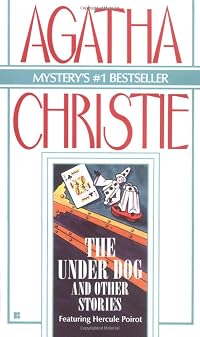
Crooked House | The Witness for the Prosecution and Other Stories | The Under Dog and Other Stories by Agatha Christie
The World of Law, Volumes I-II: The Law in Literature, The Law as Literature by Ephraim London (indirect)
Has the adaptation
Has as a student's study guide
Common Knowledge
- Canonical title
- Witness for the Prosecution [short story]; The Witness for the Prosecution [short story]
- Original title
- Witness for the Prosecution
- Alternate titles
- Traitor Hands (title at first publication) (title at first publication)
- Original publication date
- 1932 (Short story) (Short story); 1925-01-31; 1953 (play) (play)
- Related movies
- Witness for the Prosecution (1949 | IMDb); Witness for the Prosecution (2016 | IMDb); Danger: Witness for the Prosecution (1950 | IMDb); Witness for the Prosecution (2019 | IMDb); Lux Video Theatre: Witness for the Prosecution (1953 | IMDb); Witness for the Prosecution (1957 | IMDb) (show all 7); Hallmark Hall of Fame: Witness for the Prosecution (1982 | IMDb)
- Disambiguation notice
- This is the stand-alone version of the short story Witness for the Prosecution. Please do not combine with editions also containing other stories or with the play of the same name.
Classifications
Statistics
- Members
- 1,029
- Popularity
- 25,230
- Reviews
- 25
- Rating
- (3.78)
- Languages
- 9 — Czech, Danish, Dutch, English, Finnish, German, Hungarian, Italian, Spanish
- Media
- Paper, Audiobook, Ebook
- ISBNs
- 52
- UPCs
- 2
- ASINs
- 41