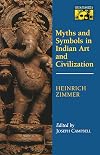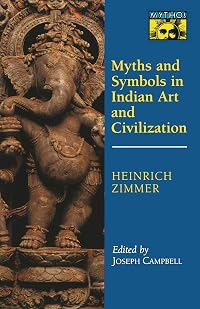
Myths and Symbols in Indian Art and Civilization
by Heinrich Robert Zimmer
On This Page
Description
A landmark work that demystifies the rich tradition of Indian art, Myths and Symbols in Indian Art and Civilization analyzes key motifs found in legend, myth, and folklore taken directly from the Sanskrit. It provides a comprehensive introduction to visual thinking and picture reading in Indian art and thought. Ultimately, the book shows that profound Hindu and Buddhist intuitions on the riddles of life and death are universally recognizable.Tags
Recommendations































Member Reviews
A landmark work that demystifies the rich tradition of Indian art, Myths and Symbols in Indian Art and Civilization analyzes key motifs found in legend, myth, and folklore taken directly from the Sanskrit. It provides a comprehensive introduction to visual thinking and picture reading in Indian art and thought. Ultimately, the book shows that profound Hindu and Buddhist intuitions on the riddles of life and death are universally recognizable. Source: Publisher
A very respectful take on the Indian traditions
Descriptions of the symbols of Indian culture and the myths surrounding them. An interesting approach, though somewhat dry. Has some great pictures, wish they were annotated with dates.
Não lido
El libro se inicia con el comentario de Heinrich Zimmer a un antiguo mito puránico que cuenta la historia de Indra, constructor de un palacio infinito, en el que tiempo y espacio desbordan todos los límites para sumergir al lector en el ritmo y las perspectivas inmensas de los ciclos cósmicos. El placer por narrar que experimentaba Zimmer, seduce al lector que penetra en otro universo, cuyos mitos y símbolos se llenan de sentido gracias a la sabiduría del gran indólogo alemán, una de las escasas personas que Carl Gustav Jung juzgó dignas de aparecer en su Autobiografía. Los comentarios de Zimmer acerca del arte indio, lleno de voluptuosidad y dinamismo contrastantes a primera vista con su espiritualidad y ascetismo, son show more contemplados desde la óptica del maya, juego de apariencias y de ilusiones, integrantes con todo de la vida del hombre en este mundo. show less
Aug 10, 2010Spanish
> André Padoux. Heinrich Zimmer. Maya, ou le rêve cosmique dans la mythologie hindoue.
In: Revue de l'histoire des religions, tome 205, n°1, 1988. pp. 98-99. … ; (en ligne),
URL : https://www.persee.fr/doc/rhr_0035-1423_1988_num_205_1_1948
In: Revue de l'histoire des religions, tome 205, n°1, 1988. pp. 98-99. … ; (en ligne),
URL : https://www.persee.fr/doc/rhr_0035-1423_1988_num_205_1_1948
Aug 31, 2020 (Edited)French
Librería 5. Estante 2.
Nov 22, 2019Spanish
Members
- Recently Added By
Author Information

25+ Works 1,545 Members
Some Editions
Series
Belongs to Publisher Series
Bollingen Series (6)
Common Knowledge
- Original publication date
- 1946
- Important places
- India
- First words
- Indra slew the dragon, a giant titan that had been couching on the mountains in the limbless shape of a cloud serpent, holding the waters of heaven captive in its belly.
- Last words
- (Click to show. Warning: May contain spoilers.)And at last it will end for us our troubles and permit us to erect for the benefit of all around us a temple of the living spirit.
- Original language
- English
Classifications
- Genres
- Nonfiction, Religion & Spirituality, Art & Design, History
- DDC/MDS
- 294.5 — Religion Other religions Buddhism/Hinduism Hinduism
- LCC
- BL2003 .Z5 — Philosophy, Psychology and Religion Religions. Mythology. Rationalism Religions. Mythology. Rationalism History and principles of religions Asian. Oriental By region or country India
- BISAC
Statistics
- Members
- 585
- Popularity
- 50,189
- Reviews
- 7
- Rating
- (4.00)
- Languages
- 7 — English, French, German, Italian, Portuguese (Portugal), Spanish, Turkish
- Media
- Paper, Ebook
- ISBNs
- 20
- ASINs
- 18