On This Page
Description
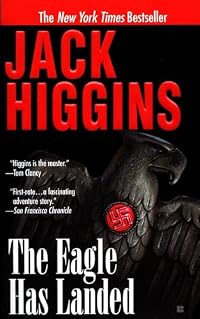
New York Times Bestseller: An audacious Nazi plan to kidnap Winston Churchill threatens to tip the scales of World War II.In November of 1943, an elite team of Nazi paratroopers descends on British soil with a diabolical goal: to abduct Winston Churchill and cripple the Allied war effort. The mission, ordered by Hitler himself and planned by Heinrich Himmler, is led by ace agent Kurt Steiner and aided on the ground by IRA gunman Liam Devlin. As the deadly duo executes Hitler's harrowing show more plot, only the quiet town of Studley Constable stands in their way. Its residents are the lone souls aware of the impending Nazi plan, and they must become the most unlikely of heroes as the fate of the war hangs in the balance. show less
Tags
Recommendations







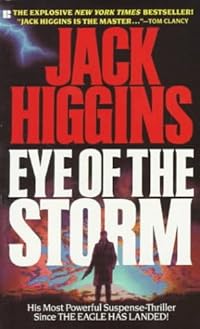




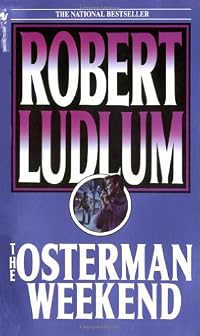

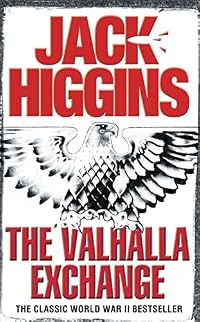

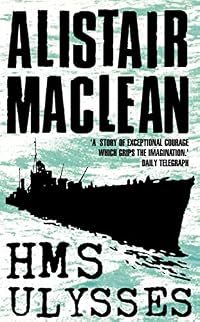










Member Recommendations

Member Reviews
The entire premise of The Eagle Has Landed is based on the fact that a small group of German paratroopers had safely arrived in England and were about to do the unthinkable, they were about to kidnap Winston Churchill. If Mussolini can be rescued from an enemy hotel then surely Churchill could be taken while on a discreet "vacation."
There is so much to like about The Eagle Has Landed (code for Liam Devlin's safe drop into enemy territory). There is also so much that could potentially go wrong with Higgins's technique. First, the frame narrative is the author, Jack Higgins himself, researching a botched attempt to kidnap the Prime Minister, Winston Churchill during the final moments of World War II. Giving away the plot in the very show more beginning of a novel is a risky move. where is the suspense? Why read on knowing the Germans failed? Second, the majority of the story is told from the point of view of the antagonists. Why be on their side?
Why care about the enemy? Because Liam Devlin is an irresistible bad guy. You want him to succeed and you don't know why. He's a charming cad; the kind of guy everyone loves to hate. That's why. You keep reading because Higgins has spun the plot. Yes, you may know the Germans failed to kidnap Churchill but...did Devlin survive? show less
There is so much to like about The Eagle Has Landed (code for Liam Devlin's safe drop into enemy territory). There is also so much that could potentially go wrong with Higgins's technique. First, the frame narrative is the author, Jack Higgins himself, researching a botched attempt to kidnap the Prime Minister, Winston Churchill during the final moments of World War II. Giving away the plot in the very show more beginning of a novel is a risky move. where is the suspense? Why read on knowing the Germans failed? Second, the majority of the story is told from the point of view of the antagonists. Why be on their side?
Why care about the enemy? Because Liam Devlin is an irresistible bad guy. You want him to succeed and you don't know why. He's a charming cad; the kind of guy everyone loves to hate. That's why. You keep reading because Higgins has spun the plot. Yes, you may know the Germans failed to kidnap Churchill but...did Devlin survive? show less
"Well, let's put it this way, you'll be a major by nightfall or dead."
No one knows the story how of a group of Germans invaded Britain for the sole purpose of kidnapping Winston Churchill. All that remains is a concealed gravestone dedicated to a unit of Germans paratroopers in a British churchyard. The truth is a closely guarded secret by the citizens of Studley Constable, a village that was the epicentre of the most daring raid of the entire war.
Having never read Higgins before, I had no expectations in reading this book. But I can honestly say this was a poignant, entertaining and exciting read. As a result I can't wait to read more of his works.
There's a variety of characters, all with depth, personality and a derth of needs and show more wants. Surprisingly enough, the majority of the story is told from the perspective of the antagonists. This is counter to what you would normally expect. Much like "Bel Canto" and "House of Cards", the writing convinces the reader to essentially sympathize with the villain(s) of the story.
Also, in most stories the tension is derived from not knowing how it all ends. This has all been avoided here as the book was written as frame story, meaning we already know how it ends. This can often be a risky idea as it often deflates interest but if done well, it draws readers in by focusing on how and why events end the way they do. Instead of concerning themselves with the end of the story, readers are more interested in the journey/middle.
Truthfully the majority of the action takes place in the last 50-100 pages but I was never bored or frustrated by this. Higgins slowly moves the playing pieces into place. He slowly builds the plot, interweaving plotlines until you can see the inexorable disaster looming in the distance, forcing the reader to continue, already knowing the outcome.
If you enjoy WWII stories filled with intrigue and like a bit of a twist on the traditional 'hero' story, check out this book. show less
No one knows the story how of a group of Germans invaded Britain for the sole purpose of kidnapping Winston Churchill. All that remains is a concealed gravestone dedicated to a unit of Germans paratroopers in a British churchyard. The truth is a closely guarded secret by the citizens of Studley Constable, a village that was the epicentre of the most daring raid of the entire war.
Having never read Higgins before, I had no expectations in reading this book. But I can honestly say this was a poignant, entertaining and exciting read. As a result I can't wait to read more of his works.
There's a variety of characters, all with depth, personality and a derth of needs and show more wants. Surprisingly enough, the majority of the story is told from the perspective of the antagonists. This is counter to what you would normally expect. Much like "Bel Canto" and "House of Cards", the writing convinces the reader to essentially sympathize with the villain(s) of the story.
Also, in most stories the tension is derived from not knowing how it all ends. This has all been avoided here as the book was written as frame story, meaning we already know how it ends. This can often be a risky idea as it often deflates interest but if done well, it draws readers in by focusing on how and why events end the way they do. Instead of concerning themselves with the end of the story, readers are more interested in the journey/middle.
Truthfully the majority of the action takes place in the last 50-100 pages but I was never bored or frustrated by this. Higgins slowly moves the playing pieces into place. He slowly builds the plot, interweaving plotlines until you can see the inexorable disaster looming in the distance, forcing the reader to continue, already knowing the outcome.
If you enjoy WWII stories filled with intrigue and like a bit of a twist on the traditional 'hero' story, check out this book. show less
A daring premise, surprising plot twists, and well captured historical background combine to make this thriller a memorable read. The premise is that a small group of German commandos is going to try to do the unthinkable--kidnap or assasinate Churchill while he is visiting an out of the way town in the English countryside. To that end they recruit Liam Devlin--an Irishman who hates the English--to work with them. Liam's colorful Irish ways make--captured skillfully by the narrator in the audio version I listened to--make him leap off of the page. His resourcefulness--and Irish luck--may just give the Germans a chance to pull it off, but his attraction for one of the local girls may prove to be his undoing. This book has a colorful cast show more of characters, all so well done you can't help but wish for almost all of them to succeed--which of course they can't. It was a delight to listen to and I highly recommend it to anyone wishing for a thriller that will keep them on the edge of their seat, hanging on every word to see what's going to happen next. show less
A very exciting thriller; if you have seen the film, the plot will be familiar. The final battle scenes are longer and more bloody and there is a minor difference in the final conclusion to the Germans' operation with regard to Churchill, which is handled more dramatically in the film. One of the most striking and somewhat uncomfortable aspects of this novel is that you can't help feeling some sympathy for the German soldiers and their allies, Liam Devlin and, to an extent, Joanna Grey. The motivations for all these characters are explored very effectively and the only wholly unsympathetic (fictional) characters are the Britischer Freikorps man Preston and the Birmingham gangster Devlin kneecaps. Powerful stuff.
Not the fully excellent book I expected. It was harder to keep track of all the characters on audio, and I think there was some track mix-up that confused me. An interesting technique to make the villans such good guys - or at least a few of them. The real baddies were actually cartoonishly so. Some plot weaknesses, but nothing glaring. Will go watch the movie now.
A fairly engrossing thriller that I liked well enough but was not madly in love with. The story begins with Jack Higgins inserting himself into the fictional universe and claiming to discover a secret plot to kidnap Winston Churchill in 1943. We then witness the story unfolding (purportedly the fruits of the author's research), with a brief return to Frame Story Higgins at the end.
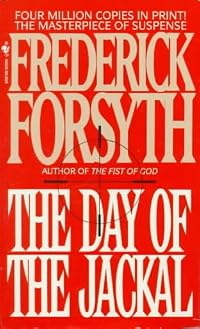
The back of the book likens this novel to The Day of the Jackal, in that both books are fiction but claim to be based on fact, but I feel like Jackal worked better at drawing me in and suspending my disbelief than Eagle did. Perhaps my being more familiar with WW2 England than Charles de Gaulle's France kept me somewhat detached, as did my affection for show more Churchill (why would I cheer for someone attempting to kidnap him?). With Eagle I was indeed interested in how the plot would be carried out and what contingencies they would have to plan for, but I wasn't really swept up in the drama until the final confrontation. Until that point most of my excitement for the story came whenever they mentioned the SAS, because they have shown up in a lot of my reading this year. (When Himmler and Col Radl had an expository discussion about the creation of the SAS, my first thought was literally "HEY I KNOW THOSE GUYS!") And I can't say I predicted that last twist, so the book does have that going for it. But still, I can't say this will make it into my list of favourites.
To sum up, read this if it interests you. show less
The back of the book likens this novel to The Day of the Jackal, in that both books are fiction but claim to be based on fact, but I feel like Jackal worked better at drawing me in and suspending my disbelief than Eagle did. Perhaps my being more familiar with WW2 England than Charles de Gaulle's France kept me somewhat detached, as did my affection for show more Churchill (why would I cheer for someone attempting to kidnap him?). With Eagle I was indeed interested in how the plot would be carried out and what contingencies they would have to plan for, but I wasn't really swept up in the drama until the final confrontation. Until that point most of my excitement for the story came whenever they mentioned the SAS, because they have shown up in a lot of my reading this year. (When Himmler and Col Radl had an expository discussion about the creation of the SAS, my first thought was literally "HEY I KNOW THOSE GUYS!") And I can't say I predicted that last twist, so the book does have that going for it. But still, I can't say this will make it into my list of favourites.
To sum up, read this if it interests you. show less
In November of 1943, an elite team of Nazi paratroopers descends on British soil with a diabolical goal: to abduct Winston Churchill and cripple the Allied war effort. The mission, ordered by Hitler himself and planned by Heinrich Himmler, is led by ace agent Kurt Steiner and aided on the ground by IRA gunman Liam Devlin. As the deadly duo executes Hitler’s harrowing plot, only the quiet town of Studley Constable stands in their way. Its residents are the lone souls aware of the impending Nazi plan, and they must become the most unlikely of heroes as the fate of the war hangs in the balance.
Members
- Recently Added By
Published Reviews
Roman ispirisan istinskim događajem iz Drugog svetskog rata i upadom nemačkih komandosa u Englesku u pokušaju da otmu Vin-stona Čerčila. Roman je poslužio kao osnova za snimanje čuvenog filma Otmica Čerčila sa ser Majkl Kejnom u glavnoj ulozi.
added by Sensei-CRS
Lists

Read the book and saw the movie
1,170 works; 192 members

The Top 100 Crime Novels of All Time
100 works; 15 members

Animals in the Title
498 works; 11 members

Publisher's Weekly Bestsellers - Part II - 1940 - 1979
355 works; 5 members

THE WAR ROOM
813 works; 24 members

Tozai Mystery Best 100 | The Top 100 Mystery Novels
111 works; 3 members

Books read in 2014
66 works; 1 member
Author Information

211+ Works 33,038 Members
Jack Higgins is a writer and educator, born in Newcastle, England on July 17, 1929. The name is the pseudonym of Harry Patterson. He also wrote under the names of Martin Fallon, James Graham, and Hugh Marlowe during his early writing career. He attended Leeds Training College and eventually graduated from the University of London in 1962 with a show more B.S. degree in Sociology. Higgins held a series of jobs, including a stint as a non-commissioned officer in the Royal House of Guards serving on the German border during the Cold War. He taught at Leeds College of Commerce and James Graham College. He has written more than 60 books including The Eagle Has Landed, Touch the Devil, Confessional, The Eagle Has Flown, and Eye of the Storm. Higgins is also the author of the Sean Dillon series. His novels have since sold over 250 million copies and been translated into fifty-five languages. His title's The Death Trade and Rain on the Dead made The New York Times Best Seller List. (Bowker Author Biography) show less
Some Editions
Awards and Honors
Distinctions
Notable Lists
Series


Belongs to Publisher Series
Lanterne (L 348)
Work Relationships
Is contained in
Has the adaptation
Is abridged in
Dødens gab / Ørnen er landet ; af Jack Higgins ; Høgebakken ; Allan W. Eckert. Min kloge mor ; af Dorothy Scannell by Reader's Digest
Reader's Digest Condensed Books 1975 v04: Where Are the Children? / Earthsound / The Eagle Has Landed / Daylight Must Come / The Wind at Morning by Reader's Digest
Reader's Digest Condensed Books: The Eagle Has Flown • Shadow Into Sunlight • As the Crow Flies • The Winter of the Fisher by Reader's Digest
Het Beste Boek: De menseneter van Tjarinti / De adelaar is geland / Florence Coply / De genezers by Reader's Digest
Reader's Digest Condensed Books: The Eagle Has Landed • Mother Knew Best • The Moneychangers • Kitten with Blue Eyes by Reader's Digest
Der Adler ist gelandet. Bourgeon, Roger: Sieg über die Nacht. Baum, Vicki: Die goldenen Schuhe. Aldridge, James: Ein Pony für zwei. by Reader's Digest
Common Knowledge
- Canonical title*
- Ørnen har landet
- Original title
- The Eagle Has Landed
- Original publication date
- 1975
- People/Characters
- Liam Devlin; Kurt Steiner; Wilhelm Canaris; Jürgen Stroop; Karl Steiner; Heinrich Himmler (show all 15); Radl; Adolf Hitler; Molly; Joanna Grey; Father Phillip Vereker; Pamela Vereker; Harry Kane; Winston Churchill; Ritter Neumann
- Important places
- Berlin, Germany; Norfolk, England, UK
- Related movies
- The Eagle Has Landed (1976 | IMDb)
- Epigraph
- Now the field of battle is a land of standing corpses; those determined to die will live; those who hope to escape with their lives will die.
Wu Ch'i - Dedication
- For my children, Sarah, Ruth, young Seán, and little Hannah, who each in their separate ways have suffered and sweated through this one, but most of all for Amy who has learned to live with that significant little click eac... (show all)h time she lifts the telephone for more than two years now ...
- First words
- Someone was digging a grave in one corner of the cemetery as I went in through the lychgate. I remember that quite clearly because it seemed to set the scene for nearly everything that followed.
- Last words
- (Click to show. Warning: May contain spoilers.)Whatever else may be said, he was a fine soldier and a brave man. Let it end there. I turned and walked away through the rain.
- Original language
- English
*Some information comes from Common Knowledge in other languages. Click "Edit" for more information.
Classifications
Statistics
- Members
- 2,156
- Popularity
- 9,427
- Reviews
- 24
- Rating
- (3.88)
- Languages
- 18 — Chinese, Danish, Dutch, English, Estonian, Finnish, French, German, Hungarian, Italian, Norwegian (Bokmål), Norwegian, Polish, Portuguese, Serbian, Slovak, Spanish, Swedish
- Media
- Paper, Audiobook, Ebook
- ISBNs
- 99
- ASINs
- 43