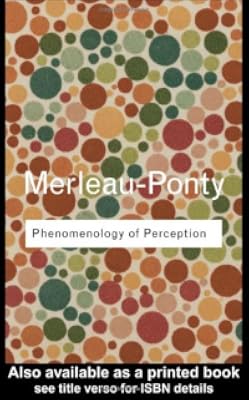
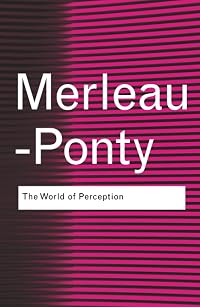
Phenomenology of Perception
by Maurice Merleau-Ponty
On This Page
Description
First published in 1945, Maurice Merleau-Ponty's monumental Phe?nome?nologie de la perception signalled the arrival of a major new philosophical and intellectual voice in post-war Europe. Breaking with the prevailing picture of existentialism and phenomenology at the time, it has become one of the landmark works of twentieth-century thought. This new translation, the first for over fifty years, makes this classic work of philosophy available to a new generation of readers.Tags
Recommendations




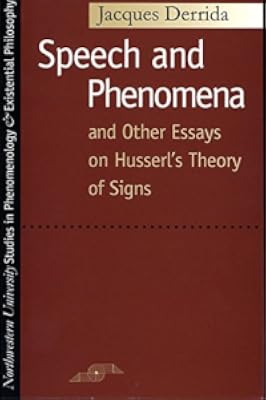
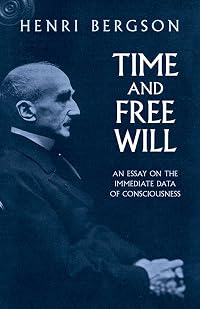
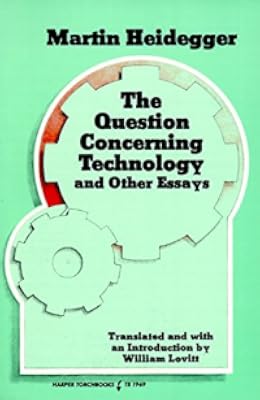

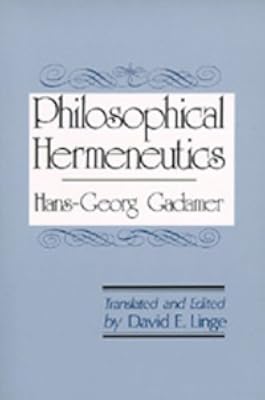

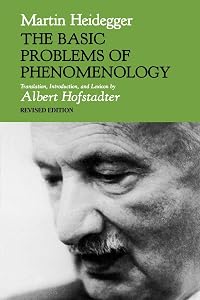
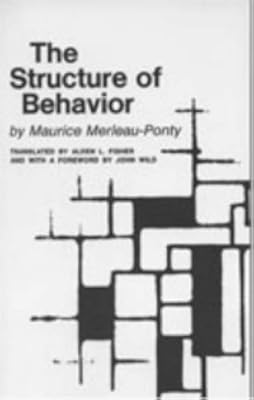




Member Reviews
> Classiques (UQAC) : http://classiques.uqac.ca/classiques/merleau_ponty_maurice/phonomenologie_de_la_...
> « Le monde objectif est trop plein pour qu’il y ait du temps […] Je
suis moi-même le temps […] il faut comprendre le temps comme sujet
et le sujet comme temps. »
—Maurice Merleau-Ponty, La phénoménologie de la perception, Gallimard, 1945.
> « C’est dans l’épreuve que je fais d’un corps explorateur voué aux choses et au
monde, d’un sensible qui m’investit jusqu’au plus individuel de moi-même et m’attire
aussitôt de la qualité à l’espace, de l’espace à la chose et de la chose à l’horizon des
choses, c’est-à-dire à un monde déjà là, que se noue ma relation avec l’être. »
—Maurice show more Merleau-Ponty, La phénoménologie de la perception, Gallimard, 1945. show less
> « Le monde objectif est trop plein pour qu’il y ait du temps […] Je
suis moi-même le temps […] il faut comprendre le temps comme sujet
et le sujet comme temps. »
—Maurice Merleau-Ponty, La phénoménologie de la perception, Gallimard, 1945.
> « C’est dans l’épreuve que je fais d’un corps explorateur voué aux choses et au
monde, d’un sensible qui m’investit jusqu’au plus individuel de moi-même et m’attire
aussitôt de la qualité à l’espace, de l’espace à la chose et de la chose à l’horizon des
choses, c’est-à-dire à un monde déjà là, que se noue ma relation avec l’être. »
—Maurice show more Merleau-Ponty, La phénoménologie de la perception, Gallimard, 1945. show less
Dec 6, 2022French
Librería 3. Estante 2
Jul 26, 2019Spanish
1
""
Sep 2, 2015French
Ratings
Members
- Recently Added By
Lists

Filosofía - Clásicos
217 works; 1 member

Nonfreudian/Nonjungian/Nonlacanian/NonD&G Psychological Analysis
36 works; 2 members
Author Information

90+ Works 4,999 Members
Appointed Professor at the College de France in 1952, Maurice Merleau-Ponty was a highly esteemed professional philosopher because of his technical works in phenomenology and psychology. He was also an activist commentator on the significant cultural and political events of his time, as well as a collaborator with Jean-Paul Sartre and Simone de show more Beauvoir in the founding and editing of Les Temps Modernes in Paris immediately after World War II. Besides being influenced by Edmund Husserl and Martin Heidegger, Merleau-Ponty assimilated the contributions of experimental philosophy and Gestalt psychology to focus on perception and behavior. His work "The Structure of Behavior," although centering on the body, presented an interpretation of the distinctions among the mental, the vital (biological), and the physical that ruled out the reductionist inclinations of behaviorism. With the appearance of his work on the phenomenology of perception in 1945, his position as a philosopher ranking beside Heidegger and Sartre was established. He unveiled a theory of human subjectivity similar to theirs but with greater technical precision. From the standpoint of an existentialist thinker whose conception of subjectivity stressed the primacy of freedom, he examined Marxism and the political factions and movements fostered in the name of Karl Marx. The resulting studies, always insightful and provocative, satisfied neither the right nor the left. In the foreword to the English translation of Merleau-Ponty's inaugural lecture at the College de France, In Praise of Philosophy, John Wild and James Edie praised him for having made "important contributions to the phenomenological investigation of human existence in the life-world and its distinctive structures. He was a revolutionary, and his philosophy, even more than that of his French contemporaries, was a philosophy of the evolving, becoming historical present." Merleau-Ponty views man as an essentially historical being and history as the dialectic of meaning and non-meaning which is working itself out through the complex, unpredictable interaction of men and the world. Nothing historical ever has just one meaning; meaning is ambiguous and is seen from an infinity of viewpoints. He has been called a philosopher of ambiguity, of contradiction, of dialectic. His search is the search for "meaning."' show less
Some Editions
Awards and Honors
Series
Belongs to Publisher Series
Work Relationships
Inspired
Has as a reference guide/companion
Common Knowledge
- Canonical title
- Phenomenology of Perception
- Original title
- Phénomenologie de la perception
- Original publication date
- 1945
- First words
- What is phenomenology?
It may seem strange that this question has still to be asked half a century after the first works of Husserl. - Last words
- (Click to show. Warning: May contain spoilers.)It is your duty, your hatred, your love, your steadfastness, your ingenuity. . . .Man is but a network of relationships, and these alonw matter to him.
- Original language*
- Francés
*Some information comes from Common Knowledge in other languages. Click "Edit" for more information.
Classifications
Statistics
- Members
- 1,825
- Popularity
- 11,951
- Reviews
- 5
- Rating
- (4.16)
- Languages
- 15 — Danish, Dutch, English, Estonian, French, German, Greek, Hungarian, Italian, Norwegian (Bokmål), Polish, Portuguese, Spanish, Swedish, Turkish
- Media
- Paper, Ebook
- ISBNs
- 57
- UPCs
- 1
- ASINs
- 17